The United States House of Representatives recently passed its version of the Fiscal Year 2027 National Defense Authorization Act (NDAA), a critical piece of legislation that outlines the nation’s defense policy and spending. While the annual defense bill typically garners bipartisan support, its latest iteration has ignited a fierce political firestorm, particularly within the Democratic Party, centered on a provision calling for deeper U.S.-Israel defense integration. This contentious debate comes amidst rising U.S.-Middle East tensions, underscoring the complexities of American foreign policy and alliances in a volatile region.
Deepening Defense Integration: The Core of the Debate
At the heart of the controversy is Section 219 of the House-passed NDAA. This provision mandates expanded cooperation between the United States and Israel across various critical defense sectors. Specifically, it seeks to enhance collaboration on military technology development, optimize supply chain resilience, foster joint research initiatives, advance capabilities in artificial intelligence and cybersecurity, and expand joint military exercises. Proponents argue that such integration is a natural and necessary evolution of the long-standing strategic alliance between the two nations, aiming to bolster collective security interests in a region fraught with threats. They contend that by pooling resources and expertise, both countries can achieve greater efficiencies and superior defense capabilities, particularly against shared adversaries.
The NDAA, a legislative behemoth passed annually for over six decades, serves as the primary mechanism for authorizing funding and setting policy for the Department of Defense. Its passage on Wednesday, with a vote of 219-206, saw Section 219 remain intact despite significant opposition from various quarters. The vote itself highlighted the internal divisions, as a notable number of Democrats, and some Republicans, broke ranks to vote against the measure or express reservations about specific provisions.
The Catalyst: Ocasio-Cortez’s "Merge" Claim
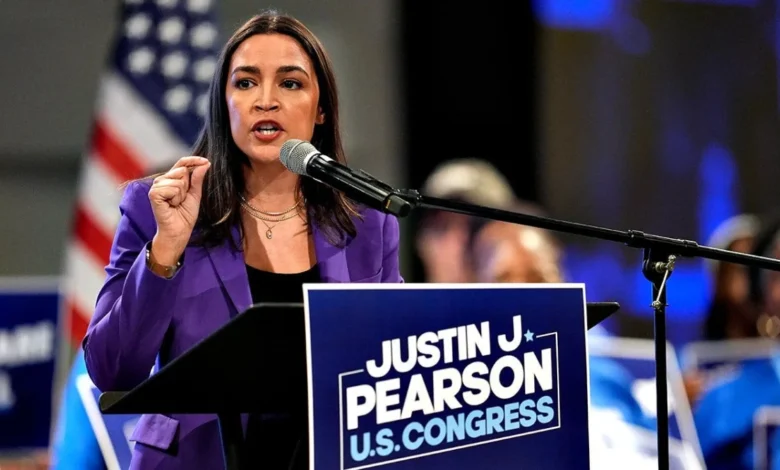
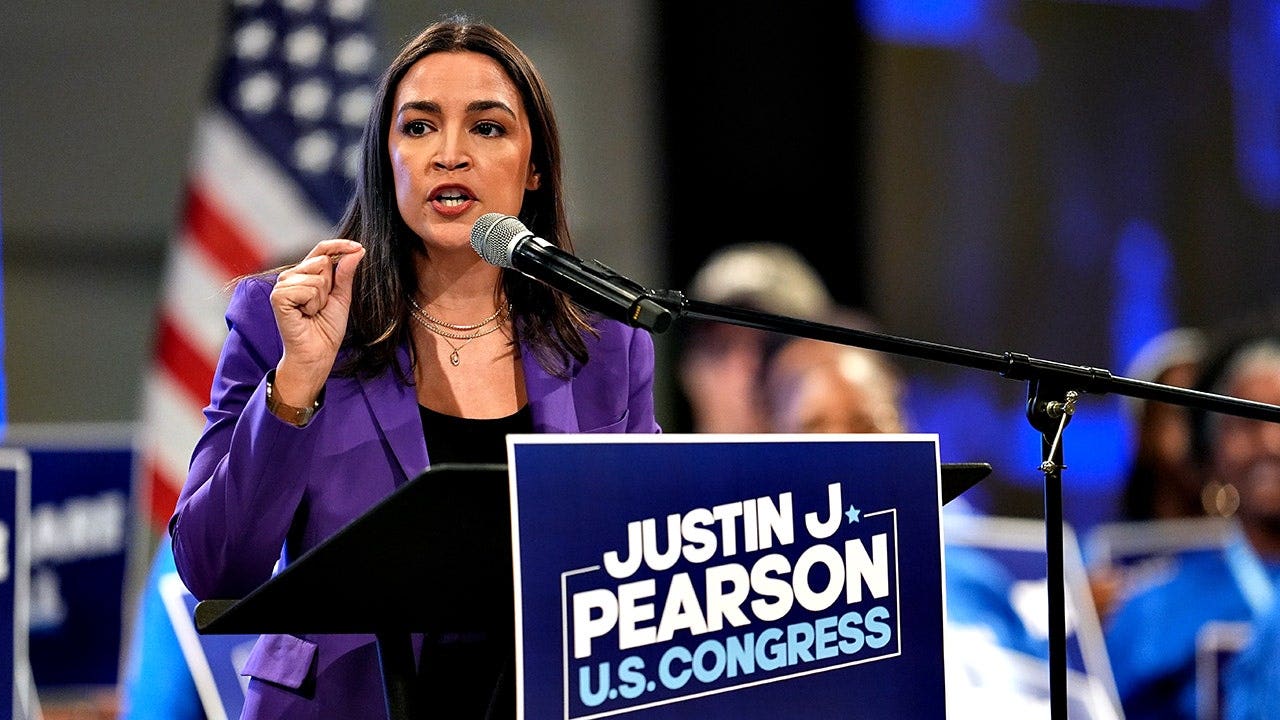
The debate escalated dramatically following a statement made by Representative Alexandria Ocasio-Cortez (D-N.Y.) on the social media platform X, formerly Twitter. Ahead of the House vote, Ocasio-Cortez asserted that the NDAA "includes a provision to merge parts of our military with the IDF," referring to the Israel Defense Forces. She went on to characterize this amendment as "an existential threat to American sovereignty and democracy," urging "every member of Congress [to] vote NO." Her strong language and interpretation of Section 219 immediately drew widespread criticism and ignited a semantic battle over the provision’s true intent and scope.
Ocasio-Cortez’s stance reflects a growing sentiment within the progressive wing of the Democratic Party, which has become increasingly critical of U.S. policy towards Israel and the extensive military aid provided. This faction often advocates for a re-evaluation of the alliance, emphasizing human rights concerns and the impact of Israeli actions on Palestinians. For these lawmakers, any measure that deepens military ties is viewed with suspicion, potentially implicating the U.S. in regional conflicts and compromising its independent foreign policy. The term "merge" suggests an unprecedented level of integration, implying a loss of distinct national military identities, which fueled her alarm and that of her supporters.
Swift Rebuttal: Republicans and Critics Push Back
The accusation of "merging" militaries was swiftly and emphatically rejected by a range of Republican lawmakers and former Trump administration officials, who accused Ocasio-Cortez of misrepresenting the legislation and stoking anti-Israel sentiment. Lee Zeldin, former Environmental Protection Agency Administrator and a prominent Republican voice, vehemently denied the claim, calling it "FALSE." He criticized the congresswoman for what he perceived as a deliberate distortion of the bill’s text, suggesting she was conflating cooperation with an actual merger.
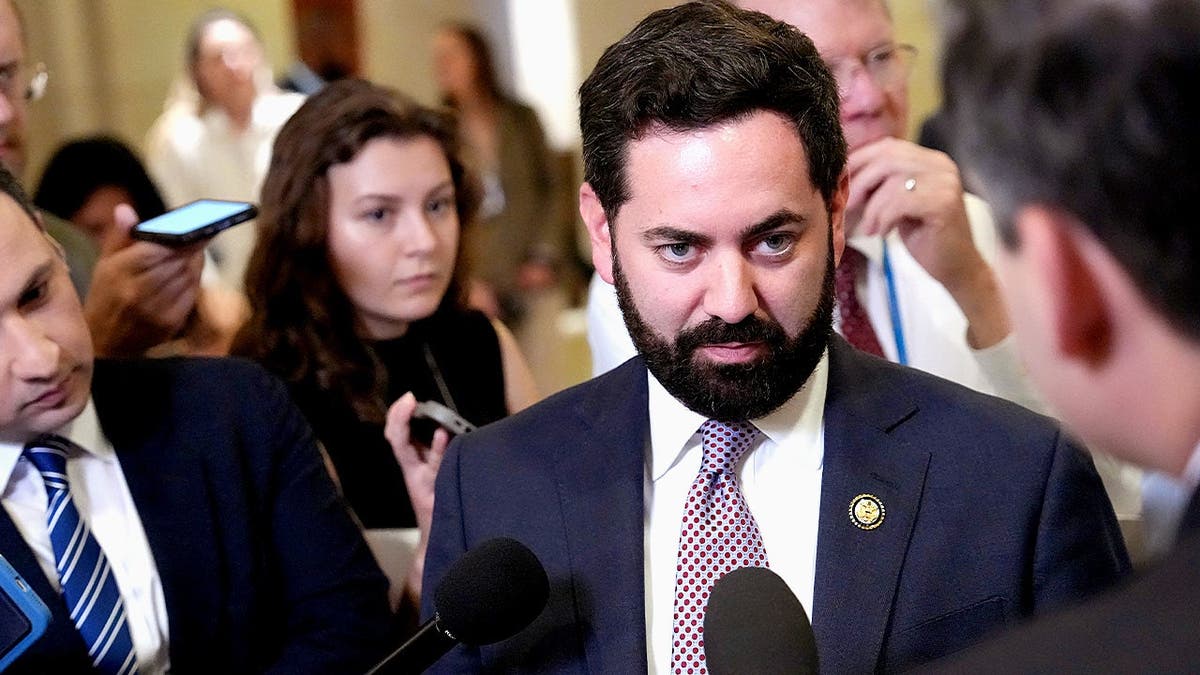
Similarly, Representative Mike Lawler (R-N.Y.) publicly blasted Ocasio-Cortez, accusing her of "stoking Jew hatred" and being "either obtuse or intentionally lying." Lawler clarified that the provision merely expands the type of defense cooperation that the United States already maintains with numerous close allies globally. He cited examples such as intelligence sharing, joint military exercises, and collaborative weapons development—all standard practices among allied nations, designed to enhance interoperability and mutual security without sacrificing national sovereignty. The argument from these critics was that Section 219 simply formalizes and expands existing mechanisms of partnership, reflecting a commitment to a key strategic ally rather than an unprecedented relinquishment of military autonomy.
Historical Context of U.S.-Israel Defense Ties
The strategic alliance between the United States and Israel has deep roots, extending back decades and evolving through numerous geopolitical shifts. Since its inception, the relationship has been characterized by significant military, intelligence, and diplomatic cooperation, driven by shared democratic values and common strategic interests in a turbulent Middle East.
Historically, the U.S. has provided substantial military aid to Israel, totaling billions of dollars annually under various agreements, including a standing Memorandum of Understanding. This aid has been instrumental in equipping the Israel Defense Forces with advanced weaponry and defensive capabilities. Key examples of this cooperation include:
- Iron Dome: The U.S. has provided significant financial and technical support for Israel’s Iron Dome missile defense system, which has been crucial in intercepting rockets fired from Gaza. This collaboration highlights shared technological development and defense priorities.
- Arrow and David’s Sling: Beyond Iron Dome, the U.S. has also partnered with Israel on other advanced missile defense systems like the Arrow (for long-range ballistic missiles) and David’s Sling (for medium- to long-range rockets and cruise missiles), demonstrating a commitment to layered defense architecture.
- Joint Military Exercises: Regular joint military exercises, such as "Juniper Cobra" and "Juniper Oak," involving thousands of personnel from both militaries, are conducted to improve interoperability, readiness, and coordination in potential conflict scenarios. These exercises simulate responses to various regional threats.
- Intelligence Sharing: Extensive intelligence sharing has been a cornerstone of the relationship, allowing both countries to better understand and counter threats from state and non-state actors in the region.
- F-35 Sales and Technology Transfer: Israel was the first country outside of the U.S. to receive the F-35 stealth fighter jets, a testament to the advanced nature of their defense partnership and the willingness to transfer cutting-edge military technology.
Given this extensive history of collaboration, proponents of Section 219 argue that the provision merely formalizes and expands upon existing frameworks, making cooperation more systematic and resilient. They contend that "integration" in this context refers to optimizing shared systems and processes, rather than dissolving national military structures.
The National Defense Authorization Act: A Legislative Cornerstone

The NDAA is one of the most significant pieces of legislation passed by Congress each year. It is a comprehensive bill that authorizes funding for the U.S. military, sets defense policy, and dictates how the Department of Defense operates. It covers everything from troop pay raises and weapon system procurement to cybersecurity initiatives and strategic alliances. The bill’s passage is considered essential for national security, and it has been enacted into law every year for the past 63 years, a remarkable streak demonstrating its critical importance.
The process typically involves both the House and Senate drafting and passing their respective versions, followed by a conference committee to reconcile differences, and finally, a vote on the unified bill before it goes to the President for signature. The current debate on Section 219 is therefore a crucial step in this annual legislative dance, highlighting specific policy choices and priorities within the broader defense agenda.
A Different Strain of Dissent: Massie and Khanna’s Opposition
While Ocasio-Cortez’s rhetoric focused on the "merger" aspect and sovereignty, other lawmakers who opposed Section 219 articulated their concerns differently, emphasizing the scope and implications of such deep integration. Representative Thomas Massie (R-Ky.), a staunch libertarian, introduced an amendment specifically aimed at stripping Section 219 from the legislation. Massie’s opposition stems from a broader skepticism of foreign entanglements and a desire to reduce U.S. military commitments abroad, often advocating for a more non-interventionist foreign policy. He views extensive military integration with any foreign power as potentially entangling the U.S. in conflicts that may not directly serve American interests or as an overreach of executive power in foreign policy decisions.
However, House leadership ultimately blocked Massie’s amendment from receiving a standalone vote. Following this procedural defeat, Massie announced his intention to vote against the entire defense bill. He expressed his disappointment on X, stating, "Unfortunately the Rule passed just now and no debate or vote was allowed on section 219, integration of US military technology and supply chains with Israel’s. The NDAA will receive a recorded vote tomorrow with section 219 in it. I’ll vote no."
Representative Ro Khanna (D-Calif.), a prominent progressive voice, partnered with Massie on the amendment and echoed his criticism of House leadership for preventing a vote. Khanna, whose political philosophy often aligns with non-interventionism and a re-evaluation of U.S. military spending, argued that Congress had prevented consideration of a proposal to stop "the integration of our military with Israel’s." He further expressed frustration with the influence of lobbying efforts, writing, "It is unconscionable to not even have a vote. We will be continuing on and will not be intimidated by the pro-Israel lobby." Khanna’s framing, while also critical of integration, focused more on the potential for entanglement and the lack of proper congressional oversight through a direct vote on the specific provision.
Internal Democratic Fissures
The controversy surrounding Section 219 and the broader debate over Israel aid has starkly illuminated the growing fissures within the Democratic Party. While traditionally a strong supporter of Israel, the party’s progressive wing has increasingly challenged this orthodoxy, advocating for a more balanced approach to the Israeli-Palestinian conflict and greater scrutiny of military aid.
House Minority Leader Hakeem Jeffries (D-N.Y.) previously weighed in on the intensifying political divide within the Democratic Party regarding a separate House bill to cut off aid to Israel (likely referring to the amendment by Massie on general aid, not just Section 219). Jeffries warned that such moves could undermine U.S. national security by empowering groups like Hamas and Hezbollah. This perspective highlights the mainstream Democratic view that supporting Israel’s security is integral to U.S. strategic interests in countering regional threats and maintaining stability. The tension between the progressive calls for re-evaluation and the established party line on Israel aid is a defining feature of contemporary Democratic politics.
The debate over Section 219 is thus not merely about a technical defense provision but serves as a proxy for this larger ideological struggle within the party. For progressives, it represents a step further down a path of entanglement and unconditional support for Israel, which they believe contradicts American values and interests. For centrist Democrats, it’s a necessary measure to reinforce a critical alliance in a dangerous world, consistent with long-standing U.S. foreign policy.
Implications for U.S. Foreign Policy and Regional Stability
The outcome of this debate and the continued legislative journey of the NDAA carry significant implications for U.S. foreign policy, particularly concerning the Middle East.
- U.S.-Israel Alliance: If Section 219 remains in the final NDAA, it signals a reinforced commitment to the U.S.-Israel strategic alliance, emphasizing deeper operational and technological interoperability. This could be seen by allies as a strong reaffirmation of U.S. support and by adversaries as a unified front.
- Regional Security: Proponents argue that enhanced integration contributes to regional stability by strengthening Israel’s defensive capabilities against state and non-state actors like Iran, Hezbollah, and Hamas, thereby deterring aggression. Critics, however, might argue it could further entrench the U.S. in a complex regional dynamic, potentially drawing it into conflicts.
- Congressional Oversight and Executive Power: The blocking of Massie’s amendment raises questions about congressional oversight on specific foreign policy provisions within larger defense bills. It highlights the power of leadership and the challenges faced by individual lawmakers seeking to alter established policy through amendments.
- Internal Political Dynamics: The deep divisions within the Democratic Party on Israel-related issues are likely to persist and intensify. This internal struggle could influence future electoral strategies, party platforms, and the selection of candidates, particularly as the party navigates its progressive and centrist factions.
- Perception of U.S. Sovereignty: Ocasio-Cortez’s "existential threat to American sovereignty" claim, while disputed, taps into a broader concern among some Americans about foreign entanglements and the potential for the U.S. to cede control over its military decisions. This narrative, if it gains traction, could influence public opinion on defense alliances.
The Road Ahead: Senate Review and Conference
With the House having passed its version of the FY2027 NDAA, the legislative process now moves to the Senate, which will deliberate and pass its own version of the bill. It is common for the House and Senate versions to differ significantly, and a conference committee will then be convened to reconcile these differences. This committee, composed of members from both chambers, will negotiate a final compromise bill that must then be re-approved by both the House and Senate before being sent to the President for signature.
The debate surrounding Section 219, particularly its interpretation and implications, is likely to continue during these subsequent stages. Senators will face similar pressures and differing viewpoints, and the final language regarding U.S.-Israel defense integration could still be subject to adjustments, although significant changes to such a core provision are often challenging given the established bipartisan support for the overall alliance.
The ongoing controversy surrounding Section 219 of the NDAA underscores the intricate balance of national security interests, foreign policy objectives, and domestic political dynamics. While the U.S. and Israel continue their long-standing strategic partnership, the debate over the nature and depth of their military integration highlights the evolving political landscape in Washington and the broader implications for America’s role in a complex and increasingly volatile world.