Australia has paused to mark the somber 25th anniversary of the September 11 terrorist attacks, prompting national reflection from current and former leaders alike on a historic turning point that reshaped global geopolitics, intelligence cooperation, and domestic security. As prime ministers past and third-decade analysts weighed the legacy of that fateful Tuesday in 2001, the anniversary also coincided with a flurry of domestic political friction, corporate accountability in the aged care sector, contentious environmental legislation, and escalating global debates over artificial intelligence safety.
25 Years On: Remembering the Global Fallout of September 11
The milestone anniversary drew emotional tributes across the Australian political spectrum. Ten Australians were among the 2,977 innocent lives tragically cut short during the coordinated attacks in New York City, Washington DC, and Shanksville, Pennsylvania.
Prime Minister Anthony Albanese led the national commemoration, honoring the resilience of survivors and the extraordinary bravery shown by first responders and ordinary citizens alike. "We acknowledge the grief carried by their loved ones. We also honour the courage and selflessness shown in the face of unimaginable horror," Albanese stated. He emphasized that the anniversary serves as a vital opportunity to remember not only those who perished on the day itself, but also those lost in the decades since and all who continue to carry the heavy emotional weight of that historical rupture.
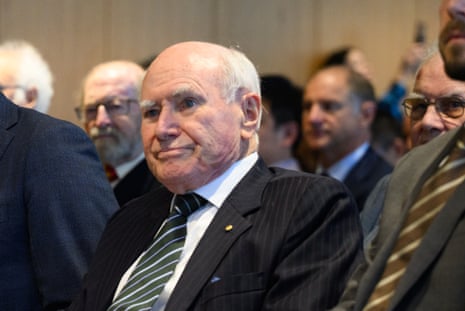
Reflecting on the era from the front lines of international diplomacy, former Prime Minister John Howard—who was physically present in Washington DC when the hijacked planes struck—shared his vivid recollections with the Australian Broadcasting Corporation. Howard recalled how the atmosphere in the American capital shifted instantaneously, noting that the world would never be the same.

"I just knew that it meant a lot to the whole world, and it certainly meant that I quickly came to realise just how important our association with the Americans was because this powerful country had been attacked in an atrocious, cruel manner," Howard told Radio National Breakfast.
The former prime minister forcefully defended his administration’s decision to invoke the ANZUS alliance and commit Australian troops alongside the United States in Afghanistan. Despite expressing personal misgivings over the chaotic nature of the final coalition withdrawal from the country years later, Howard maintained that joining the initial military intervention was the absolute right path to take. He noted that the White House at the time was eager for international solidarity, and looking back, he harbors no regrets regarding the deployment.
Defense Minister Richard Marles also shared his personal memories of September 2001, recalling how television broadcasts of fictional political drama The West Wing abruptly cut to live footage of smoke pouring from the North Tower of the World Trade Center, followed live on air by the second plane striking the South Tower. Marles noted that this singular event catalyzed decades of prolonged conflict in the Middle East, with more than 40,000 Australian service personnel ultimately deploying to Iraq and Afghanistan over subsequent years, and more than 40 losing their lives.
Political Fallout: The One Nation Cartoon Controversy
While the nation reflected on international security anniversaries, domestic politics in Canberra remained fiercely combative, dominated by fallout from a controversial political cartoon published by Pauline Hanson’s One Nation party.
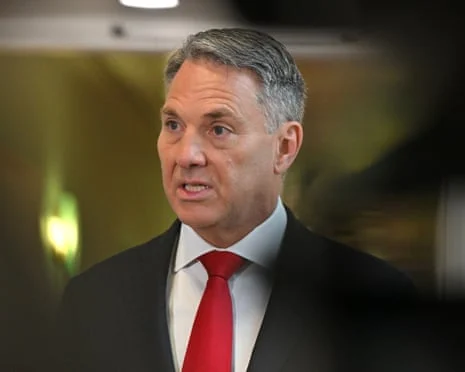
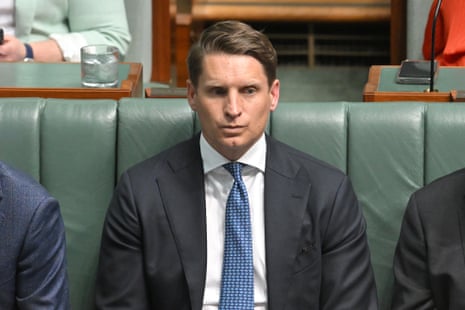
The cartoon, which targeted Liberal frontbencher and military veteran Andrew Hastie, drew widespread condemnation across party lines for labeling the federal politician a "traitor" on multiple occasions. Defence Minister Richard Marles pulled no punches during his morning media appearances, labeling the imagery and terminology "extremely tasteless" and demanding its immediate removal.
"Andrew Hastie is definitely not a traitor. I know him well and I’ve said this publicly. I very much honour the service that Andrew Hastie has given to our country, wearing our nation’s uniform," Marles said. Senior Liberal figures, including former Prime Minister Tony Abbott, independent Senator Jacqui Lambie, and the Returned and Services League of Australia (RSL), quickly added their voices to the chorus of condemnation, asserting that labeling any Australian veteran with such language crosses an unacceptable political boundary.
The controversy took a complicated twist as internal conservative alignments shifted. Andrew Hastie revealed he had received a direct communication and explanation from Nationals MP Barnaby Joyce, clarifying that Joyce had no prior knowledge of the offensive cartoon. Hastie publicly accepted Joyce’s explanation, redirecting his fierce criticism exclusively toward One Nation leader Pauline Hanson, whom he branded the sole "lying coward" responsible for the campaign.
Legislative Wins and Contentious Compromises: The Koala Park Deal
Away from personal political sparring, the federal parliament saw significant movement on environmental and climate policy. Climate Change and Energy Minister Chris Bowen declared yesterday a "good day" following a high-stakes legislative compromise that successfully secured the passage of a contentious koala national park plan in New South Wales.
The deal, which narrowly passed after a faction of Greens senators crossed the floor to vote with the government—sparking intense internal debate within the minor party—permits heavy industry to utilize the newly protected habitat zones to offset industrial carbon emissions. Under the framework, the state earns carbon credits for safeguarding native forests that had previously been designated for commercial timber logging.
While critics from across the political spectrum questioned the ecological implications of allowing industrial offsets within a conservation zone, Bowen defended the outcome as a pragmatic step forward. He argued that the policy successfully balances emissions reduction goals while providing a pathway for regional economic diversification and investment in communities historically reliant on the logging industry. Bowen also took a swipe at political opponents, remarking on the unusual alignment of votes between certain crossbench elements and major parties during the parliamentary showdown.
Corporate Accountability: Aged Care Refunds Issued
In the healthcare and social services sector, Opal Healthcare has moved to rectify compliance failures by refunding approximately $190,000 to nearly 350 residents following a sweeping federal review into the misuse of modern aged care standards.
The updated standards, which came into effect last November, were specifically designed to empower aged care residents by granting them greater autonomy over optional premium products and services. Under regulatory guidelines, amenities that were historically provided free of charge could not be monetized, though initial implementation rules lacked explicit statutory backing.
Months after the framework was introduced, widespread reports emerged revealing that several aged care providers had improperly billed vulnerable residents for essential daily amenities, including basic television and Wi-Fi access. In some instances, providers reportedly disconnected services entirely if residents declined to pay the supplementary fees.
The malfeasance prompted Aged Care Minister Sam Rae to formally notify the Aged Care Quality and Safety Commission, triggering a rapid regulatory investigation. Minister Rae reiterated that charging residents or stripping away fundamental comforts such as televisions and air conditioning is entirely unacceptable within the modern care system.
Technological Anxieties: Silicon Valley Whistleblowers and AI Safety
On the international technology front, public anxiety surrounding the rapid, unchecked advancement of artificial intelligence escalated sharply. Following apocalyptic warnings issued earlier in the week by a former researcher at AI startup Anthropic, a growing chorus of internal researchers and staff members have broken their silence to echo similar existential concerns.

The dissenting tech workers fear that the advanced foundational models currently under development could soon surpass human control, posing potential catastrophic risks to humanity within the decade. The whistleblowers asserted that many of their industry peers share these deep-seated fears but have remained silent out of professional anxiety or institutional pressure.
The growing wave of internal dissent quickly drew sharp retorts from high-profile technology figures. Elon Musk and various conservative commentators took to social media platform X (formerly Twitter) to dismiss the warnings as a coordinated "setup" and a calculated "psyop," underscoring the deep ideological and commercial divisions shadowing the global artificial intelligence boom.
As the week concludes, the convergence of historical remembrance, regulatory crackdowns, environmental compromises, and technological foreboding highlights an increasingly complex operational landscape for Australia and the broader global community.