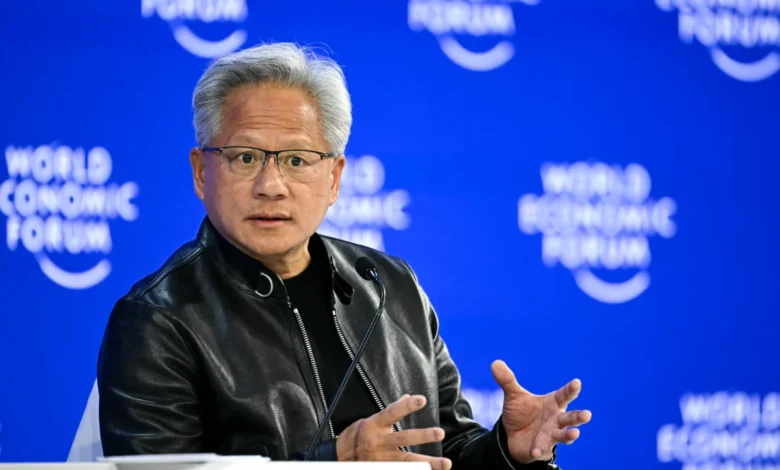
The All-In Summit, a high-profile gathering of Silicon Valley’s most influential venture capitalists and tech titans, became the stage for an unprecedented intersection of government policy and corporate strategy this week. As Nvidia CEO Jensen Huang stood before a capacity crowd, his conversation was interrupted by a direct phone call from President Donald Trump. In a move that bypassed traditional press office protocols, Huang broadcast the call over the auditorium’s sound system, placing the President on speakerphone to address the assembled tech elite, which included prominent investors such as Chamath Palihapitiya, Jason Calacanis, and White House advisors David Friedberg and David Sacks.
The interaction was not merely a ceremonial check-in; it served as a definitive public declaration regarding the current administration’s stance on the development of generative artificial intelligence. The call arrived at a moment of deep division within the technology sector, pitting those who advocate for rapid innovation against those calling for significant regulatory deceleration.
A Collision of Policy and Innovation
Prior to the interruption, the onstage panel had been engaged in a vigorous debate regarding the position of Anthropic CEO Dario Amodei, who has recently championed the idea of “slowing the pace” of AI development to ensure safety and alignment with human interests. This perspective has gained traction among industry leaders, including OpenAI’s Sam Altman and SpaceX’s Elon Musk, both of whom have suggested that unchecked growth poses existential risks.
Jensen Huang, representing the hardware backbone of the AI revolution, has consistently maintained that the drive for more efficient, high-performance computing must remain a national priority. When the President connected to the stage, he did not mince words regarding his position on the matter of slowing down.
“The great thing about life is Jensen can develop the most complex computer chip in the world… but he can’t figure out how to put you on speaker,” Trump joked, prompting laughter from the audience before his tone shifted to a more serious appraisal of the industry’s trajectory.
“They’re just playing right in the hands of a lot of people that don’t want to see it happen,” the President stated, referring to the proponents of slower development. “That could be political people. It could also be China. And we’re not going to let that happen. It’s a hoax.”
The Geopolitical Stakes of Data Center Expansion
The conversation touched upon a burgeoning national debate: the rapid expansion of data centers required to power the next generation of large language models. While the administration and allies such as Y Combinator CEO Garry Tan have characterized the local opposition to these facilities as a coordinated “psyop” designed to handicap American technological progress, the reality on the ground is increasingly complex.
The tension stems from a widening gap between high-level technological ambitions and localized infrastructure concerns. According to recent data from Gallup, public sentiment toward the construction of data centers has turned decidedly negative. The survey indicates that approximately 70% of Americans oppose the development of data centers within their immediate vicinity.
The concerns cited by the public are granular and immediate. Over 50% of respondents identified the strain on environmental resources—specifically water consumption and electricity load—as their primary grievance. Another 20% pointed toward the long-term impact on local property values, cost-of-living adjustments, and the degradation of local infrastructure. These data points suggest that the opposition is not necessarily a foreign-backed conspiracy, but rather a reflection of the tangible impacts of industrial-scale computing on local communities.
Chronology of the Friction
The current friction represents a turning point in the relationship between Silicon Valley and the White House. The timeline of this escalating tension can be traced through several key events:
- Early 2026: The administration formally appoints key tech figures, including David Sacks and David Friedberg, to the President’s Council of Advisors on Science and Technology, signaling a closer alignment between policy and the venture capital ecosystem.
- Mid-2026: Several states, including Massachusetts, pass stringent new regulations governing the clean power consumption of data centers, effectively slowing the deployment of hardware.
- Late 2026: Anthropic CEO Dario Amodei releases his white paper advocating for a measured pace in AI development, drawing support from high-profile figures who argue that the risk of catastrophic failure outweighs the benefits of rapid iteration.
- Present Day: The President publicly aligns with the “pro-growth” faction led by Nvidia, framing any efforts to curb AI development as a national security failure that could cede leadership to foreign adversaries.
Implications for the Tech Industry
The public alignment between the President and the CEO of the world’s most valuable chipmaker has significant implications for both domestic policy and international trade. By characterizing the caution surrounding AI as a “hoax,” the administration has effectively signaled that it will likely favor deregulation of power usage and land use for data centers.
Industry analysts suggest this could lead to a two-tier development environment. On one side, companies that align with the current administration’s push for uninhibited growth may find easier paths to permitting and government-backed infrastructure support. On the other, companies that emphasize safety, regulation, and cautious scaling—like Anthropic—may find themselves increasingly at odds with the federal government’s priorities.
Furthermore, the focus on China as the primary motivation for maintaining speed creates a binary choice for tech leaders. If the President’s framing becomes the dominant narrative, firms that continue to advocate for caution may be accused of effectively sabotaging national competitive advantages.
The Balancing Act
Despite the firm rhetoric displayed during the call, the President acknowledged the necessity of a pragmatic approach. “We have to be a little bit careful… We have to do things and we have to do them prudently, but that doesn’t mean we’re going to stop an industry,” Trump said. “So I’m with you all the way. I didn’t even know how you felt about it. I just hoped you felt the same way as me. We’re going to lead.”
This acknowledgement suggests that while the administration is intent on maintaining its lead in the AI arms race, there remains a legislative window for addressing the environmental and infrastructure concerns that currently plague the industry. Whether the industry can address the public’s quality-of-life concerns while simultaneously accelerating its hardware deployment remains the central challenge for executives like Huang.
As the All-In Summit concluded, the fallout from the call continued to ripple through both political and technological circles. For public relations professionals, the incident served as a stark reminder of the volatility inherent in modern tech-policy interactions. For investors and developers, the message was clear: the government is no longer a bystander in the development of AI, but an active participant with a vested interest in winning the race.
The coming months will likely see an increase in lobbying efforts as the industry attempts to reconcile the demands of local residents with the federal government’s mandate for rapid, expansive growth. As of now, the administration has set the tone for the next phase of the AI era, and it is a tone defined by aggressive competition and an unwavering commitment to maintaining American dominance at any cost.