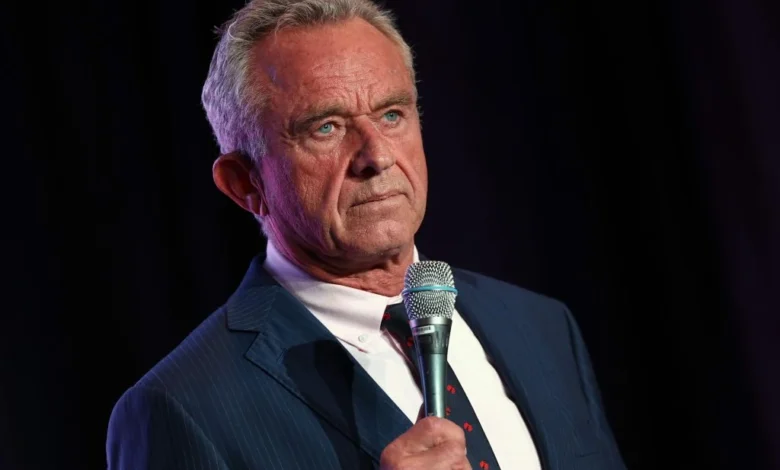
Health and Human Services Secretary Robert F. Kennedy Jr. is slated to headline an upcoming high-profile conference hosted by Children’s Health Defense (CHD), an organization he previously led. The decision to take center stage at the event marks a notable public turn, signaling a return to the roots of his activist career just as questions mount regarding his policy direction within the current administration.
The gathering, officially billed as a pursuit of a more perfect future, aims to rally figures within the broader health freedom movement to discuss perceived risks and opportunities within contemporary public health infrastructure. Scheduled for September 17, with an opening reception the night before, the event has drawn considerable attention due to both its roster of speakers and the timing relative to Kennedy’s confirmation and ongoing federal policy debates.
The Conference Roster and Financial Structure
The CHD conference brings together a familiar cohort of prominent vaccine skeptics, political figures, and media personalities. Alongside Kennedy, the agenda features prominent political figures such as Senator Ron Johnson of Wisconsin, who has maintained a vocal and consistent posture of vaccine skepticism throughout and following the COVID-19 pandemic, and Senator Rand Paul of Kentucky, a frequent critic of federal public health mandates and agency overreaches.
Additional speakers include Mark Gorton, president of the MAHA Institute—a policy organization aligned with the Kennedy network—and Jan Jekielek, a senior editor at the right-wing publication Epoch Times. Several members of the CHD leadership team, including Chief Executive Officer Mary Holland, are also scheduled to deliver remarks or participate in panel discussions.
Demand for the event appears robust among its target demographic. According to the organization’s official website, in-person registration tickets priced at $250 sold out well in advance. To accommodate continued interest, organizers introduced limited passes for seating in a designated overflow area of the main conference room priced at $125, alongside digital access passes for livestreaming the proceedings at $100.
Background and Chronology of Kennedy’s Transition to Public Office
The trajectory leading to Kennedy’s keynote appearance involves a carefully orchestrated series of organizational shifts and political maneuvering. For decades, Kennedy was the public face, founder, and chairman of Children’s Health Defense, using the platform to propagate claims linking childhood vaccines to autism, question the safety profiles of standard immunizations, and challenge the regulatory frameworks of agencies like the Food and Drug Administration (FDA) and the Centers for Disease Control and Prevention (CDC).
When Kennedy pursued a transition into official government service, culminating in his nomination to lead the Department of Health and Human Services (HHS), questions regarding his decades-long activism took center stage. Ahead of his formal appointment, Kennedy severed his official administrative and financial ties with CHD around the start of 2025.
During his high-stakes Senate confirmation hearings in early 2025, Kennedy sought to rebrand his posture for a broader legislative audience. Under questioning from lawmakers concerned about his history of vaccine hesitancy, Kennedy repeatedly insisted that he was pro-vaccine, casting his philosophy as an effort to ensure rigorous safety testing and transparent science rather than an outright rejection of immunization technology. However, public health experts, medical associations, and watchdog groups pointed out that these assertions contradicted a vast and documented record of anti-vaccine advocacy, public statements, and legal challenges spearheaded by Kennedy through CHD.
The Shift Back to Ideological Roots
Kennedy’s decision to headline the upcoming CHD conference represents a sharp pivot from the moderated tone he adopted during his confirmation process. By returning to keynote an explicitly anti-vaccine and health freedom organization, he appears to be openly embracing the core constituency and ideology that defined his career prior to entering federal service.
This public alignment with CHD comes on the heels of recent reports indicating friction at the highest levels of the executive branch. According to recent administration reporting, President Donald Trump has expressed frustration that Kennedy has not moved quickly enough to dismantle federal vaccine policies, restrict the availability of specific immunizations, or produce definitive federal findings supporting the long-debunked theory that vaccines cause autism.
The tension between political expediency during confirmation hearings and the pressure from his core base to deliver on anti-establishment campaign promises has placed Kennedy in a complex position. By stepping back onto the CHD stage, he reassures his traditional supporters that his ideological commitments remain unchanged, even as he oversees the sprawling apparatus of federal public health agencies.
Broader Impact and Policy Implications
The implications of Kennedy’s continued association with Children’s Health Defense extend far beyond optics, raising profound questions about the future direction of American public health policy. As the head of HHS, Kennedy holds immense influence over the nation’s health priorities, research funding allocations, regulatory approvals, and public messaging.
Public health professionals, epidemiologists, and pediatricians have expressed deep alarm over the normalization of vaccine skepticism from the highest levels of government. Decades of peer-reviewed scientific research have repeatedly discredited the hypothesis that childhood vaccines are linked to autism, affirming instead that vaccination programs remain one of the most successful and cost-effective public health interventions in modern history. Critics argue that when a cabinet secretary validates organizations that promote discredited medical claims, it undermines public trust in essential vaccines, potentially reversing decades of progress against preventable infectious diseases such as measles, pertussis, and polio.
Conversely, supporters of the health freedom movement view Kennedy’s leadership at HHS and his participation in events like the CHD conference as a historic opportunity to challenge what they characterize as overreaching federal bureaucracy and corporate capture within agencies like the FDA and CDC. For this constituency, the conference serves as a rallying point to push for sweeping structural reforms, expanded transparency, and alternative approaches to chronic disease management.
As the September 17 conference approaches, all eyes will be on Kennedy’s remarks to see how he bridges the gap between his official role as a cabinet secretary charged with protecting public health and his long-standing alignment with an activist movement dedicated to dismantling the scientific consensus underpinning modern immunization programs.