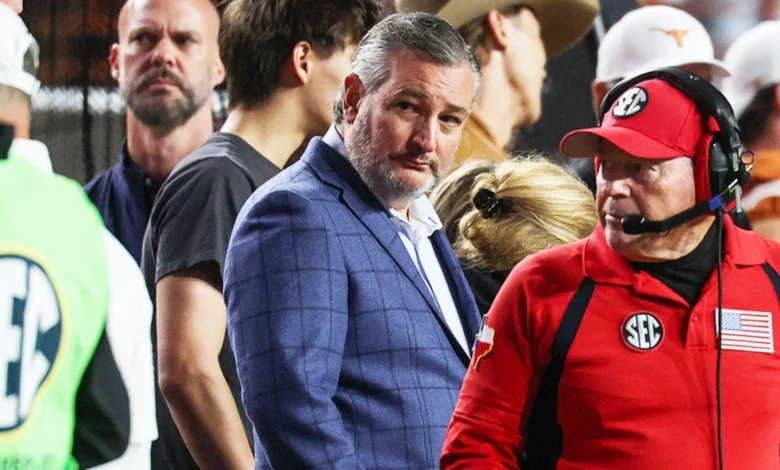
The United States Senate has taken a definitive step toward establishing a federal regulatory framework for collegiate athletics, signaling a major shift in how the nation governs the rapidly evolving landscape of name, image, and likeness (NIL) rights. By advancing the Protect College Sports Act, lawmakers are attempting to impose order on a system that has been described by both sides of the aisle as being in a state of chaotic transition. The bipartisan legislation, spearheaded by Sen. Ted Cruz, R-Texas, and Sen. Maria Cantwell, D-Wash., represents a significant effort to curb the unpredictability that has characterized the NCAA since the 2021 Supreme Court ruling in Alston v. NCAA, which fundamentally altered the amateurism model.
The Senate’s procedural move to move the bill to its next phase underscores the mounting pressure from stakeholders, universities, and athletic conferences to provide legal certainty. As the current landscape faces ongoing litigation and a fragmented patchwork of state laws, the proposed federal standard seeks to replace the existing, inconsistent regulations with a uniform set of national rules.
The Origins of the Modern Collegiate Crisis
The current turmoil in college sports traces its roots to June 2021, when the Supreme Court issued its landmark ruling in NCAA v. Alston. The decision affirmed that the NCAA could not limit education-related benefits for student-athletes, effectively ending the organization’s long-standing prohibition on athletes profiting from their own name, image, and likeness. While the ruling was hailed as a victory for athletes’ rights, it also triggered a domino effect.
Without a clear federal mandate, individual states began passing their own NIL laws, leading to a situation where a student-athlete in one state might be subject to vastly different financial and recruiting regulations than a peer in another. This regulatory fragmentation, coupled with the rapid expansion of the transfer portal, has created an environment where recruiting cycles, compensation packages, and contract terms vary wildly, leading to what many administrators call "the Wild West" of college sports.
Key Provisions of the Protect College Sports Act
The Protect College Sports Act is designed to consolidate authority and create a predictable environment for both institutions and athletes. The core pillars of the legislation include:
- Uniform Eligibility Framework: The bill proposes a standardized five-year eligibility limit, designed to curb the frequent movement of athletes and promote academic stability.
- Transfer Portal Reform: The act introduces stricter guardrails on the transfer portal, attempting to mitigate the instability caused by constant roster turnover.
- Federal NIL Standards: By establishing a single national standard, the bill aims to override the existing state-by-state patchwork of NIL legislation, providing a predictable environment for boosters, collectives, and athletes.
- Recruiting and Tampering Restrictions: The legislation outlines specific windows and protocols for contact between institutions, agents, and prospective student-athletes, aiming to reduce the aggressive and often predatory recruiting tactics that have become common.
- Revenue-Sharing Caps: A controversial component of the bill, the revenue-sharing cap seeks to limit the amount of money flowing directly to athletes, a measure supported by many university athletic departments but heavily criticized by labor advocates.
The Growing Opposition: A Clash of Ideologies
The legislation has faced significant opposition, not only from the powerful conferences that govern major college sports—such as the SEC and Big Ten—but also from within the halls of Congress. Critics argue that the bill’s provisions, particularly the revenue-sharing caps and antitrust exemptions, unfairly strip athletes of their bargaining power.
Sen. Chris Murphy, D-Conn., has been one of the most vocal opponents, characterizing the push for regulation as an attempt to suppress the newfound economic leverage of student-athletes. On social media, Murphy noted that the "chaos" cited by supporters of the bill is, in his view, a direct result of athletes finally gaining a seat at the table. He argued that the current legislative push is an attempt to revert to a model where power remains concentrated in the hands of coaches and administrators.
Furthermore, the Congressional Black Caucus (CBC), led by Rep. Yvette Clarke, D-N.Y., has formally withheld support for the measure. In a statement, the caucus expressed deep frustration that Congress is prioritizing the stability of athletic institutions while, in their view, failing to address urgent civil rights concerns, such as voting rights. The CBC argued that it is inappropriate to grant "sweeping new federal protections" to institutions that have remained largely silent on broader issues of racial equity and political representation.
Legislative Defense and Justification
In response to the mounting criticism, Sen. Ted Cruz has maintained that federal intervention is a necessity of Congress’s own making. During a recent press conference, Cruz argued that decades of federal antitrust litigation have eroded the rules that previously held the collegiate system together. He asserted that without legislative action, the courts will continue to dismantle the structure of college sports, eventually leading to a complete breakdown of the amateur model.
Sen. Maria Cantwell, while acknowledging the validity of her colleagues’ concerns regarding civil rights, defended the bill on the Senate floor. "Let me be clear, voting rights are sacred, and I will stand in that fight with anyone," Cantwell said. "But I cannot agree that the way to wage it is to hold thousands of student-athletes’ scholarships, health protections, and future hostages to a Supreme Court decision they did not make."
Implications for the Future of Collegiate Athletics
The implications of the Protect College Sports Act are far-reaching. If passed, the legislation would represent the most significant federal intervention in the history of American college sports. The bill’s passage would likely trigger a wave of new litigation, as stakeholders on both sides of the issue test the limits of the new federal authority.
For universities, the act offers the promise of stability, potentially reducing the massive legal and administrative costs associated with navigating varying state laws and constant transfer portal turnover. For student-athletes, the impact is more nuanced. While the bill aims to provide health protections and more formal structures, it simultaneously limits the scope of their financial potential and their ability to negotiate in a truly free market.
Data from the past three years of NIL activity suggests that the market for student-athletes has become a multi-billion-dollar industry. With the rise of "collectives"—organizations that pool donor money to pay athletes—the distinction between a student-athlete and a professional employee has blurred. Critics of the bill argue that by imposing a cap on revenue-sharing, Congress is effectively attempting to turn back the clock on the economic reality of the 21st-century collegiate athlete.
Chronology of Legislative Developments
- June 2021: The Supreme Court rules in NCAA v. Alston, opening the door for athletes to profit from NIL.
- 2021–2024: A surge of state-level NIL laws creates a fragmented regulatory environment; the transfer portal leads to unprecedented roster instability.
- Early 2026: Sen. Ted Cruz and Sen. Maria Cantwell introduce the Protect College Sports Act, aiming to establish federal oversight.
- Mid-2026: Opposition grows from major athletic conferences, the Congressional Black Caucus, and progressive lawmakers, citing concerns over antitrust exemptions and athlete rights.
- Late 2026: The Senate successfully moves the bill to its next phase, clearing a procedural hurdle and setting the stage for a potential floor vote later in the week.
Conclusion
As the Senate prepares for the next stage of debate, the tension between maintaining the traditional spirit of collegiate athletics and adapting to the economic demands of the modern era remains the defining conflict. Whether the Protect College Sports Act serves as a necessary stabilizer or an overreach of federal power is a question that will likely be debated for years to come. Regardless of the outcome, the days of the NCAA governing itself without significant federal oversight appear to be coming to an end. The path forward remains uncertain, but the legislative momentum suggests that a new chapter for college sports is imminent.