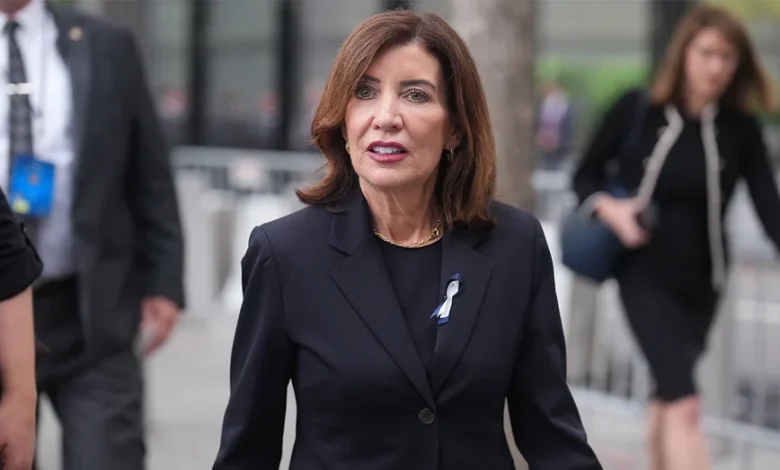
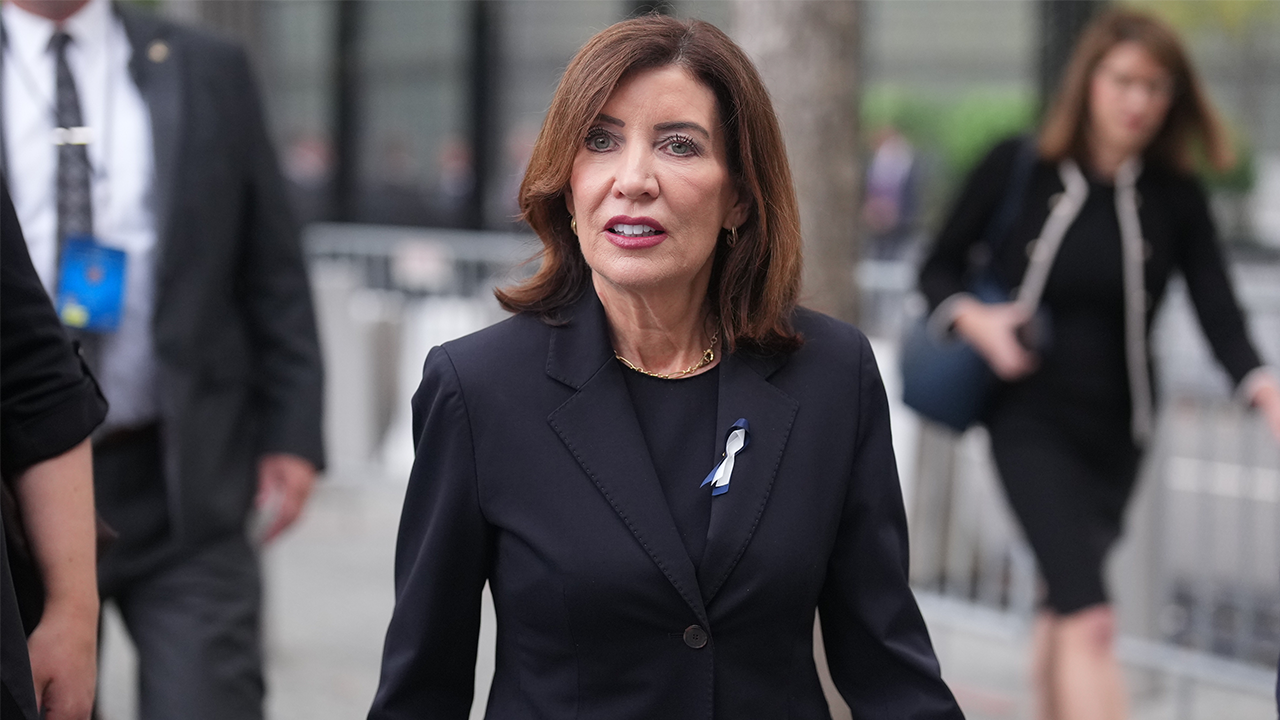
New York Democratic Governor Kathy Hochul signed a controversial piece of legislation into law last week that grants the state’s Attorney General, Letitia James, broad authority to investigate and levy fines against entities accused of distributing communications that deceptively mimic the appearance or authorization of a labor union. The law, which took effect immediately upon the governor’s signature, creates a new legal framework for addressing what proponents describe as fraud against union members and what critics condemn as a calculated strike against free speech and the dissemination of information regarding labor rights.
Under the provisions of the new statute, the Office of the Attorney General is empowered to launch investigations, issue subpoenas, and seek judicial injunctions against any organization—including those based outside of New York—that is deemed to have engaged in "deceptive practices" intended to mislead public employees. Courts are now authorized to impose civil penalties of up to $1,000 per violation.
The Legislative Context and Labor Landscape
The enactment of this bill comes amid a shifting landscape for public-sector unions in the United States. Since the 2018 Supreme Court landmark ruling in Janus v. AFSCME, the financial model of public-sector unions has faced significant disruption. The Court ruled that public-sector employees cannot be compelled to pay union dues or agency fees as a condition of employment, as such payments may constitute coerced speech on matters of public concern.
Following this decision, various advocacy groups—most notably the Freedom Foundation—began aggressive outreach campaigns aimed at educating public employees, including teachers and government staff, about their rights to opt out of union membership and cease the payment of dues. For the unions, these campaigns represent an existential threat to their revenue streams and, by extension, their political influence.
The Conflict: Freedom Foundation vs. New York State
The Freedom Foundation has emerged as the primary antagonist to the new legislation, characterizing the law as a direct retaliation against its successful outreach efforts. According to internal data from the foundation, approximately 7,500 public employees in New York have utilized their resources to terminate their union memberships, with over 1,400 departures recorded in the current year alone.
Aaron Withe, CEO of the Freedom Foundation, has been vocal in his condemnation of the law, labeling it a "hit job" designed to stifle the organization’s ability to inform workers of their constitutional rights. "This isn’t about protecting anyone," Withe stated in a recent interview. "It exists because government unions in New York are terrified of an inconvenient fact: when public employees learn they don’t have to pay union dues, a lot of them stop. Instead of making their case to their own members, union bosses ran to their friends in the legislature and got them to write a law that makes speech illegal."
The foundation argues that its materials are not deceptive, but rather factual summaries of legal rights established by the Supreme Court. Withe further noted that the organization is prepared to challenge the law in court, drawing parallels to similar legislation in Oregon, which the group is currently contesting in the 9th U.S. Circuit Court of Appeals.
Official Stance and Labor Union Perspectives
Governor Kathy Hochul and her administration have defended the bill as a necessary measure to protect workers from fraudulent actors. In a series of public remarks and social media posts, the governor positioned the legislation as part of a broader commitment to the state’s labor history.
"New York State gave birth to the labor movement," Governor Hochul stated on social media following the signing. "Over the last five years, I have continued that legacy by fiercely supporting the men and women of labor. Today marks a new day with even more protections, because I’ll never stop fighting for our workers."
The New York State American Federation of Labor and Congress of Industrial Organizations (NYS AFL-CIO) has formally endorsed the legislation. Mario Cilento, president of the NYS AFL-CIO, praised the move, emphasizing that the law serves to "hold individuals accountable for fraudulently claiming to be union representatives." Supporters of the bill argue that in an era of sophisticated digital communication, workers are increasingly vulnerable to "spoofing" and other deceptive practices that could trick them into disclosing personal data or making financial decisions under false pretenses.
Broader Implications for Free Speech
The debate surrounding the bill highlights a growing tension between state-level regulatory authority and First Amendment protections. Legal experts observing the case suggest that the definition of "deceptive" will be the primary battleground in future litigation. If the Attorney General’s office utilizes the law to target communications that are political or informational in nature, rather than strictly fraudulent, the law could face significant challenges under the "overbreadth" doctrine, which prevents laws from being so broad that they chill constitutionally protected speech.
Ryan Walters, the former superintendent of Oklahoma public schools and CEO of the Teacher Freedom Alliance, described the law as a dangerous precedent for other states. "This is a canary in the coal mine moment," Walters stated. "If New York is allowed to do this—a governor operating as a tyrant doing the behests of the teachers’ unions—it’s going to go on across the country. Where New York goes with this is going to be where the other blue states follow."
Walters further argued that the legislation highlights the symbiotic relationship between Democratic leadership and public-sector unions. "They have to control the school system to continue to control the country," Walters asserted. "Despite elections, they still control these education systems at large. That’s why the teachers’ unions are enemy number one of progress in this country."
Chronology and Legislative Path
The legislation was part of a larger, three-bill package signed by Governor Hochul, all aimed at bolstering labor rights in New York. The process moved relatively quickly through the legislature, drawing support from a coalition of labor-aligned lawmakers who viewed the measure as an essential guardrail against what they characterize as "predatory" anti-union groups.
- Pre-2018: Public-sector employees in many states were required to pay "fair share" fees to unions regardless of their membership status.
- 2018: The U.S. Supreme Court issues its ruling in Janus v. AFSCME, declaring mandatory union fees unconstitutional.
- 2018–2025: Advocacy groups, including the Freedom Foundation, launch widespread campaigns across the U.S. to inform public workers of their right to leave unions.
- Mid-2025: New York legislative bodies introduce a bill to regulate "deceptive communications" related to unions, citing constituent reports of misleading mailers and digital outreach.
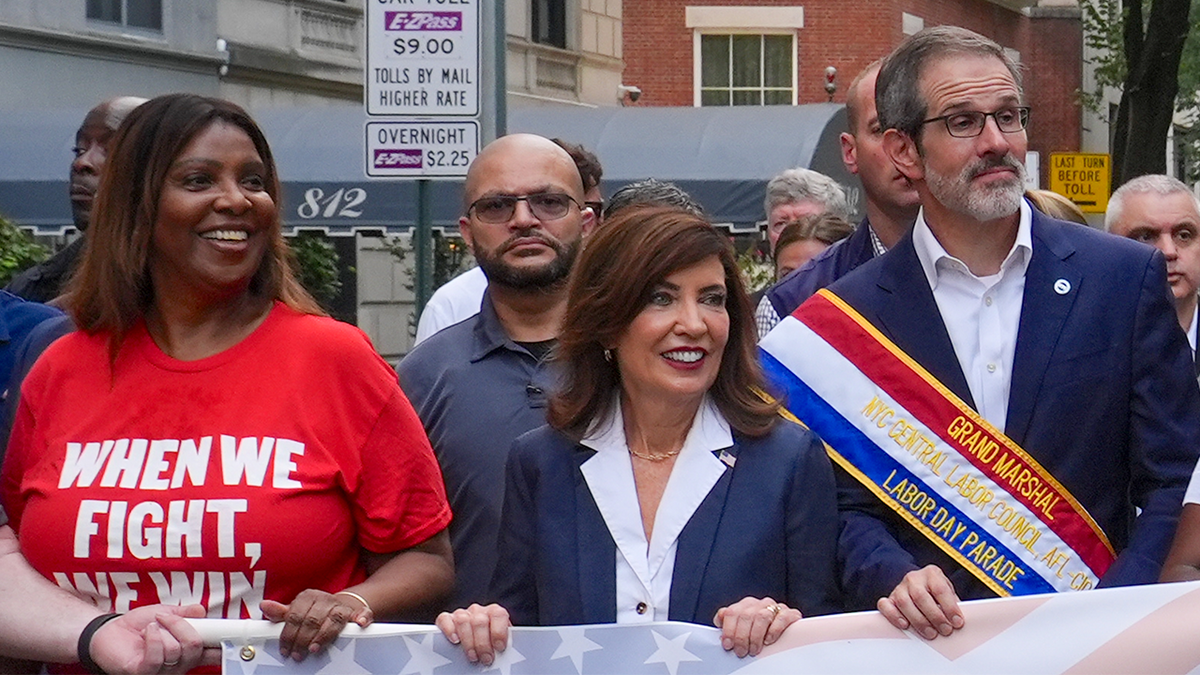
- September 2025: Governor Kathy Hochul signs the bill into law, alongside other labor-related legislation, during a public event coinciding with Labor Day celebrations.
- Immediate Aftermath: The Freedom Foundation announces its intent to challenge the constitutionality of the law, mirroring their ongoing litigation against similar statutes in Oregon.
Analytical Perspective: The Future of Union-State Dynamics
The implementation of this law is likely to have significant long-term consequences for labor policy in the United States. By centralizing enforcement in the office of the Attorney General, New York has created a high-stakes environment for any organization seeking to influence the membership rolls of public unions.
For the unions, the law provides a shield against the "churn" of membership losses that has defined the post-Janus era. For critics, the law represents an encroachment on the marketplace of ideas. As the case moves toward potential judicial review, the fundamental question will remain: at what point does the state’s interest in protecting consumers from fraud transition into the suppression of political dissent?
The outcome of the pending legal challenges will likely dictate whether other states follow New York’s lead or whether the courts will deem the legislation an unconstitutional restriction on free expression. For now, the new law stands as a clear indicator of the intensity of the ongoing battle over the future of the American labor movement and the degree to which state governments will intervene to preserve the traditional power structures of organized labor.