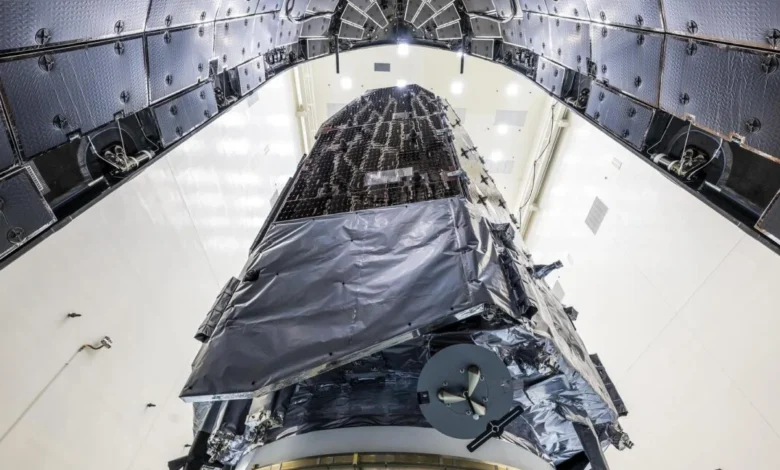
The $4.3 billion Nancy Grace Roman Space Telescope is currently gliding toward its permanent observation post a million miles from Earth on a trajectory so precise that NASA officials have confirmed its onboard fuel reserves will last for at least 22 years of science operations. Originally designed with a baseline mission lifetime of five years—with a potential five-year extension—the observatory now boasts more than double its expected operational lifespan thanks to an impeccably accurate launch and exceptionally efficient orbital insertion maneuvers executed by SpaceX and NASA’s flight dynamics teams.
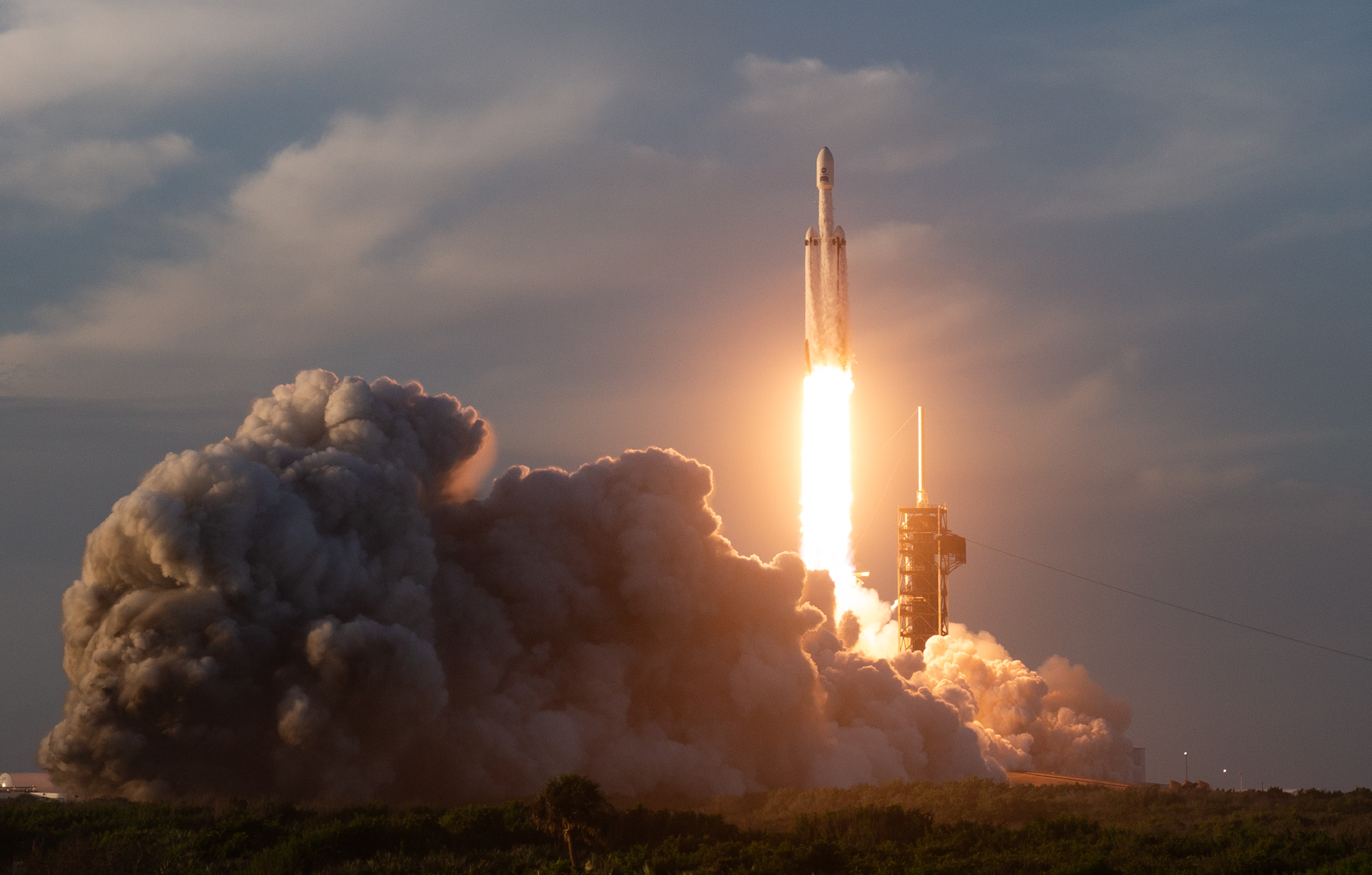
Launched on August 30 from NASA’s Kennedy Space Center in Florida aboard a heavy-lift SpaceX Falcon Heavy rocket, the next-generation observatory kicked off an ambitious mission to dramatically widen humanity’s observational window into the cosmos. While its primary mirrors and optical instruments match the resolution of the legendary Hubble Space Telescope, Roman features a field of view that is 100 times larger. Astronomers calculate that the new observatory will be able to survey in a single month what would take Hubble an entire century to observe.
Anatomy of a Precision Launch
The extraordinary fuel savings began on the launch pad. During the mission confirmation review in 2020, NASA engineers budgeted for a maximum allowable spacecraft weight to ensure adequate margins, predicting that the observatory would push close to its structural limits upon completion. However, rigorous mass management throughout the integration and testing phases meant the spacecraft finished construction significantly lighter than anticipated.
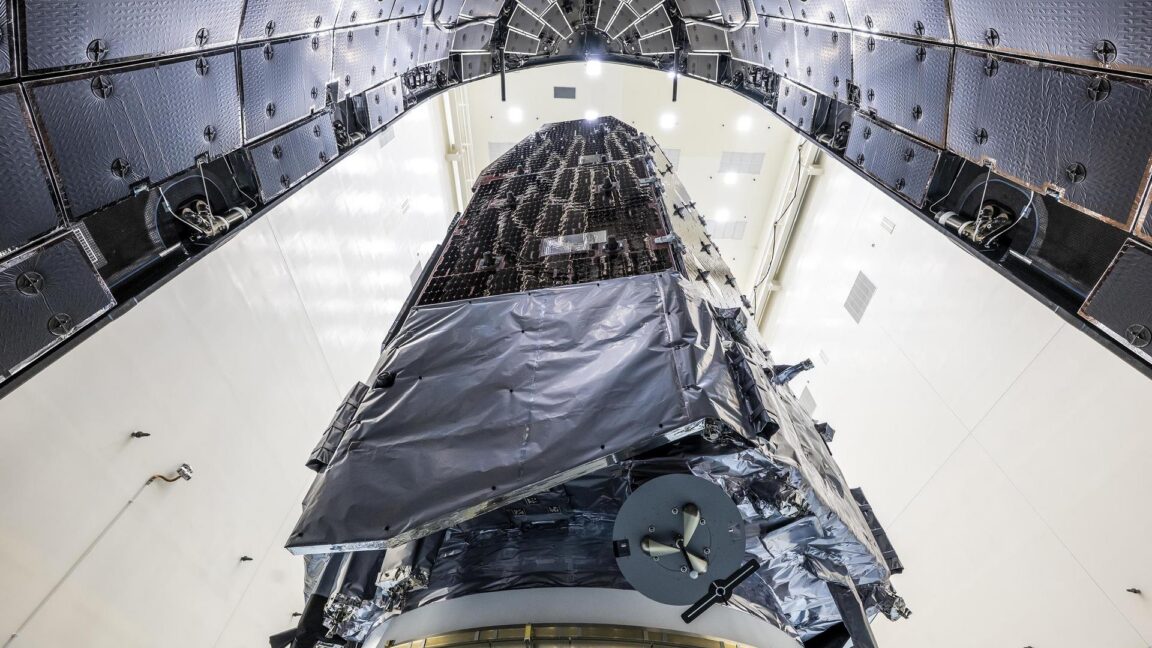
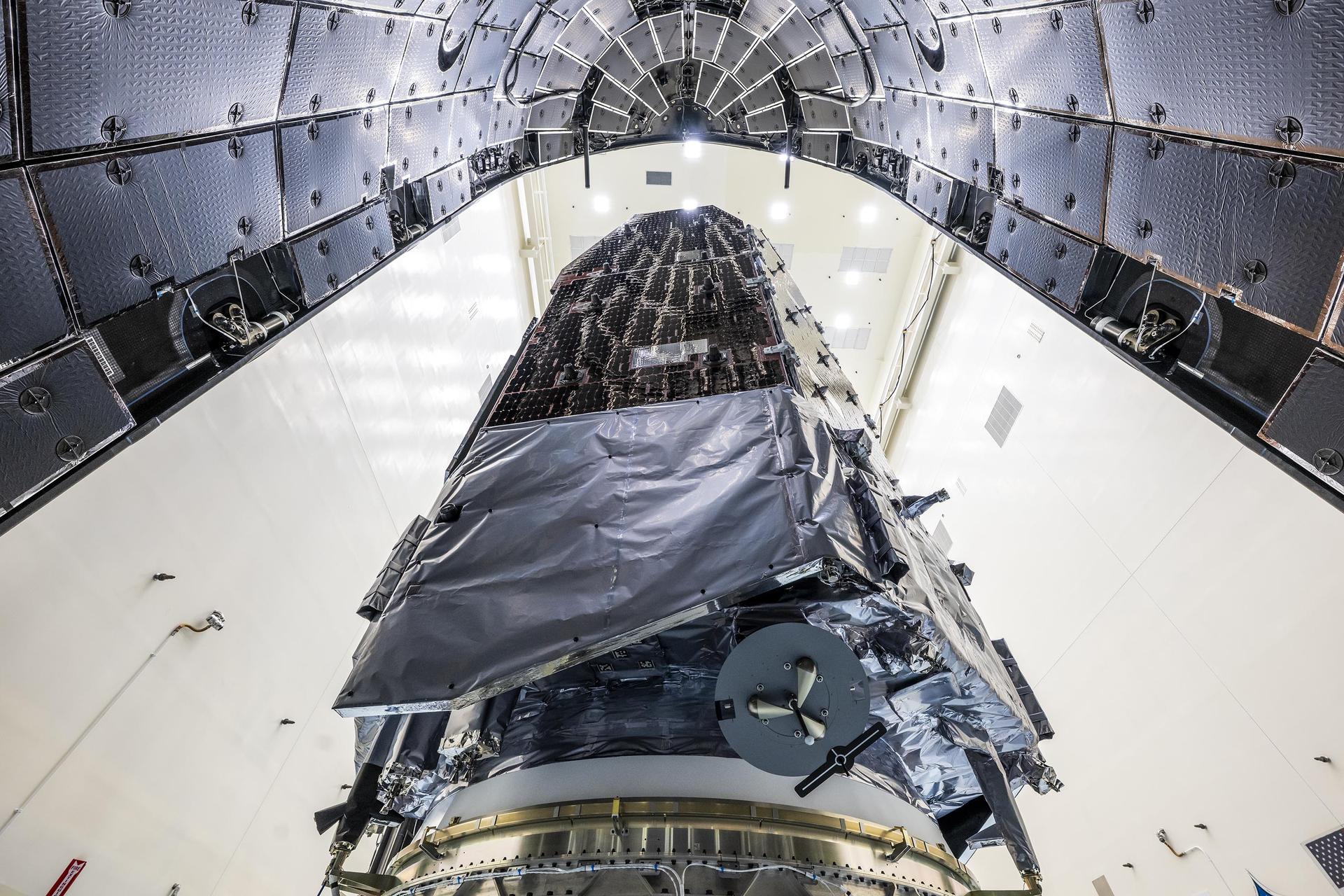
At final integration, Roman weighed 17,760 pounds (8,056 kilograms)—roughly two tons lighter than its maximum allowable weight limit. This unexpected mass reduction allowed ground crews at the Kennedy Space Center to fill the spacecraft’s 24 hydrazine thruster fuel tanks to absolute capacity, loading 290 gallons (1,100 liters) of propellant. Even fully loaded with fuel, the observatory tipped the scales at 20,224 pounds (9,173.5 kilograms), remaining a safe half-ton below the rocket’s lift capacity.
When the SpaceX Falcon Heavy separated from its payload, it delivered the telescope onto an optimal trajectory toward the Sun-Earth L2 Lagrange point—a gravitationally stable region approximately one million miles from Earth. Because the launch insertion was executed with pinpoint accuracy, the first major trajectory correction burn performed one day into the flight consumed a mere 40 pounds (18 kilograms) of hydrazine, a fraction of the preflight allocation of 441 pounds (200 kilograms).
Jamie Dunn, center director at NASA’s Goddard Space Flight Center, praised the cooperative effort in a formal statement. As a result of exquisite planning by the orbital dynamics team, brilliant execution by the operations team, and a precise launch from SpaceX, Roman has secured fuel for at least 22 additional years of scientific discovery. This mirrors the historic windfall experienced by the James Webb Space Telescope, which saw its operational lifespan similarly doubled following an exceptionally clean launch aboard an Ariane 5 rocket in December 2021.
Journey to the L2 Lagrange Point and Station-Keeping Mechanics
The Nancy Grace Roman Space Telescope is currently navigating a slow, multi-month cruise toward its designated destination: a quasi-halo orbit around the Sun-Earth L2 Lagrange point. Reaching this gravitationally balanced sweet spot will take approximately three months.
Following the initial course-correction burn, mission controllers are preparing a second minor trajectory adjustment later this month, followed by a final orbital insertion maneuver scheduled for early December. NASA project engineers anticipate that these upcoming maneuvers will also consume significantly less propellant than originally modeled, preserving additional reserves for future contingencies.
Once established in its operational orbit, Roman will execute routine station-keeping burns roughly every 28 days to maintain its precise position. Additionally, the spacecraft’s propulsion system will be utilized periodically to unload angular momentum from its six reaction wheels, which serve as the primary mechanism for adjusting and maintaining the telescope’s pointing orientation.
Because propellant usage dictates the ultimate expiration date of most space telescopes, securing a 22-year supply transforms the scientific outlook of the mission. It ensures that Roman can complete its primary surveys of dark energy and exoplanets without the looming threat of premature decommissioning due to fuel exhaustion.
Refueling Preparations and Servicing Architecture
Despite the massive fuel windfall, NASA engineers adhered to original mission requirements that mandate a degree of in-space serviceability. Unlike the Hubble Space Telescope—which has been visited and serviced five times by crewed Space Shuttle missions since its 1990 launch—Roman is stationed a million miles away, rendering human intervention impossible with current flight technology.
However, recognizing that propellant would ultimately be the life-limiting resource for the observatory, NASA designed Roman to be the first space observatory capable of potential uncrewed robotic refueling.
To facilitate this futuristic capability, engineers installed a specialized grapple fixture on the bottom of the spacecraft, matching the standard interface used by robotic arms on the International Space Station. The exterior of the telescope is also outfitted with visual navigation aids, including a retroreflector and external reference points designed to guide an automated servicing vehicle during final approach and docking operations.
Jackie Townsend, Roman project manager at NASA Goddard, emphasized the intentionality of the design. While Roman is not nearly as modular or accessible as Hubble was to spacewalking astronauts, it possesses all the necessary infrastructure for a rendezvous, capture, and docking sequence with a hypothetical robotic servicer.
The thermal blanketing surrounding Roman’s fueling port was custom-engineered with a magnetic closure system, allowing a robotic manipulator to easily peel back the insulation, connect to the fuel valve, replenish the hydrazine, and reseal the port.
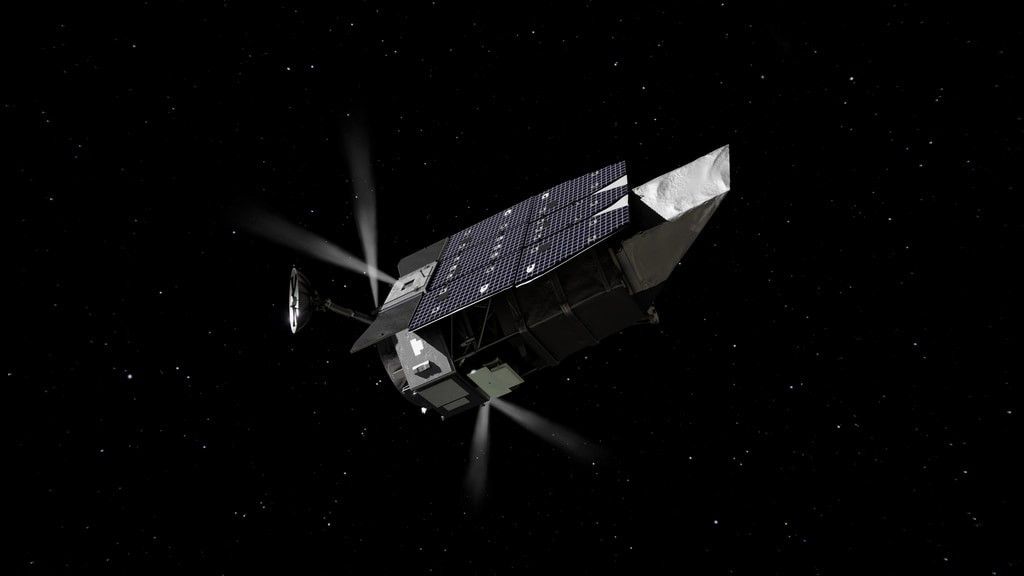
While no operational commercial or government spacecraft currently exists with the capability to travel to the L2 Lagrange point to execute such a maneuver, the aerospace industry is rapidly advancing satellite-servicing technologies. Several private American aerospace firms are developing orbital refueling platforms primarily geared toward low-Earth and geosynchronous national security missions. Furthermore, international milestones—such as a successful autonomous docking between two Chinese spacecraft in geosynchronous orbit to conduct satellite-to-satellite refueling—demonstrate that the foundational technologies for robotic servicing are actively maturing.
Scientific Instruments and Operational Outlook
As the spacecraft continues its interplanetary cruise, all major onboard systems are performing well above initial thresholds. On September 1, engineers successfully opened the telescope’s aperture cover, allowing starlight to illuminate its primary mirror for the very first time.
Amit Kshatriya, NASA’s associate administrator, provided an optimistic update during a presentation at the American Astronautical Society’s Glenn Space Technology Symposium, confirming that preliminary checkout procedures have yielded unmitigated success. Data streamed from the Wide Field Instrument—which houses 18 high-resolution near-infrared detectors capable of producing 300-megapixel images—confirms that the mirrors and charge-coupled devices are successfully chilling down to their required cryogenic operating temperatures. False-current and connectivity diagnostics have returned entirely green margins across all 18 detectors.
Roman’s secondary instrument, a specialized coronagraph designed to capture direct images of planets orbiting distant stars, has similarly passed early functional checkouts with flying colors.

The primary scientific objectives of the Nancy Grace Roman Space Telescope center on solving some of the greatest mysteries in modern astrophysics. By mapping wide swaths of the cosmos with unprecedented speed and depth, the telescope will allow astronomers to trace the distribution of galaxies and dark matter filaments across the universe. This vast cosmic cartography is expected to shed light on dark energy, the mysterious repulsive force responsible for accelerating the expansion of the universe.
With its fuel tanks filled to the brim and its optical systems fully functional, the mission team is now looking ahead to the formal commencement of science operations. As Kshatriya noted to symposium attendees, when the telescope captures its official "first light" images, it will mark the beginning of a historic era in space exploration—one now guaranteed to last for decades.