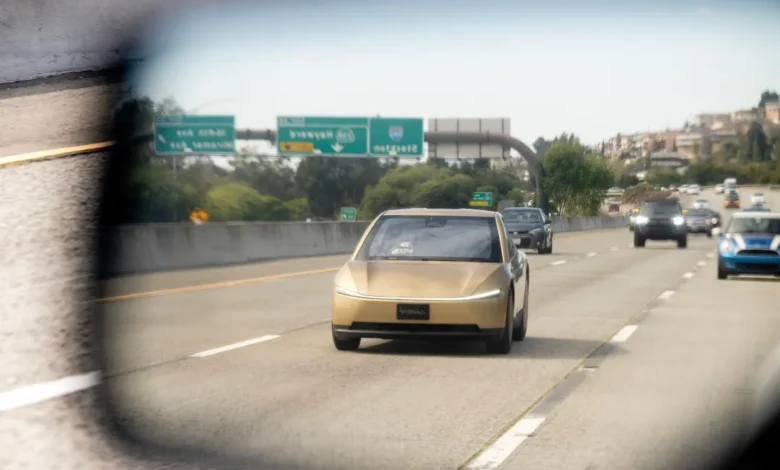
Tesla has officially initiated the pre-order phase for its highly anticipated autonomous vehicle, the Cybercab, marking a significant strategic shift for the automaker. As of Friday, November 14, 2026, a select group of customers has been granted the opportunity to secure a unit of the golden-hued, driverless vehicle for personal ownership. This development follows months of speculation regarding how Tesla would bridge the gap between its legacy consumer vehicle business and its long-term ambition to dominate the autonomous ride-hailing market.
The Cybercab, first teased by Tesla leadership as a cornerstone of the company’s "Master Plan," represents a radical departure from traditional automotive design. By removing the steering wheel and pedals entirely, Tesla is betting that the regulatory environment and its Full Self-Driving (FSD) software have matured enough to handle unsupervised operation. However, the initial rollout is characterized by strict operational limitations, reflecting both the nascent state of autonomous legislation and the complexities of scaling such technology.
Operational Constraints and Geographic Limitations
While the prospect of owning a dedicated robotaxi is compelling for early adopters, the current terms of service underscore the realities of contemporary autonomous technology. Prospective buyers have discovered that the purchase comes with stringent requirements. According to reports from early users, including prominent tech commentator Marques Brownlee, buyers must be prepared to accept delivery in specific Texas-based metropolitan areas.
Furthermore, the vehicle’s utility is strictly tethered to "geofenced" zones. These are pre-mapped regions where Tesla has verified that its sensor suite and neural networks can operate without human intervention. Ashok Elluswamy, a key figure in Tesla’s Autopilot and AI division, clarified on social media that the Cybercab will function in the same unsupervised, geofenced capacity as the broader Robotaxi network, effectively acting as a private, automated transit pod for the owner within those approved boundaries. The delivery of these units is currently slated for December 2026, creating a tight window for both the company to finalize manufacturing and for regulators to sign off on the required safety certifications.
Pricing Structure and Economic Implications
The base price for the Cybercab is set at $29,990, an aggressive entry point intended to compete with low-cost mobility solutions. However, the total cost of ownership is more complex. Initial order pages indicated an additional $299 monthly subscription fee for the operation of the vehicle’s autonomy stack and connectivity services.
This monthly recurring revenue model has drawn immediate scrutiny from both industry analysts and the CEO himself. Elon Musk, addressing feedback regarding the high subscription cost, suggested that the current $299 figure is likely to be revised downward. Musk indicated that the fee should ideally align with the pricing of the company’s existing Full Self-Driving (FSD) and connectivity packages for other Tesla models, which typically hover around $115 per month. The discrepancy between the initial launch figure and the CEO’s public commentary highlights the fluid nature of Tesla’s pricing strategy as it navigates the transition to a software-defined business model.
Strategic Pivot: From Cybertruck to Cybercab
The push for the Cybercab coincides with a major recalibration of Tesla’s manufacturing priorities. On November 6, 2026, Tesla announced it would cease production of the Cybertruck by the end of 2027. This decision, while surprising to some, reflects the company’s broader move to optimize factory capacity for its high-margin autonomous fleet.

The Cybertruck, which launched with significant fanfare and polarized public reception, ultimately failed to meet the volume and profitability targets originally projected by the company. By reallocating resources—including labor, assembly line footprint, and supply chain logistics—toward the production of the Cybercab, Tesla is signaling a decisive move away from the enthusiast-focused light truck market toward a service-oriented, high-volume autonomous future. This transition is not merely logistical; it is a fundamental shift in the company’s identity, moving from a manufacturer of high-performance consumer cars to a provider of autonomous infrastructure.
The Regulatory and Technological Landscape
The primary hurdle for the widespread adoption of the Cybercab remains the patchwork of local, state, and federal regulations. While Musk has stated that the vehicle will be available nationwide as regulatory approvals are secured, the reality is that the United States currently lacks a unified federal framework for the deployment of steering-wheel-less vehicles.
Companies like Waymo and Cruise have spent years navigating this legal maze, often restricted to specific cities where they have cultivated strong relationships with local transit authorities. Tesla’s attempt to bring a consumer-owned autonomous vehicle into this space introduces new variables. Unlike fleet-operated robotaxis, which are maintained and supervised by a central entity, the personal ownership model places the responsibility of maintenance, software updates, and liability on the individual buyer. The success of this model will depend on whether Tesla can maintain the same safety standard across a distributed fleet of privately owned vehicles as it does with a centralized, company-monitored fleet.
Fact-Based Analysis of the Market Shift
The move to authorize personal use of the Cybercab is a calculated risk. By allowing customers to own the vehicle, Tesla is effectively outsourcing a portion of the data-gathering and market-penetration effort. Every mile driven by a customer-owned Cybercab provides invaluable real-world training data for Tesla’s neural networks, potentially accelerating the development of its FSD software.
However, the implications for the automotive insurance industry and municipal traffic departments are significant. If a vehicle is operating autonomously at the behest of an owner, defining liability in the event of an accident becomes a complex legal challenge. Furthermore, the reliance on geofencing suggests that the "nationwide" promise made by Tesla’s leadership is still in a long-term development phase. Consumers should expect that for the foreseeable future, the "personal use" of the Cybercab will be confined to the sunbelt regions and tech-forward urban environments where climate and regulatory conditions are most favorable.
Chronology of the Cybercab Development
- October 2026: Initial unveil of the Cybercab, showcasing the vehicle’s distinct design and lack of traditional controls.
- November 6, 2026: Tesla announces the sunsetting of the Cybertruck production line to clear space for increased autonomous vehicle manufacturing.
- November 14, 2026: Tesla opens the pre-order portal to select customers, revealing the $29,990 price point and the $299 monthly subscription fee.
- November 14, 2026 (Evening): Public response and subsequent clarification from leadership regarding subscription pricing and geographic restrictions.
- December 2026 (Projected): Expected initial delivery window for the first wave of pre-ordered Cybercabs.
Looking Ahead
As of mid-November 2026, the industry remains in a state of observation. Tesla’s decision to transition from the niche market of the Cybertruck to the mass-market potential of the Cybercab is one of the most significant pivots in the history of the modern automotive industry.
While the technological capability of the vehicle appears to be meeting the requirements for limited, supervised operation, the path to full autonomy—where a user can summon a vehicle in any location, at any time—remains an ongoing challenge. For the present, the "select customers" participating in this initial launch are effectively serving as the vanguard of a new era of transportation. Whether this model scales to the millions of vehicles Tesla envisions will depend not just on the software’s performance, but on the company’s ability to navigate the complex, often slow-moving landscape of government safety regulation and public trust.
The coming months will provide the first real-world data points on how these vehicles perform in diverse weather conditions and traffic scenarios outside of controlled testing environments. As Tesla prepares for the December deliveries, the global automotive market will be watching closely to see if the golden promise of the Cybercab can truly replace the steering wheel in the hands of the average consumer.