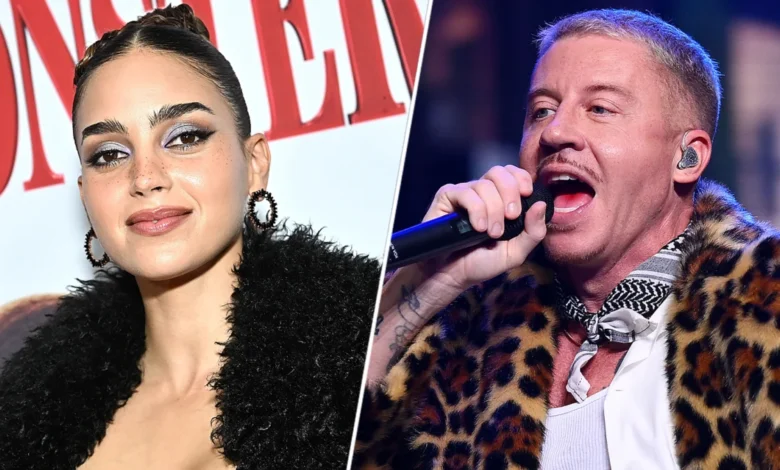
Nearly three years after her high-profile departure from the Scream horror franchise, actress Melissa Barrera is observing a significant shift in how the entertainment industry responds to artists who utilize their platforms to voice support for Palestinians. Barrera’s recent comments come against the backdrop of a burgeoning trend of solidarity within the music industry, specifically surrounding the recent fallout from Ed Sheeran’s Loop Tour.
The conversation was sparked when several high-profile acts, including Finneas and various opening performers, withdrew from their commitments to Ed Sheeran’s tour in solidarity with rapper Macklemore. Macklemore had been removed from the tour roster following public comments he made in support of the “Free Palestine” movement. For Barrera, the collective action taken by these artists represents a stark departure from the environment she navigated in late 2023, where she felt isolated after facing professional repercussions for her own political expression.
A Chronology of the Scream Controversy
The events leading to Barrera’s exit from the Scream franchise began in November 2023, during a period of heightened global tension following the October 7, 2023, attacks in Israel and the subsequent military campaign in Gaza. Barrera, who played the lead role of Sam Carpenter in the revived franchise, utilized her social media channels to post content regarding the humanitarian crisis in the Gaza Strip.
On November 21, 2023, Spyglass Media Group, the production company behind the franchise, issued a formal statement announcing that it had severed ties with the actress. The company’s statement cited a “zero tolerance” policy regarding antisemitism and the incitement of hate, specifically characterizing Barrera’s social media activity as crossing the line into hate speech. The firing drew immediate international attention, sparking a polarized debate about the limits of political expression for public figures and the responsibilities of production studios in managing the discourse of their cast members.
The fallout was immediate and cascading. Shortly after the news of Barrera’s termination, co-star Jenna Ortega announced her departure from the project. While officially attributed to scheduling conflicts regarding the Netflix series Wednesday, industry analysts noted that the timing signaled a significant disruption in the creative continuity of the franchise. Subsequently, director Christopher Landon, who had been tasked with helming the seventh installment, also exited the production. Landon later cited the “highly aggressive” nature of the backlash and confirmed that his family had been the target of death threats, underscoring the volatile atmosphere surrounding the production at the time.
The Evolution of Industry Solidarity
Reflecting on the recent developments involving Macklemore and the subsequent tour boycotts, Barrera told the Associated Press that the shift in solidarity is both meaningful and overdue. “It was so beautiful to see Finneas and the band and all the opening acts pulling out in support of Macklemore,” she remarked. “It made me emotional. You know, I didn’t get that when it happened to me. I didn’t have any of that happen. It was too soon. People were too scared. But it’s good to see that almost three years later, at least things have changed.”
This observation highlights a perceived maturation in how artists evaluate the professional risks associated with political advocacy. In 2023, the industry was arguably in a state of reactive uncertainty, with studios prioritizing risk mitigation and public perception above established norms of creative freedom. By 2026, the cumulative effect of sustained grassroots activism and a more organized approach to artist solidarity has shifted the power dynamic. When artists like Finneas choose to sacrifice lucrative tour slots to support a colleague, it signals that the professional "cost" of political advocacy is being communalized rather than borne solely by the individual.
Franchise Rebuilding and Public Response
Following the exodus of Barrera, Ortega, and Landon, the production of Scream 7 underwent a radical restructuring. In March 2024, it was confirmed that Neve Campbell, who had previously declined to return for Scream VI due to a salary dispute, would rejoin the franchise. Furthermore, Kevin Williamson, the original writer of the 1996 slasher classic, was appointed to direct the seventh entry.
Despite the inclusion of legacy talent, the franchise continued to face significant headwinds from the public. When the first promotional materials and trailers for the seventh film were released in October 2025, they were met with immediate social media backlash. Fans of the franchise, many of whom had rallied behind Barrera, initiated organized boycott campaigns, utilizing platforms such as X (formerly Twitter) and TikTok to voice their dissatisfaction with the studio’s handling of the 2023 controversy.
By the time the film premiered at Paramount Studios in February 2026, the tension was physically manifest. Pro-Palestine activists assembled outside the venue, effectively turning the red-carpet event into a site of protest. The persistence of these demonstrations suggests that the decision to terminate Barrera left a lasting impression on a segment of the audience that continues to view the franchise through the lens of that original labor dispute.
Fact-Based Implications for Hollywood
The broader implications of these events are significant for the entertainment industry. The "Barrera precedent," as some critics have labeled the 2023 firing, initially served as a cautionary tale for celebrities looking to engage with complex geopolitical issues. However, the subsequent years have demonstrated a "pendulum effect."
- The Cost of Public Expression: The industry is currently grappling with how to balance talent relations with brand safety. Studios are finding that unilateral decisions, while intended to protect the bottom line, can lead to talent churn, project delays, and a loss of brand equity among younger, more politically engaged demographics.
- The Rise of Collective Bargaining (Social): The recent actions taken by artists on the Ed Sheeran tour suggest that the industry is witnessing the emergence of informal, solidarity-based collective action. Artists are increasingly coordinating their responses to perceived injustices, creating a layer of protection that was absent in 2023.
- Audience Agency: The Scream 7 boycott illustrates the power of social media to turn public sentiment into tangible, financial pressure. While box office performance is influenced by myriad factors, the sustained negative sentiment directed at the project likely impacted its reach, providing a case study in how political friction can influence commercial success in the streaming and social media era.
Analyzing the Cultural Shift
The shift in sentiment described by Barrera can be analyzed through the lens of shifting public awareness. In the months following the initial outbreak of conflict in late 2023, many organizations and individuals were operating in a state of reactive crisis management. The lack of support for Barrera at that time may have stemmed from a lack of infrastructure for such solidarity or a general fear of the professional fallout associated with the Israel-Hamas conflict.
Three years later, the discourse has matured. Advocacy groups, both within and outside the industry, have developed more robust frameworks for supporting artists who face termination or blacklisting due to their political speech. The willingness of high-profile musicians to link their professional trajectories to the principles of their peers indicates that political alignment is becoming a recognized factor in talent management.
As the industry moves forward, the case of Melissa Barrera remains a touchstone for discussions regarding intellectual freedom, the rights of artists as citizens, and the evolving role of corporations in policing the personal speech of their employees. Whether this trend toward increased solidarity will lead to a more permissive environment for political discourse in Hollywood remains to be seen, but the clear signal from the current landscape is that the days of artists remaining silent in the face of peer persecution may be coming to an end.