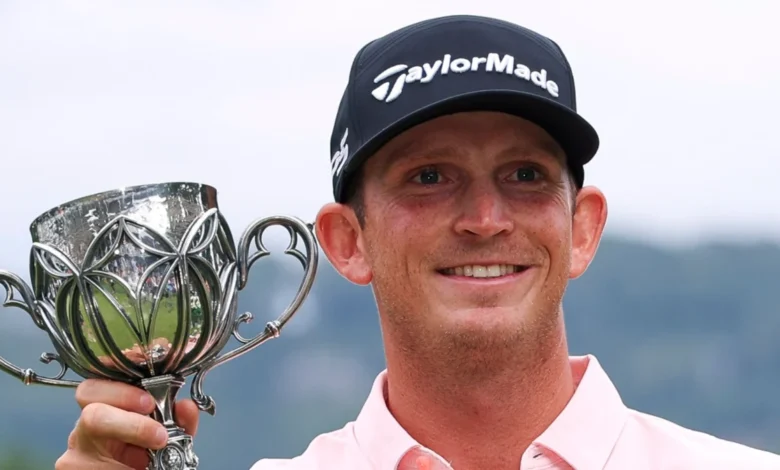
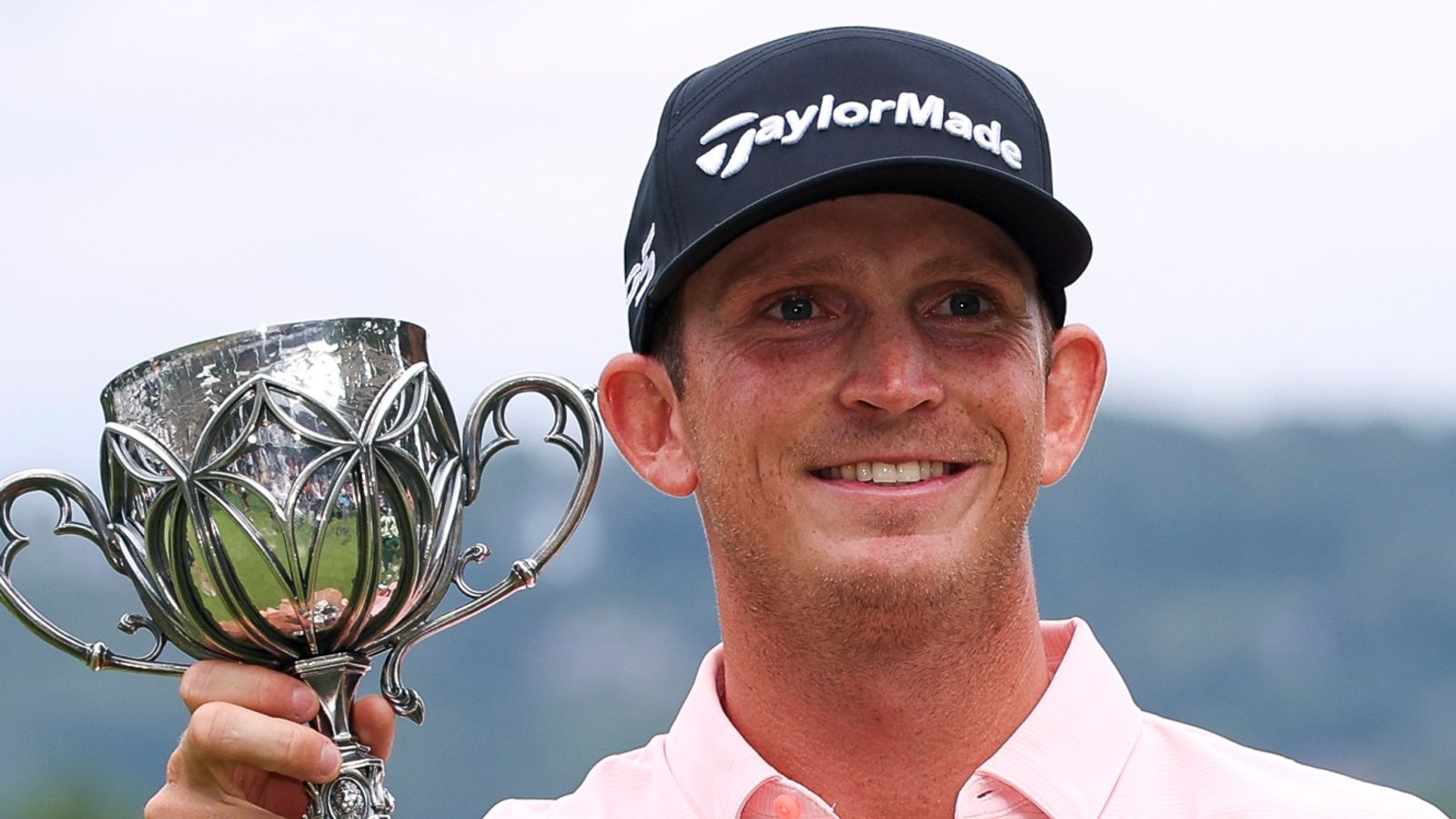
The landscape of professional golf often rewards momentum, precision, and peak timing, qualities that 26-year-old American standout Jacob Bridgeman displayed in abundance during a thrilling conclusion to the Biltmore Championship in Asheville, North Carolina. Entering the final round at The Cliffs at Walnut Cove facing a formidable five-shot deficit, Bridgeman put on a masterclass of clutch execution, firing a bogey-free, 11-under-par 61 to catapult past the leaderboard and capture his second PGA Tour title of the year.
This scintillating performance not only solidifies Bridgeman’s status as one of the most in-form players on the global circuit but also serves as the ultimate catalyst heading into his highly anticipated debut at the Presidents Cup. Named to Brandt Snedeker’s Team USA roster to face the International Team at Medinah, Bridgeman’s victory crystallizes a meteoric rise that has seen him climb to world No. 29.
As golf enthusiasts turn their attention toward the impending international showdown, Bridgeman’s triumph in the Blue Ridge Mountains offers a fascinating study in resilience, low-scoring pressure, and the mental fortitude required to succeed at the highest tier of professional sport.
A Masterclass on Sunday: The Road to 26-Under
The final day of the Biltmore Championship at The Cliffs at Walnut Cove will long be remembered as a festival of offensive golf, characterized by benign morning conditions, receptive greens, and an onslaught of historic low scores. Three different players managed to card rounds of 61 or lower on Sunday, but none executed their game plan with more precision than Bridgeman.
Starting the day five strokes adrift of overnight leader Neal Shipley, Bridgeman knew he needed to apply immediate pressure. He did precisely that, racing out of the gates by birdieing three of his opening four holes. His momentum continued to build as he approached the turn, highlighted by a majestic stroke from 10 feet on the par-five eighth hole that yielded an eagle, instantly energizing his gallery and signaling to the field that a serious charge was underway.
Carrying a wave of confidence onto the back nine, Bridgeman picked up another stroke at the 10th hole before embarking on a breathtaking sequence from the 13th, where he rattled off three consecutive birdies. Standing on the tee of the par-five 17th hole, the mathematics of the round came into sharp focus: play the final three holes in three-under-par to secure the first sub-60 round in recent PGA Tour memory.
While a sub-60 scorecard ultimately slipped through his fingers, Bridgeman did not falter. A composed birdie at the 17th followed by a steady, routine par on the 18th hole capped off a phenomenal back-nine surge. His flawless 61 brought his tournament total to 26-under-par, clearing compatriot Ben James—who matched Bridgeman’s brilliant 61—by two decisive strokes.
A Leaderboard Packed with Historic Scoring
Bridgeman’s heroic charge overshadowed what was, by any metric, an extraordinary display of scoring depth throughout the tournament’s final 18 holes. The Cliffs at Walnut Cove proved vulnerable to the world’s elite ball-strikers, producing a leaderboard defined by dramatic shifts and near-historic milestones.
Neal Shipley, who had held the tournament lead heading into Sunday, struggled to match the blistering pace set by Bridgeman and James. Shipley ultimately finished three strokes back at 23-under-par, settling for a share of third place alongside Ricky Castillo, who also posted a strong closing campaign.
Meanwhile, fellow American JT Poston narrowly missed out on golf’s most elusive single-round milestone. Poston produced a sensational 60, narrowly missing a putt on the final green that would have etched his name into the record books with a magical 59. Two-putting from 25 feet for a closing par, Poston reflected philosophically on his performance after vaulting into a tie for fifth place.
"At the end of the day it was a great round of golf, a new career low out here," Poston noted, maintaining a pragmatic perspective on his near-miss. "As much as I would like to shoot that magical 59 number, which I’ve never done, there are so many positives to take away."
Poston finished alongside Jackson Koivun, another rising star who will join Bridgeman in representing the United States at the upcoming Presidents Cup. The strong showing from younger Americans highlights a generational wave sweeping through professional golf, injecting fresh energy into both weekly tour events and elite team competitions.
International Contenders and Global Representation
While American players dominated the upper echelons of the Biltmore Championship leaderboard, international competitors also made notable statements as they fine-tune their games for the autumn schedule.
Ireland’s Seamus Power put together a consistent four days of golf, finishing six strokes back from the champion in a share of seventh place. Power’s steady ball-striking and dependable short game kept him in contention throughout the weekend on a course that severely punished errant tee shots.
England’s Marco Penge, a notable absentee from the DP World Tour’s concurrent BMW PGA Championship at Wentworth, justified his decision to travel and compete in North Carolina. Penge secured a respectable share of 10th place following a solid final-round 67, validating his ambition to test his skills against deep fields on American soil.
The broader international presence at the Biltmore Championship underscores the increasingly globalized nature of modern professional golf, where athletes routinely travel across continents in search of ranking points, competitive reps, and preparation for high-stakes team events.
Bridgeman’s Ascent and the Road to Medinah
For Bridgeman, the timing of his second PGA Tour victory of the year could not be more auspicious. At 26 years old, he has developed a reputation as a relentless competitor capable of sustaining high-level performance across all facets of the game. His victory in Asheville adds a crucial psychological edge to his resume just as he prepares for the unique pressures of team competition.
Selected by captain Brandt Snedeker as a crucial captain’s pick for Team USA, Bridgeman enters the Presidents Cup carrying the weight of high expectations balanced by the intoxicating freedom of a player at the absolute peak of his powers. Speaking live after his victory, Bridgeman articulated the distinct emotional landscape of transitioning from the individual grind of the PGA Tour to the collective camaraderie of international team play.
"It’s a dream come true," Bridgeman said regarding his upcoming Presidents Cup debut. "There is so much individualness in this sport, but to be able to play as a team and the United States is just amazing. Everybody is pumped. It’s getting really real. We’re all getting super excited!"
The Presidents Cup, pitting the United States against the formidable International Team, demands a specialized blend of stellar individual skill and seamless partnership chemistry. Players who enter the event riding a wave of competitive success—such as Bridgeman and fellow top-10 finisher Jackson Koivun—frequently serve as invaluable assets during both the four-ball and foursomes sessions.
Implications and Broader Analysis
Bridgeman’s victory at the Biltmore Championship and his subsequent entry into the Presidents Cup spotlight several broader trends within the current professional golf ecosystem.
First, the extraordinary depth of talent on the PGA Tour continues to compress the margin for error. The fact that multiple players shot 61 or lower on a single Sunday demonstrates that modern equipment, athletic conditioning, and advanced analytical preparation have elevated baseline scoring capabilities to unprecedented heights. Winning tournaments under these conditions requires not just good play, but explosive, error-free execution under intense pressure.
Second, the strategic importance of captain’s picks in team events has never been more pronounced. By selecting players like Bridgeman who exhibit late-season form and proven mental resilience, captains like Brandt Snedeker mitigate the risks associated with slumping veterans or unproven rookies. Bridgeman’s ability to erase a five-stroke deficit with a bogey-free 61 proves he possesses the clutch gene necessary to close out matches when the national spotlight is brightest.
As the golf world shifts its collective focus from the rolling hills of Asheville to the historic fairways of Medinah, all eyes will be on how Bridgeman translates his individual brilliance into team success. With live coverage beginning this Thursday on Sky Sports Golf, fans can anticipate a fiercely contested Presidents Cup defined by the exact brand of high-octane drama that unfolded at the Biltmore Championship.