Methane has quietly emerged as one of the most critical and volatile variables in the ongoing global climate equation. As a colorless, odorless hydrocarbon, methane operates as the primary component of natural gas while simultaneously serving as the second most influential greenhouse gas driving global heating, trailing only carbon dioxide. While global climate discourse has historically centered heavily on carbon dioxide emissions, scientists, policymakers, and environmental researchers are increasingly turning their attention toward methane due to its extreme potency. Over a 20-year timescale, methane traps approximately 86 times more heat per unit of mass than carbon dioxide, making it a primary accelerator of near-term temperature spikes.
Understanding the dynamics of methane requires examining its dual origins across natural and anthropogenic landscapes. Natural sources—led heavily by wetlands, freshwater systems, geological seeps, and permafrost—account for roughly 40 percent of total atmospheric methane emissions. These natural emissions are driven primarily by a process known as methanogenesis, wherein specialized underwater microorganisms called archaea break down organic matter in oxygen-depleted environments. However, the remaining 60 percent of atmospheric methane is directly tied to human activity. Since the onset of the industrial revolution, human-driven emissions have surged, driven overwhelmingly by three distinct sectors: agriculture, fossil fuel extraction and transport, and waste management.

The Chronology of Methane Monitoring and Global Pledges
The trajectory of methane tracking has evolved significantly over the past several decades, transitioning from localized ground-level estimates to sophisticated satellite surveillance capable of pinpointing high-emission events in real time. For many years, regulatory bodies like the U.S. Environmental Protection Agency relied on "bottom-up" inventories—multiplying standard equipment count or livestock populations by estimated average emission factors. However, this methodology historically missed extraordinary, intermittent leaks that disproportionately drive industrial emissions.
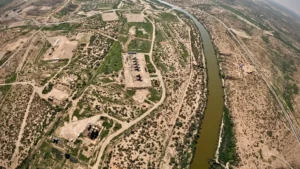
A major turning point in global awareness occurred during the 2010s, as aerospace technology advanced. The deployment of high-resolution satellites enabled scientists to detect massive, localized leaks—often termed "super-emitters"—originating from oil and gas fields, coal mines, and sprawling landfills. Studies utilizing direct atmospheric measurements revealed that real-world fossil fuel emissions were frequently tens of percentages higher than government inventories had previously estimated.

This growing body of empirical evidence catalyzed high-level political mobilization. At the 2021 United Nations Climate Change Conference (COP26) in Glasgow, Scotland, the United States and the United Kingdom jointly launched the Global Methane Pledge. By January 2025, the initiative had expanded to include 159 participating nations, all committing to a collective target of reducing global methane emissions by 30 percent relative to 2020 levels by the year 2030. According to scientific assessments, achieving this goal would prevent approximately 0.2 degrees Celsius of global warming by 2050, helping keep the critical threshold of 1.5 degrees Celsius above pre-industrial levels within reach.
Data, Discrepancies, and the Implementation Gap
Despite the formal commitments established under the Global Methane Pledge, a profound implementation gap continues to hamper real-world progress. Atmospheric concentrations of methane have continued to break historical records. Data from the World Meteorological Organization indicates that by 2023, atmospheric methane concentrations had surged to 1,934 parts per billion—a staggering 265 percent increase compared with pre-industrial baselines.

The fossil fuel sector represents both the greatest opportunity for rapid mitigation and the most glaring policy shortfall. The International Energy Agency has repeatedly emphasized that the oil and gas industry could slash its methane emissions by up to 70 percent using existing technologies, with a significant portion of those reductions achievable at net-zero cost through basic leak detection and repair (LDAR) protocols. Yet, total emissions from the sector have remained stubbornly high, exceeding 120 million metric tons annually. Analysts attribute this persistence to a lack of binding domestic regulations, noting that as of 2023, only a small fraction of global methane emissions were actively governed by dedicated reduction policies.
Agriculture and waste management present similarly complex statistical challenges. Livestock operations—specifically ruminant animals such as cattle, sheep, and goats—generate roughly 32 percent of human-caused methane through enteric fermentation, a digestive process driven by microbial gut activity. Concurrently, rice cultivation in flooded paddies accounts for approximately eight percent of anthropogenic emissions. As global populations grow and meat consumption patterns shift, emissions from the agricultural and waste sectors are projected to continue expanding unless systemic interventions are swiftly implemented.
Official Responses and Strategic Solutions

Governments, international bodies, and industry stakeholders face mounting pressure to bridge the gap between climate pledges and execution. The Intergovernmental Panel on Climate Change has explicitly stated that global methane emissions must decline by roughly 34 percent by 2030, relative to 2019 levels, to prevent irreversible climate tipping points.
To achieve these reductions, experts advocate a multi-pronged approach targeting the three primary human-caused vectors:
- Fossil Fuel Infrastructure: Beyond the ultimate goal of transitioning away from fossil fuels toward renewable energy, immediate interventions include phasing out routine venting and flaring, mandating advanced aerial and ground-based leak detection, deploying degasification wells at coal mines, and properly capping abandoned wells. The expansion of liquefied natural gas (LNG) infrastructure has also faced intense scrutiny; analysts warn that accounting for upstream methane leaks renders the climate impact of LNG comparable to, or worse than, that of coal.
- Agricultural Transformations: Mitigation in the agricultural sector focuses on both dietary shifts and direct enteric interventions. Researchers have documented that supplementing cattle feed with specific seaweed varieties or chemical inhibitors like 3-NOP can reduce ruminant methane emissions by up to 82 percent in feedlot settings without compromising animal health. Concurrently, modifying rice paddy management through alternative wetting and drying techniques can suppress the microbial activity responsible for methane generation in flooded fields.
- Waste Management Systems: Upgrading municipal solid waste protocols by diverting organic matter away from landfills toward composting facilities, capturing biogas via engineered digesters, and expanding secondary and tertiary wastewater treatment plants can substantially curb the release of fugitive methane.
Broader Impacts and Public Health Implications

Beyond its role as a driver of global temperature rise, methane acts as a direct precursor to ground-level ozone. When methane interacts with other atmospheric compounds in the presence of sunlight, it forms tropospheric ozone—a hazardous pollutant known to damage human lung tissue, exacerbate chronic respiratory conditions such as asthma, and stunt the growth of vital agricultural crops like wheat, rice, and soybeans.
Public health analyses indicate that ground-level ozone generated by methane contributes to hundreds of thousands of premature deaths globally each year. Consequently, aggressive methane mitigation delivers immediate co-benefits. Every million metric tons of methane prevented from entering the atmosphere translates directly into reduced cardiovascular and respiratory morbidity, fewer emergency room visits, and safeguarded global food yields.
Implications for the Future

The dual nature of methane presents a unique structural dilemma for global climate strategy. Because methane possesses an atmospheric lifespan of roughly 12 years—vastly shorter than carbon dioxide’s centuries-long persistence—curbing its emissions offers the single most effective lever for decelerating global heating over the next two decades.
However, the realization of this potential relies entirely on aggressive policy enforcement, technological deployment, and structural reforms in energy and agriculture. As satellite monitoring continues to expose uncounted super-emitter leaks and climate feedback loops—such as thawing Arctic permafrost and expanding tropical wetlands—accelerate natural emissions, the margin for error narrows. The path forward requires moving beyond voluntary aspirational targets toward mandatory, verifiable emissions reductions across all major industrial and agricultural sectors.