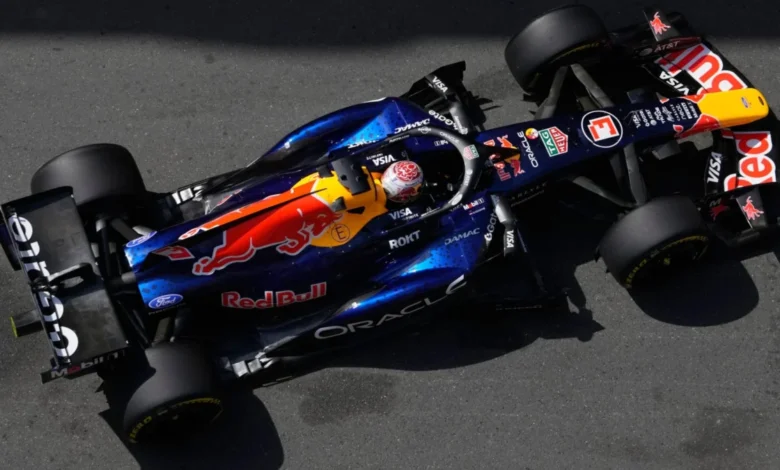
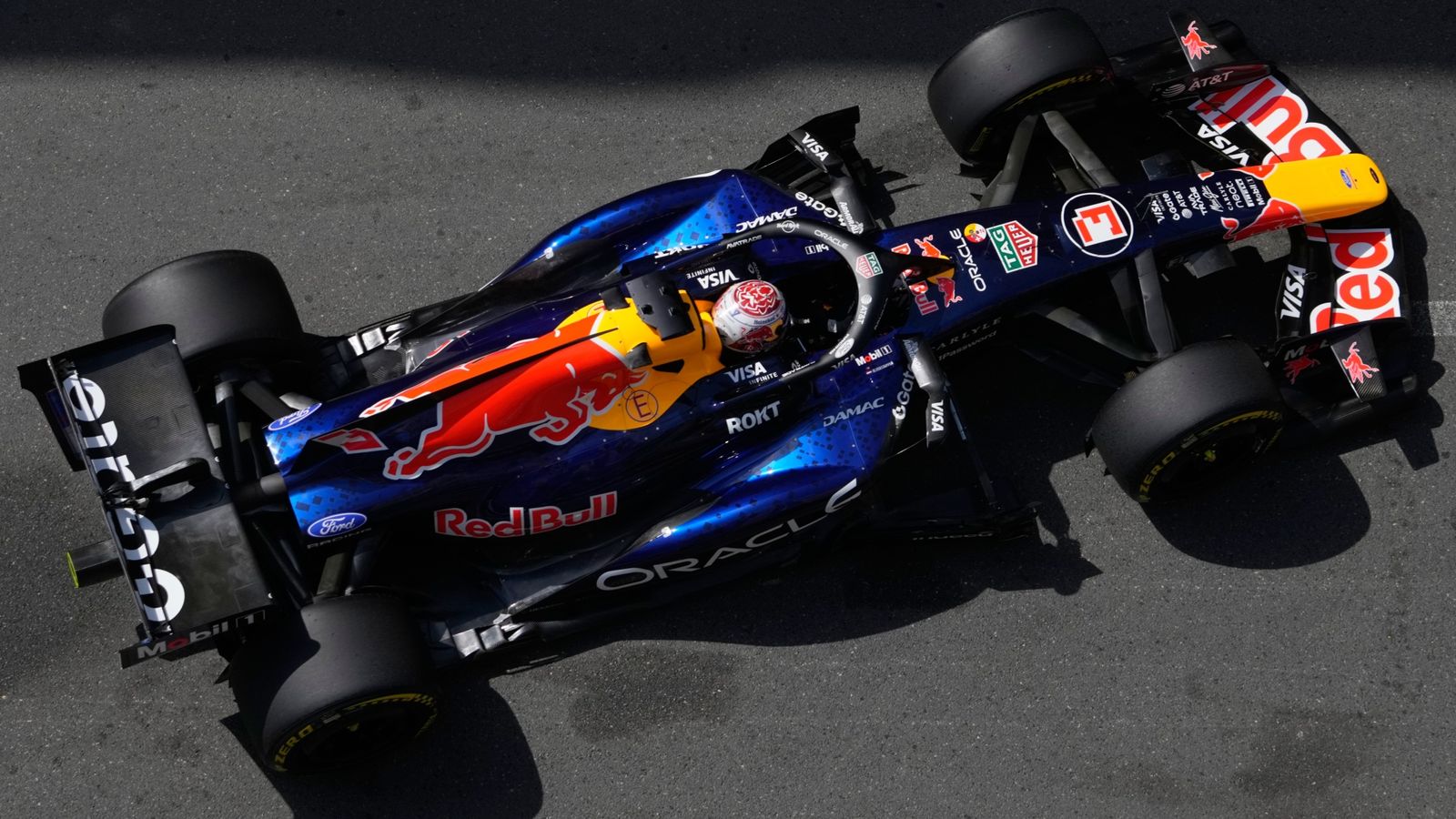
Max Verstappen stamped his authority on the final practice session at the Azerbaijan Grand Prix, denying Mercedes driver George Russell a clean sweep of the weekend’s practice sessions. As Formula 1 enters a critical phase of the 2026 season, Red Bull’s renewed pace around the unforgiving, wall-lined Baku City Circuit has injected a high degree of unpredictability into the upcoming qualifying session. Verstappen’s late charge on the soft compound tires yielded a benchmark lap time of 1:43.922, edging out Russell by a narrow margin of 0.099 seconds and signaling that Red Bull has successfully dialed in its setup ahead of the grid-deciding shootout.
The final hour of practice was defined by a dramatic shift in environmental conditions. Unlike the relative calm of Thursday’s running, which allowed Mercedes to establish a commanding pace, Friday morning brought characteristic and fierce gusty conditions to the streets of the Azerbaijani capital. The unpredictable wind played havoc with the aerodynamic balance of the 2026-specification cars, catching out numerous drivers and leading to multiple excursions off the track as competitors tested the absolute limits of adhesion on the tight, 6.001-kilometer street circuit.
Evolution of the Final Practice Session
The sixty-minute session began with Mercedes looking to replicate their dominant form from the opening day. George Russell immediately set a brisk pace, capitalizing on the car’s low-speed stability and mechanical grip. However, as the track evolution accelerated and teams transitioned to qualifying simulations on Pirelli’s soft-compound rubber, the competitive order began to compress dramatically.
Verstappen, who has experienced a more challenging title defense this season compared to his previous years of utter dominance, extracted maximum performance from his RB22. His progression was methodical, building confidence sector by sector through the castle section before laying down the fastest time of the weekend. Russell ultimately had to settle for second fastest, just under a tenth of a second shy of the Red Bull driver’s benchmark.
Further down the timing sheets, Lewis Hamilton demonstrated a significant turnaround in Ferrari’s fortunes. Having struggled to find a competitive window during the earlier parts of the session, the seven-time world champion put together a blistering final lap to secure third place, finishing just 0.111 seconds behind Verstappen. Hamilton’s surge was aided significantly by strategic positioning on the mammoth 2.2-kilometer pit straight, where he utilized a aerodynamic tow—a strategic draft—from cars ahead to boost his straight-line speed. This tactic, combined with the swirling crosswinds, is expected to play a decisive role in pole position contention.
David Croft, lead commentator for Sky Sports F1, captured the prevailing sentiment in the paddock as teams prepared for the afternoon session. "The weather has brought us the possibility of an absolutely fascinating and dramatic qualifying to come," Croft noted. "These are not easy conditions out there by any stretch of the imagination."
Championship Implications and Field Spread
Behind the leading trio, the battle for supremacy remained intensely tight. Kimi Antonelli, who currently holds a commanding 81-point lead over teammate George Russell in the Drivers’ Championship standings, showed resilience to finish the session fourth fastest. Antonelli has been one of the standout revelations of the 2026 season, consistently extracting maximum points and displaying a maturity that belies his relative inexperience at the pinnacle of motorsport.
Charles Leclerc rounded out the top five in the second Ferrari. While Leclerc has historically been a formidable force on street circuits—boasting multiple pole positions in Baku—the Scuderia’s ultimate pace during qualifying remains difficult to predict due to their fluctuating tire warm-up characteristics in the cooler, windier ambient conditions.
The tight margins across the top five highlight a broader narrative of the 2026 regulation era: the convergence of competitive performance between Red Bull, Mercedes, and Ferrari. With fractions of a second separating the front-runners, minor driver errors or a well-timed slipstream on the long straight could easily alter the final grid order.
Unique Weekend Format and Schedule Adjustments
The 2026 Azerbaijan Grand Prix weekend features a unique scheduling adjustment that has forced teams and drivers to adapt their preparation strategies. Unlike the traditional European schedule, the main Grand Prix takes place on Saturday at midday local time, kicking off a grueling triple-header of races.
This Saturday race format places an immense premium on Friday’s running, leaving engineers with a condensed window to analyze data, simulate race strategies, and finalize mechanical setups. With final practice concluding just hours before the 1 PM qualifying session, teams had virtually no margin for error in repairing any potential damage sustained during the practice-hour incidents.
Key Weekend Timings (UK Times)
Friday September 25
- 11:10 AM – F2 Feature Race 1
- 12:30 PM – Azerbaijan GP Qualifying Build-up
- 1:00 PM – AZERBAIJAN GP QUALIFYING
- 3:00 PM – Ted’s Qualifying Notebook
Saturday September 26
- 7:55 AM – F2 Feature Race 2
- 10:30 AM – Grand Prix Sunday: Azerbaijan GP Build-up
- 12:00 PM – THE AZERBAIJAN GRAND PRIX
- 2:00 PM – Chequered Flag: Azerbaijan GP Reaction
- 3:00 PM – Ted’s Notebook
Tactical Outlook for Qualifying
As the sun beats down on the Caspian Sea coast, teams are bracing for a high-stakes qualifying session where track position and execution will be everything. The Baku City Circuit is notoriously unforgiving, offering virtually no run-off areas at the apexes of its tight 90-degree corners and the famous narrow castle section (Turns 8, 9, and 10).
Engineers will need to balance downforce levels meticulously. Too much wing angle will sacrifice crucial time down the immense flat-out blast of the start-finish straight, while too little will leave drivers struggling for rear stability in the technical lower-speed sections where the gusty crosswinds present the greatest hazard.
Furthermore, tire management will dictate success in Q3. Drivers will need to carefully orchestrate their out-laps to ensure the soft compound tires are in the optimum operating window without overheating the rubber before the start of a flying lap. The use of strategic tows—demonstrated so effectively by Hamilton and Verstappen in practice—will likely trigger tactical gamesmanship in the pit lane as teams vie to send their drivers out at the optimal moment to capitalize on aerodynamic drafts.
With Max Verstappen searching for his maiden pole position of the 2026 campaign, George Russell aiming to convert practice speed into a definitive pole, and the Ferrari duo lurking with race-pace potential, the stage is set for one of the most volatile and electrifying qualifying sessions of the season.