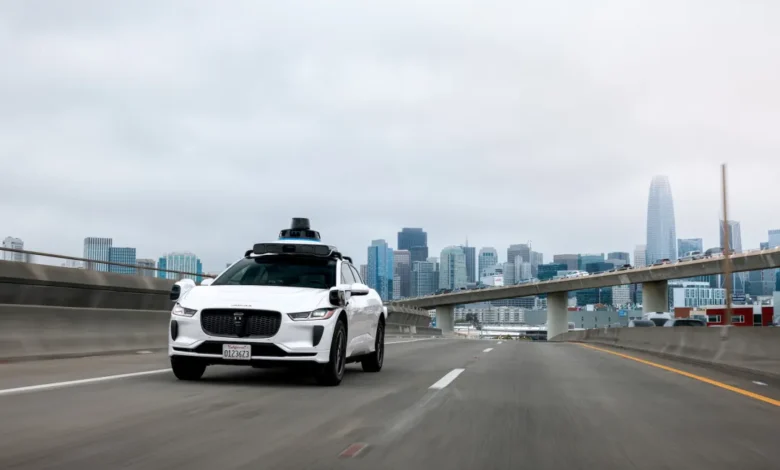
The California Department of Motor Vehicles (DMV) has officially revoked the permit allowing Waymo, the autonomous driving unit of Alphabet, to operate its fleet on state freeways. This significant regulatory setback follows a series of operational incidents in which the company’s driverless vehicles repeatedly entered active construction zones, creating what regulators have characterized as an “imminent hazard to public safety.” The directive, issued on November 11 but only disclosed to the public this week, marks a sharp pivot in the state’s otherwise permissive stance toward the large-scale deployment of autonomous ride-hailing services.
The immediate consequence of this mandate is the cessation of all freeway-based operations for Waymo vehicles across California. Furthermore, in a proactive move to maintain compliance and conduct an internal audit, Waymo has voluntarily suspended its freeway operations in all other U.S. markets where it currently provides commercial service.
A Chronology of Operational Challenges
The path toward the current suspension has been marked by a recurring struggle between Waymo’s software capabilities and the unpredictable nature of California’s infrastructure. The DMV’s decision was precipitated by two specific, high-profile events. The first involved three separate Waymo autonomous vehicles entering an active construction zone on U.S. Route 101 near Burlingame. The second, and perhaps more concerning incident, involved an interaction between a Waymo vehicle and California Highway Patrol (CHP) cruisers on Highway 280 in San Francisco.
These incidents are not isolated occurrences but rather the latest in a troubled history for the company’s freeway program:
- Late 2025: Waymo formally launched commercial freeway rides, a critical milestone that allowed the company to significantly reduce travel times for passengers traveling between the San Francisco core and the Silicon Valley periphery.
- May 18, 2026: Waymo implemented an abrupt, self-imposed halt to its freeway operations following reports of vehicles struggling to navigate construction zones. At the time, social media footage surfaced showing autonomous cars attempting to drive through or around traffic cones, highlighting a fundamental failure in the perception system’s ability to interpret road signage and safety barriers.
- July 2026: After internal software updates, Waymo resumed freeway operations, claiming that its updated system was better equipped to handle construction zones and complex lane closures.
- November 11, 2026: Following the renewed incursions on U.S. 101 and the CHP incident, the California DMV issued its formal order to stop all freeway activity.
The Regulatory Stance on Public Safety
The California DMV serves as the primary arbiter for the testing and deployment of autonomous vehicles (AVs). In its communication to the company, the department emphasized that the decision was not merely about the inconvenience caused by the vehicles, but rather the failure of the technology to respond to previously identified risks.
“The Department determined that Waymo’s driverless freeway operations pose an imminent hazard to public safety due to recurring incursions by its vehicles into active construction zones where construction workers, vehicles and equipment are present,” the DMV stated in its official release.
The regulatory body has made it clear that the restoration of these privileges will require more than a simple software patch. Waymo must demonstrate, through rigorous testing and evidentiary data, that it has implemented “effective corrective actions” that address the systemic deficiencies that allowed the vehicles to ignore warnings and enter restricted work zones.
Waymo’s Corporate Response
In response to the regulatory action, Waymo has adopted a tone of transparency and cooperation. Dana Gallagher, a spokesperson for the company, confirmed the suspension of services and highlighted that the company is currently evaluating its performance across all 15 of its active U.S. markets.
“Safety is at the foundation of everything we do,” Gallagher said in a prepared statement. “Following recent freeway construction zone encounters on U.S. 101 in California that did not involve any injuries or collisions, the California DMV has implemented an operating restriction on freeway operations in the state. In alignment with our safety-first principles, we have also temporarily restricted freeway operations across our other operating markets to evaluate our performance.”
Waymo noted that its core business—ride-hailing on surface streets—remains fully operational. With the company currently facilitating over half a million trips per week, the service remains a staple of urban transit in cities like San Francisco, Phoenix, and Los Angeles. However, the loss of freeway access creates a significant logistical hurdle for the company’s expansion strategy, which relies on the ability to move passengers rapidly between distant urban centers.
The Strategic Impact of Freeway Restrictions
The integration of freeway access was intended to be the "killer app" for Waymo’s commercial viability. By utilizing high-speed arteries, Waymo was able to offer a competitive alternative to traditional ride-sharing services like Uber and Lyft, which rely on human drivers. In the San Francisco Bay Area, the ability to travel via highway meant that trips between the city and the southern Peninsula could be reduced from over an hour to under 40 minutes.
The removal of this capability forces Waymo back onto slower, more complex surface streets. While this may increase the safety profile of the service in the short term, it fundamentally degrades the value proposition for the consumer. Furthermore, the reliance on surface streets subjects the autonomous fleet to a higher volume of pedestrians, cyclists, and unpredictable traffic maneuvers, which presents its own set of distinct safety challenges.
Broader Industry Implications
The suspension of Waymo’s freeway permit serves as a cautionary tale for the wider autonomous vehicle industry. While companies have successfully navigated the complexities of city streets, the high-speed, high-stakes environment of the freeway introduces a level of entropy that current artificial intelligence models struggle to master.
From an engineering perspective, the challenge lies in the "edge cases"—rare, unpredictable events like construction zones where road markings change daily and human flaggers provide instructions that conflict with static traffic rules. For Waymo, the struggle to identify and respect these zones suggests that the transition from a "driver-assist" level of intelligence to a fully "autonomous" level remains an incomplete journey.
Industry analysts suggest that this regulatory intervention could lead to a more conservative oversight period for all AV companies operating in California. As the state moves toward a future where autonomous transport is a standard feature of public infrastructure, the DMV is signaling that it will prioritize human worker safety in construction zones over the rapid scaling of software-defined transit.
For the immediate future, Waymo’s team of engineers and safety experts will likely focus on enhancing the "semantic understanding" of their vehicles—ensuring that the sensor suite, including LiDAR, radar, and high-resolution cameras, can better differentiate between a temporary traffic cone and a permanent obstacle.
Whether this suspension lasts for weeks or months remains to be seen. However, the incident has firmly established that even the most advanced autonomous fleets remain subject to the oversight of human regulators who are increasingly willing to sacrifice convenience for the sake of verified, demonstrable public safety. As Waymo prepares its case for reinstatement, the company will need to provide not just data on successful miles traveled, but proof that its decision-making architecture can reliably prioritize the safety of road workers in the most chaotic environments.