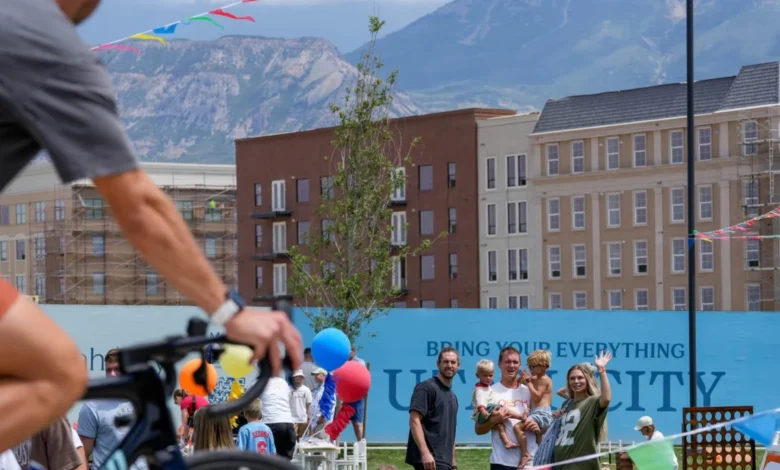
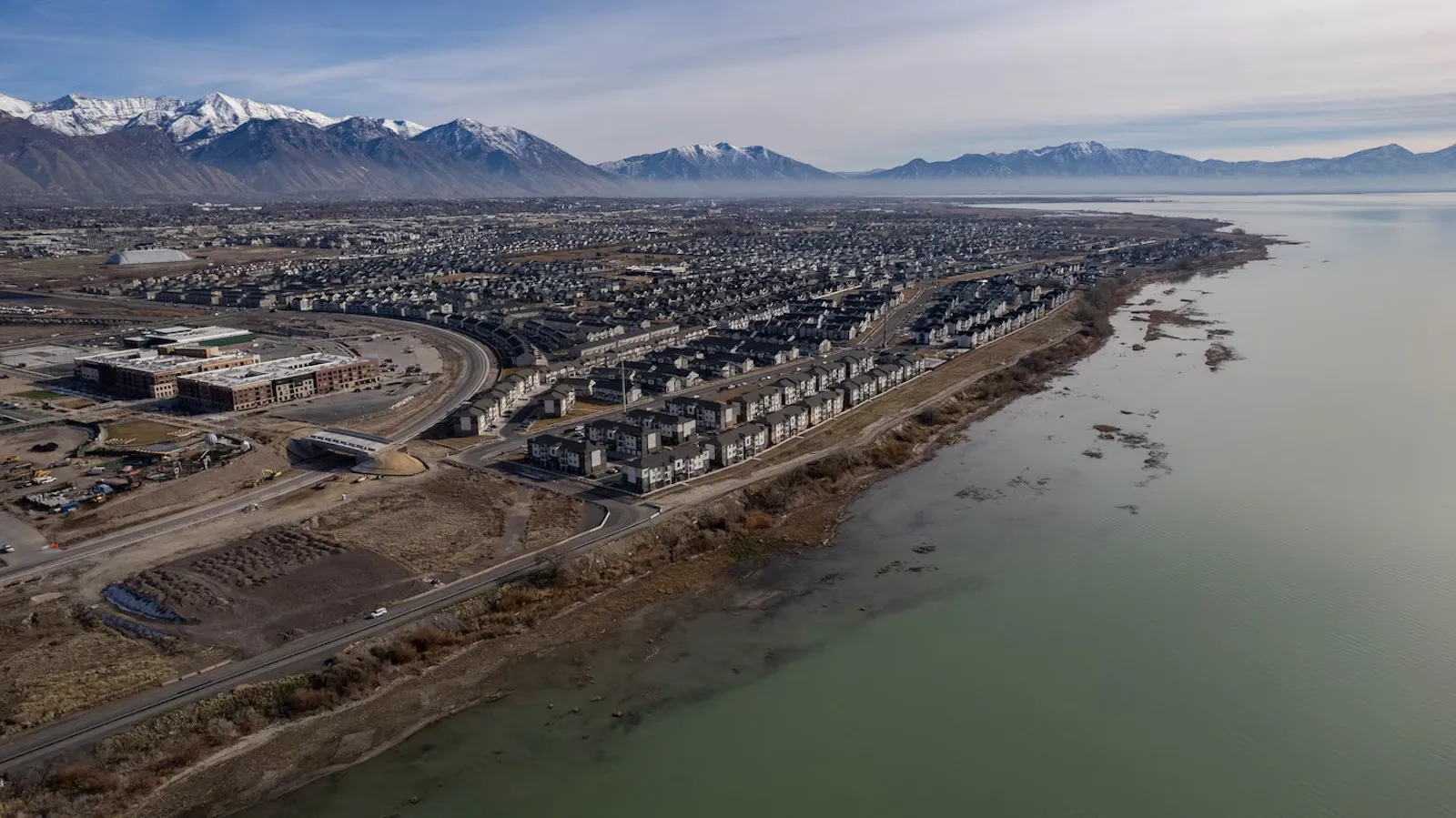
On a sun-drenched summer afternoon, Sarah Miller navigated the pathways of the Greenline, a meticulously landscaped promenade in Vineyard, Utah, with her five-year-old son in tow. The scene—a vibrant mix of pickleball courts, manicured green spaces, and modern, high-density residential buildings—is the physical embodiment of a bold vision for the future of the Wasatch Front. This is Utah City, a 700-acre master-planned community rising from the dust of the former Geneva Steel industrial complex. Once a symbol of Utah’s mid-century manufacturing might, the site is now the testing ground for an ambitious experiment in urban planning: whether a region defined by sprawling suburbs and car-centric culture can successfully pivot toward a dense, transit-oriented lifestyle.
As Vineyard has ballooned from a quiet town of 139 residents in 2010 to a bustling municipality of 16,000 today, the development of Utah City has become the central pillar of its identity. However, the project is currently navigating a period of intense political friction. A new cohort of municipal leadership, including Mayor Zack Stratton, has expressed deep skepticism regarding the public-private partnership that birthed the development, questioning the heavy reliance on tax incentives and the long-term viability of high-density living in a state where the car remains king.
A Legacy Reimagined: From Steel Mill to Smart City
The history of the site is inseparable from the economic evolution of Utah County. For decades, the Geneva Steel plant was the beating heart of the regional economy, providing thousands of industrial jobs before its eventual closure in the early 2000s. The site sat dormant for years, a vast, underutilized footprint of industrial residue and brownfield challenges.
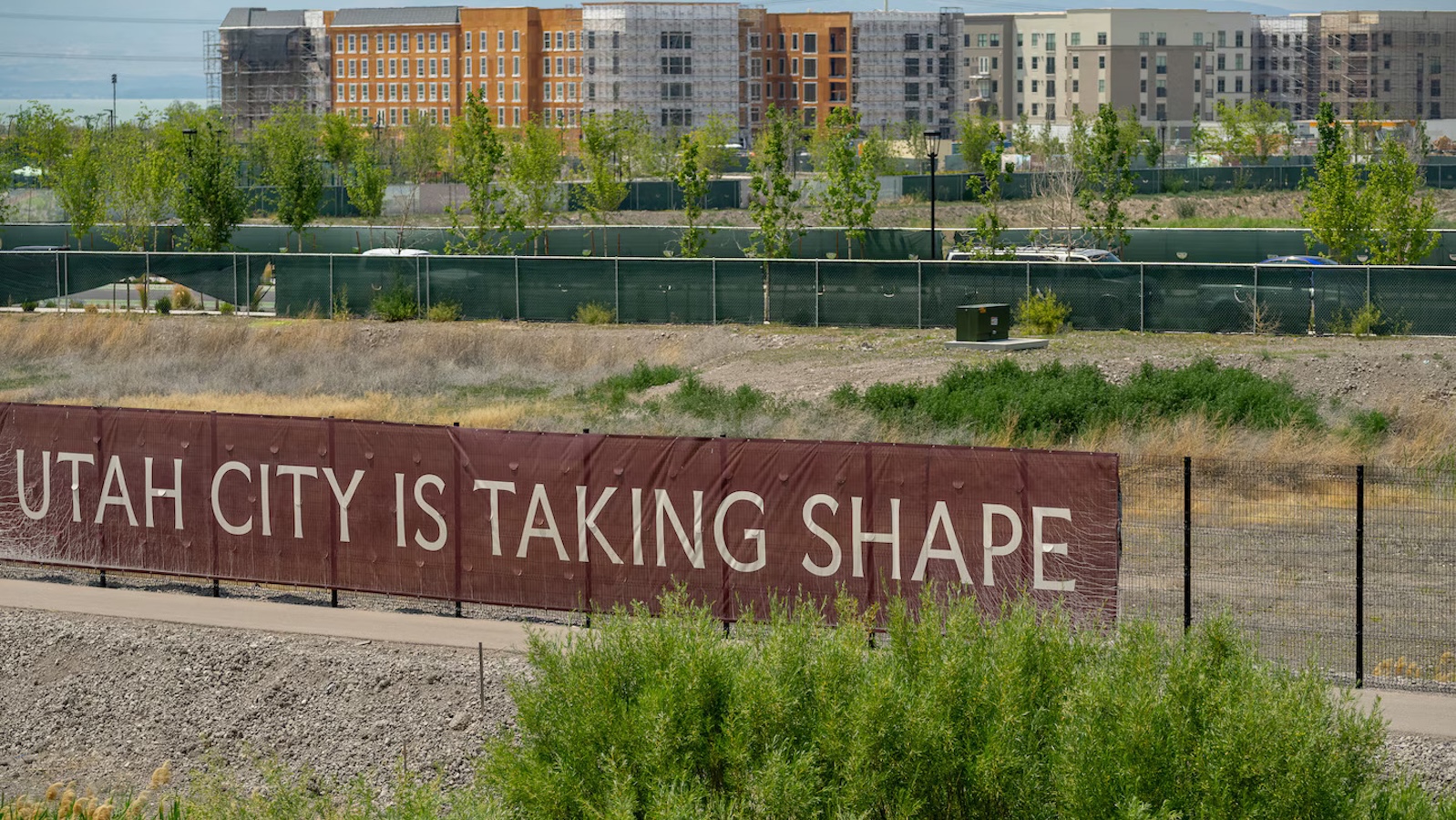
The vision to transform this industrial wasteland into a "downtown" for Vineyard began in earnest over the last decade. Former municipal officials, eager to capitalize on the rapid population growth of the Wasatch Front, courted developers with aggressive tax incentives, aiming to create a dense, walkable, and transit-reliant corridor. A critical milestone occurred in 2022, when the Utah Transit Authority (UTA) established a stop on the FrontRunner commuter rail line directly at the site, physically anchoring the project to the regional transit network.
Flagborough LLC, the primary developer, envisions a 15-to-20-year build-out that would eventually feature thousands of housing units, high-rise commercial space, and civic infrastructure. The developers have tapped world-renowned urban designer Jeff Speck, author of "Walkable City," to create an environment where, in his words, the goal is not to force residents to abandon cars, but to create an environment where they simply choose to use them less.
The Financial Tug-of-War
At the heart of the current political controversy is the "Housing and Transit Reinvestment Zone" (HTRZ) designation granted to the project. Under this framework, as property tax revenues within the zone climb, those funds are diverted to cover infrastructure costs—such as parking structures and utility upgrades—and to subsidize the high construction costs associated with vertical density.
Critics, including current Vineyard City Council members Jacob Wood and David Lauret, argue that the financial burden on the public is too high. The city reported paying $4.5 million to the developers in 2026 alone. For these officials, the concern is twofold: a lack of transparency regarding how taxpayer dollars are being utilized and a philosophical disagreement with the type of development being incentivized.
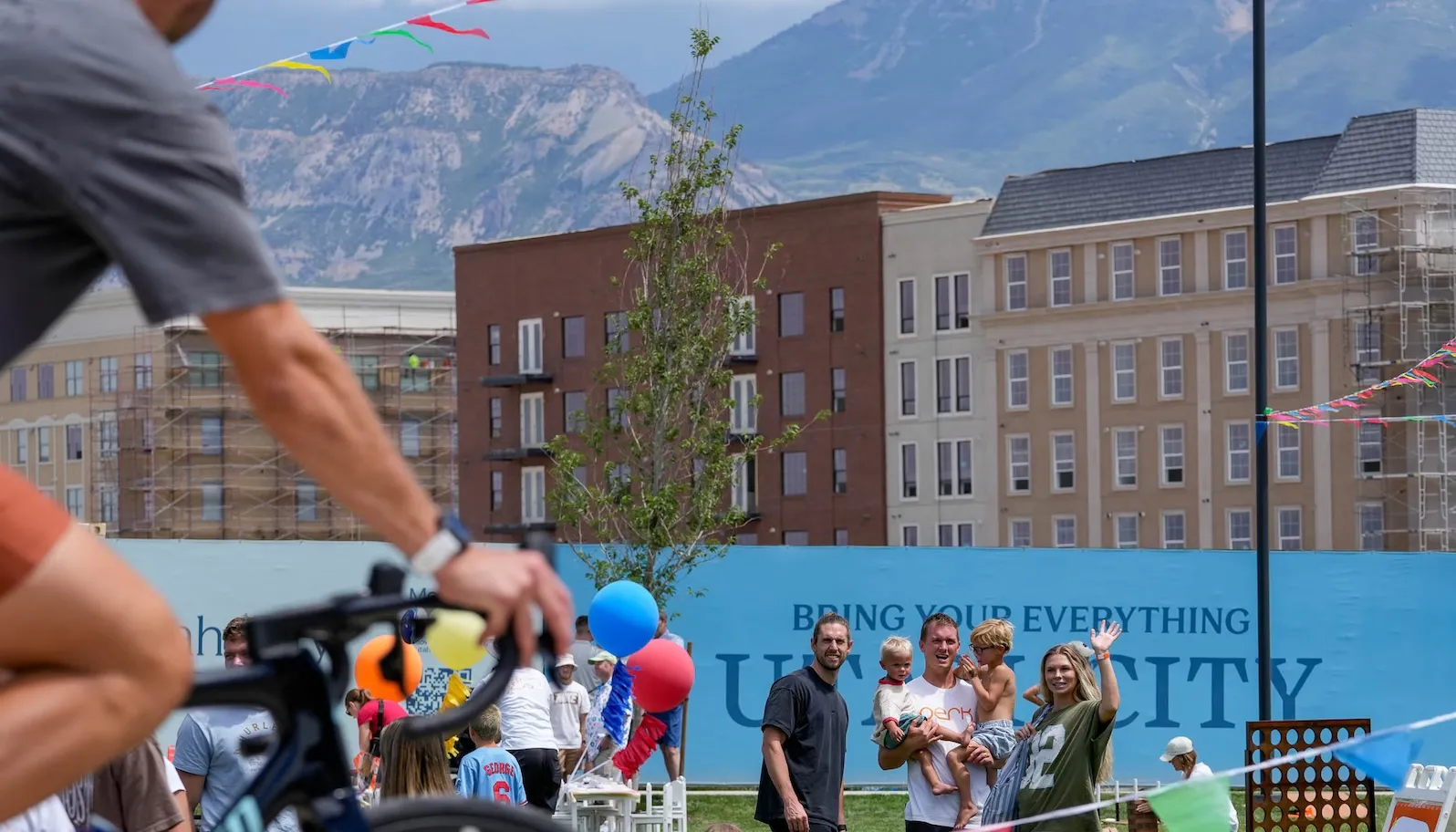
"It’s all rental facilities," Council member Lauret stated during a recent review of city contracts. "We’re basically helping to hand them a business they’ll make money with in perpetuity." The council’s recent decision to hire a panel of residents to audit past redevelopment agency contracts underscores the depth of the public distrust. While no evidence of corruption has been uncovered to date, the friction between the developers’ promises of a vibrant, high-density future and the taxpayers’ concerns about "corporate welfare" remains a dominant theme in local governance.
The Cultural Barrier to Density
The challenge for Utah City is as much cultural as it is economic. While the development offers high-end amenities—including ski passes to Sundance, Peloton studios, and sleek "bougie" apartments—the surrounding region remains stubbornly committed to the suburban model. According to recent U.S. Census Bureau estimates, nearly 79 percent of Utahns drive to work alone. In Utah County specifically, public transportation usage accounts for less than 2 percent of commutes.
Urban geographer Sarah Moser of McGill University notes that this is a recurring global phenomenon. She points to projects like King Abdullah Economic City in Saudi Arabia as a cautionary tale: planners often attempt to import "walkable" models into cultures where prestige and convenience are firmly tethered to private vehicle ownership. Even in California, high-profile efforts to build new eco-friendly cities from scratch have faced stiff resistance from residents who remain wary of top-down planning and the shift away from single-family housing.
Mayor Zack Stratton summarized the prevailing sentiment among many local voters when he stated, "No one up and down the Wasatch Front wants density." This creates a significant headwind for the developers of Utah City, who must persuade a market accustomed to large lots and low traffic that high-rise living is a desirable upgrade rather than a forced compromise.
Affordability and the "Bait and Switch" Narrative
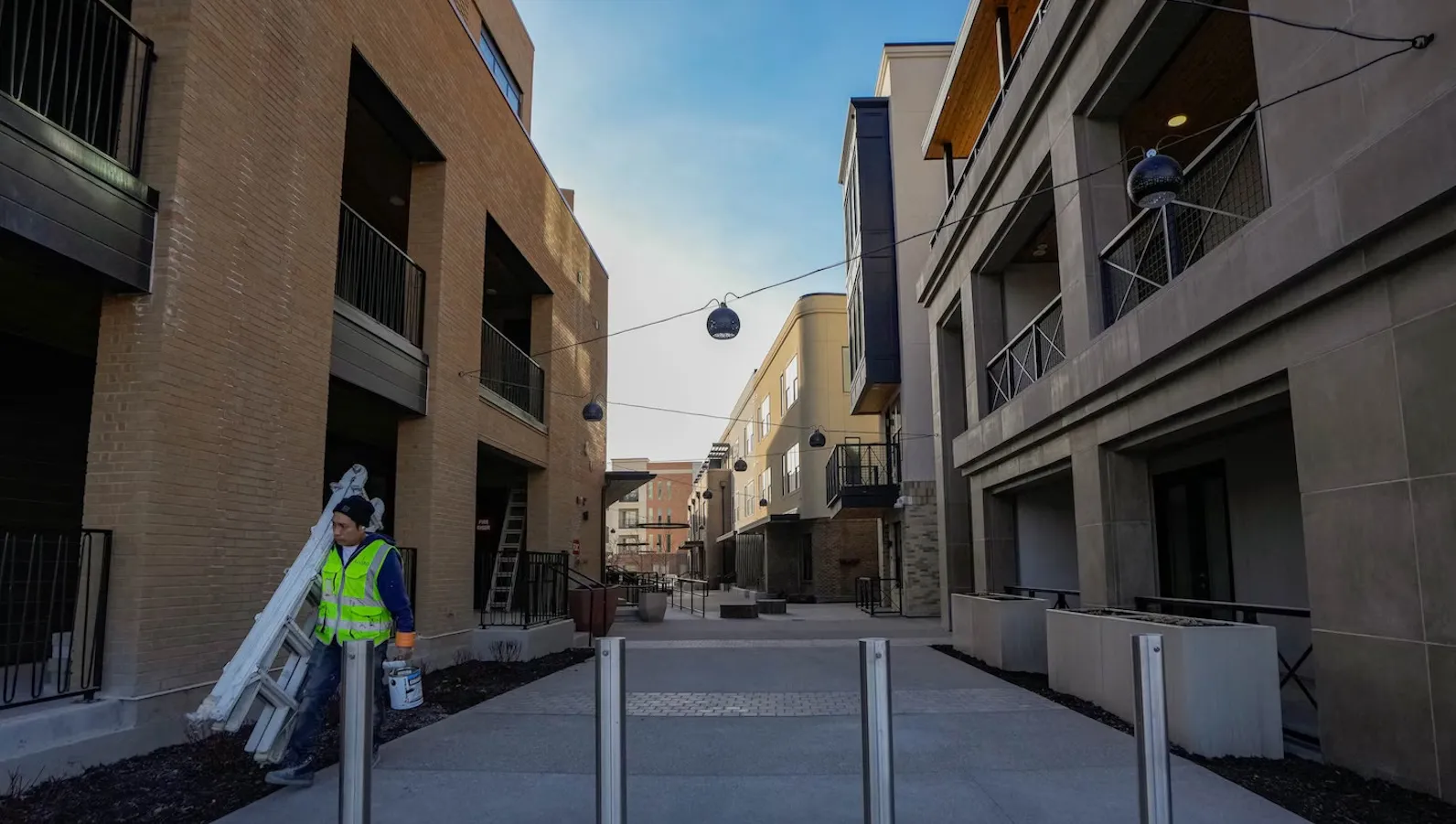
A primary point of contention is the definition of affordability. In their original project application, developers pledged that Utah City would provide thousands of "attainable" housing units, defined as costing 30 percent or less of a household’s income. However, the current reality for many residents is a market-rate luxury product. Studio apartments start at over $1,300, while two-bedroom units can exceed $2,500, excluding additional fees for parking and utilities.
Council member Jacob Holdaway, whose family history in the area dates back to the original pioneers, has become a vocal critic, labeling the discrepancy between the initial pitch and the current leasing reality as a "bait and switch."
Nate Hutchinson, a partner at Flagship, defends the project’s track record, arguing that the development is providing essential housing stock at a volume unmatched in the county. He emphasizes that the current rental model is a phase in a long-term strategy, and that the project’s definition of "affordable" aligns with federal HUD standards, which take into account the higher median income of the region.
The Path Forward: Jobs, Education, and Infrastructure
Despite the political headwinds, there are significant economic catalysts on the horizon that may validate the developers’ long-term optimism. By 2028, the site is slated to house a new Huntsman Cancer Institute facility, which is expected to bring roughly 450 high-paying research and clinical jobs to the area. This influx of professional staff could provide the critical mass needed to support the retail and dining establishments that have already begun to open, such as the local grocery store Bella’s Market and the New York-inspired Fini Pizza.
Furthermore, the developers are in discussions to attract higher education facilities to the area, potentially creating a synergistic relationship with the nearby Utah Valley University. These institutional anchors are viewed by both proponents and some skeptics as a major net positive for the region.
Implications for Future Planning
Utah City serves as a bellwether for the state’s urban future. With the state preparing to spend billions on I-15 expansion to mitigate current traffic, the debate over whether to continue subsidizing road-widening or to pivot toward transit-oriented nodes has never been more urgent.
The developers maintain that the "unlimited density" allowed by the current zoning is the only logical response to the state’s rapid population growth. If the project succeeds, it could become a blueprint for how to integrate housing, employment, and transit in a way that preserves open space and reduces the carbon footprint of the Wasatch Front. If it fails, or if the public opposition continues to stall development, it may signal that even with the best designs and transit links, the culture of the American West remains fundamentally incompatible with the European-style urbanism that planners are trying to export.
As the buildings rise and the amenities are finalized, the success of Utah City will not be measured solely by the number of units filled, but by whether it can bridge the gap between the visionary, dense future planners desire and the practical, car-reliant reality that its citizens still call home. For now, the "quiet" of the park that Sarah Miller enjoys is a temporary state, the calm before a storm of either regional transformation or, perhaps, a long and expensive reckoning with the limits of growth.