A legislative proposal currently under consideration in New Jersey, Assembly Bill 1146, has ignited a fierce debate regarding the boundaries of protected speech and the role of the state in defining social bias. The bill, which seeks to establish a formal state-level definition of "Islamophobia" for use in civil and criminal administrative proceedings, has drawn sharp criticism from legal experts who argue that the terminology is dangerously broad. While proponents contend the bill is a necessary tool to combat rising incidents of discrimination, detractors warn that the move could inadvertently suppress public discourse by subjecting those who criticize religious or political ideologies to state-sanctioned scrutiny.
The Scope and Intent of Assembly Bill 1146
The legislation is sponsored by Democratic Assemblyman Joe Danielsen, with co-sponsorship from Assembly members Verlina Reynolds-Jackson, Mitchelle Drulis, and Roy Freiman. As drafted, the bill provides a comprehensive, if contested, definition of Islamophobia. It encompasses "hatred or severe disparagement towards Muslim persons or their culture," as well as "rhetorical, violent, or physical anti-Muslim manifestations." Specific examples provided in the text include the forcible removal of a hijab from a Muslim woman, discriminatory treatment in housing or employment, and the collective blaming of Muslims for the actions of individuals or extremist groups.
The bill does not seek to create a new standalone criminal charge. Instead, it directs public officials, law enforcement agencies, and administrative bodies to utilize this definition when investigating or adjudicating claims related to existing anti-discrimination policies, housing laws, and civil rights regulations. By codifying this definition, the state intends to provide a consistent framework for identifying and addressing bias-motivated harassment and hate crimes.
Legal Concerns and the First Amendment
The primary point of contention rests on whether the state’s involvement in defining ideological or religious criticism oversteps the protections afforded by the First Amendment. Bill Brown, a partner at the Parlatore Law Group and a former U.S. Navy SEAL, has emerged as a vocal opponent of the measure. Brown argues that the language, while technically preserving First Amendment rights, creates a "chilling effect" that will deter citizens from engaging in legitimate public debate.
"The mere threat of state scrutiny is a direct assault on public debate," Brown stated in an interview. He emphasizes that the First Amendment exists precisely to protect speech that may be offensive or critical of religious and theological systems. Brown’s concern is that by creating a formal definition of Islamophobia, the state is essentially establishing a "backdoor blasphemy law." He contends that when the government begins to curate which criticisms are acceptable and which are deemed "disparagement," it fundamentally alters the landscape of free expression.
Distinguishing Religion from Geopolitics
A significant portion of the critique centers on the bill’s treatment of "anti-Islamism." The legislation includes this term among those that may trigger an investigation. Brown points out a critical distinction that he believes the bill fails to respect: the difference between prejudice against a protected class of people and the critical examination of a political movement.
"Islamism is a distinct geopolitical movement," Brown said, noting that it is a political ideology rather than a strictly religious faith. According to his analysis, the bill’s broad language risks conflating legitimate political criticism of radical movements or regimes with hatred toward the Muslim faith. By failing to draw a clear, statutory line between the two, Brown argues, the state could inadvertently categorize political dissent as discriminatory conduct. His perspective is informed by his own background; having served in Iraq and witnessed the reality of jihadist violence firsthand, he maintains that the ability to criticize such ideologies is vital to national security and democratic health.
Background and Context: The Rise of Hate Crime Legislation
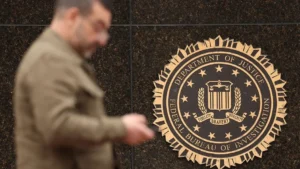
The push for Assembly Bill 1146 arrives at a time when states across the U.S. are grappling with how to address reports of rising religious intolerance. According to data from the Federal Bureau of Investigation (FBI) and various civil rights monitoring groups, there has been a marked increase in reported hate crimes targeting various religious groups in recent years. In New Jersey, as in many other states, legislators have faced mounting pressure from community advocacy organizations to strengthen legal protections for minority groups.
Similar debates have played out in other jurisdictions. For instance, in California, new legislation regarding hate speech in schools and public sectors has faced legal challenges from religious organizations that argue the laws act as a form of indoctrination. In Connecticut, disputes over the display of religious symbols in public spaces have led to lawsuits, highlighting the ongoing tension between maintaining a secular government and protecting religious freedom.
The Legislative Process and Lack of Clarity
Despite the gravity of the potential implications, the legislative process for A1146 has been characterized by a lack of public engagement from its sponsors. Multiple requests for comment directed at Assemblyman Danielsen and his co-sponsors have gone unanswered. This silence has left a void in the public record regarding the specific metrics officials will use to apply the definition.
Critics point out that "disparagement" is a subjective standard. Without clear, objective criteria, the application of this law could vary significantly from one official to the next. Legal scholars observe that when laws rely on subjective emotional states or ambiguous definitions of "disparagement," they often fail to meet the "void for vagueness" standard, making them susceptible to constitutional challenges in higher courts.
Broader Implications for Democracy
The debate over the New Jersey proposal touches upon a fundamental question in American governance: Can the government address real-world discrimination without infringing on the intellectual freedom that defines the country?
Proponents of the bill argue that the language explicitly protects the First Amendment and that the primary goal is to ensure that existing laws are applied uniformly to protect Muslim citizens from targeted harassment. They argue that in a diverse society, the government has a responsibility to define the parameters of acceptable civic conduct.
However, opponents, including civil libertarians and constitutional lawyers, argue that this is a dangerous precedent. If the state is empowered to define what constitutes "hatred" or "disparagement" regarding a belief system, there is no structural reason it could not do the same for other ideologies in the future. This, they argue, transforms the government from a neutral arbiter into an ideological referee.
Analyzing the "Chilling Effect"
In legal theory, the "chilling effect" refers to a situation where individuals refrain from expressing their views or engaging in legal behavior for fear of facing legal or administrative consequences. Even if a citizen is eventually cleared of wrongdoing, the process of investigation itself can be punitive.

In the context of the New Jersey bill, the fear is that an average citizen, teacher, or journalist might self-censor when discussing sensitive topics—such as the role of religious law in global politics or the historical actions of specific religious figures—out of a desire to avoid being flagged by an administrative body. The result, according to critics like Brown, is a narrowing of the "marketplace of ideas" that the First Amendment was designed to protect.
Moving Forward
As the bill moves through the legislative pipeline, the tension between the need to protect vulnerable populations and the need to maintain an open society will likely intensify. The outcome in New Jersey may serve as a bellwether for other states considering similar legislation. If the bill passes in its current form, it is highly probable that it will face immediate legal challenges in the federal court system, where judges will be tasked with determining whether the state’s interest in preventing discrimination outweighs the constitutional right to critique and challenge religious and political doctrines.
For now, the situation remains a stalemate between advocates who seek concrete legislative action to curb hate and civil libertarians who argue that the cost of such action—the erosion of free, uninhibited speech—is too high a price to pay for the state to impose a new definition of acceptable discourse. As Brown noted, "True diversity is diversity of thought," a sentiment that remains at the heart of this evolving legal and cultural confrontation.