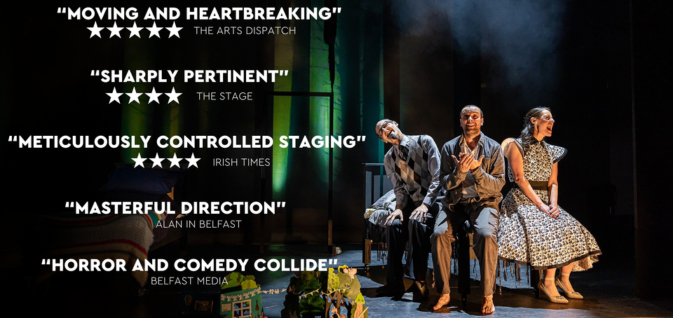
The Pillowman: Unearthing the Heartbreak Behind Martin McDonagh’s Masterpiece
Martin McDonagh’s "The Pillowman" is a play that sears itself into the consciousness, a dark, brutal, yet undeniably poignant exploration of storytelling, censorship, and the cyclical nature of violence. While the play’s stark narrative and shocking twists often dominate discussions, understanding the profound heartbreak woven into its fabric requires a deeper dive into its thematic underpinnings and the desperate circumstances of its protagonist, Katurian. The story behind "The Pillowman" is not a simple biographical account of its creation, but rather an excavation of the emotional and philosophical landscape that birthed such a challenging and emotionally resonant work.
At its core, Katurian’s story is one of a life defined by profound trauma and the subsequent desperate attempt to process and even transcend that trauma through the act of creation. He is a writer of short stories, specifically "pillowman" tales, which are dark, often gruesome narratives designed to soothe children with the promise of a less painful afterlife than their often-abusive existences. This very premise immediately signals the bleakness that has shaped Katurian. The "pillowman" himself is a grotesque but ultimately benevolent figure in his stories, a stark contrast to the harsh realities Katurian and his mentally challenged brother, Michal, have endured. Their childhood was a landscape of severe physical and psychological abuse at the hands of their parents. This foundational trauma is the wellspring of Katurian’s creative impulse and the source of the immense heartbreak that permeates the play.
The play’s structure, with its interwoven narratives of Katurian’s interrogation and the stories he tells, mirrors the fractured nature of trauma itself. Katurian is arrested on suspicion of murdering children, and his stories, which bear striking resemblances to the actual crimes, become the primary evidence against him. This forces him to confront the disturbing parallels between his fictional worlds and the brutal reality he inhabits. The heartbreak here lies in the devastating realization that his attempts to make sense of his own pain, to find a language for suffering, have inadvertently contributed to real-world horror. He doesn’t actively wish harm upon children, but the echoes of his own experiences, channeled into his violent narratives, have become a conduit for a darkness he may not fully understand until he is forced to confront it in the interrogation room.
Michal, Katurian’s brother, is another crucial element in the play’s heartbreak. His intellectual disability makes him both a victim of their parents’ abuse and a symbol of innocence tragically corrupted. Katurian’s fierce protectiveness of Michal is palpable and forms a significant emotional anchor in the play. He sees Michal as an extension of himself, a soul still more vulnerable to the world’s cruelty. When Michal confesses to the murders, driven by a misguided attempt to alleviate Katurian’s own perceived suffering or to embody the dark logic of his brother’s stories, it is a devastating blow. The heartbreak is amplified by the tragic irony: Katurian’s love for his brother, his desire to protect him, ultimately leads to their shared condemnation. Michal’s act, born from a warped understanding of Katurian’s narratives and a desperate need to belong, underscores the tragic consequences of inherited trauma and the inability to escape one’s past.
The interrogators themselves, Detective Tupolski and Detective Ariel, are not simply stock villains. They too carry their own burdens and their own warped justifications for their actions. Ariel, in particular, embodies a chilling sadism, stemming from his own history of abuse. His desire to inflict pain mirrors the cycle of violence that Katurian’s stories attempt to explore. The heartbreak in their interactions lies in the recognition that even those wielding authority in the name of justice are themselves products of the very systems of abuse they claim to combat. Their cruelty is not an abstract evil, but a learned response, a painful testament to the pervasive nature of the suffering that the play depicts.
The stories within "The Pillowman" are crucial to understanding the heartbreak. Each one, from "The Little Girl Who Was Too Fond of Shoes" to "The Apple Tree Man," serves as a parable, illustrating a different facet of suffering and the human condition. The story of the father who cuts off his children’s toes so they can fit into a beautiful pair of shoes is a chilling metaphor for parental abuse and the sacrifice of innocence for perceived societal gain. The Apple Tree Man, who eats children to grow, represents a primal, destructive force that devours the vulnerable. These narratives are not mere embellishments; they are the raw material of Katurian’s psyche, the manifestation of his deepest fears and anxieties. The heartbreak lies in the fact that these stories, born from his own pain, are so horrifyingly resonant with the reality of the child murders. He is forced to confront the possibility that his imagination, his only escape, has become a mirror reflecting unspeakable acts.
The play also grapples with the power and responsibility of the storyteller. Katurian believes that stories have the power to heal, to provide solace, to offer a better alternative to the pain of existence. He writes for children because he believes they are the most vulnerable and therefore most in need of such comfort. However, "The Pillowman" brutally interrogates this ideal. Can stories truly offer salvation, or do they, in fact, risk perpetuating the very violence they seek to explore? The heartbreak stems from Katurian’s dawning, agonizing realization that his stories, intended as a balm, may have inadvertently inspired or at least resonated with real-world atrocities. This is a profound existential crisis for a writer, a betrayal of his own creative purpose.
The ending of "The Pillowman" is a masterclass in tragic resolution, solidifying the play’s heartbreaking core. Katurian, faced with execution, chooses to die rather than reveal the identity of the "pillowman" in his stories – a deliberate fabrication meant to preserve Michal’s fabricated confession and protect his brother’s memory from the shame of being a murderer. He makes a final act of storytelling, weaving a narrative that leads to his own demise. His ultimate sacrifice, born out of love and a desperate attempt to control the narrative even in death, is the most profound expression of heartbreak in the play. He sacrifices his own life to shield Michal, and in doing so, becomes the martyr of his own tragic tales. The final image of Katurian and Michal, bound together, facing their fate, is a powerful and desolate testament to the enduring nature of familial love in the face of unimaginable suffering.
The inherent bleakness of "The Pillowman" is its greatest strength and the source of its enduring emotional impact. It refuses to offer easy answers or comforting platitudes. Instead, it forces the audience to confront the uncomfortable truths about abuse, the nature of storytelling, and the resilience of the human spirit, even when broken. The heartbreak in "The Pillowman" is not a single event, but a pervasive atmosphere, a lingering ache that arises from the deeply human struggles of its characters. It’s the heartbreak of seeing innocence corrupted, of witnessing love twisted into something destructive, and of understanding the profound and often terrible power of the stories we tell ourselves and others. The play doesn’t just tell a story of heartbreak; it embodies it, forcing us to feel the weight of Katurian’s suffering and the devastating beauty of his final act of narrative defiance.

