
Twitter Breach API Attack: A Deep Dive into the Exploitation of User Data and Platform Vulnerabilities
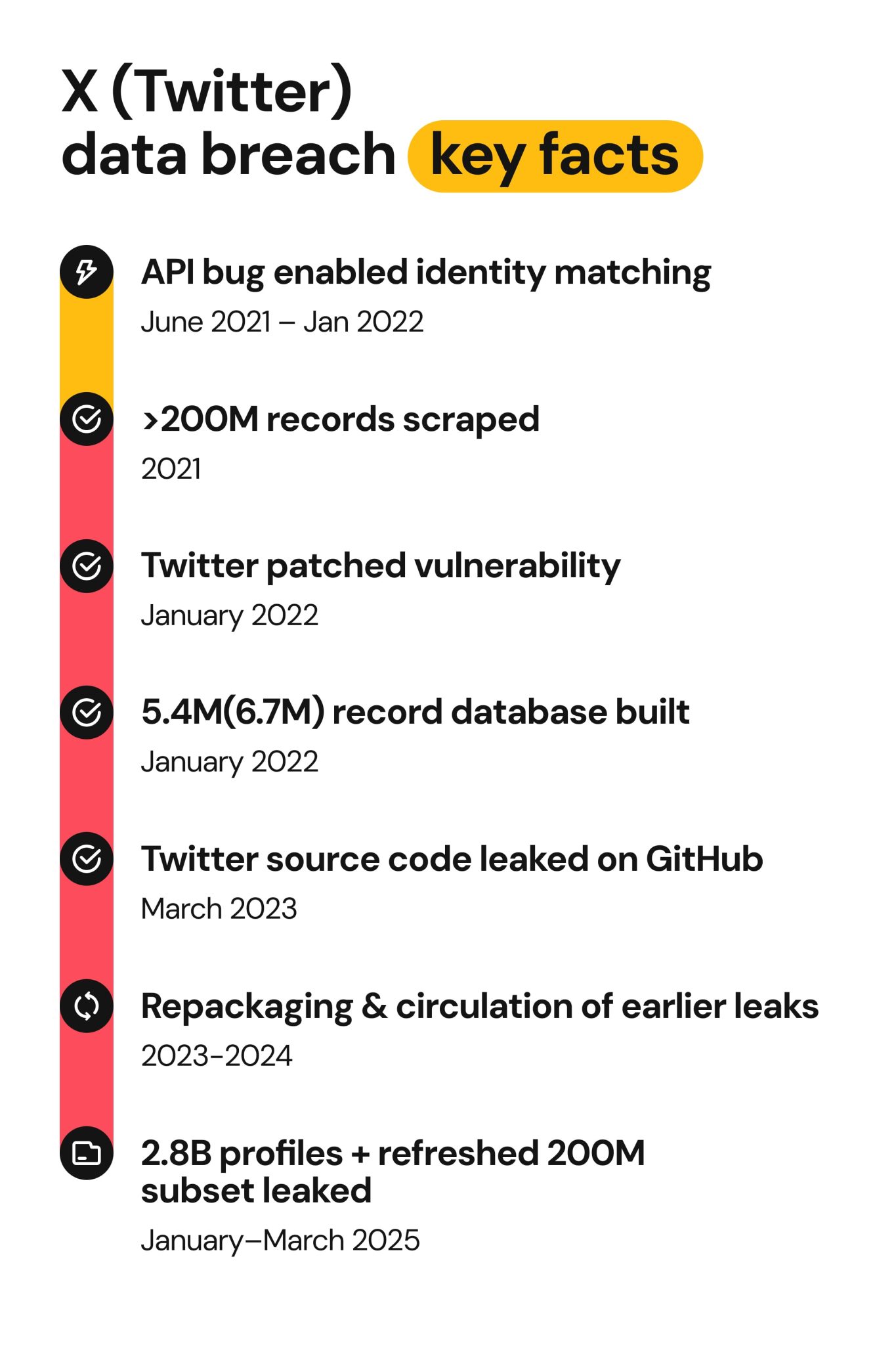
The Twitter breach, often referred to as a Twitter API attack, represents a significant cybersecurity incident that exposed the data of millions of users. This breach, which came to light in early 2023, was not a direct hack of Twitter’s core systems but rather a sophisticated exploitation of its Application Programming Interface (API). APIs are designed to allow different software applications to communicate with each other, and in this instance, malicious actors leveraged vulnerabilities within Twitter’s API to extract vast amounts of user information. The consequences of this breach are far-reaching, impacting individual privacy, brand reputation, and the broader trust in social media platforms. Understanding the technical underpinnings of this attack, the data compromised, and the subsequent mitigation efforts is crucial for users, businesses, and cybersecurity professionals alike.
The technical backbone of the Twitter breach lies in the way Twitter’s API was designed and secured. APIs, while essential for functionality and integration, also present potential attack vectors if not implemented with robust security measures. In this specific incident, threat actors are believed to have exploited a weakness or a misconfiguration in one of Twitter’s APIs, possibly an older or less secured version. These APIs often handle requests for information about users, tweets, and their associated metadata. A successful exploitation would allow an attacker to programmatically query the API, requesting specific types of data for a large number of user accounts. This is distinct from a traditional brute-force attack or a SQL injection that might target the primary database. Instead, it’s about manipulating the authorized channels of communication to exfiltrate data. The attackers likely identified an API endpoint that did not sufficiently validate requests or had overly permissive access controls. This allowed them to repeatedly submit requests, mimicking legitimate user interactions, to extract information without raising immediate alarms. The scale of the breach suggests a programmatic, automated approach, rather than manual data scraping. This method is particularly insidious because it can operate at a speed and volume that outpaces human detection, especially if the API itself is designed to handle high volumes of legitimate traffic. The nature of API vulnerabilities can vary, but common weaknesses include insufficient rate limiting, improper authentication and authorization checks, and exposure of sensitive endpoints. Without specific details from Twitter, it’s challenging to pinpoint the exact vulnerability, but the outcome points to a significant lapse in API security.
The data compromised in the Twitter breach is extensive and, for many users, highly sensitive. Primarily, the attack involved the extraction of email addresses and phone numbers that users had associated with their Twitter accounts. This information, when linked to a specific user profile, can be incredibly valuable to cybercriminals. These credentials can be used for a variety of malicious purposes, including phishing attacks, account takeovers on other platforms (as many users reuse passwords), and even for targeted identity theft. Beyond these direct identifiers, the breach may have also inadvertently exposed other associated data that Twitter’s API readily provides, such as user IDs, usernames, and potentially follower lists. While Twitter has stated that financial information and passwords were not compromised, the exposure of email addresses and phone numbers is a critical privacy violation. This data can be used to build detailed profiles of individuals, facilitating more sophisticated social engineering attacks. For instance, knowing a user’s email and phone number allows attackers to craft highly personalized and believable phishing messages, making them more likely to trick the victim into revealing further sensitive information or clicking on malicious links. Furthermore, the linkage of these identifiers to specific Twitter accounts means that the compromised data is not just a random collection of emails and phone numbers; it’s directly tied to individuals who actively use the platform.
The ramifications of such a large-scale data breach are multifaceted and significant. For individual users, the primary concern is the heightened risk of identity theft and account compromise. The leaked email addresses and phone numbers become prime targets for phishing campaigns, smishing (SMS phishing), and vishing (voice phishing). Users may find themselves receiving a barrage of unsolicited communications, some of which could be highly deceptive and lead to further losses. The psychological impact of knowing one’s personal information has been exposed can also be considerable, leading to increased anxiety and a sense of vulnerability. For businesses and organizations that utilize Twitter for marketing, customer service, or brand building, the breach presents a serious threat to their reputation and customer trust. If employee accounts or accounts representing the brand were compromised, it could lead to the dissemination of misinformation, malicious links, or offensive content from official channels, damaging brand integrity. Furthermore, the breach can erode customer confidence in the security of the platform, leading to a decline in user engagement and potentially a loss of advertising revenue for Twitter itself. On a broader societal level, such breaches highlight the ongoing challenges of securing vast amounts of personal data in the digital age and the urgent need for stronger data protection regulations and robust cybersecurity practices across all online platforms. The interconnectedness of online services means that a breach on one platform can have cascading effects across others, underscoring the need for a holistic approach to cybersecurity.
Addressing and mitigating the fallout from a Twitter API attack requires a multi-pronged approach involving platform-level security enhancements, user-level protective measures, and regulatory oversight. For Twitter, the immediate priority is to conduct a thorough forensic investigation to understand the exact nature of the API vulnerability exploited and to patch it immediately. This involves reviewing all API endpoints for security flaws, implementing stricter access controls, and enhancing rate limiting to prevent mass data exfiltration. The company must also work to identify the full extent of the compromised data and notify affected users transparently and promptly. Implementing multi-factor authentication (MFA) more widely and encouraging its adoption by users is a critical defensive strategy against account takeovers, even if passwords themselves weren’t directly stolen. For users, vigilance is paramount. They should be suspicious of any unsolicited communications, particularly those requesting personal information or urging them to click on links or download attachments. Regularly changing passwords, especially for accounts that may have been compromised indirectly through reused credentials, and enabling MFA wherever possible are essential protective steps. Users should also monitor their financial accounts and other sensitive online profiles for any signs of suspicious activity. Cybersecurity awareness training for both individuals and employees within organizations is also a vital component of defense.
From a regulatory and legal perspective, breaches of this magnitude often trigger investigations by data protection authorities. These bodies, such as the European Data Protection Board (EDPB) or the U.S. Federal Trade Commission (FTC), can impose significant fines on companies that fail to adequately protect user data. Such regulatory scrutiny can incentivize platforms to invest more heavily in cybersecurity and to adhere to stringent data privacy standards, like GDPR or CCPA. The long-term implications of this breach also lie in the ongoing debate about platform accountability and the responsibilities of social media companies to safeguard user data. The incident underscores the need for continuous adaptation and improvement in cybersecurity defenses. As threat actors evolve their tactics, platforms must remain proactive in identifying and addressing vulnerabilities before they are exploited. This includes investing in threat intelligence, employing advanced security monitoring tools, and fostering a culture of security awareness throughout the organization. The development and deployment of secure coding practices, regular security audits, and penetration testing are essential to identifying and rectifying weaknesses before they can be exploited. The Twitter breach serves as a stark reminder that even well-established platforms are not immune to sophisticated cyber threats.
The ongoing evolution of APIs and their integral role in the modern digital ecosystem necessitates a heightened focus on API security. As platforms increasingly rely on APIs to connect services, share data, and enable third-party integrations, the potential attack surface expands. The Twitter breach is a case study that highlights the critical need for developers and platform providers to prioritize security from the initial design phase of any API. This includes implementing robust authentication and authorization mechanisms, utilizing encryption for data in transit and at rest, and conducting regular security assessments of API endpoints. Rate limiting, as mentioned earlier, is a crucial defense against brute-force attempts and excessive data scraping, but it must be implemented intelligently to avoid hindering legitimate API usage. Moreover, logging and monitoring API activity are essential for detecting anomalous behavior that might indicate a breach in progress. Security information and event management (SIEM) systems can play a vital role in aggregating and analyzing API logs to identify suspicious patterns. The incident also emphasizes the importance of API version management and deprecation strategies. Older, less secure API versions should be phased out and replaced with more secure alternatives, and users should be actively encouraged to migrate. Failure to do so leaves a legacy of potential vulnerabilities that can be exploited long after newer, more secure versions are available.
The broader implications for the cybersecurity landscape cannot be overstated. This breach reinforces the understanding that even sophisticated organizations can be vulnerable. It necessitates a continuous reassessment of security strategies and investments. The race between attackers and defenders is perpetual, and complacency is a dangerous adversary. The lessons learned from the Twitter breach should inform future security practices, not just for social media platforms, but for any organization that handles sensitive user data or relies on API integrations. This includes a renewed emphasis on threat modeling, risk assessment, and incident response planning. Organizations must be prepared not only to prevent attacks but also to detect and respond to them swiftly and effectively when they occur. The economic impact of such breaches, including the cost of remediation, legal fees, regulatory fines, and reputational damage, often far outweighs the cost of proactive security measures. Therefore, investing in robust cybersecurity is not merely a cost of doing business but a strategic imperative for survival and sustained success in the digital age. The interconnectedness of the digital world means that a vulnerability in one part of the ecosystem can have ripple effects across many others.
In conclusion, the Twitter breach, a sophisticated API attack, has underscored the persistent and evolving nature of cyber threats. The exploitation of API vulnerabilities to extract millions of users’ email addresses and phone numbers has significant implications for individual privacy, platform security, and broader trust in online services. The technical mechanisms behind such attacks involve the manipulation of authorized communication channels, often exploiting weaknesses in authentication, authorization, or rate limiting. The ramifications range from heightened risks of identity theft and account compromise for individuals to severe reputational damage for businesses and potential regulatory penalties. Mitigation and prevention strategies require a holistic approach, encompassing platform-level security enhancements, user vigilance, robust regulatory frameworks, and a continuous commitment to adapting cybersecurity practices in line with emerging threats and evolving technological landscapes. The ongoing importance of secure API development, diligent monitoring, and proactive security measures remains paramount in safeguarding user data in an increasingly interconnected digital world. The Twitter breach serves as a crucial reminder of the ongoing need for vigilance and investment in cybersecurity at all levels.

