
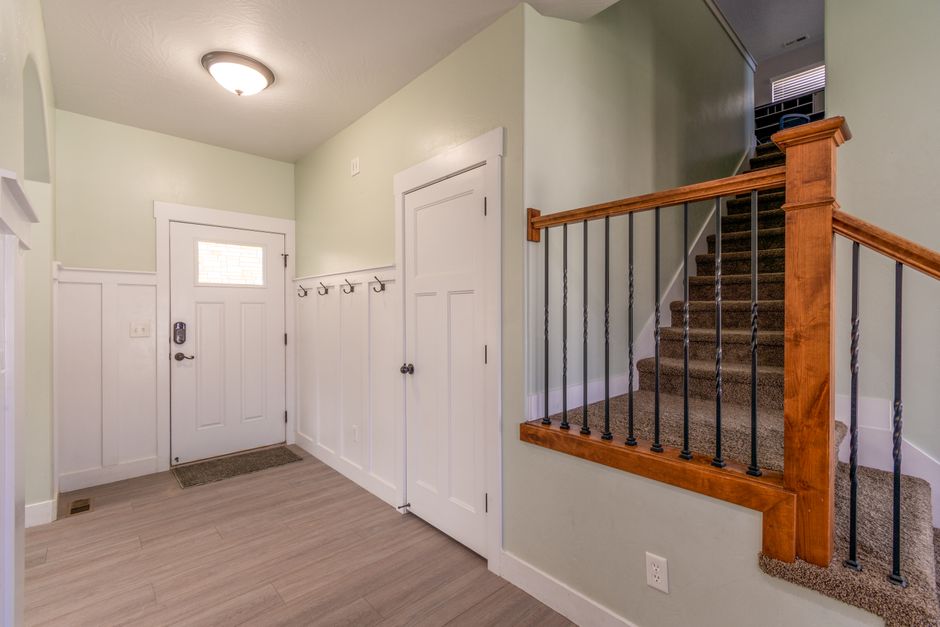
Transform Your Staircase with DIY Board and Batten: A Comprehensive Guide
Board and batten, a classic architectural detail, offers an affordable yet impactful way to elevate the visual appeal of any space, and a staircase is no exception. This technique involves alternating wide, flat boards (often referred to as "boards") with narrow strips of wood ("battens") applied over them, creating a dimensional, textured wall finish. While it might seem daunting, installing board and batten on a staircase is a manageable DIY project that can dramatically enhance the style and character of your home’s entryway. This guide will walk you through every step, from planning and material selection to precise installation and finishing, ensuring a professional-looking result.
1. Planning Your Board and Batten Staircase Design
Before picking up a single tool, meticulous planning is crucial for a successful board and batten staircase. The first decision is the style of application. You can opt for a full wall treatment, extending the board and batten from the floor to the ceiling, or a wainscoting height, typically around 30-36 inches from the floor. For staircases, a full wall treatment often creates a more dramatic and cohesive look, particularly on longer runs or landings. Consider the overall aesthetic of your home. Are you aiming for a modern, farmhouse, traditional, or contemporary feel? This will influence the spacing and width of your boards and battens.
Spacing is paramount. The distance between your battens dictates the visual rhythm. Common batten spacing ranges from 4 to 10 inches on center. Wider spacing can lend a more modern feel, while tighter spacing can appear more traditional. Measure the total width of the wall area you intend to cover. Subtract the width of your chosen boards. The remaining width will be divided by the number of spaces between the battens. For example, if you have a 100-inch wall and plan to use 4-inch wide boards with 6-inch gaps between battens, you’ll need to calculate how many 4-inch boards and 6-inch gaps fit. It’s often easier to determine your desired batten spacing and then work backward to calculate the number of boards needed.
Consider the layout of your staircase. Staircases often have openings for doors, windows, or banister posts. You’ll need to plan how your board and batten pattern will align with these elements. Aim for symmetrical breaks where possible. For instance, if a door opening is centered on a wall, try to have your batten pattern also centered around that opening. Measure the height of your walls, paying attention to any changes in ceiling height or stair treads. This will help you determine the length of your boards and battens.
Material Selection is Key: For board and batten, you’ll typically use either MDF (Medium-Density Fiberboard) or wood. MDF is generally more affordable, smooth, and readily available. It takes paint very well, but it is susceptible to moisture damage and can be heavier. Wood, such as pine or poplar, offers natural beauty and durability but can be more expensive and may require more preparation (like filling knots). For battens, you can use 1×2, 1×3, or 1×4 lumber, depending on your desired visual impact. For the boards, consider using 1×4, 1×6, or even wider boards, or opt for plywood panels if you’re doing a full-height treatment and want a seamless look for the "board" sections.
Tools and Materials Checklist:
- Measuring tape
- Pencil
- Level (a long level is highly recommended for staircases)
- Miter saw (for precise cuts)
- Stud finder
- Nail gun (brad nailer or finish nailer) and appropriate nails
- Wood glue
- Sanding blocks or orbital sander
- Spackle or wood filler
- Primer
- Paint (semigloss or satin is common for durability)
- Paintbrushes and rollers
- Safety glasses
- Gloves
- Painter’s tape
- Optional: Caulk gun and caulk
2. Preparing Your Staircase Walls for Installation
Proper wall preparation is fundamental for a professional board and batten finish. Begin by thoroughly cleaning the staircase walls. Remove any cobwebs, dust, or grime. If there are any significant imperfections, such as large dents or holes, fill them with spackle or wood filler and allow them to dry completely. Sand these filled areas smooth.
Locate Wall Studs: This is a critical step for secure installation. Use a stud finder to mark the location of every wall stud along the entire length of your staircase walls. These marks will serve as your anchor points for attaching the boards and battens, ensuring they are securely fastened to the wall. For staircases, studs are typically spaced 16 or 24 inches apart. Mark these locations at your desired height, as you’ll be attaching your horizontal boards and vertical battens to these studs.
Determine Your Starting Point: Decide where you will begin your board and batten installation. It’s often easiest to start in a less visible corner or at the bottom of the staircase and work your way up. This allows you to establish your pattern and make any necessary adjustments as you progress.
Consider Existing Trim: If your staircase has existing baseboards or crown molding, you’ll need to decide whether to remove them, replace them, or work around them. If you’re aiming for a clean, modern look, removing existing trim and installing new, slim trim after the board and batten is often the best approach. If you’re working with a more traditional aesthetic, you might be able to integrate the existing trim.
3. Cutting and Installing the Horizontal Boards
The horizontal "boards" are the foundation of your board and batten design. If you’re doing a full wall treatment, these will run from the floor to the ceiling. If you’re doing a wainscoting height, they will be installed at your chosen height and then topped with a chair rail or picture frame molding.
Measure and Cut: Using your measuring tape and miter saw, carefully measure and cut your chosen board material to the required lengths. Account for any wall angles or corner cuts. For long walls, it’s often best to cut boards to fit the longest sections possible to minimize seams. If seams are unavoidable, plan to place them over a stud and consider staggering them for a less noticeable appearance.
Mark Your Layout: Before you start nailing, lightly mark your horizontal board placement on the wall. This can be as simple as a faint pencil line at your desired height. If you’re doing a wainscoting, this line will be your guide for the bottom or top edge of your horizontal boards.
Install the First Board: Apply a bead of wood glue to the back of your first horizontal board, aligning it with your starting point and ensuring it’s perfectly level. Use your nail gun to secure the board to the wall studs, driving nails every 12-16 inches. For a seamless look, use finish nails that can be easily countersunk and filled.
Continue Installing Horizontal Boards: Work your way across the wall, installing subsequent horizontal boards. For full-height treatments, you’ll have boards running floor to ceiling. For wainscoting, you’ll install the bottom board, then your battens, and finally a top trim piece (chair rail or picture frame molding). Always use a level to ensure each board is perfectly horizontal.
Dealing with Obstacles: When you encounter doorways, windows, or electrical outlets, carefully measure and cut your boards to fit around them. Use painter’s tape to protect surrounding areas from accidental nicks or scratches.
4. Cutting and Installing the Vertical Battens
The vertical battens are what give board and batten its distinctive look. They are applied over the horizontal boards and are responsible for creating the textured, dimensional effect.
Determine Batten Spacing: Refer back to your planning phase for your desired batten spacing. Use your measuring tape and a pencil to mark the desired spacing on your horizontal boards or across the wall at regular intervals. This is where your pre-marked stud locations become invaluable. Aim to have your battens hit a stud whenever possible for maximum stability.
Measure and Cut Battens: Cut your chosen batten material (e.g., 1×2 or 1×3 lumber) to the full height of your wall or to the desired length for your wainscoting design. For staircases, you’ll be cutting these pieces to match the height of the wall, potentially with angled cuts at the top and bottom to accommodate the slope of the stairs.
Install the First Batten: Apply a bead of wood glue to the back of your first vertical batten. Align it with your marked spacing and ensure it’s perfectly plumb (vertical) using your level. Nail the batten to the wall studs, again spacing nails every 12-16 inches. If a batten doesn’t land directly on a stud, use construction adhesive in addition to nails, or consider shimming behind it for added support.
Continue Installing Battens: Work your way across the wall, installing each subsequent batten according to your marked spacing. Use your level frequently to ensure each batten is perfectly vertical. Consistency is key to a professional appearance.
Creating a Consistent Pattern: When working on a staircase, the challenge is often maintaining a consistent pattern on angled walls or around turns. Use your level and measuring tape diligently. For angled sections, you might need to make angled cuts on your battens. It’s often best to measure each individual section and cut the battens to fit precisely.
5. Finishing Touches: Filling, Sanding, and Priming
Once all your boards and battens are installed, the real magic of a smooth finish begins with the filling and sanding process.
Fill Nail Holes: Using spackle or wood filler, carefully fill every nail hole. Don’t overfill; a small amount is sufficient. Allow the filler to dry completely according to the product’s instructions.
Sand Smooth: Once the filler is dry, use a sanding block or orbital sander to smooth out the filled areas. You want the surface to be completely flush with the surrounding board or batten. For a truly seamless finish, you may need to apply a second layer of filler to any areas that didn’t fill completely. Sand again until smooth.
Caulk Seams: For a professional, polished look, caulk all the seams between the boards and battens, and where the boards meet the ceiling and baseboards. Apply a thin, even bead of paintable caulk. Use a damp cloth or your finger to smooth the caulk line, removing any excess. This step dramatically improves the overall finish by hiding any minor gaps and creating a unified surface.
Prime the Surface: Before painting, it is essential to prime your entire board and batten installation. Use a high-quality primer that is suitable for your chosen material (MDF or wood). Primer will seal the surface, ensure even paint absorption, and provide a uniform base for your topcoat. Apply one or two coats of primer, allowing each coat to dry completely before proceeding. Lightly sand between primer coats with fine-grit sandpaper (around 220 grit) to remove any dust nibs or imperfections.
6. Painting Your Board and Batten Staircase
Painting is the final step that brings your board and batten staircase to life.
Choose Your Paint Finish: For board and batten, a semigloss or satin finish is typically recommended for durability and ease of cleaning. These finishes are more resistant to scuffs and stains, which is important in a high-traffic area like a staircase. You can choose to paint the entire installation one color, or for a more traditional look, paint the boards a different color than the battens.
Apply the First Coat of Paint: Using a high-quality paintbrush for the edges and corners and a roller for the flat surfaces, apply your chosen paint color. Work in sections, ensuring even coverage. Avoid overworking the paint, as this can lead to brush marks. For the best results, apply thin, even coats.
Allow for Drying Time: Let the first coat of paint dry completely according to the manufacturer’s instructions. This is crucial for proper adhesion and a smooth finish.
Apply Additional Coats: Most board and batten installations will require at least two coats of paint for full coverage and depth of color. Apply subsequent coats, allowing adequate drying time between each. Again, lightly sand with very fine-grit sandpaper between coats if necessary to address any imperfections.
Final Touches: Once the final coat of paint is dry, step back and admire your work. If you removed existing trim, now is the time to reinstall or install new trim pieces to complete the look.
SEO Considerations for Staircase Board and Batten Content:
Throughout this article, keywords such as "board and batten staircase," "DIY board and batten," "staircase wainscoting," "how to install board and batten," "wood accent wall," "DIY home improvement," "staircase renovation," and "wall molding installation" have been incorporated naturally within the text. The structure of the article, with clear headings and a logical flow, also contributes to SEO by making it easy for search engines to understand the content. The detailed step-by-step instructions and comprehensive information aim to answer user queries effectively, increasing the likelihood of ranking well in search results. The inclusion of a materials checklist and preparation steps further enhances the article’s utility and searchability.

