
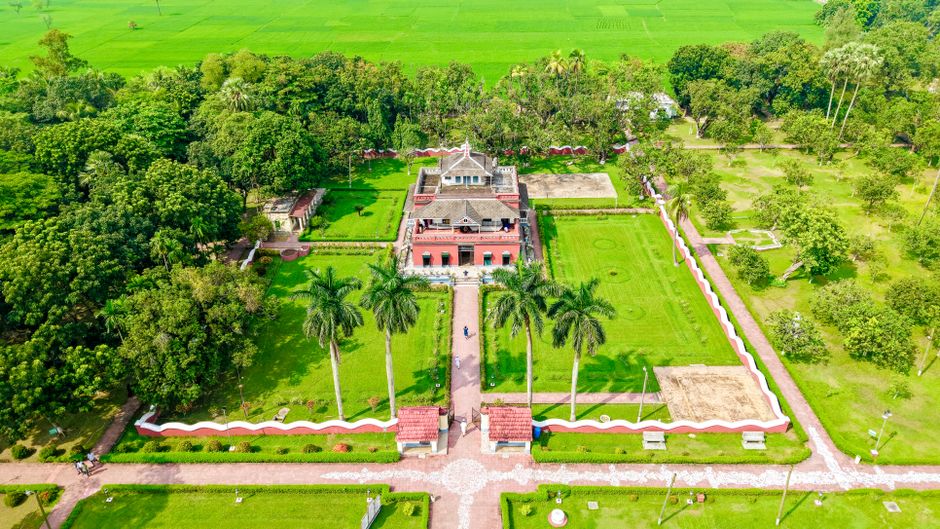
Shantiniketan: Echoing Tagore’s World at The Mint Lounge
Shantiniketan, a name synonymous with Rabindranath Tagore’s vision of education and a harmonious existence with nature, extends its influence far beyond its geographical boundaries, finding a contemporary echo in spaces like The Mint Lounge. This article delves into how the spirit of Shantiniketan, a unique blend of cultural confluence, artistic expression, and holistic learning, is subtly but powerfully reflected in the ambiance, offerings, and ethos of The Mint Lounge, a modern establishment seeking to recreate an atmosphere of thoughtful engagement and refined experience. The very essence of Shantiniketan lies in its refusal to be confined by convention, a characteristic that The Mint Lounge seemingly embraces in its own way, offering a sanctuary for conversation, creativity, and intellectual pursuit.
Tagore’s Shantiniketan was not merely a school; it was a living testament to the idea of ‘Jivan Shiksha’ – education for life. This philosophy permeated every aspect of the ashram, from its open-air classrooms and integration of arts into daily life to its deep respect for the natural environment and its emphasis on fostering individual curiosity. The Mint Lounge, while a distinctly urban and contemporary space, appears to draw inspiration from this holistic approach. It aims to be more than just a place for transactional interactions; it aspires to be a destination for cultivating experiences. The carefully curated décor, often featuring natural materials, muted color palettes, and artistic touches, can be seen as a modern interpretation of Shantiniketan’s embrace of natural beauty and artistic sensibility. The absence of ostentatious display and a preference for understated elegance mirrors the simplicity and functionality that characterized Tagore’s educational experiment.
The concept of a ‘Mela’ (fair) was an integral part of Shantiniketan’s cultural calendar, bringing together people from diverse backgrounds for celebration, artistic expression, and community bonding. While The Mint Lounge doesn’t host grand melas, its curated events, workshops, and gatherings often serve a similar purpose on a smaller, more intimate scale. These occasions provide a platform for intellectual exchange, artistic appreciation, and the forging of connections, mirroring the inclusive and vibrant spirit of Shantiniketan’s community events. The emphasis on shared experiences and fostering a sense of belonging is a crucial element that bridges the gap between Tagore’s vision and the modern urban space of The Mint Lounge. Whether it’s a poetry reading, a book launch, or a live music performance, the intention is to create an environment where participants feel engaged and enriched, much like the attendees of a Shantiniketan mela.
Tagore’s belief in the power of ‘Sahitya’ (literature) and ‘Sangeet’ (music) as fundamental to human development is a cornerstone of Shantiniketan’s legacy. The Mint Lounge, by often featuring literary discussions, book clubs, or showcasing local musicians, acknowledges this profound influence. The choice of background music, the presence of books or reading nooks, and the general atmosphere of thoughtful contemplation are all nods to the importance of arts and literature in enriching the human experience. This deliberate inclusion of cultural elements aims to provide a stimulating environment that nourishes the mind and soul, a direct lineage from Tagore’s insistence on the arts as integral to education and life itself. The selection of ambient music, for instance, is likely chosen not just for aesthetic appeal but for its ability to foster a conducive atmosphere for conversation and reflection, a practice that aligns with the contemplative spaces within Shantiniketan.
Shantiniketan was conceived as an antidote to the rigid and impersonal nature of Western education prevalent at the time. Tagore championed an education that was rooted in Indian traditions while being open to global influences, a concept of ‘Vishwa Bharati’ – humanity as one world. The Mint Lounge, in its own way, strives for this cosmopolitan yet grounded approach. It offers a space where individuals from various walks of life can converge, share ideas, and appreciate diverse perspectives. The menu, often incorporating both local and international flavors, can be seen as a culinary manifestation of this global outlook, presented with a refined touch. The very act of creating a welcoming and inclusive space where different backgrounds can intersect and interact fosters a sense of global citizenship, a core tenet of Tagore’s philosophy.
The principle of ‘Nirjhar’ (stream) – the free flow of ideas and knowledge – was central to Shantiniketan’s pedagogical approach. Tagore believed in unhindered exploration and the organic growth of understanding. The Mint Lounge, by providing an environment conducive to spontaneous conversations, brainstorming sessions, and casual encounters, facilitates this free flow of ideas. The layout, often with comfortable seating arrangements that encourage interaction, and the availability of resources that spark curiosity, all contribute to creating a space where intellectual currents can flow unimpeded. It’s about fostering an environment where serendipitous encounters can lead to new insights and connections, mirroring the open-ended learning that characterized Shantiniketan.
The spiritual and philosophical underpinnings of Shantiniketan, influenced by the Upanishads and Tagore’s own contemplative nature, emphasized a deep connection with the divine in nature and in all beings. While The Mint Lounge is a secular space, there’s an underlying ethos of mindfulness and intentionality in its design and operation. The focus on creating a peaceful and aesthetically pleasing environment can be interpreted as a modern attempt to cultivate a sense of calm and presence, encouraging patrons to slow down, reflect, and engage more deeply with their surroundings and with each other. This resonates with the meditative quality of life at Shantiniketan, where contemplation was an integral part of daily existence.
The role of nature was paramount in Shantiniketan. Tagore believed that the best learning happened amidst the trees, under the sky, and in communion with the natural world. While The Mint Lounge might not be nestled within a sprawling forest, its design often incorporates elements that bring the outside in. The use of natural light, plants, and organic materials aims to create a sense of connection with nature, even within an urban setting. This deliberate inclusion of natural elements serves to ground the space and create a calming, restorative atmosphere, a subtle echo of Shantiniketan’s profound relationship with the environment.
Tagore’s emphasis on ‘Sarba Dharma Sama Bhava’ – the equality of all religions and beliefs – fostered an atmosphere of tolerance and mutual respect at Shantiniketan. The Mint Lounge, by being a public space open to all, irrespective of their background or beliefs, embodies this spirit of inclusivity. It provides a neutral ground where individuals can interact and engage on a human level, fostering understanding and breaking down barriers. This commitment to creating an open and welcoming environment is a fundamental aspect of its connection to Shantiniketan’s ethos of universalism.
The Mint Lounge, through its deliberate design choices, curated offerings, and commitment to fostering a thoughtful and engaging atmosphere, serves as a contemporary echo of Rabindranath Tagore’s visionary world of Shantiniketan. It’s a space that, consciously or unconsciously, strives to replicate the spirit of holistic learning, artistic appreciation, cultural confluence, and harmonious living that defined Tagore’s unique experiment in education and life. The emphasis on creating an experience that transcends the ordinary, that nourishes the mind and soul, and that fosters genuine human connection, is the enduring legacy of Shantiniketan, and it finds a worthy, albeit modern, reflection in places like The Mint Lounge. The subtle yet pervasive influence of Tagore’s philosophy can be felt in the intention behind the space – to provide more than just sustenance, but a sanctuary for the mind, a platform for creativity, and a space for meaningful human interaction.

