
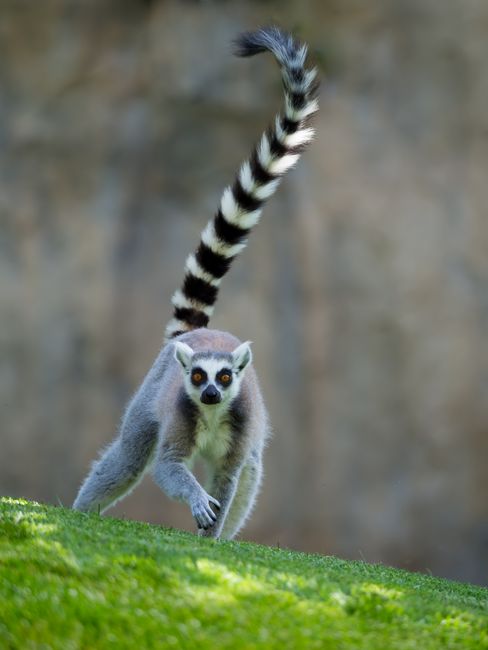
The Long, Wiggly Tail: A Masterpiece of Evolutionary Design and Functional Versatility
The long, wiggly tail, a common and often endearing feature across a vast spectrum of the animal kingdom, is far more than just an aesthetic appendage. It represents a profound evolutionary triumph, a testament to the power of natural selection in crafting highly specialized tools for survival, communication, and locomotion. From the twitching antenna of a mouse to the sweeping plume of a lion, these elongated, flexible structures serve a myriad of critical functions, each adapted to the specific ecological niche and lifestyle of its bearer. Understanding the biomechanics, neurological control, and diverse applications of the long, wiggly tail unlocks a deeper appreciation for the intricate web of life and the ingenious solutions nature has devised.
The fundamental structure of a mammalian tail, which most commonly embodies the "wiggly" characteristic, is built upon a series of caudal vertebrae, a direct extension of the vertebral column. The number of these vertebrae can vary significantly, with some species possessing a few, while others boast dozens, contributing to the tail’s length and degree of flexibility. These vertebrae are interconnected by intervertebral discs, allowing for a range of motion from simple flexion and extension to complex lateral undulation and rotation. Muscles, tendons, and ligaments intricately woven around these bony structures provide the power and precision for tail movements. The musculature is particularly dense and well-innervated, enabling both gross motor actions and fine, nuanced adjustments. Sensory receptors within the skin and underlying tissues, including proprioceptors that sense position and movement, provide constant feedback to the brain, allowing for sophisticated control. This sophisticated neuromuscular system is what allows for the characteristic "wiggle," a dynamic and often rapid oscillation that can be both instinctive and consciously controlled.
Perhaps the most visually striking and widely recognized function of the long, wiggly tail is its role in balance. For arboreal creatures, like monkeys and squirrels, the tail acts as a dynamic counterweight, crucial for maintaining stability while navigating precarious branches. As the animal leaps or shifts its weight, the tail can be extended, flexed, or swept to counterbalance the movement, preventing falls. Imagine a squirrel darting across a thin wire – its tail is constantly in motion, adjusting its position to keep its center of gravity aligned. This balancing act extends to terrestrial animals as well. Cheetahs, for instance, utilize their long tails as rudders during high-speed chases, allowing them to execute sharp turns with remarkable agility. The tail provides a vital stabilizing force, enabling them to maintain control and pursue prey effectively. Even animals not typically associated with acrobatic feats, such as dogs, employ their tails for balance, especially when moving at speed or on uneven terrain.
Beyond its role in equilibrium, the long, wiggly tail is a powerful instrument of communication. In many species, tail posture, speed of movement, and direction of wagging convey a wealth of information, acting as a visual lexicon of emotions and intentions. For dogs, a slow, sweeping wag often signifies contentment or curiosity, while a rapid, high-pitched wag can indicate excitement or even anxiety. A tucked tail between the legs is a clear signal of fear or submission, whereas a raised, stiff tail can denote dominance or aggression. This complex visual language allows for intricate social interactions, helping to de-escalate conflicts, signal mating readiness, or warn of danger. Primates, with their highly developed social structures, utilize their prehensile tails not only for grip but also for social signaling. A gentle flick might be a friendly greeting, while a more emphatic swish could convey annoyance. The subtlety and context-dependency of these tail signals highlight the sophisticated communication systems that have evolved within these species.
Locomotion, in ways beyond simple balance, is another crucial area where the long, wiggly tail plays a significant role. For aquatic mammals like otters and beavers, the tail is a primary propulsor. Its broad, flattened shape, or in some cases, its paddle-like structure, generates powerful thrusts that propel them through the water. The undulatory movements of their tails, combined with their powerful hind limbs, allow for efficient swimming and maneuvering. Similarly, some reptiles, such as crocodiles and alligators, possess long, muscular tails that are adept at both propulsion and steering in aquatic environments. These tails can also be used as powerful weapons, delivering formidable blows to deter predators or subdue prey.
The long, wiggly tail also serves as a vital tool for predator evasion. For many small mammals, a quick flick of the tail can serve as a distraction, drawing the predator’s attention away from the main body, allowing the prey animal a crucial moment to escape. In some species, like certain lizards, the tail is even designed to detach, a phenomenon known as autotomy. When grabbed by a predator, the tail breaks off, continuing to writhe and twitch, a tantalizing diversion that allows the lizard to escape with its life. The regenerated tail may not be as long or as robust as the original, but it provides a crucial survival advantage. This remarkable adaptation underscores the evolutionary pressures that have shaped the diverse forms and functions of tails.
Beyond these primary functions, the long, wiggly tail exhibits a fascinating array of specialized adaptations. For animals that burrow, like moles, their tails may be short and stiff, serving as a lever to push dirt away from their digging efforts. Conversely, the prehensile tails of New World monkeys are so dexterous that they function as a fifth limb, capable of grasping branches, carrying food, and even exploring their environment. The elaborate, feathered tails of birds are integral to their aerodynamic capabilities, providing steering, braking, and stability during flight, and also play a significant role in courtship displays. The iridescent, fan-like tail of a peacock, for instance, is a prime example of sexual selection, used to attract mates through its sheer visual spectacle.
The neurological control over these intricate tail movements is a marvel of biological engineering. The brain regions dedicated to tail control are often proportionally larger in species that rely heavily on tail function. This intricate neural network allows for rapid processing of sensory information and precise motor commands, enabling seamless and often subconscious tail movements. Damage to the spinal cord or specific motor neurons can severely impair tail function, highlighting the critical connection between the nervous system and the tail’s capabilities. The "wiggle" itself is a testament to this complex interplay, a symphony of neural signals orchestrating a cascade of muscular contractions.
Furthermore, the long, wiggly tail can also serve as a tactile sensory organ. Many animals use their tails to explore their surroundings, especially in low-light conditions or confined spaces. The sensitive skin of the tail can detect textures, vibrations, and even subtle air currents, providing valuable information about the environment. For nocturnal creatures, this tactile exploration can be as important as visual cues. The ability to "feel" their way through the dark, using their tails as extensions of their sensory perception, significantly enhances their ability to navigate, forage, and avoid danger.
The diversity in tail morphology and function is a powerful illustration of adaptive radiation. Over evolutionary time, ancestral tails have been sculpted by environmental pressures, leading to a breathtaking array of forms, each perfectly suited to its owner’s way of life. From the streamlined tails of aquatic predators to the bushy, insulating tails of arctic mammals, each variation represents a successful evolutionary strategy. The development of the "wiggly" characteristic, with its inherent dynamism and responsiveness, has proven to be a particularly advantageous trait across numerous lineages, underpinning its widespread prevalence.
In conclusion, the long, wiggly tail is a prime example of functional morphology, a biological structure that has been refined over millennia to perform a diverse array of essential tasks. Its contribution to balance, communication, locomotion, predator evasion, and sensory perception underscores its profound importance in the survival and success of countless species. The intricate interplay of skeletal structure, muscular control, and neural innervation allows for the dynamic and often complex movements that define the "wiggly" tail, making it a truly remarkable evolutionary innovation. Recognizing the multifaceted roles of this appendage enriches our understanding of the natural world and the elegant, efficient solutions that evolution provides.

