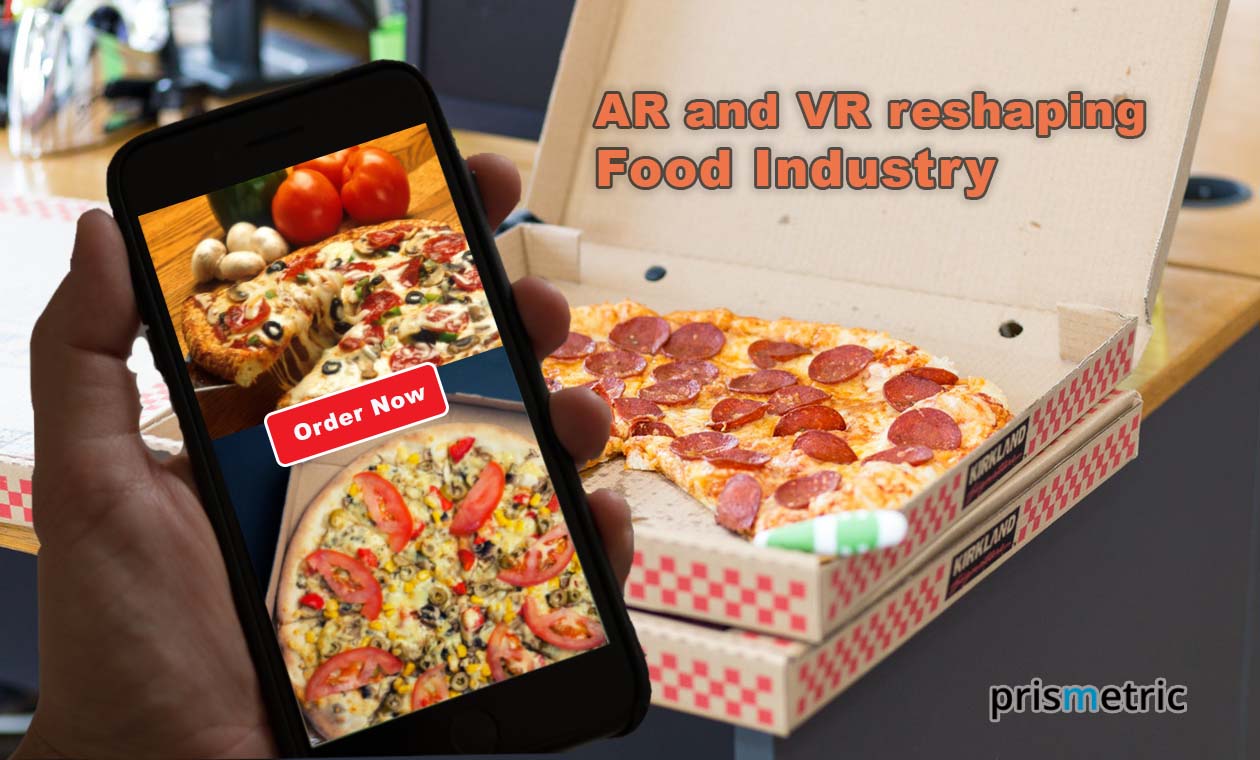

The Future of Flavor: How Virtual Reality is Revolutionizing the Food Industry
The integration of Virtual Reality (VR) into the food industry is no longer a speculative concept; it’s a burgeoning reality transforming how we conceptualize, create, market, and consume food. This intersection of immersive digital experiences and the tangible world of gastronomy offers a multifaceted approach to addressing challenges and unlocking new opportunities. From enhanced product development and training to novel consumer engagement and therapeutic applications, VR is poised to reshape the culinary landscape fundamentally. The initial investment in VR hardware and software development, while significant, is rapidly being offset by the demonstrable benefits in efficiency, innovation, and customer reach. As VR technology matures and becomes more accessible, its impact on the food industry is set to expand exponentially.
One of the most profound applications of VR in the food industry lies in product development and innovation. Traditionally, creating and testing new food products involved extensive, costly, and time-consuming physical prototyping. This included formulating recipes, conducting taste tests, and iterating based on consumer feedback. VR offers a paradigm shift by allowing food scientists and chefs to simulate entire product development cycles in a virtual environment. Imagine designing a new ice cream flavor. Instead of painstakingly mixing ingredients, freezing batches, and organizing physical tasting panels, a developer can, using VR, craft a digital representation of the flavor profile. They can adjust ingredient ratios virtually, simulate the mouthfeel, and even preview the visual appeal of the final product without expending a single physical resource. This virtual prototyping allows for rapid iteration and experimentation with a vast array of flavor combinations and textural possibilities. The ability to virtually "taste" and evaluate a product before it’s even made in a lab dramatically accelerates the innovation cycle and reduces the waste associated with failed experiments. Furthermore, VR can simulate consumer reactions to new products. By creating virtual environments that mimic typical consumption settings – a dinner party, a fast-food restaurant, or even a home kitchen – developers can gather data on how consumers might perceive and interact with a new food item. This predictive analysis, based on user behavior within the VR simulation, can inform critical decisions regarding product design, packaging, and marketing strategies. The granularity of data obtainable from VR-based consumer testing far surpasses traditional focus groups, offering insights into emotional responses, perceived value, and purchase intent. This data-driven approach minimizes risk and maximizes the chances of successful product launches, a crucial advantage in a highly competitive market.
Beyond product development, VR is revolutionizing food industry training and education. The complexities of food production, from agricultural practices to restaurant service, require highly skilled personnel. VR provides an immersive and safe platform for training employees in a realistic, risk-free environment. For example, aspiring chefs can hone their knife skills in a virtual kitchen, practicing intricate cuts and techniques without the fear of injury or wasting precious ingredients. They can learn to operate complex kitchen equipment, navigate food safety protocols, and master elaborate plating designs all within a simulated setting. This not only enhances skill acquisition but also instills confidence before they step into a real-world kitchen. Similarly, in food manufacturing plants, VR can be used to train workers on operating machinery, adhering to strict hygiene standards, and responding to potential safety hazards. The ability to simulate emergency scenarios, such as equipment malfunctions or contamination breaches, allows employees to practice their responses in a controlled setting, ensuring they are prepared to act effectively when real-life situations arise. This is particularly valuable in industries with high safety regulations, where mistakes can have severe consequences. For restaurant staff, VR can simulate customer interactions, enabling them to practice order taking, dealing with difficult customers, and providing exceptional service. This level of practical, hands-on training, previously difficult to replicate consistently, is now achievable through immersive VR experiences. The economic benefits are substantial: reduced training time, fewer errors leading to waste and rework, and improved employee retention due to increased confidence and job satisfaction.
Marketing and consumer engagement are being fundamentally reshaped by VR. The traditional advertising methods, while still relevant, often struggle to convey the full sensory experience of food. VR offers a powerful solution by allowing brands to create immersive marketing campaigns that engage consumers on multiple levels. Imagine a coffee brand creating a VR experience that transports users to a Colombian coffee plantation, allowing them to virtually walk through the fields, learn about the bean cultivation process, and witness the meticulous harvesting. This narrative-driven approach builds a deeper connection with the consumer, fostering brand loyalty and appreciation for the product’s origin and quality. Similarly, restaurants can use VR to offer virtual tours of their dining spaces, showcasing the ambiance, decor, and even a preview of signature dishes. This can entice potential customers and help them make informed decisions about where to dine. Food manufacturers can leverage VR to create interactive packaging that, when scanned with a VR headset, unlocks a wealth of information about the product, including recipes, nutritional facts, and origin stories. This transforms passive consumption into an active, engaging experience. Furthermore, VR can be used for virtual product sampling. While not a direct replacement for tasting, it can offer a compelling preview. A company launching a new snack could create a VR simulation where users can "virtually" unbox and experience the texture and aroma of the product, generating excitement and driving pre-orders. This innovative approach to marketing not only captures attention but also provides a more memorable and impactful brand experience, differentiating products in a crowded marketplace. The ability to tell a compelling story and evoke emotions through sensory immersion is a significant advantage that VR brings to food marketing.
The therapeutic and health-related applications of VR within the food industry are emerging as a significant area of growth. For individuals with eating disorders or specific dietary restrictions, VR can provide a controlled and supportive environment for exposure therapy and nutritional education. For example, someone struggling with food phobias might gradually be introduced to feared foods in a VR simulation, allowing them to confront their anxieties in a safe space under the guidance of a therapist. This can be a crucial step in overcoming debilitating conditions. VR can also be used to help individuals manage chronic health conditions that require specific dietary management, such as diabetes. Immersive simulations can teach patients about portion control, healthy meal planning, and the impact of different food choices on their blood sugar levels. This gamified approach to education can make adherence to complex dietary regimens more engaging and effective. For the elderly or those with mobility issues, VR can offer a way to experience dining in a restaurant setting or enjoy familiar foods they may no longer be able to prepare or access easily. This can combat social isolation and improve quality of life. Furthermore, VR is being explored for its potential to reduce food waste by helping consumers visualize the environmental impact of their purchasing decisions and by providing tools for better meal planning and inventory management. The ability to create virtual kitchens that optimize ingredient usage and suggest recipes based on available items can empower individuals to make more sustainable choices.
The technological advancements driving VR’s integration into the food industry are multifaceted. High-resolution displays are crucial for creating realistic visual experiences, making virtual food items appear appetizing and accurate. Precise tracking systems are essential for allowing users to interact naturally with virtual ingredients and environments. Haptic feedback technology is rapidly advancing, enabling users to "feel" the texture and resistance of virtual food items, enhancing the immersive experience. Advanced spatial audio contributes to the overall realism, simulating the sounds of cooking or dining. The development of intuitive user interfaces and hand-tracking capabilities further simplifies interaction, making VR accessible to a broader audience. The underlying software platforms are also becoming more sophisticated, enabling the creation of complex simulations and data analytics. The cost of VR hardware, once prohibitive, is steadily decreasing, making it a more viable investment for businesses of all sizes. Cloud computing plays a vital role in rendering complex VR environments and processing large datasets generated from user interactions. The ongoing research and development in artificial intelligence are also contributing to more intelligent and responsive VR experiences, such as virtual chefs that can provide real-time guidance or customer avatars that exhibit realistic behaviors. The interconnectedness of these technologies is what empowers the transformative potential of VR in the food sector.
The challenges associated with implementing VR in the food industry are not insignificant. The initial capital investment for high-quality VR hardware and software development can be substantial, posing a barrier for smaller businesses. The need for specialized technical expertise to create and maintain VR applications can also be a hurdle. Ensuring the accuracy and fidelity of virtual food simulations, particularly in replicating taste and smell, remains a significant technical challenge, although advancements in olfactory technology are showing promise. User adoption can be another consideration; some consumers may be hesitant to embrace new technologies, and effective education and onboarding are crucial. Furthermore, the ethical implications of immersive marketing and potential for over-reliance on virtual experiences need careful consideration. Data privacy and security are paramount, especially when collecting sensitive consumer behavior data within VR environments. The potential for motion sickness in some users can also limit the duration and intensity of VR experiences. Addressing these challenges will require a collaborative effort between technology developers, food industry stakeholders, and regulatory bodies to establish best practices and ensure responsible innovation.
Looking ahead, the future of VR in the food industry is one of continuous innovation and expansion. We can anticipate the development of more sophisticated haptic feedback systems that can accurately replicate a wider range of textures, from the crispness of a salad to the chewiness of bread. Olfactory VR, which aims to simulate smells, is a particularly exciting frontier, holding the potential to unlock a new dimension of sensory immersion for food experiences. As AI continues to advance, we will see the creation of more intelligent and personalized VR food experiences, tailored to individual preferences and dietary needs. The metaverse, a persistent, interconnected virtual world, will likely become a significant platform for VR-driven food industry activities, from virtual restaurants and food courts to interactive brand experiences and even virtual food festivals. The integration of VR with other emerging technologies, such as augmented reality (AR) and the Internet of Things (IoT), will further blur the lines between the physical and digital realms, creating even more seamless and impactful food-related experiences. For instance, AR overlays could provide real-time nutritional information or recipe suggestions while a user is physically in their kitchen, enhanced by a VR-based meal planning tool. The ongoing democratization of VR technology, with increasingly affordable and user-friendly hardware, will drive wider adoption across all sectors of the food industry. This will empower smaller businesses to leverage these advanced tools and foster a more innovative and competitive landscape. The long-term vision is one where VR is not just a novelty but an integral component of the food ecosystem, enhancing every stage from farm to fork.

