DIY Colorful Kitchen Clocks: Infuse Your Culinary Space with Personality and Style
Revitalizing your kitchen doesn’t require a massive renovation or a hefty budget. One of the most impactful yet accessible ways to inject personality and vibrant energy into your culinary hub is through a DIY colorful kitchen clock. More than just a timekeeping device, a uniquely decorated clock becomes a focal point, a conversation starter, and a daily reminder of your creative flair. This article explores the multifaceted world of DIY colorful kitchen clocks, offering a comprehensive guide to materials, techniques, design inspiration, and SEO considerations to help you create a personalized masterpiece. Whether you’re a seasoned crafter or a DIY novice, the possibilities for transforming a plain clock into a vibrant work of art are endless, making this project a rewarding endeavor for anyone looking to elevate their kitchen’s aesthetic.
The appeal of a DIY colorful kitchen clock lies in its inherent customization. Standard store-bought clocks often lack individuality, blending into the background rather than commanding attention. By crafting your own, you gain complete control over the color palette, design motifs, and even the materials used. This allows you to perfectly complement your existing kitchen décor, whether it’s a rustic farmhouse, a sleek modern space, or a bohemian-inspired haven. Furthermore, the process of creation is therapeutic and satisfying, offering a welcome break from the everyday routine and a tangible result to be proud of. The journey of transforming a humble clock into a statement piece is as enjoyable as the final product, making it an ideal project for individuals of all skill levels.
Materials and Tools: Your Colorful Canvas Awaits
The foundation of any DIY colorful kitchen clock is a basic clock mechanism and a clock face. You can purchase these affordably at craft stores, online retailers, or even repurpose an old clock. For the clock face, the options are abundant:
- Wood Rounds: These offer a natural, rustic charm and are excellent for painting, wood burning, or decoupage. Plywood, MDF, or solid wood slices are all viable choices.
- Metal or Tin Plates: These can be painted, stenciled, or even embossed for a unique metallic sheen. Vintage tin signs can also serve as excellent, pre-decorated clock faces.
- Ceramic or Porcelain Tiles: Offer a smooth, durable surface for intricate designs, mosaic work, or even hand-painted scenes. Consider using a large format tile for a more substantial clock.
- Cardboard or Thick Paper: A budget-friendly option for experimentation. Ensure it’s sturdy enough to support the clock mechanism and any embellishments.
- Repurposed Items: Think old vinyl records, cutting boards, ceramic plates, or even vintage trays. The key is to ensure the surface is relatively flat and can accommodate the clock hands.
Once you have your clock face material, you’ll need an array of colorful supplies to bring your vision to life:
- Paints: Acrylic paints are incredibly versatile, offering a vast spectrum of colors and finishes. Consider matte, satin, gloss, metallic, or even glow-in-the-dark options. Chalk paint can lend a charming vintage feel.
- Markers and Pens: Permanent markers, paint pens, or even fine-tip Sharpies are perfect for detailed designs, lettering, or outlining.
- Stencils: A quick and easy way to achieve intricate patterns and repeating motifs. You can buy pre-made stencils or create your own from cardstock or plastic.
- Decoupage Supplies: Mod Podge and decorative paper (scrapbook paper, tissue paper, fabric scraps, maps, book pages) allow for layered, textured designs.
- Embellishments: Buttons, beads, small tiles, glitter, sequins, mosaic pieces, sea glass, or even small painted figurines can add dimension and sparkle.
- Adhesives: Strong craft glue, hot glue gun, or E6000 adhesive will be essential for attaching embellishments securely.
- Sealant/Varnish: A clear sealant, such as Mod Podge Hard Coat or a spray varnish, is crucial to protect your artwork and give it a professional, durable finish. Choose a finish that complements your design (matte, satin, or gloss).
Essential tools for your DIY adventure include:
- Scissors and Craft Knife: For cutting paper, stencils, and other materials.
- Paintbrushes: A variety of sizes and shapes for different painting techniques.
- Pencil and Eraser: For sketching designs directly onto the clock face.
- Ruler and Measuring Tape: For accurate placement and spacing.
- Sandpaper: For preparing wooden surfaces or smoothing edges.
- Drill and Drill Bits (optional): If you need to create a central hole for the clock mechanism.
- Protective Surface: A drop cloth or old newspaper to protect your workspace.
Design Inspiration: Unleashing Your Inner Artist
The possibilities for colorful kitchen clock designs are virtually limitless, driven by your personal style and the existing aesthetic of your kitchen. Here are some popular and effective approaches:
- Geometric Patterns: Bold stripes, chevrons, polka dots, hexagons, or abstract geometric shapes in contrasting or harmonious color combinations create a modern and eye-catching look. This is particularly effective on a clean, minimalist clock face.
- Floral and Botanical Motifs: Delicate hand-painted flowers, whimsical vines, or stylized leaves can bring a touch of nature and organic beauty to your kitchen. Consider a watercolor effect for a soft, ethereal feel.
- Food-Themed Designs: Embrace the culinary nature of your kitchen with designs featuring fruits, vegetables, kitchen utensils, or even playful food illustrations. Think a vibrant fruit collage or a whimsical arrangement of whisks and spatulas.
- Typography and Lettering: Use stencils or freehand to add inspirational quotes, kitchen rules, your family name, or even just the numbers in a stylish font. Consider distressed lettering for a vintage vibe.
- Ombre and Gradient Effects: Smooth transitions of color can create a sophisticated and calming atmosphere. Experiment with blues, greens, or warm sunset tones.
- Mosaic Magic: Break up colorful ceramic tiles, glass pieces, or even pebbles and arrange them in an eye-catching pattern. This adds texture and a unique artisanal quality.
- Decoupage Delights: Cover your clock face with maps, vintage book pages, sheet music, or vibrant scrapbook paper. Layering different patterns and colors can create depth and visual interest.
- Whimsical and Playful: Don’t be afraid to be bold and fun! Think bright, cheerful colors, cartoonish illustrations, or even incorporating small toys or novelty items.
- Minimalist Pops of Color: For a more subtle approach, keep the background neutral (white, black, wood grain) and add a few strategically placed colorful elements, such as painted numbers or a single vibrant motif.
When developing your design, consider the scale of your kitchen and the placement of the clock. A larger clock face might accommodate more intricate or bold designs, while a smaller clock could benefit from simpler, more focused elements. Think about the dominant colors in your kitchen and how your clock can either complement or provide a striking contrast.
Step-by-Step DIY Colorful Kitchen Clock Creation
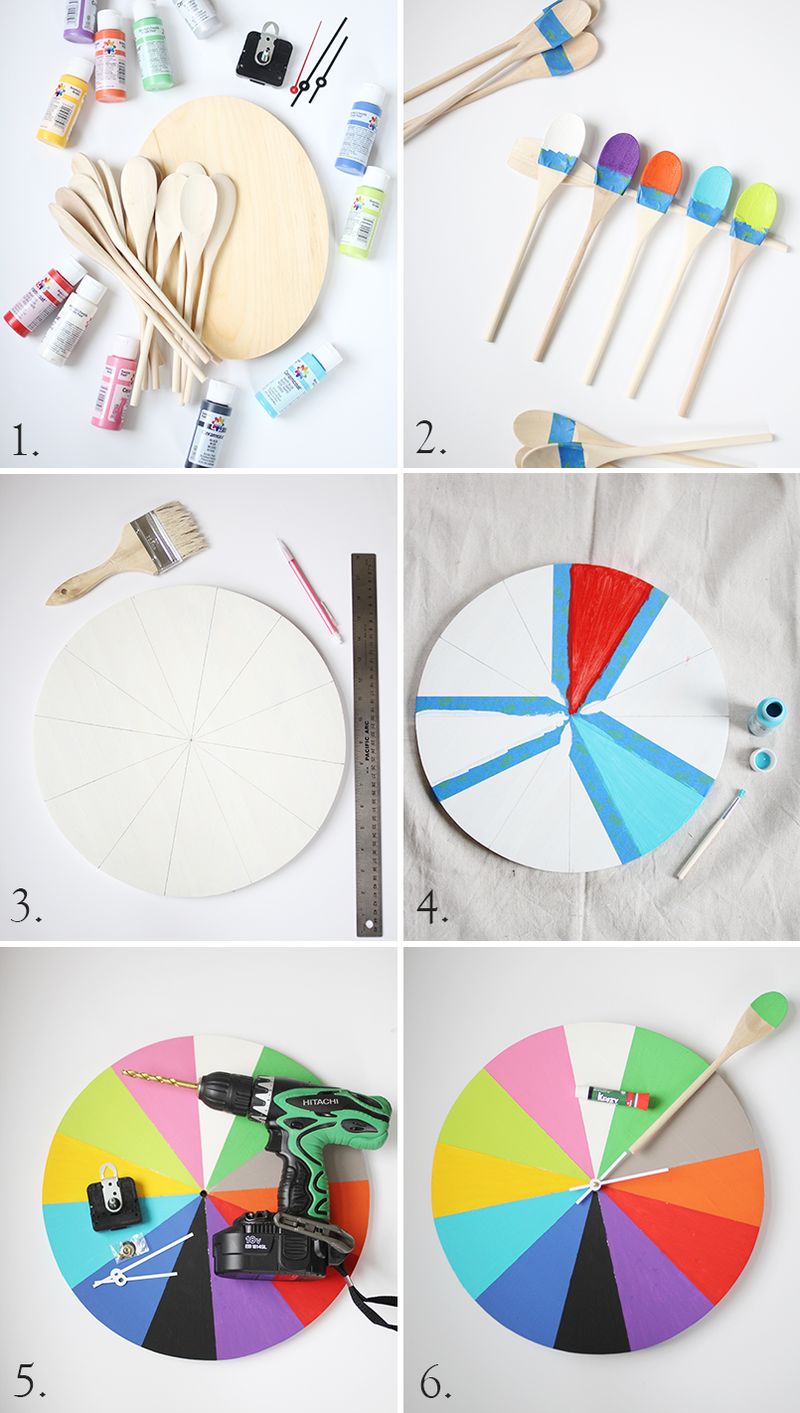
Let’s walk through a general process for creating your DIY colorful kitchen clock. Specific steps may vary depending on your chosen materials and design.
-
Prepare Your Clock Face:
- Cleaning: Ensure your chosen surface is clean, dry, and free of any grease or debris. If using wood, lightly sand it to create a smooth surface for painting.
- Priming (Optional but Recommended): For porous surfaces like wood or unfinished metal, apply a coat of primer. This will help your paint adhere better and ensure truer color saturation. White or a neutral color is usually best.
- Drilling the Hole (if necessary): If your clock face doesn’t already have a central hole for the mechanism, carefully measure and mark the exact center. Use a drill with an appropriate-sized bit to create a clean hole. Sand the edges smooth.
-
Transfer Your Design (if applicable):
- Sketching: Lightly sketch your design onto the clock face with a pencil.
- Stencils: Position your stencil and secure it with tape.
- Tracing: For more complex designs, you might trace a printed image onto transfer paper and then onto your clock face.
-
Bring on the Color! (Painting and Decorating):
- Base Coat: Apply your base colors according to your design. Allow each layer to dry completely before adding the next.
- Layering and Details: Build up your design with subsequent layers of paint, markers, or stencils. Use fine brushes for intricate details.
- Decoupage: Apply a thin layer of Mod Podge to the clock face, carefully place your chosen paper or fabric, and then smooth it down to remove air bubbles. Apply another layer of Mod Podge over the top. Repeat for multiple layers.
- Embellishments: Once your painted or decoupaged design is dry, begin attaching your embellishments using strong craft glue or a hot glue gun. Work in sections, allowing glue to set before moving on.
-
Sealing and Finishing:
- Drying Time: Allow your entire creation to dry thoroughly for at least 24-48 hours, especially if using multiple layers of paint or glue.
- Apply Sealant: Apply 2-3 thin, even coats of your chosen sealant or varnish. This protects your artwork from moisture, stains, and wear. Ensure each coat dries completely before applying the next. If using a spray sealant, do so in a well-ventilated area.
-
Assemble the Clock Mechanism:
- Follow Instructions: Most clock mechanisms come with instructions. Typically, you’ll insert the mechanism through the central hole from the back of the clock face.
- Attach Hands: Secure the hour, minute, and second hands onto the mechanism’s spindle, ensuring they are aligned correctly and have clearance to move freely.
- Install Battery: Insert a battery and set the time.
SEO Considerations for Your DIY Colorful Kitchen Clock Content
To ensure your DIY colorful kitchen clock project reaches a wider audience, consider these SEO best practices:
- Keyword Research: Identify relevant keywords that people are searching for. Examples include: "DIY kitchen clock," "colorful clock ideas," "how to make a clock," "custom kitchen décor," "painted clock tutorial," "unique wall clock," "easy craft projects," "kitchen accessories."
- Title Tag: Your title tag should be compelling and include your primary keywords. For example: "DIY Colorful Kitchen Clock: Vibrant Ideas & Easy Tutorials" or "How to Make a Stunning DIY Colorful Kitchen Clock."
- Meta Description: Craft a concise and engaging meta description that summarizes your article and entices users to click. Include relevant keywords and a call to action.
- Header Tags (H1, H2, H3): Use header tags to structure your content logically. Your main title will be H1. Use H2 for major sections like "Materials and Tools," "Design Inspiration," and "Step-by-Step Creation." Use H3 for sub-sections within these.
- Image Optimization: Use high-quality images of your DIY clocks and optimize them for web. Use descriptive alt text that includes relevant keywords (e.g., "DIY polka dot kitchen clock," "hand-painted floral wall clock").
- Internal and External Linking: Link to other relevant DIY projects or resources on your website (internal linking). Also, link to reputable external sources for inspiration or supplies (external linking).
- Readability: Write in clear, concise language. Use short paragraphs and bullet points to break up text and make it easy to scan. Aim for a good readability score.
- Long-Tail Keywords: Incorporate more specific, longer phrases that users might search for, such as "DIY rustic wooden kitchen clock with painted numbers" or "easy decoupage clock for a colorful kitchen."
- User Engagement: Encourage comments and questions from readers. Respond to comments to foster a community and increase engagement signals.
- Mobile-Friendliness: Ensure your website and content are fully responsive and display correctly on all devices.
Beyond the Basic: Advanced Techniques and Creative Twists
Once you’ve mastered the fundamentals, consider exploring more advanced techniques to elevate your DIY colorful kitchen clock:
- Resin Art: Incorporate vibrant resin pours with mica powders, glitters, or even small embedded objects for a glossy, multi-dimensional effect.
- Wood Burning (Pyrography): Create intricate designs and textures by burning patterns into a wooden clock face.
- Mosaic Tiling: Utilize a wider variety of mosaic tiles, including stained glass, mirror shards, and iridescent pieces, for a truly spectacular effect.
- Mixed Media: Combine different materials and techniques, such as painting, decoupage, and fabric application, for a rich and complex aesthetic.
- Themed Collections: Create a series of clocks for different areas of your home, all sharing a common color palette or design theme.
- Interactive Elements: Consider adding small moving parts (if you have the technical skill) or a chalk-paint surface for jotting down notes.
The Enduring Appeal of a Personalized Kitchen Clock
A DIY colorful kitchen clock is more than just a decorative item; it’s a reflection of your unique personality and a tangible representation of your creativity. It’s a project that can be adapted to any skill level and budget, offering a satisfying and rewarding way to infuse your kitchen with joy, color, and individuality. By following the guidance in this article, you’re well on your way to creating a functional work of art that will brighten your kitchen and serve as a constant, cheerful reminder of your own crafting prowess. The act of making something beautiful and functional with your own hands is profoundly empowering, and a colorful kitchen clock is a perfect testament to that.
