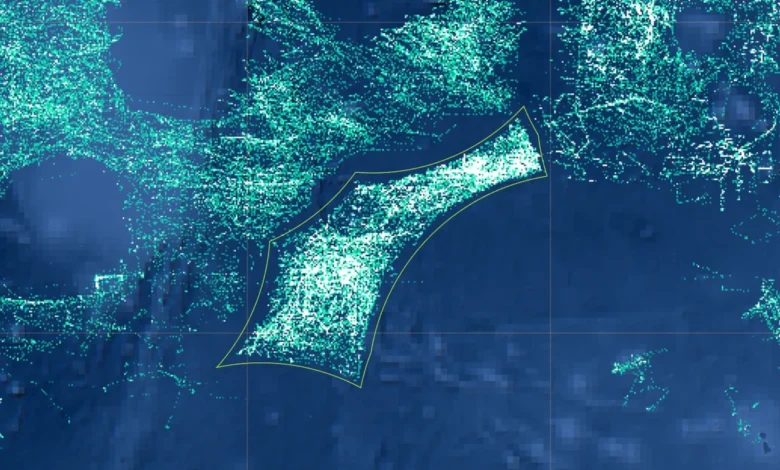
A geopolitical and environmental standoff is intensifying in the remote reaches of the South Pacific as a nascent American company seeks to bypass international regulatory frameworks to secure mining rights in a sensitive marine corridor. American Deep Sea Minerals, a San Francisco-based startup, has submitted an application to the United States government to lease 25 million acres of international waters for mineral exploration. The targeted area, known as "Eastern High Seas Pocket 3," is a unique maritime enclave entirely surrounded by the exclusive economic zones (EEZs) of French Polynesia, the Cook Islands, and Kiribati. This move comes at a time of heightened global tension over the "common heritage of humankind" and the ecological sanctity of the world’s oceans.
The application serves as a direct challenge to the conservationist momentum recently established in the region. Just one year ago, at the United Nations World Oceans Conference, French Polynesia finalized the establishment of Tainui Atea, the world’s largest contiguous marine protected area (MPA). At that summit, French President Emmanuel Macron declared that "the deep sea is not for sale," reinforcing a 2022 ban on seabed mining within French Polynesian waters. However, the American Deep Sea Minerals proposal targets the waters just beyond these protected boundaries, highlighting a legal loophole that the Trump administration has actively sought to exploit.
A Strategic Enclave: The Significance of Pocket 3
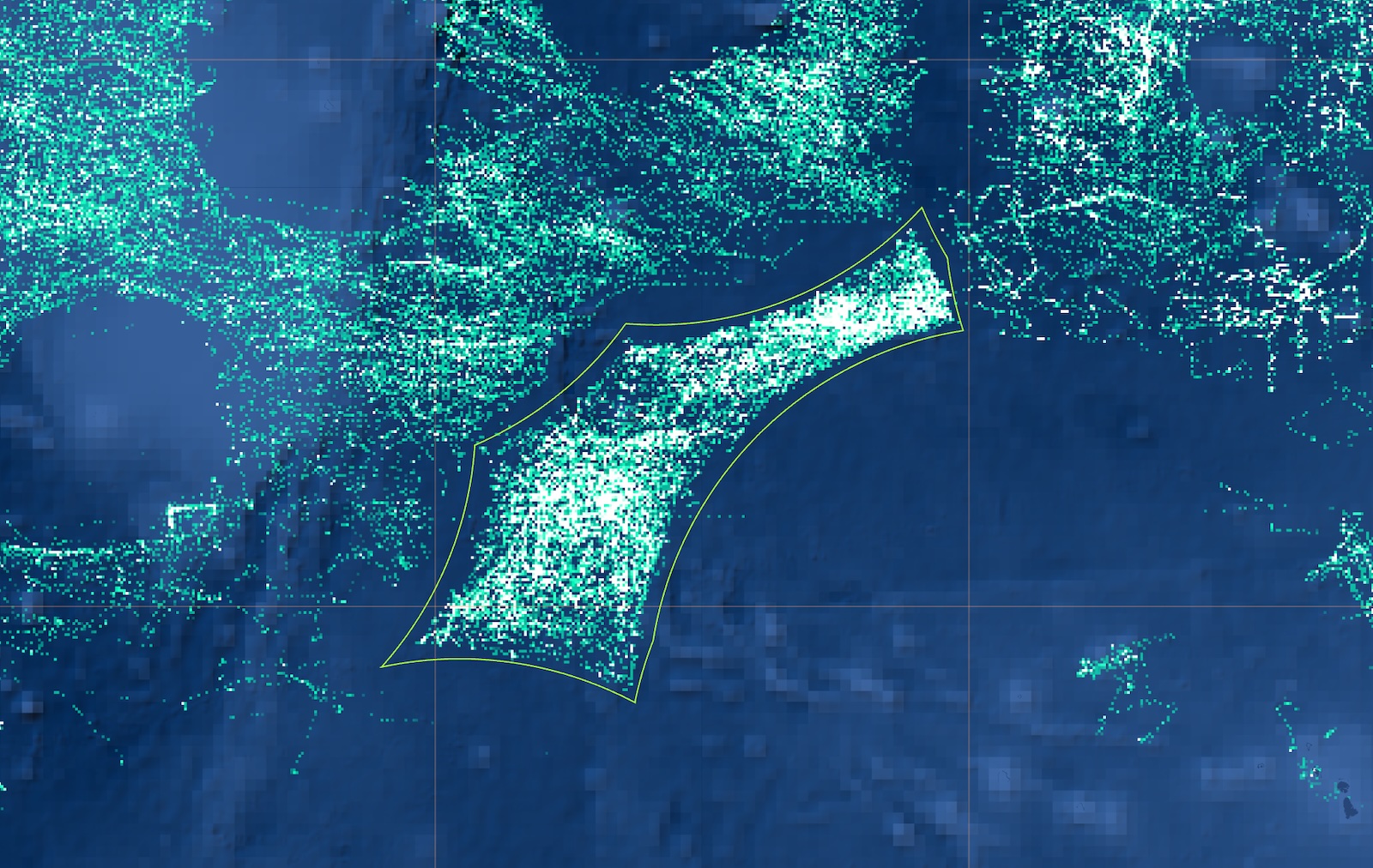
The "Eastern High Seas Pocket 3" is not merely a blank spot on a nautical chart; it is a critical biological corridor. This 25-million-acre patch of the high seas is a primary migratory route and feeding ground for several high-value tuna species, including albacore, yellowfin, and bigeye. According to data provided by Global Fishing Watch and the Benioff Ocean Science Lab, the area is frequented by dozens of commercial fishing vessels annually, forming a vital component of the regional economy for Pacific Island nations.
Beneath these teeming waters lies a seafloor rich in polymetallic nodules—fist-sized rocks that have accumulated minerals over millions of years. These nodules contain high concentrations of manganese, nickel, cobalt, and copper. In the context of the global energy transition, these minerals are viewed as "critical" for the production of electric vehicle batteries, renewable energy storage systems, and advanced military hardware. The rush to secure these resources has sparked a modern-day gold rush, with companies and nations racing to stake claims before international regulations are finalized.
The Legal Tug-of-War: Domestic Law vs. International Treaty
The core of the controversy lies in the diverging legal paths taken by the United States and the rest of the international community. Most of the world’s nations adhere to the United Nations Convention on the Law of the Sea (UNCLOS), which established the International Seabed Authority (ISA). The ISA, based in Jamaica, is currently meeting to negotiate a "Mining Code"—a set of rules intended to govern how, or if, commercial mining can occur in international waters without causing irreparable environmental harm.
The United States, however, never ratified UNCLOS. Instead, the Trump administration has revitalized a Cold War-era domestic statute: the Deep Seabed Hard Mineral Resources Act of 1980. Originally signed by President Jimmy Carter as an interim measure, the law allows the U.S. to issue its own exploration and mining licenses in international waters. By operating under this domestic framework, American companies like American Deep Sea Minerals can circumvent the ISA’s oversight and the lengthy, multi-decade negotiations that have so far prevented commercial mining from commencing.
Legal experts, including Coalter Lathrop, a specialist in international ocean law, suggest that this approach creates a precarious "gray zone." If the U.S. grants a license that the rest of the world does not recognize, any future mining operations could face significant diplomatic and legal challenges. Furthermore, the proximity of the application area to the EEZs of neighboring nations introduces the possibility of "overlapping claims." Under UNCLOS, nations can claim sovereign rights over the seabed if they can prove their continental shelf extends beyond the standard 200-mile limit. If French Polynesia or the Cook Islands successfully extend their claims, the U.S.-issued license could be rendered null and void under international law.
Profile of a Startup: American Deep Sea Minerals
Despite the massive scale of the 25-million-acre request, American Deep Sea Minerals appears to be a company in name only. Led by Graham Goulet, a San Francisco financial analyst, the firm lacks the ships, specialized robotic equipment, and processing infrastructure required for deep-sea operations. The company’s initial bid was submitted in August 2025 under the name Kraken Metals, shortly after the Trump administration signaled its intent to accept domestic applications for high-seas mining.
Goulet has defended the application, stating that it is currently limited to exploration rather than commercial extraction. In communications with journalists, he noted that the company is developing its program with experts in marine geology and offshore engineering. Recently, the firm hired Wouter Duijnstee, an engineer formerly associated with Allseas, a major offshore contractor. However, critics like Lathrop argue that the application is essentially a speculative financial play. By securing a U.S. license for a mere $100,000 application fee, the company’s valuation could skyrocket, allowing it to partner with or be acquired by larger industrial players who possess the actual technology to mine the seafloor.
Environmental and Economic Risks
The prospect of mining in Pocket 3 has raised alarms among marine scientists and the fishing industry. Deep-sea mining involves deploying massive robotic harvesters to the seafloor, which vacuum up nodules and sediment. This process creates "sediment plumes"—vast clouds of silt and potentially toxic heavy metals that can drift for hundreds of miles.
A study published in the journal Nature suggests that releasing mining waste in the upper layers of the ocean could have devastating "cascading effects" on the marine food web. Such plumes could starve zooplankton, the foundation of the ocean’s ecosystem, eventually depleting the very tuna stocks that Pacific nations rely on for food security and export revenue. Furthermore, deep-sea researchers warn that the mining process would destroy fragile habitats that have remained undisturbed for millennia, potentially wiping out species before they are even discovered.
The economic implications are equally complex. While proponents argue that seabed mining could provide a windfall for developing nations, the reality is less certain. Because American Deep Sea Minerals is seeking a U.S. permit, there is no legal requirement for the company to share profits with the neighboring Pacific nations. Although Goulet has expressed an intent to create "benefit-sharing agreements," there are no established mechanisms to ensure that the people of Kiribati or the Cook Islands would see any of the wealth extracted from their doorstep.
Regional Responses and Indigenous Advocacy
The reaction from Pacific Island nations is far from uniform, reflecting the difficult balance between economic development and environmental stewardship. French Polynesia, led by President Moetai Brotherson, remains a staunch opponent. Brotherson has characterized seabed mining as "playing God with the cradle of life," and has actively sought to expand conservation zones to 200,000 square miles to safeguard regional biodiversity.
Conversely, the Cook Islands and Kiribati have shown a cautious openness to the industry. Mark Brown, the Prime Minister of the Cook Islands, has suggested that seabed minerals could be "transformational" for his nation, where the average annual income is approximately $9,000. For these nations, the revenue from mining could fund infrastructure, climate adaptation, and education. However, even these proponents emphasize that any mining must be done within a robust regulatory framework—something the unilateral U.S. licensing process threatens to undermine.
Indigenous voices are also central to the debate. Solomon Kaho’ohalahala, a Native Hawaiian activist and navigator, has frequently testified before international bodies regarding the cultural significance of the deep sea. He argues that the Western concept of "Exclusive Economic Zones" and "High Seas" fails to account for Indigenous cosmologies that view the ocean as a singular, connected entity. "The ocean doesn’t know any boundaries," Kaho’ohalahala has stated, pointing out that the ecological damage caused in international waters will inevitably wash up on the shores of Indigenous communities.
Conclusion and Broader Implications
The application by American Deep Sea Minerals is one of at least a dozen currently being reviewed by the Trump administration. The public comment period for this specific proposal remains open until August 3, providing a narrow window for environmental groups, scientists, and foreign governments to register their opposition.
The outcome of this application will likely serve as a bellwether for the future of ocean governance. If the United States proceeds with granting unilateral mining licenses, it could trigger a breakdown in international cooperation, leading to a "wild west" scenario on the high seas. This would not only threaten the delicate balance of marine ecosystems but also exacerbate geopolitical tensions in the Pacific, a region already caught in the middle of the strategic rivalry between the U.S. and China.
As the world watches, the "Eastern High Seas Pocket 3" has become a microcosm of the global struggle to define the limits of industrial expansion. The choice facing policymakers is whether to prioritize the short-term demand for battery minerals or the long-term health of an ocean that sustains billions of people. For the residents of French Polynesia, the Cook Islands, and Kiribati, the stakes could not be higher, as the decisions made in Washington D.C. may soon reshape the waters they have called home for generations.