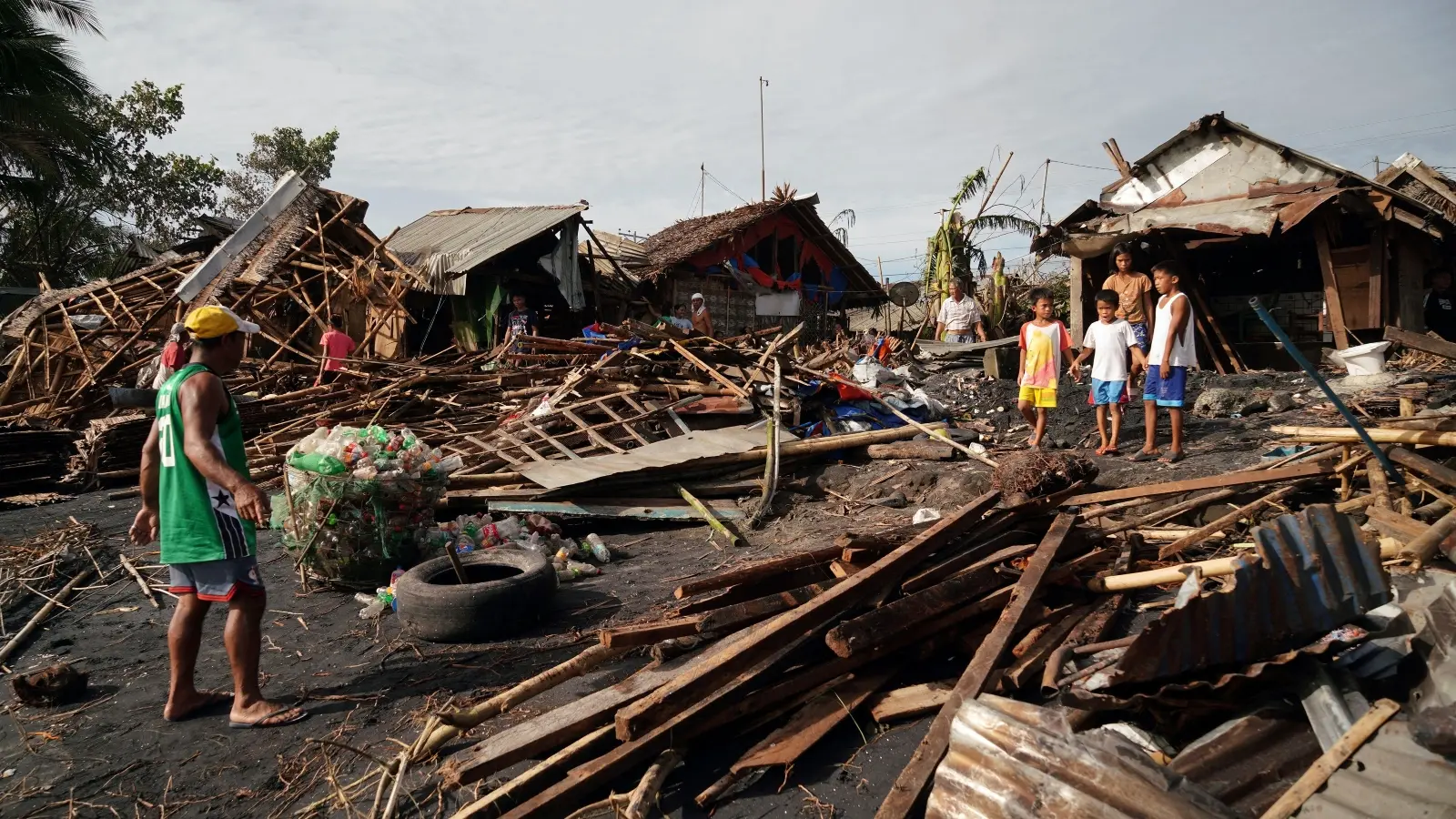
When Super Typhoon Rai—known locally as Odette—slammed into the Philippines in December 2021, it carried the force of a Category 5 hurricane, leaving a trail of catastrophic destruction across the archipelago. Among those caught in the eye of the storm was Trixy Elle, a fish vendor from Batasan Island in Bohol. As the surge rose, Elle, alongside her husband, their two children, and her elderly father, waded into the churning floodwaters, gripped by the terror of being entombed in their own home. They survived the night by clinging to one another, but the morning light revealed a landscape stripped of its foundations. The home they had spent years laboring to build was gone, replaced by a wasteland of debris.
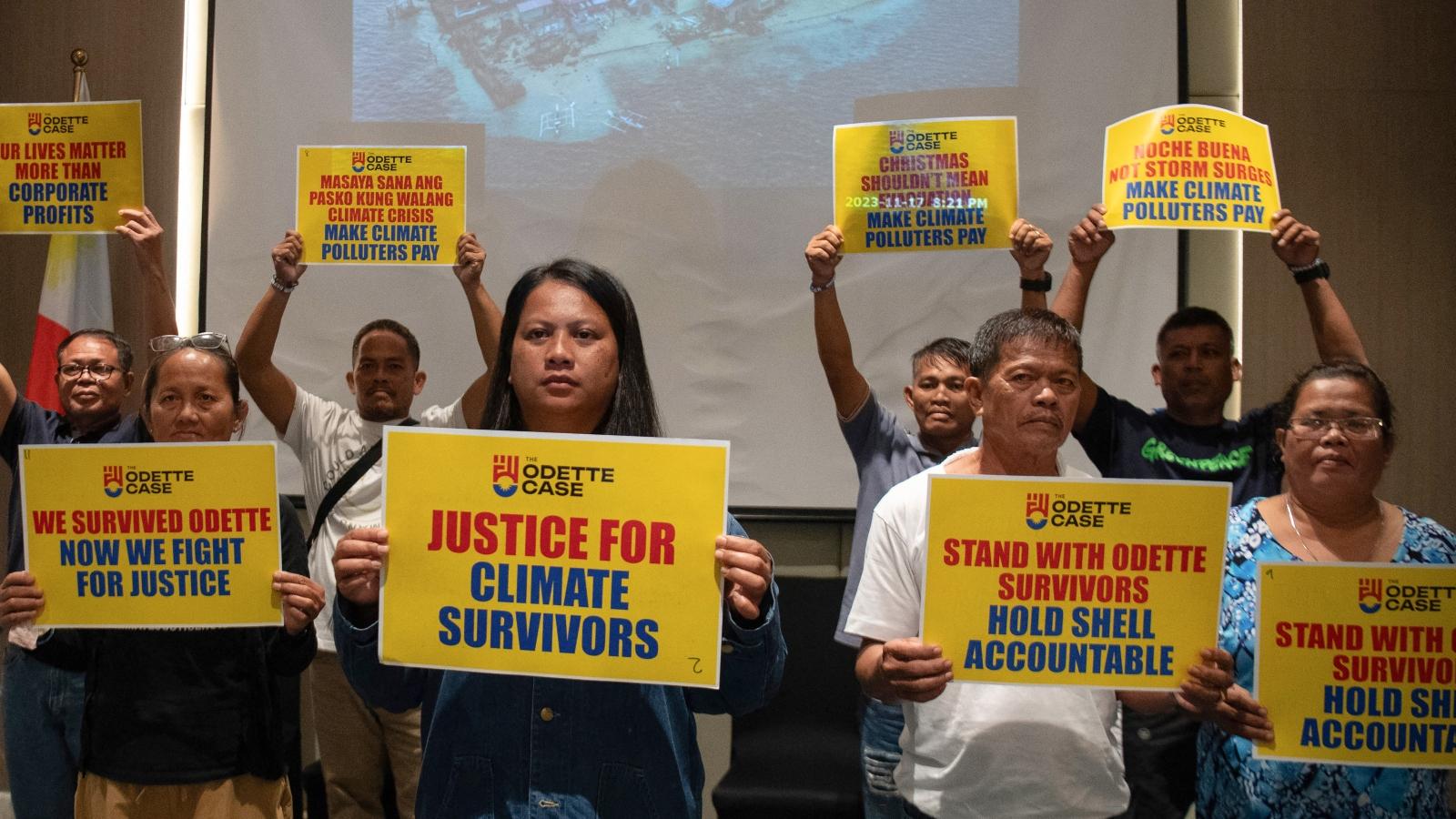
In the harrowing weeks that followed, the family’s survival was reduced to the most desperate measures. With government aid delayed and infrastructure shattered, Elle and her family were forced to scavenge for food, eventually consuming livestock they found dead in the storm’s wake. For Elle, the trauma of the event was compounded by a burgeoning sense of systemic injustice. While her community contributed negligibly to global carbon emissions, they were the ones paying the ultimate price for a warming planet. This realization transformed her from a survivor into a litigant. In December 2025, Elle and 66 other survivors filed a landmark lawsuit against Shell at the Royal Courts of Justice in London, alleging that the company’s historic greenhouse gas emissions directly intensified the disaster and seeking compensation for the profound damages incurred.
The Scientific and Legal Basis for Accountability
The lawsuit filed by the Philippine survivors represents a pivotal moment in the evolution of climate litigation. The plaintiffs contend that Shell has been aware of the catastrophic risks posed by climate change since the 1960s, yet continued to expand its fossil fuel operations while allegedly misleading the public about the environmental impact of its products. This case is widely regarded as the first civil action to directly link the operations of a major fossil fuel multinational to specific deaths and injuries resulting from climate-driven disasters in the Global South.
Supporting this legal challenge is the rapidly advancing field of "attribution science." Recent studies, including those published in EGUsphere, have provided increasingly precise data showing that anthropogenic climate change is making tropical cyclones like Rai more frequent and significantly more intense. For the Philippines, a nation that experiences an average of 20 typhoons per year, the stakes of this scientific consensus are existential. Super Typhoon Rai affected approximately 10.6 million people, claimed more than 400 lives, and displaced 1.4 million residents. By targeting Shell in its home jurisdiction of the United Kingdom, the plaintiffs are leveraging a more developed legal framework for corporate responsibility than what is currently available in many developing nations.
A Chronology of Climate Justice in Asia
While the Shell case in London captures international headlines, it is part of a broader, accelerating trend of climate litigation across Asia. Historically, the region has lagged behind the West in using the courts to address environmental grievances. However, the mid-2020s have seen a surge in landmark rulings and filings:
- December 2021: Super Typhoon Rai devastates the Philippines, providing the catalyst for the current litigation against Shell.
- 2023: Residents of Pari Island, Indonesia, initiate a lawsuit against the Swiss cement giant Holcim. The plaintiffs argue that the company’s emissions have contributed to rising sea levels that threaten to submerge their island.
- August 2024: South Korea’s Constitutional Court delivers a historic verdict, ruling that the government’s Carbon Neutrality Act was unconstitutional because it failed to provide specific, binding targets for emission reductions beyond 2030, thereby violating the rights of future generations.
- 2024: The Supreme Court of India issues a landmark judgment recognizing that citizens have a fundamental constitutional right to be free from the adverse impacts of climate change. The ruling emerged from a case involving the protection of the Great Indian Bustard, an endangered bird threatened by power lines connected to renewable energy projects.
- January 2026: A Malaysian environmental watchdog, RimbaWatch, files the country’s first greenwashing case, accusing a fossil fuel entity of misleading the public by marketing a carbon-intensive product as "carbon neutral."
- April 2026: A group of Malaysian youths sues the federal government over its failure to halt deforestation, arguing that the loss of forest cover violates the state’s pledge to maintain at least 50% of its land as forest and jeopardizes the climate security of future citizens.
Statistical Disparities in Global Litigation
Despite the recent uptick in activity, the Global South remains underrepresented in the global climate litigation landscape. According to data from the Sabin Center for Climate Change Law, as of mid-2025, there were 3,099 climate change cases filed worldwide. However, the distribution is heavily skewed. Nearly two-thirds of all cases originate in the United States. When the U.S. is excluded, Europe accounts for 32% of the remaining litigation. Asia and Africa, despite being home to the populations most vulnerable to climate shocks, account for only 6% and 2% of cases, respectively.
Experts suggest several reasons for this disparity. Jolene Lin, director of the Asia-Pacific Centre for Environmental Law, notes that the obstacles are not cultural but structural. "In Asia, there are many jurisdictions where judicial corruption is a problem, as well as a lack of judicial independence," Lin explained. Furthermore, many judges in the region lack experience with the complex scientific evidence required in climate cases. There is also the issue of "shrinking space" for civil society; in several Asian nations, restrictive laws on free speech and assembly make it dangerous or prohibitively difficult for activists to organize legal challenges against powerful state or corporate interests.
Transborder Litigation: The Strategy of Extraterritoriality
The decision by Philippine and Indonesian plaintiffs to sue European companies in European courts—Shell in the UK and Holcim in Switzerland—is a calculated strategic move. These "transborder" cases aim to bypass the limitations of domestic legal systems in the Global South.
In the Holcim case, four residents of Pari Island are demanding that the company reduce its CO2 emissions by 69% by 2040 and provide financial compensation for flood damage. The Cantonal Court of Zug in Switzerland admitted the case in late 2023, signaling a willingness by Western judiciaries to entertain claims of climate harm originating thousands of miles away. Johannes Wendland, a legal advisor at HEKS-EPER Swiss Church Aid, noted that these cases have already sent ripples through the corporate world. Major law firms in Switzerland and the UK have begun issuing alerts to their corporate clients, warning that high emissions now constitute a tangible legal and financial risk.
Official Responses and Corporate Defense
Fossil fuel giants like Shell have historically defended their records by emphasizing their compliance with national regulations and their investments in renewable energy transitions. In response to previous litigation, companies have often argued that climate change is a matter of government policy rather than courtroom adjudication. While Shell did not provide a specific comment to The Xylom regarding the Rai survivors’ suit, the company has traditionally maintained that it is not solely responsible for global temperature rises, pointing instead to the global demand for energy.
However, the legal tide is shifting toward the "Polluter Pays" principle. Campaigners like Jefferson Chua of Greenpeace Philippines argue that the goal is not just financial compensation but a fundamental shift in corporate behavior. "We can hold big companies like Shell accountable," Chua stated. "Even if it takes years, it is still possible."
Broader Implications for Climate Justice
The rise of climate litigation in Asia and the Global South marks a transition from passive suffering to active legal resistance. These cases are serving as a "roadmap" for future litigants, testing how existing laws—ranging from human rights to consumer protection—can be applied to the climate crisis.
For the plaintiffs, the stakes are deeply personal. The success of these cases could lead to the establishment of "loss and damage" funds, where corporations are held liable for the physical and economic destruction caused by their historical emissions. But beyond the legal precedents, there is a moral dimension. Trixy Elle’s motivation is rooted in the legacy she leaves for her children. "If one day my grandchildren ask me what I did for nature, at least I have an answer: I fought for your future," she said.
As the impacts of climate change intensify, the courtroom is increasingly becoming a primary battlefield for environmental justice. Whether through challenging government inaction in South Korea or seeking corporate damages in the UK, the survivors of disasters like Super Typhoon Rai are ensuring that those most responsible for the warming of the planet are finally forced to answer for the consequences.