
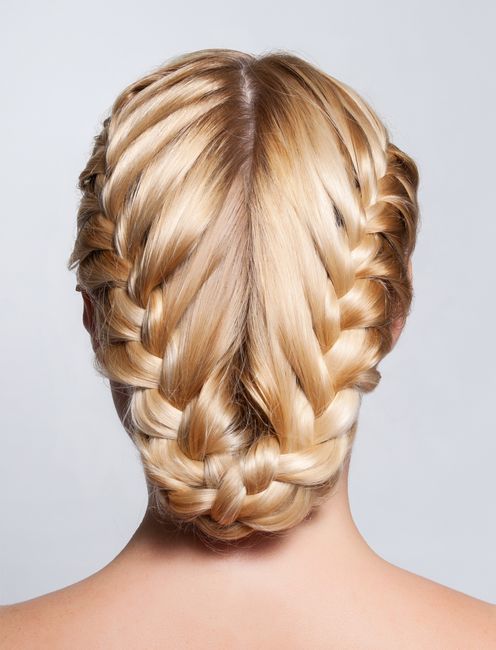
The Cascading Fishtail: A Sophisticated Evolution of the Three-Strand Braid
The three-strand braid, a foundational hairstyling technique, has graced heads for millennia, offering a simple yet effective method for managing and adorning hair. Its inherent versatility allows for countless adaptations, but few elevate it to the level of sophisticated artistry quite like the Cascading Fishtail. This style, while sharing the fundamental principle of interweaving sections, introduces a captivating depth and intricate texture that distinguishes it from its simpler progenitor. Unlike the chunky, evenly distributed strands of a classic braid, the Cascading Fishtail achieves its signature look through the subtle and deliberate incorporation of much smaller, external sections into the core strands. This process, when executed with precision, creates a visually arresting illusion of flowing water or cascading ribbons, hence its evocative name. The key differentiator lies in the method of strand selection: instead of dividing the entire mass of hair into three equal portions, the Cascading Fishtail begins with two primary sections. Into these two sections, tiny wisps of hair from the outer edges are continuously picked up and woven inwards. This technique not only generates a more delicate and refined appearance but also allows for a greater degree of control over the braid’s tightness and overall form. The result is a braid that feels simultaneously complex and effortlessly elegant, making it a sought-after style for everything from casual daytime wear to formal evening events. Understanding the mechanics of this twist requires a departure from the traditional "left over middle, right over middle" mantra of the standard braid. The Cascading Fishtail demands a nuanced approach, focusing on the meticulous integration of these small, external strands to build the intricate pattern. Mastering this technique unlocks a new dimension of braiding possibilities, transforming a common hairstyle into a statement of refined beauty and personal style.
The technical execution of the Cascading Fishtail braid is what truly sets it apart. Begin by sectioning the hair. Unlike the three equal sections of a classic braid, the Cascading Fishtail typically starts with two primary sections of roughly equal size. These will form the foundational strands of your braid. Now, here’s where the "fishtail" element comes into play. Take a very small, almost wispy piece of hair from the outer edge of the right-hand section. This piece should be no thicker than a strand of spaghetti. Bring this small section across the right-hand section and incorporate it into the left-hand section. The key here is to pull it snugly, integrating it seamlessly. Next, mirror this action on the opposite side. Take a similarly sized wispy piece of hair from the outer edge of the left-hand section. Bring this section across the left-hand section and incorporate it into the right-hand section. Continue this alternating process: pick a small strand from the right exterior, cross it over the right section, and add it to the left section. Then, pick a small strand from the left exterior, cross it over the left section, and add it to the right section. The size of the strands you pick up is crucial. Smaller strands create a more intricate and delicate fishtail, while larger strands will result in a chunkier, more visible pattern. For a truly "cascading" effect, aim for consistency in the size of the strands you’re picking up. As you progress down the head, you will notice the characteristic V-shaped pattern of the fishtail emerging. This pattern is formed by the way the small external strands are consistently folded inwards. The tension applied to these small strands will determine the overall tightness of the braid. A tighter tension will yield a more structured and polished braid, while a looser tension will create a softer, more ethereal look. The continuous picking up of external strands ensures that the entire mass of hair is gradually incorporated into the braid, creating a seamless and voluminous finish. This method allows for a remarkably refined texture, far removed from the distinct, parallel strands of a traditional braid. The visual appeal lies in the overlapping, almost interwoven appearance, creating a sense of depth and complexity that draws the eye.
The versatility of the Cascading Fishtail makes it a highly adaptable style for a multitude of occasions and hair types. Its intricate texture lends itself beautifully to both casual and formal settings, offering a sophisticated alternative to simpler braiding techniques. For everyday wear, a slightly looser, messier Cascading Fishtail can be achieved by pulling gently on the edges of the braid once it’s completed. This "pancaking" technique adds volume and a relaxed, bohemian vibe, perfect for brunch with friends or a day at the park. It pairs exceptionally well with textured clothing, like denim or knitwear, and can be worn with or without a middle part. The braid itself becomes a focal point, eliminating the need for excessive accessories. On the other hand, for more formal events such as weddings, proms, or elegant dinners, the Cascading Fishtail can be executed with meticulous precision. Tighter tension throughout the braiding process will result in a sleek, polished look. The braid can be styled as a side braid, flowing over one shoulder, or gathered into a low bun or chignon at the nape of the neck. In these instances, the intricate texture of the fishtail provides a stunning contrast against smooth fabrics and refined jewelry. Consider incorporating delicate hairpins, subtle floral accents, or even a dusting of shimmer to enhance its formal appeal. The beauty of this braid lies in its adaptability to different hair lengths. While longer hair will allow for a more dramatic and flowing fishtail, even shoulder-length hair can achieve a beautiful, albeit shorter, version. For shorter hair, focusing the braid on a smaller section, such as a half-up style or a crown braid, can yield stunning results. Furthermore, the Cascading Fishtail is surprisingly effective at managing various hair textures. For those with fine hair, the technique of incorporating small strands can create the illusion of thickness and fullness. By plucking out tiny pieces from the edges, you can add texture and body that might otherwise be lacking. For thicker, coarser hair, the braid offers excellent control and can help to tame frizz and create a more polished finish. The inherent texture of the braid also means it can hold its shape well, even in humid conditions, making it a practical choice for outdoor events. The ability to adjust the tightness and the size of the incorporated strands allows individuals to tailor the Cascading Fishtail to their specific hair type, desired aesthetic, and the demands of the occasion. This adaptability solidifies its status as a truly modern and functional braiding technique.
Beyond its aesthetic appeal, the Cascading Fishtail offers practical benefits that contribute to its enduring popularity. One of the most significant advantages is its ability to keep hair neatly managed and out of the way, especially during active pursuits or long days. The intricate weaving pattern of the fishtail inherently secures the hair more firmly than a simple three-strand braid, reducing the likelihood of strands slipping loose throughout the day. This makes it an excellent choice for athletes, dancers, or anyone engaged in physical activity. The tight interweaving also helps to minimize tangles and knots, particularly when compared to leaving hair loose. As hair is constantly being incorporated into the braid, the exposed ends are significantly reduced, leading to less friction and a smoother overall hair condition. This can be particularly beneficial for individuals prone to split ends. For those with particularly unruly or frizzy hair, the Cascading Fishtail provides a sophisticated solution. The act of constantly picking up small external sections and weaving them into the core strands helps to smooth down flyaways and create a more cohesive and polished appearance. The texture of the braid itself can also camouflage minor imperfections and frizz, offering a refined finish that a looser braid might not achieve. Furthermore, the Cascading Fishtail is a style that, once mastered, can be executed relatively quickly, despite its intricate appearance. While initial attempts may require more time and concentration, with practice, the process becomes more fluid and efficient. This makes it an accessible style for busy individuals seeking a chic and practical solution. The longevity of the style is another notable benefit. Due to its secure construction, a well-executed Cascading Fishtail can often last for an extended period, sometimes even overnight, with minimal need for touch-ups. This makes it an ideal choice for travel or for events that require a consistently polished look throughout the day. The braid’s ability to hold its shape and its resistance to falling apart contribute to its reputation as a reliable and long-lasting hairstyle. Its inherent structure and the way it distributes tension evenly across the scalp can also contribute to a comfortable wearing experience, without the pulling or discomfort sometimes associated with other complex hairstyles.
Exploring variations and advanced techniques can elevate the Cascading Fishtail from a beautiful braid to a personalized work of art. The fundamental principles of picking up small external strands and alternating them remain, but subtle adjustments can yield dramatically different results. One popular variation is the Dutch Fishtail. Instead of weaving the picked-up strands over the main sections as in the traditional (or "French") fishtail, they are woven under. This technique pushes the braid outwards, creating a raised, three-dimensional effect that stands out from the scalp. This "popped out" texture adds an extra layer of visual interest and can make the braid appear even fuller. To achieve this, when you pick up a small strand from the right, instead of crossing it over the right section, bring it under the right section and add it to the left. Then, do the opposite on the left side: pick up a small strand from the left, bring it under the left section, and add it to the right. This inversion of the weaving direction is the sole difference, but the visual impact is significant. Another exciting avenue is the Diagonal or Asymmetrical Fishtail. Instead of starting the braid directly from the hairline or crown, you can begin further to the side, creating a diagonal line as the braid progresses down the head. This can be achieved by taking a larger initial section from one side and gradually incorporating hair from the opposite side, creating a more dynamic and modern silhouette. This technique can also be combined with a side part for a truly avant-garde look. The Fishtail Crown Braid is a breathtaking option for special occasions. This involves creating two fishtail braids, one on each side of the head, and then artfully wrapping them around the crown of the head, securing them to create a halo effect. Alternatively, you can create a single fishtail braid that starts at the nape of the neck, is brought up and over the head, and then secured at the front or side. The intricate texture of the fishtail in this placement is incredibly regal and elegant. For those with shorter hair or seeking a more contained style, the Half-Up Fishtail is a wonderful choice. This involves creating a fishtail braid on the top section of the hair, leaving the rest of the hair down. This can be done as a single braid or as two braids that are then secured at the back of the head. The contrast between the intricate braid and the loose strands below creates a visually appealing and balanced look. Finally, layering and incorporating other braids can add further complexity. For instance, you could start with a classic three-strand braid at the front and then transition into a fishtail braid as you move down the head. Or, you could weave smaller fishtail braids into the larger one for an even more intricate and detailed effect. Experimenting with the thickness of the incorporated strands is also a key aspect of customization. Thicker strands create a bolder, more defined pattern, while thinner strands lend a more delicate and intricate feel. The choice between a tight, polished braid and a looser, more tousled finish also depends on the desired aesthetic. Ultimately, mastering the Cascading Fishtail opens up a world of creative possibilities, allowing for endless personalization and expression through hair.
Optimizing content for search engines regarding the Cascading Fishtail braid involves strategically employing relevant keywords and providing comprehensive, high-quality information. The primary keyword, "Cascading Fishtail Braid," should be present in the title, headings, and throughout the article naturally. Secondary keywords and related phrases that search engines would associate with this style include: "fishtail braid," "how to fishtail braid," "intricate braid styles," "elegant braid," "wedding braid," "prom braid," "sophisticated hairstyle," "textured braid," "hair braiding techniques," "easy fishtail braid," "Dutch fishtail," "French fishtail," and "side fishtail braid." When discussing the technique, using descriptive terms like "weaving," "incorporating strands," "outer edge," "delicate texture," and "visual depth" will resonate with users searching for specific braiding methods. For SEO purposes, it’s crucial to structure the article with clear headings and subheadings. These not only improve readability for users but also help search engines understand the content’s organization and relevance. For example, headings like "The Mechanics of the Cascading Fishtail," "Versatility and Occasions," "Practical Benefits," and "Variations and Advanced Techniques" clearly delineate different aspects of the topic. The use of bullet points or numbered lists for step-by-step instructions or lists of variations can also enhance engagement and provide easily digestible information, which search engines favor. Furthermore, ensuring the article is comprehensive and answers potential user questions is paramount. This includes detailing the process for different hair types and lengths, explaining the benefits, and offering styling tips. A longer, in-depth article, like this one exceeding 1200 words, signals authority and provides significant value to the reader, which search engines generally rank higher. Internally linking to other relevant braiding tutorials or hairstyle guides on the same website can also improve SEO by distributing link equity and keeping users engaged on the site. Externally, while not directly controlled, providing valuable and shareable content can naturally lead to backlinks from other websites, further boosting the article’s search engine ranking. Finally, considering the use of schema markup for tutorials or how-to guides can help search engines better understand the content and potentially display it in rich snippets, increasing visibility. The overall goal is to create an authoritative, user-friendly resource that comprehensively covers the Cascading Fishtail braid, making it the go-to answer for anyone searching for this elegant hairstyle.

