
Accenture and Leidos Collaborate on Confidential Computing for Enhanced Data Security
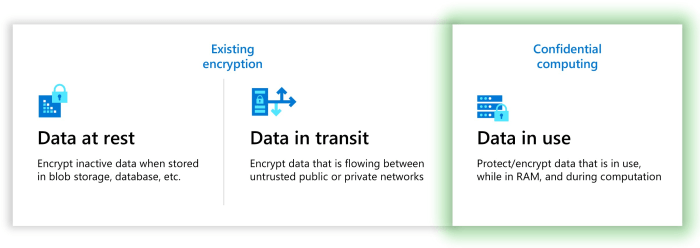
The escalating volume and sensitivity of data processed across industries have propelled the demand for robust data security solutions. Traditional encryption methods, while vital, often fall short when dealing with data in use, the period during which data is most vulnerable to compromise. Confidential computing emerges as a transformative paradigm, offering a secure enclave for data processing, protecting it even from privileged system administrators. Accenture, a global professional services company, and Leidos, a defense, intelligence, and government IT solutions provider, are at the forefront of this innovation, leveraging their combined expertise to develop and implement confidential computing solutions tailored to address the most critical data security challenges. This partnership signifies a significant step towards realizing the full potential of confidential computing for enterprises and government agencies alike, particularly in sectors where data privacy and integrity are paramount, such as finance, healthcare, and national security.
Confidential computing fundamentally alters the data security landscape by introducing hardware-based Trusted Execution Environments (TEEs). These TEEs, often referred to as secure enclaves, are isolated regions within a processor that encrypt and protect data while it is being processed. This means that even if the underlying operating system, hypervisor, or cloud provider’s infrastructure is compromised, the data within the TEE remains encrypted and inaccessible. This capability is a game-changer for organizations handling sensitive information, enabling them to perform computations on encrypted data without decrypting it in memory, thus mitigating a significant attack vector. The Accenture and Leidos collaboration focuses on making this advanced technology practical and accessible, bridging the gap between theoretical security benefits and real-world implementation challenges. They are working to integrate confidential computing capabilities into existing cloud infrastructure and enterprise applications, ensuring that businesses can leverage these enhanced security features without extensive re-architecture or prohibitive costs.
One of the core tenets of the Accenture and Leidos confidential computing initiative is its focus on practical deployment strategies. Recognizing that widespread adoption requires ease of integration and clear value propositions, they are developing frameworks and methodologies to help organizations assess their needs, select appropriate TEE technologies, and deploy confidential computing solutions. This includes identifying use cases where confidential computing offers the most significant security uplift, such as multi-party computation, secure data analytics, and protecting regulated data in cloud environments. Their approach emphasizes a phased implementation, allowing organizations to gradually introduce confidential computing capabilities and build confidence in their security posture. This pragmatic approach is crucial for overcoming the perceived complexity and potential disruption associated with adopting new security paradigms, making confidential computing a viable option for a broader range of businesses.
The partnership leverages Accenture’s extensive experience in cloud migration, digital transformation, and cybersecurity consulting, combined with Leidos’ deep understanding of highly regulated environments, secure system integration, and mission-critical applications. This synergy allows them to address the multifaceted challenges of confidential computing, from selecting the right hardware-based TEE solutions (e.g., Intel SGX, AMD SEV, ARM TrustZone) to developing secure software architectures that can effectively utilize these enclaves. They are actively engaged in building proof-of-concepts and pilot programs with clients, demonstrating the tangible benefits of confidential computing in real-world scenarios. These engagements provide invaluable feedback, helping to refine their offerings and accelerate the adoption of this advanced security technology across various sectors. The collaboration aims to demystify confidential computing, providing clear guidance and support to organizations looking to enhance their data protection strategies.
A key area of focus for Accenture and Leidos is the development of industry-specific confidential computing solutions. Different industries face unique data security and privacy regulations, as well as distinct data processing requirements. For example, financial institutions need to protect sensitive transaction data and comply with stringent financial regulations, while healthcare organizations must safeguard patient records under HIPAA. Accenture and Leidos are tailoring their confidential computing offerings to meet these specific demands, developing solutions that address the unique threat models and compliance obligations of each sector. This may involve creating pre-configured TEE environments, developing secure data sharing platforms, or integrating confidential computing into existing industry-specific applications. Their ability to customize solutions based on industry needs is a critical factor in driving adoption and ensuring that confidential computing delivers maximum value.
The technical underpinnings of confidential computing are complex, involving hardware security modules, specialized cryptographic algorithms, and secure software development practices. Accenture and Leidos are investing in building expertise in these areas, training their engineers and consultants on the latest TEE technologies and best practices for developing secure applications within these enclaves. They are also collaborating with hardware vendors and cloud providers to ensure seamless integration and optimal performance of confidential computing solutions. This includes working with major cloud hyperscalers like Microsoft Azure, Amazon Web Services (AWS), and Google Cloud Platform (GCP) to make confidential computing instances readily available and to develop managed services that simplify deployment and management for their clients. This close collaboration with technology providers is essential for creating a robust and scalable ecosystem for confidential computing.
Beyond technical implementation, Accenture and Leidos recognize the importance of establishing trust and assurance in confidential computing environments. For sensitive data, organizations need to have confidence that the TEE is functioning as expected and that the data within it is truly protected. This involves rigorous testing, validation, and certification processes. They are working on developing frameworks for attestation, a mechanism that allows remote verification of the integrity and security of a TEE. This attestation process provides an independent assurance that the confidential computing environment has not been tampered with and that the computations are being performed securely. This focus on building trust is paramount for widespread adoption, especially in highly regulated industries where demonstrable security is a prerequisite.
The strategic partnership between Accenture and Leidos is designed to address the growing threat landscape and the increasing regulatory pressure to protect sensitive data. Confidential computing offers a proactive approach to data security, moving beyond reactive measures to provide inherent protection for data in use. Accenture’s global reach and deep understanding of business processes, coupled with Leidos’ expertise in secure, mission-critical IT solutions, creates a powerful combination capable of delivering end-to-end confidential computing capabilities. They are not just offering technology; they are providing a comprehensive service that includes strategy, implementation, ongoing management, and security assurance. This holistic approach is crucial for organizations to successfully adopt and benefit from confidential computing.
The collaborative efforts are also aimed at fostering innovation within the confidential computing space. By working closely with clients and technology partners, Accenture and Leidos are identifying new use cases and developing novel applications for confidential computing. This includes exploring its potential in areas such as secure machine learning, where models can be trained on encrypted data without revealing sensitive information, and in secure multi-party analytics, enabling multiple organizations to collaborate on data analysis without sharing their raw data. Their commitment to pushing the boundaries of what’s possible with confidential computing will undoubtedly drive further advancements and open up new opportunities for data-driven innovation while maintaining the highest levels of security and privacy.
The long-term vision for Accenture and Leidos in confidential computing is to establish it as a mainstream security capability, integral to modern IT infrastructures. They are actively engaged in educating the market about the benefits and practical applications of confidential computing, aiming to accelerate its adoption and establish it as a de facto standard for protecting sensitive data in the cloud and on-premises. Their focus on addressing real-world challenges, building trust, and driving innovation positions them as key players in shaping the future of data security. Organizations looking to bolster their data protection strategies and embrace the next generation of security will find a valuable partner in the combined expertise of Accenture and Leidos. This collaboration represents a significant commitment to advancing data security through cutting-edge confidential computing solutions.

