
Backbase Unveils Intelligence Fabric to Unlock AI Productivity Gains for Banks
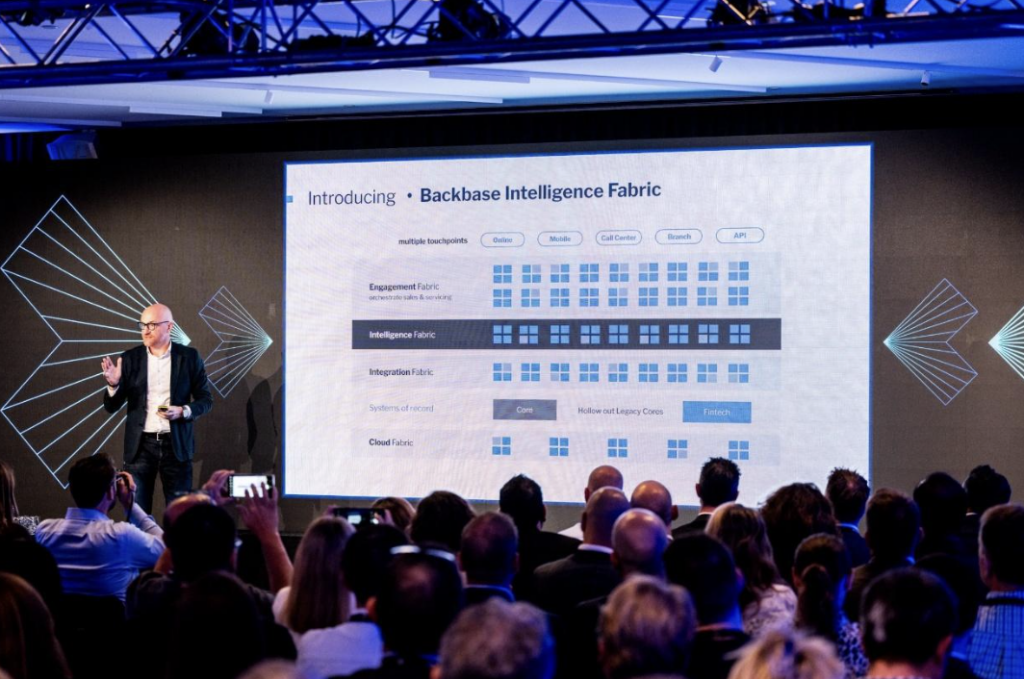
Backbase, a leading digital banking platform, has launched its groundbreaking Intelligence Fabric, a sophisticated architecture designed to empower financial institutions with unprecedented AI-driven productivity gains. This innovative solution addresses the growing imperative for banks to leverage artificial intelligence effectively, moving beyond siloed AI applications to a unified, data-centric approach that unlocks true operational efficiency and enhances customer experiences. The Intelligence Fabric is not merely a technology offering; it represents a strategic shift in how banks can harness the power of AI, integrating disparate data sources and enabling a more intelligent, responsive, and proactive digital banking ecosystem.
The core of Backbase’s Intelligence Fabric lies in its ability to create a unified and accessible data foundation. Traditionally, banks have struggled with fragmented data across various legacy systems, making it challenging to derive meaningful insights and deploy AI models effectively. The Intelligence Fabric breaks down these data silos by establishing a comprehensive, semantic layer that standardizes, enriches, and contextualizes data from core banking systems, CRM, third-party data providers, and customer interaction logs. This semantic layer acts as a "brain" for the bank, understanding the relationships between different data points and making them readily available for AI consumption. By providing a single source of truth for all AI initiatives, the Intelligence Fabric drastically reduces the time and effort required for data preparation, a notoriously time-consuming bottleneck in AI development. This streamlined data accessibility is critical for accelerating the deployment of AI use cases, from fraud detection and personalized recommendations to automated customer service and risk assessment.
Furthermore, the Intelligence Fabric is engineered for modularity and scalability, allowing banks to adopt AI capabilities incrementally and adapt to evolving business needs. Instead of implementing large, monolithic AI solutions, financial institutions can deploy specialized AI modules that plug seamlessly into the fabric. This modular approach fosters agility, enabling banks to experiment with new AI applications, iterate quickly based on performance, and scale their AI investments strategically. For instance, a bank might initially deploy an AI-powered chatbot for customer inquiries, then later integrate a predictive analytics module for personalized product offers, all within the unified framework of the Intelligence Fabric. This flexibility is crucial in the rapidly changing financial landscape, where the ability to adapt and innovate quickly is paramount for maintaining a competitive edge. The architecture’s scalability ensures that as data volumes grow and AI capabilities expand, the Intelligence Fabric can accommodate these increases without compromising performance or efficiency.
One of the most significant benefits of the Intelligence Fabric is its ability to democratize AI within the organization. By providing a user-friendly interface and abstracting away the complexities of underlying AI models and data engineering, Backbase empowers business users, not just data scientists, to leverage AI insights. This means that product managers, marketing teams, and customer service representatives can access AI-driven recommendations and analytics directly, enabling them to make more informed decisions and take proactive actions. For example, a marketing team can use the fabric to identify customer segments with a high propensity to churn and then trigger personalized retention campaigns. A customer service agent can receive real-time AI-driven insights about a customer’s needs and preferences during a call, leading to more efficient problem resolution and improved customer satisfaction. This democratization of AI fosters a data-driven culture across the entire organization, driving widespread productivity gains.
The Intelligence Fabric also places a strong emphasis on governance, compliance, and ethical AI. Recognizing the stringent regulatory requirements and the importance of trust in financial services, Backbase has built robust mechanisms for data lineage, auditability, and bias detection into the fabric. This ensures that AI models are developed and deployed responsibly, with transparency and accountability at every step. Banks can confidently use AI for critical functions like credit scoring and fraud detection, knowing that the underlying data and algorithms are rigorously governed and compliant with industry regulations. The fabric’s ability to track data provenance and model behavior is essential for meeting evolving compliance standards and building customer trust in AI-powered interactions. This focus on responsible AI is not just a compliance imperative but a strategic advantage, as customers are increasingly wary of opaque and potentially biased algorithmic decision-making.
From an SEO perspective, the term "Intelligence Fabric" is a key differentiator for Backbase. By coining and championing this concept, Backbase is positioning itself as a thought leader in the AI for banking space. This creates a unique search query that competitors may struggle to match initially. The article’s title and prominent use of keywords such as "Backbase," "Intelligence Fabric," "AI productivity," "banks," "financial institutions," "digital banking," "data silos," "AI deployment," "customer experience," and "operational efficiency" are designed to capture relevant search traffic. Furthermore, the depth and breadth of the content, covering technical architecture, business benefits, and strategic implications, will encourage longer dwell times and deeper engagement, both of which are positive signals for search engines. The detailed explanation of how the Intelligence Fabric solves specific banking challenges, such as data fragmentation and the need for agile AI adoption, will resonate with industry professionals actively searching for solutions.
The practical applications of the Intelligence Fabric are vast and transformative for banks. In the realm of customer engagement, AI-powered personalization engines, fueled by the Intelligence Fabric, can deliver highly tailored product recommendations, marketing messages, and service interactions, leading to increased customer loyalty and wallet share. For example, a customer opening a new savings account might be automatically offered a complementary investment product based on their inferred risk appetite and financial goals, all orchestrated by AI leveraging the rich data within the fabric. Fraud detection and prevention are significantly enhanced as the fabric enables real-time analysis of vast transaction data, identifying anomalies and suspicious patterns with greater accuracy and speed than traditional rule-based systems. This not only protects the bank from financial losses but also safeguards customers from fraudulent activities.
Operational efficiency is another major area of impact. Automating routine tasks, such as customer onboarding, loan application processing, and dispute resolution, through AI-powered workflows can free up human resources to focus on more complex and value-added activities. The Intelligence Fabric facilitates the integration of AI into these processes by providing the necessary data context and decision-making capabilities. For instance, an AI model trained on historical loan data can assess the risk of a new loan application within seconds, significantly speeding up the approval process. In the back office, AI can be used for intelligent document processing, extracting critical information from various financial documents, and automating data entry, thereby reducing manual errors and improving turnaround times. The predictive maintenance of IT infrastructure, based on real-time system performance data, can also be enabled by the Intelligence Fabric, preventing costly downtime.
The implications for risk management are profound. The Intelligence Fabric allows for the creation of more sophisticated and dynamic risk models. By integrating a wider array of internal and external data, including market data, social media sentiment, and geopolitical indicators, banks can gain a more holistic view of their risk exposure. AI can then be used to predict potential risks, such as credit default, market volatility, or regulatory changes, allowing banks to take proactive mitigation measures. This is particularly crucial in today’s volatile economic environment. Furthermore, the fabric’s ability to provide clear audit trails and explainable AI (XAI) capabilities is essential for regulatory compliance and for building confidence in the risk assessment processes.
The competitive landscape for banks is intensifying, with FinTechs and challenger banks rapidly innovating and capturing market share. Backbase’s Intelligence Fabric offers a strategic advantage by enabling traditional banks to accelerate their digital transformation and compete more effectively. By unlocking AI productivity, banks can improve their agility, reduce costs, and deliver superior customer experiences, all of which are critical for long-term success. The Intelligence Fabric positions banks to move from being reactive to proactive, from operational to insightful, and from siloed to integrated. This strategic imperative makes the adoption of such a solution a key differentiator for financial institutions aiming to thrive in the digital age.
In conclusion, Backbase’s Intelligence Fabric represents a paradigm shift in how banks can harness the power of AI. By providing a unified data foundation, modular AI deployment, and democratized access to insights, it empowers financial institutions to achieve significant productivity gains, enhance customer experiences, and strengthen their competitive position. The focus on governance and ethical AI further ensures that these advancements are made responsibly and sustainably. For any bank looking to navigate the complexities of the digital banking era and truly leverage the transformative potential of artificial intelligence, the Intelligence Fabric offers a compelling and comprehensive solution. The strategic implications of this unveiling are significant, marking a new era of AI-driven innovation and efficiency for the financial services industry.

