
Barbell Fixed Income Investing: A Resilient Strategy for Capital Preservation and Growth
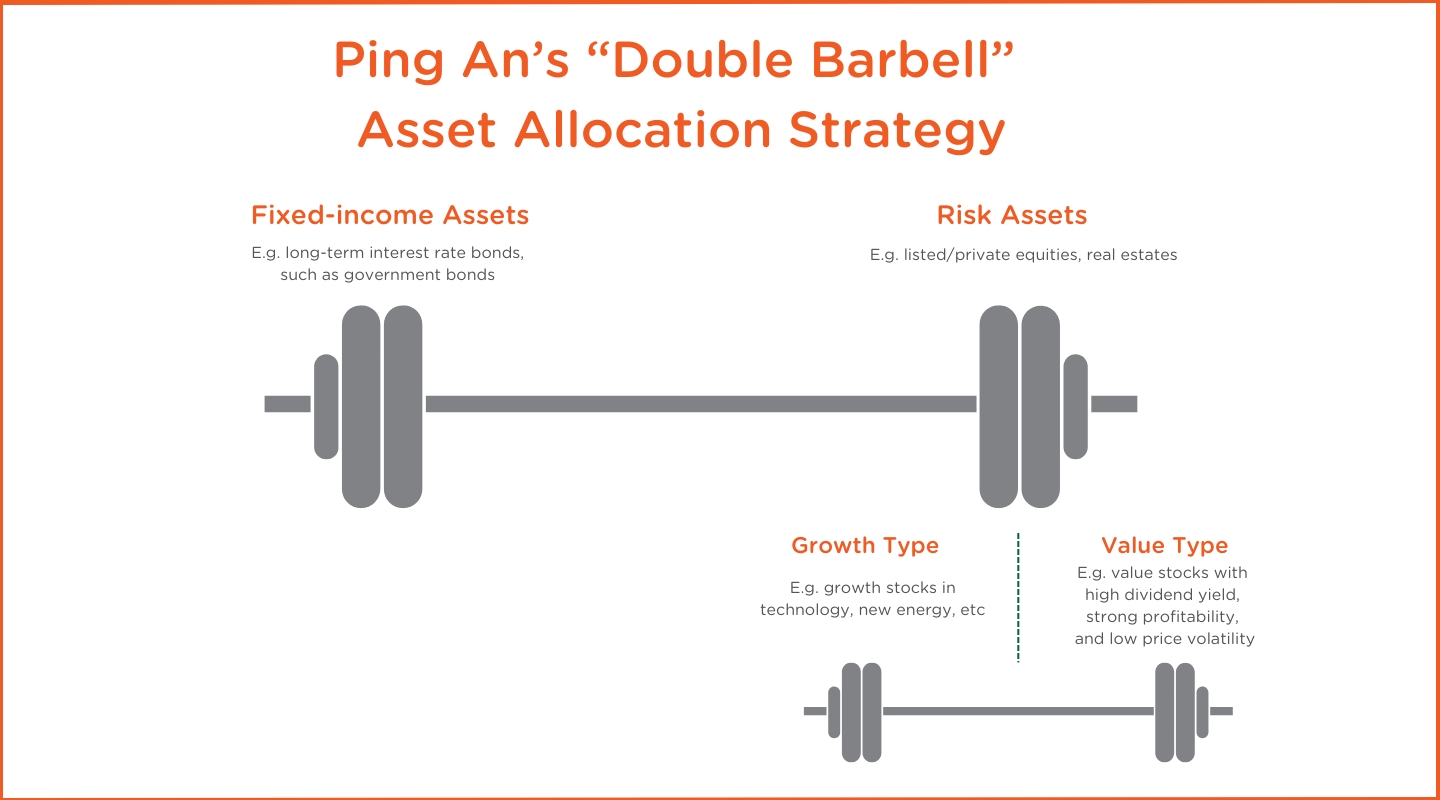
Barbell fixed income investing is a portfolio construction strategy that combines two distinct segments of the fixed income market: short-term, highly liquid instruments and long-term, higher-yielding instruments, with a significant exclusion of the intermediate-term. This "barbell" shape, visually represented by the concentration of assets at either end of the maturity spectrum, aims to achieve a balance between capital preservation, liquidity, and potential for enhanced returns. The rationale behind this approach stems from a desire to mitigate the risks inherent in intermediate-term bonds while capturing the benefits of both short-term safety and long-term yield. It is a strategy that has gained traction among sophisticated investors seeking to navigate volatile interest rate environments and achieve specific financial objectives.
The core principle of the barbell strategy is to divide the fixed income allocation into two primary buckets. The "short end" of the barbell consists of highly liquid, low-risk securities with maturities typically ranging from a few months to two years. Examples include Treasury bills (T-bills), short-term government agency bonds, certificates of deposit (CDs), and money market funds. The primary function of this segment is to provide immediate liquidity, serve as a buffer against unforeseen cash needs, and offer a safe haven during periods of market uncertainty. While offering minimal yield, the stability and accessibility of these instruments are paramount to the strategy’s overall resilience.
The "long end" of the barbell, conversely, is comprised of longer-dated fixed income securities, generally with maturities exceeding ten years, often extending to 20 or 30 years. These can include longer-term Treasury bonds, corporate bonds with a high credit rating, and potentially mortgage-backed securities. The allure of the long end lies in its typically higher coupon payments and the potential for capital appreciation if interest rates decline. Investors are compensated with a higher yield for locking up their capital for an extended period and accepting the greater price sensitivity to interest rate fluctuations. The selection of credit quality within this segment is crucial, as credit risk can amplify the volatility of long-term bonds.
The deliberate omission of the intermediate-term maturity segment (typically maturities between 3 and 10 years) is a defining characteristic of the barbell strategy. This exclusion is not arbitrary. Intermediate-term bonds, while offering a potentially attractive yield pickup over short-term securities, are often considered to be in a precarious position regarding interest rate risk. They are sufficiently sensitive to interest rate changes to experience significant price volatility, yet they do not offer the same substantial yield enhancement as long-term bonds to fully compensate for that risk. By avoiding this middle ground, the barbell strategy aims to sidestep the "worst of both worlds" scenario where investors are exposed to considerable interest rate risk without a commensurate reward.
The strategic advantages of a barbell fixed income portfolio are multifaceted. Firstly, it prioritizes capital preservation and liquidity through the short-term allocation. This is particularly valuable for investors who may need access to funds on short notice or who are concerned about preserving principal in a downturn. The ability to meet immediate financial obligations without being forced to sell longer-term assets at potentially unfavorable prices is a significant risk mitigation tool. This segment acts as a safety net, ensuring that the portfolio can withstand unexpected expenses or market shocks.
Secondly, the long-term segment is designed to capture higher yields and benefit from potential capital appreciation. When interest rates fall, the prices of existing long-term bonds with higher coupon rates increase significantly. This price appreciation can provide a substantial boost to overall portfolio returns. Furthermore, the higher income generated by these longer-dated securities can contribute to a more robust income stream for the investor, especially in a low-interest-rate environment. The long-term allocation essentially positions the portfolio to capitalize on favorable interest rate movements.
Thirdly, the barbell strategy can offer a degree of protection against inflation, particularly if the long-term bonds held are inflation-protected securities (TIPS). While traditional fixed-rate bonds can be eroded by inflation, TIPS adjust their principal value based on changes in the Consumer Price Index (CPI), thus preserving the purchasing power of the investment. The long end of the barbell can be a vehicle for strategically hedging against inflationary pressures over extended periods.
The implementation of a barbell fixed income strategy requires careful consideration of several key factors. The precise allocation between the short and long ends is a critical decision and will vary depending on an investor’s risk tolerance, time horizon, and financial goals. A more risk-averse investor might lean towards a higher allocation to the short end, while an investor with a longer time horizon and a greater appetite for risk might allocate more to the long end. There is no one-size-fits-all ratio; it necessitates a personalized approach.
The selection of individual securities within each segment is equally important. For the short end, the focus is on creditworthiness and liquidity. High-grade short-term government bonds and money market funds are typically preferred. For the long end, while credit quality remains a consideration, investors will also be evaluating yield, duration, and the potential for capital appreciation. Diversification across different issuers and sectors within the long end is advisable to mitigate idiosyncratic risks. Investors might consider a mix of government bonds, highly rated corporate bonds, and potentially some mortgage-backed securities.
Understanding and managing interest rate risk is fundamental to the barbell strategy. While the short end is largely insulated from interest rate fluctuations, the long end is highly sensitive. If interest rates rise, the price of long-term bonds will fall, potentially leading to capital losses. This is a trade-off that investors must accept in pursuit of higher yields. Conversely, a decline in interest rates will lead to capital gains on the long-term holdings. Therefore, the success of the barbell strategy is often correlated with the direction of interest rates.
The barbell strategy can be particularly effective in certain economic environments. During periods of rising interest rates, the short end of the barbell provides stability and the ability to reinvest at higher rates as maturities come due. While the long end may experience price depreciation, the higher income generated can partially offset these losses, and the strategy can be adjusted by gradually shifting towards shorter maturities if the rate-hiking cycle is expected to continue. Conversely, in a declining interest rate environment, the long end of the barbell can generate significant capital appreciation. The short end still provides liquidity and stability, acting as a ballast to the more volatile long-term holdings.
The barbell approach is not without its limitations. The most significant is the opportunity cost associated with excluding intermediate-term bonds. In certain market conditions, intermediate-term bonds might offer an attractive combination of yield and risk that is not captured by the barbell. Furthermore, the strategy’s performance is heavily reliant on the investor’s ability to correctly anticipate interest rate movements. Incorrect prognostication can lead to suboptimal returns.
Another consideration is the potential for reinvestment risk. As short-term bonds mature, investors will need to reinvest that capital. If interest rates have fallen, they will be reinvesting at lower yields, which can impact the overall return of the short end. Conversely, if interest rates have risen, the short end benefits from higher reinvestment rates. The long end, by its nature, locks in a coupon rate for an extended period, mitigating reinvestment risk for that portion of the portfolio.
Tax implications should also be carefully considered. The coupon payments from long-term bonds may be subject to ordinary income tax, while capital gains realized from selling bonds at a profit are taxed at different rates depending on holding periods. Investors should consult with a tax advisor to understand the specific tax consequences of their barbell fixed income portfolio.
The barbell fixed income strategy can be implemented using a variety of investment vehicles. For the short end, direct ownership of Treasury bills, short-term CDs, and high-quality money market funds are common choices. For the long end, investors can purchase individual long-term Treasury bonds, corporate bonds, or consider bond exchange-traded funds (ETFs) or mutual funds that focus on long-duration fixed income. ETFs and mutual funds offer diversification and professional management, which can be beneficial for investors who do not wish to select individual bonds. However, it is crucial to select ETFs or mutual funds with a clear mandate and appropriate duration and credit quality for the long end of the barbell.
In conclusion, the barbell fixed income investing strategy offers a robust framework for managing fixed income portfolios with a focus on capital preservation, liquidity, and enhanced return potential. By concentrating investments in short-term, liquid assets and long-term, higher-yielding instruments while deliberately avoiding the intermediate-term, investors can construct a resilient portfolio. This strategy is particularly well-suited for navigating fluctuating interest rate environments and achieving specific financial objectives. Success hinges on careful asset allocation, prudent security selection, and a thorough understanding of interest rate risk. While not a guaranteed path to riches, the barbell approach provides a disciplined and strategic method for optimizing fixed income exposure in a complex financial landscape.

