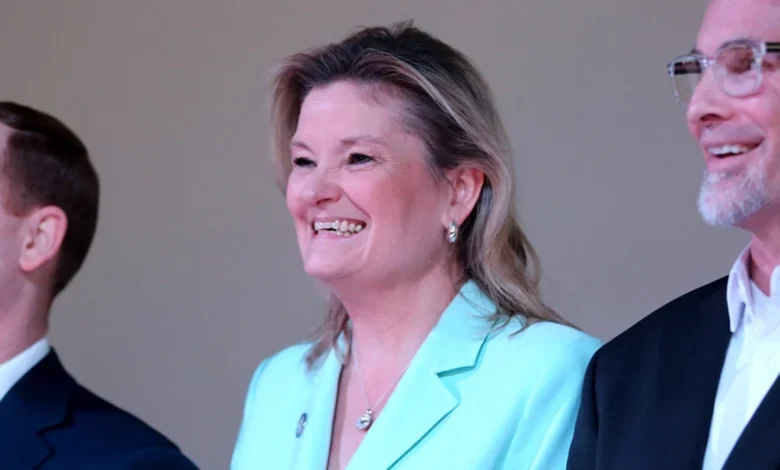
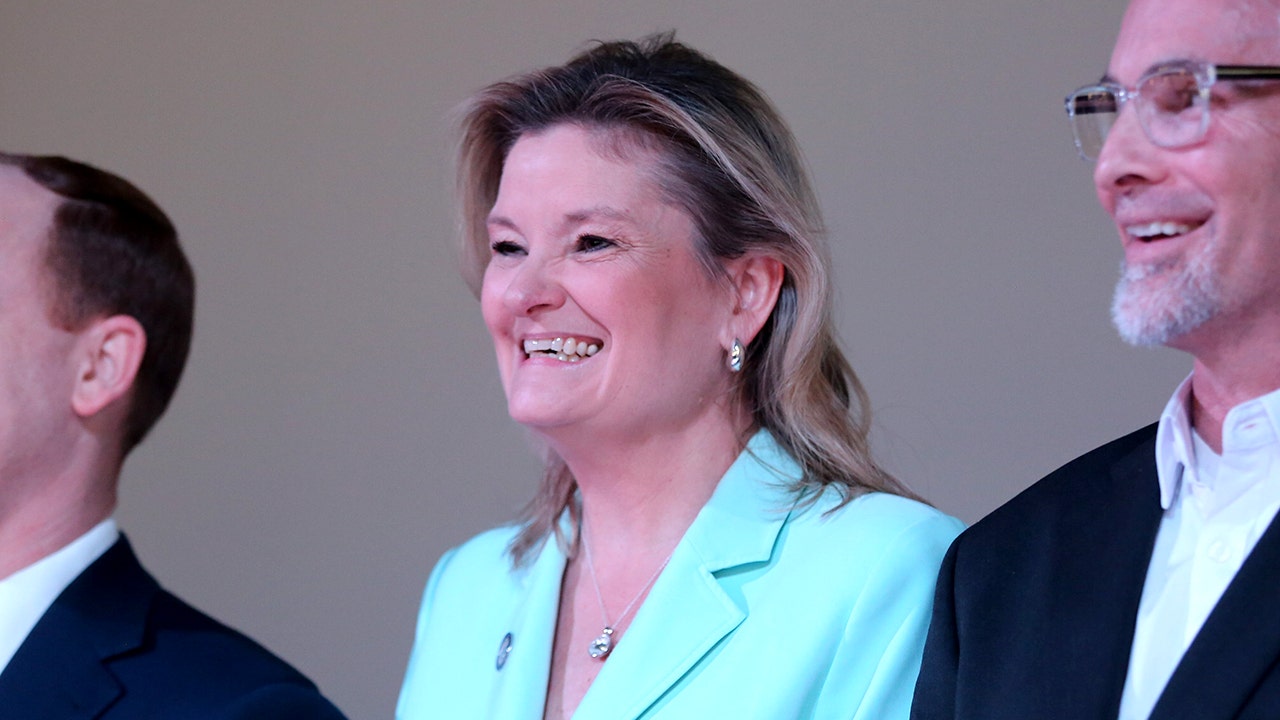
The election of Cindy Holscher marks a significant milestone in Kansas political history, signaling the Democratic Party’s continued influence in a state that has historically leaned Republican. By securing the governorship, Holscher succeeds the outgoing Laura Kelly, whose two terms in office set the stage for this latest transition. Holscher’s victory, confirmed by the Associated Press, ensures that the executive branch in Topeka will remain under Democratic leadership for at least another four years, defying the broader national trend of Republican dominance in many Midwestern states.
The Path to Victory and the Primary Struggle
The road to the governor’s mansion was far from straightforward for Holscher. Before facing off against Republican Senate President Ty Masterson, Holscher had to navigate a contentious and high-profile Democratic primary. Her opponent, state Sen. Ethan Corson, entered the race with the explicit backing of both incumbent Gov. Laura Kelly and former Gov. Kathleen Sebelius. Many political analysts initially viewed Corson as the presumptive favorite, given the institutional support he enjoyed from the party’s established leadership.
However, Holscher’s grassroots appeal proved stronger than the party establishment had anticipated. By focusing on a platform that emphasized education reform, rural healthcare access, and moderate fiscal policies, she managed to consolidate support among progressive voters and suburban moderates. Her victory in the August primary served as an early indicator of her ability to mobilize a coalition that exceeded the reach of traditional party endorsements.
Campaign Controversies and Public Discourse
The general election campaign was not without its challenges. Throughout the final months of the race, Holscher found herself on the defensive regarding statements she had made in 2023. During a heated legislative session regarding a bill that would have restricted drag performances in public spaces—specifically those accessible to minors—Holscher became a focal point of intense media scrutiny.
In a series of social media posts, Holscher had engaged in a speculative discussion regarding the nature of religious figures, at one point suggesting that Jesus Christ could have been transgender. The comments were seized upon by the Masterson campaign and conservative advocacy groups, who framed the remarks as evidence of a candidate who was out of touch with the religious values of the Kansas electorate. Holscher faced a barrage of criticism from religious organizations and social conservatives, forcing her to clarify her position repeatedly throughout the autumn. While the controversy threatened to alienate rural voters, Holscher’s ability to pivot back to economic issues and public infrastructure allowed her to maintain her lead in suburban corridors, which ultimately determined the outcome of the race.
Profiles of the Candidates
Cindy Holscher brings a distinct legislative background to the executive branch. First elected to the Kansas House of Representatives in 2016, she served two terms before moving to the state Senate in 2021. Her career in the statehouse has been defined by her work on healthcare access and transportation infrastructure, often positioning herself as a pragmatist willing to work across the aisle on non-ideological issues.
Her opponent, Ty Masterson, represented the conservative backbone of the Kansas Republican Party. As the President of the Kansas Senate since 2021, Masterson had been a formidable force in state politics, championing tax cuts and aggressive oversight of the executive branch. His campaign was bolstered by an endorsement from former President Donald Trump, which solidified his base among the party’s populist wing. Despite this high-level support, Masterson struggled to expand his coalition beyond the conservative base, failing to capture the necessary swing voters in Johnson and Wyandotte counties who proved decisive in the final tally.
Analyzing the Kansas Electorate
The Kansas gubernatorial race serves as a case study for the evolving political landscape of the Midwest. The state has long been a bastion of fiscal conservatism, yet the election of Laura Kelly in 2018 and her subsequent reelection in 2022 demonstrated that Kansas voters are increasingly willing to separate their national partisan preferences from their state-level choices.
Data from the 2024 election cycle indicates a persistent trend: voters in suburban areas—particularly in the Kansas City metro region—are increasingly wary of extreme ideological rhetoric. While Masterson focused heavily on cultural issues that resonate in rural Kansas, Holscher’s campaign strategy successfully leveraged the "Kelly model." This approach prioritized a moderate, results-oriented governing style that prioritized economic stability and the protection of essential social services.
The economic climate in Kansas also played a pivotal role. With inflation and the cost of living remaining top-of-mind for voters, both candidates proposed varying tax relief measures. Holscher’s focus on long-term property tax reform resonated with homeowners, providing a tangible counter-narrative to Masterson’s broader tax-cutting agenda, which some critics argued would jeopardize the state’s long-term budget stability.
The Role of Institutional Support
The transition from Laura Kelly to Cindy Holscher represents a continuity of policy that is rare in state politics. Kelly’s legacy, which includes the expansion of state investment in education and the stabilization of the state’s pension fund, provided a platform for Holscher to build upon. Though the party establishment initially backed a different candidate in the primary, they quickly coalesced around Holscher once she secured the nomination, recognizing that the governorship was the most vital prize in the state.
The Republican Party, conversely, will likely face a period of internal reflection. Despite holding a supermajority in the state legislature, the GOP has now lost three consecutive gubernatorial elections. Political consultants suggest that the party’s focus on high-profile social issues may be reaching a point of diminishing returns, particularly as the state’s demographic makeup continues to shift toward more diverse, suburban-centered populations.
Looking Ahead: The Holscher Administration
As Governor-elect Holscher prepares to take the oath of office in January, her administration faces immediate hurdles. The Republican-controlled legislature will remain a check on her power, necessitating a delicate balancing act if she hopes to pass meaningful legislation. Holscher has already signaled that her first priorities will be addressing the state’s workforce shortage and investing in rural broadband—two issues that historically enjoy bipartisan support.
However, the shadow of the 2023 social media controversy may continue to linger. Observers expect that the opposition party will hold the administration to a high standard of scrutiny, and the potential for friction over social legislation remains high. Holscher will need to demonstrate that she can serve as a governor for all Kansans, not just those who supported her in the general election.
Implications for the National Landscape
The results of the Kansas election will undoubtedly be analyzed by national party committees as they prepare for the next midterm cycles. For Democrats, the win serves as a blueprint for how to hold onto power in "red-leaning" states: identify moderate candidates who can pivot effectively from primary contests to general elections, focus on local economic issues, and maintain a consistent brand that emphasizes competence over culture war theatrics.
For Republicans, the loss is a reminder that national endorsements and strong conservative bona fides are not always sufficient to overcome the specific local dynamics of a state. As the Republican Party moves forward, it may be forced to recalibrate its messaging in states like Kansas, where the electorate has shown a distinct preference for pragmatic, stable governance.
Conclusion
The election of Cindy Holscher is more than just a victory for a single candidate; it is a testament to the volatility and potential for change within the Kansas political landscape. By navigating a tough primary, overcoming public controversy, and maintaining a focus on core legislative priorities, Holscher has positioned herself to lead the state through a period of transition. Whether she can translate her campaign promises into legislative action will define her tenure and determine the future trajectory of the Democratic Party in the Sunflower State. As the state moves toward the new legislative session, all eyes will be on Topeka to see how the next chapter of Kansas politics unfolds.