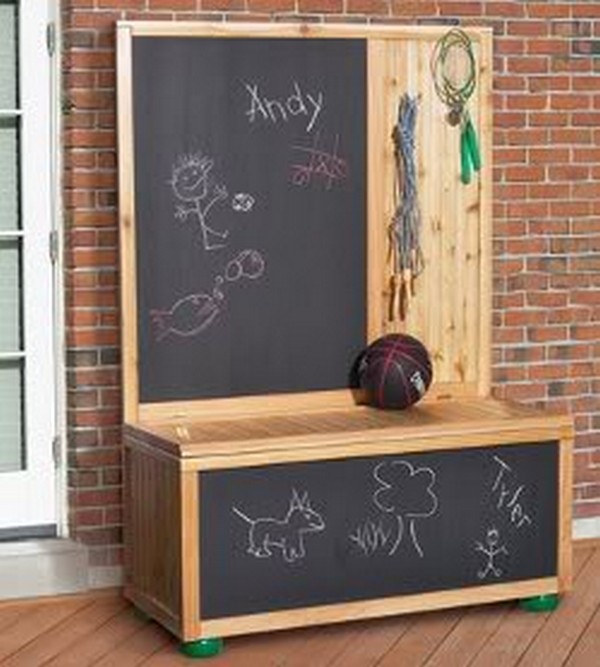

DIY Chalkboard Toy Box on Wheels: A Comprehensive Building Guide
This comprehensive guide details the construction of a DIY chalkboard toy box on wheels, a versatile and engaging storage solution for children’s toys. The project combines practical storage with interactive play, allowing children to personalize the exterior with chalk drawings and messages. The addition of wheels enhances mobility, making it easy to relocate the toy box to different play areas or to tidy up quickly. This project is suitable for intermediate DIYers with basic woodworking knowledge and access to standard tools. The design prioritizes durability, safety, and aesthetic appeal.
Materials and Tools Required:
Wood:
- One 4’x8′ sheet of 3/4-inch plywood (birch or pine is recommended for a smooth finish).
- One 4’x8′ sheet of 1/4-inch plywood or hardboard for the bottom panel.
- Four caster wheels (5-inch diameter, heavy-duty, with a weight capacity of at least 100 lbs each). Swivel casters are ideal for maneuverability.
- One box of 1.5-inch wood screws.
- One box of 1-inch wood screws.
- Wood glue.
- Sandpaper (120-grit, 220-grit).
- Wood filler.
- Chalkboard paint (two 8 oz cans).
- Clear, non-toxic sealant or polycrylic.
- Optional: Hinges for a lid, handles for easier carrying.
Tools:
- Circular saw or table saw.
- Jigsaw (if adding a hinged lid with cutouts).
- Drill/driver with various drill bits.
- Measuring tape.
- Pencil.
- Square.
- Clamps (bar clamps or pipe clamps).
- Orbital sander (optional, but recommended for faster sanding).
- Paintbrushes or foam rollers for painting.
- Safety glasses.
- Dust mask.
Cutting the Wood Components:
Begin by accurately measuring and cutting the plywood into the following pieces. Precision is key for a sturdy and well-fitting box.
- Sides (2): Cut two pieces of 3/4-inch plywood to 36 inches long by 18 inches high.
- Front and Back (2): Cut two pieces of 3/4-inch plywood to 34.5 inches long by 18 inches high. These dimensions account for the thickness of the side panels to create a complete 36-inch length when assembled.
- Bottom (1): Cut one piece of 1/4-inch plywood or hardboard to 34.5 inches long by 16.5 inches wide. This is slightly smaller than the internal dimensions to allow for easier insertion.
- Lid (1) (Optional): If you choose to have a hinged lid, cut a piece of 3/4-inch plywood to 36 inches long by 18 inches wide.
Assembly of the Toy Box Frame:
The assembly process involves joining the cut plywood pieces to form the main box structure.
-
Attaching Sides to Front/Back: Apply wood glue to the edges of the front and back panels where they will meet the side panels. Position one side panel perpendicular to the edge of a front panel. Ensure the edges are flush and the corners are square. Predrill pilot holes through the side panel into the edge of the front panel to prevent wood splitting. Drive 1.5-inch wood screws every 6-8 inches to secure the joint. Repeat this process for the other side of the front panel and both sides of the back panel. You should now have a U-shaped structure.
-
Completing the Box: Apply wood glue to the exposed edges of the front and back panels of the U-shaped structure. Carefully align the remaining side panel, ensuring all corners are square and flush. Predrill pilot holes and secure with 1.5-inch wood screws as before. You should now have a rectangular box frame.
-
Reinforcing Joints (Optional but Recommended): For added strength, cut small strips of 3/4-inch plywood (approximately 2 inches wide and the height of the box) and glue and screw them into the inside corners of the box, further reinforcing the primary joints.
Installing the Bottom Panel:
The bottom panel provides structural integrity and contains the toys.
- Positioning: Flip the assembled box frame upside down. Apply a generous bead of wood glue around the bottom edges of the box frame.
- Securing the Bottom: Carefully place the 1/4-inch plywood bottom panel onto the glued edges. Ensure it is centered and flush with the outer edges of the box frame. Predrill pilot holes through the bottom panel into the side, front, and back panels. Use 1-inch wood screws spaced approximately 4-6 inches apart to secure the bottom panel firmly.
Preparing for the Chalkboard Finish:
Proper preparation is crucial for a smooth and durable chalkboard surface.
- Sanding: Begin by sanding the entire exterior of the toy box with 120-grit sandpaper. This will smooth out any rough edges, remove imperfections, and create a good surface for primer and paint. Pay close attention to all joints and corners.
- Filling Imperfections: Inspect the box for any dents, screw holes, or minor gaps. Fill these with wood filler, pressing it in firmly. Allow the wood filler to dry completely according to the manufacturer’s instructions.
- Second Sanding: Once the wood filler is dry, sand the filled areas smooth with 120-grit sandpaper. Then, sand the entire exterior again with 220-grit sandpaper for a very smooth finish. This finer grit will ensure a superior paint application.
- Cleaning: Thoroughly wipe down the entire toy box with a damp cloth to remove all dust and debris. Allow it to dry completely.
Applying the Chalkboard Paint:
This is the transformative step that turns the toy box into a creative canvas.
- Priming (Optional but Recommended): For the best adhesion and a more uniform chalkboard surface, consider applying a coat of primer to the exterior of the toy box. Use a water-based primer and follow the manufacturer’s drying instructions. Lightly sand the primed surface with 220-grit sandpaper once dry and wipe clean.
- First Coat of Chalkboard Paint: Stir the chalkboard paint thoroughly. Apply a thin, even coat of chalkboard paint to the exterior surfaces of the toy box using a high-quality paintbrush or foam roller. Avoid applying too thickly, as this can lead to an uneven texture. Work in one direction for a consistent finish.
- Drying and Second Coat: Allow the first coat to dry completely according to the paint manufacturer’s instructions. Lightly sand the dried paint with 220-grit sandpaper and wipe clean. Apply a second thin, even coat of chalkboard paint.
- Subsequent Coats (Optional): Depending on the coverage of your chalkboard paint and desired opacity, you may need to apply a third coat. Follow the same drying, sanding, and cleaning process between coats. Most high-quality chalkboard paints require at least two coats.
- Curing Time: Chalkboard paint requires a curing period before it can be used effectively. This typically ranges from 24 to 72 hours. During this time, avoid touching or drawing on the surface.
Installing the Caster Wheels:
The wheels make the toy box mobile and easy to move.
- Wheel Placement: Decide on the placement of the caster wheels. For optimal stability, place them in each corner of the bottom panel, approximately 2 inches in from each edge. This provides a wide base for stability.
- Marking: With the toy box right-side up, place one caster wheel in its intended position. Mark the screw hole locations with a pencil. Repeat this for all four wheels.
- Drilling Pilot Holes: Remove the caster wheels. Predrill pilot holes at each marked location. The pilot hole size should be slightly smaller than the diameter of the screws provided with the casters. This prevents the wood from splitting.
- Attaching Casters: Align each caster wheel with its pilot holes. Secure each caster firmly using the screws provided with the casters. Ensure they are tightened securely.
Optional Additions: Hinged Lid and Handles:
- Hinged Lid: If you cut a lid piece, attach two or three sturdy hinges to the back edge of the lid and the corresponding top edge of the toy box. Ensure the lid opens and closes smoothly. You might consider adding a soft-close hinge for safety.
- Handles: For easier maneuvering, especially when lifting or tilting, consider attaching handles to the sides of the toy box. Choose durable rope handles or metal cabinet handles. Predrill pilot holes and secure them with appropriate screws.
Finishing Touches and Curing:
- Sealing the Chalkboard Surface: Once the chalkboard paint is fully cured (refer to paint manufacturer’s instructions for the specific curing time, which can be up to 7 days), you can apply a clear, non-toxic sealant or polycrylic over the chalkboard paint. This helps protect the painted surface, makes it easier to clean, and prevents chalk dust from permanently adhering. Apply in thin, even coats and allow each coat to dry completely. Lightly sand with very fine grit sandpaper (e.g., 400-grit) between coats for a smoother finish.
- First Use of Chalkboard: Before extensive use, condition the chalkboard surface by rubbing a piece of chalk over the entire area and then wiping it clean with a dry cloth. This creates a micro-layer of chalk that helps prevent permanent marks from being made.
SEO Optimization Elements:
This article is structured to be SEO-friendly by:
- Keyword Inclusion: The primary keyword "DIY Chalkboard Toy Box on Wheels" is present in the title and repeatedly throughout the article, especially in headings and early paragraphs. Secondary keywords like "chalkboard toy storage," "toy box with wheels," "kids’ craft project," and "DIY furniture" are naturally integrated.
- Clear Headings and Subheadings: Using
<h2>,<h3>, and<h4>tags (implicitly in this text format) helps break down content and improves readability for both users and search engines. - Comprehensive Content: The article provides a detailed, step-by-step guide, offering significant value and encouraging longer dwell times.
- Actionable Instructions: The clear, numbered steps and material lists make it easy for users to follow along.
- Descriptive Language: Using terms like "versatile," "engaging," "durable," and "safe" enhances the article’s appeal and searchability.
- Focus on User Intent: The article directly addresses the intent of someone searching for instructions on how to build a chalkboard toy box on wheels.
- Internal/External Linking Potential: While not explicitly included here, a real-world implementation would benefit from links to related DIY projects, tool reviews, or material suppliers.
- Image Alt Text: In a web format, descriptive alt text for images of each step would be crucial for image search optimization.
- Meta Description: A compelling meta description summarizing the article’s content and including keywords would be vital.
By following these steps, you can create a robust, functional, and creatively engaging DIY chalkboard toy box on wheels that will be a treasured addition to any child’s playroom. The project offers a rewarding DIY experience and a practical, interactive storage solution.

