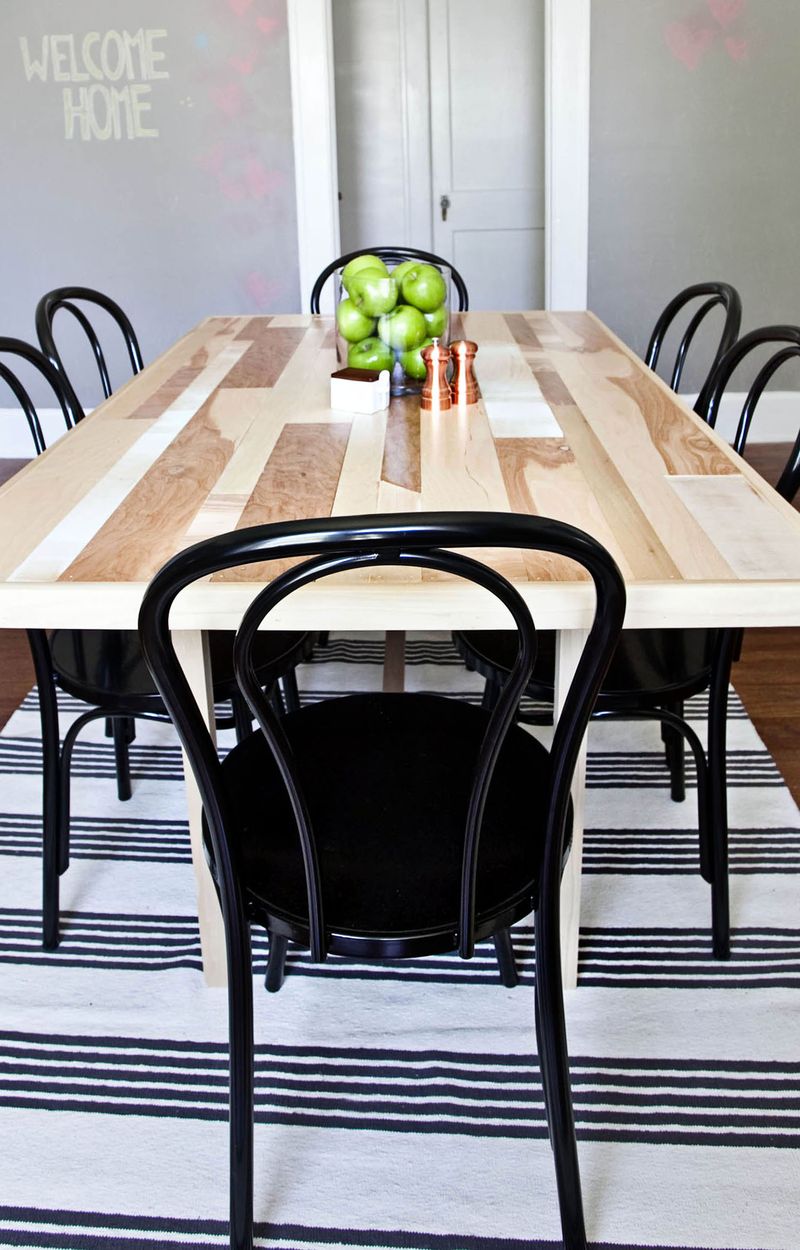

DIY Six-Seat Dining Room Table: A Comprehensive Guide to Building Your Own Custom Table
Building a six-seat dining room table is a rewarding DIY project that allows for complete customization in terms of size, style, and material. This guide will walk you through the entire process, from planning and material selection to construction and finishing. The goal is to create a sturdy, functional, and aesthetically pleasing centerpiece for your dining space that perfectly suits your needs and budget.
Planning Your DIY Six-Seat Dining Room Table
The first crucial step is meticulous planning. Consider the available space in your dining room. Measure the dimensions of the room and how much space you can comfortably allocate to the table and surrounding seating. For a six-seat table, a common and comfortable size is around 60-72 inches long and 30-36 inches wide. The height should be standard dining table height, typically 28-30 inches from the floor to the top of the table. Consider the legroom needed under the table; a clearance of at least 24 inches between the table apron and the floor is recommended.
Next, decide on the style of your table. Common DIY-friendly styles include a farmhouse table with a solid wood top and sturdy legs, a modern table with clean lines and perhaps metal accents, or a trestle table with a more architectural base. The style will dictate the complexity of the build and the types of materials you’ll need. Think about how the table will integrate with your existing décor.
Finally, create a detailed sketch or blueprint of your design. Include all dimensions, joinery methods, and material specifications. This plan will serve as your roadmap throughout the construction process, minimizing errors and ensuring a cohesive final product. Don’t underestimate the value of a well-thought-out plan; it will save you time, money, and frustration.
Material Selection for Your DIY Dining Table
The choice of materials significantly impacts the appearance, durability, and cost of your DIY dining table. For the tabletop, hardwood is generally preferred for its strength and aesthetic appeal. Popular options include:
- Pine: Affordable and easy to work with, pine offers a rustic look. However, it’s softer and more prone to dents and scratches, making it best suited for a more casual or farmhouse style. Stains well and can be finished to achieve various looks.
- Oak: A classic choice, oak is strong, durable, and has a beautiful grain pattern. It’s more expensive than pine but offers excellent longevity. Red oak and white oak are common varieties, each with slightly different characteristics.
- Maple: Known for its smooth, fine grain and exceptional hardness, maple is a fantastic choice for a durable and elegant tabletop. It takes stains and finishes very well, offering a clean, modern look or a richer, deeper hue.
- Walnut: A premium hardwood, walnut offers a rich, dark color and stunning grain patterns. It’s very durable but also the most expensive option.
- Poplar: A less expensive hardwood than oak or maple, poplar is relatively stable and paints well, making it a good choice if you plan to paint your table.
For tabletops, you can opt for a single large slab (which can be costly and challenging to source and work with) or, more commonly for DIY projects, create a tabletop from individual planks. When selecting planks, look for straight boards with minimal knots and imperfections. You’ll need enough material to achieve your desired tabletop dimensions, accounting for waste during cutting.
For the table legs and apron (the supporting frame under the tabletop), you can use the same hardwood as the tabletop for a cohesive look, or choose a more economical option like construction-grade lumber or even metal for a modern aesthetic. If using dimensional lumber (like 2x4s or 4x4s), ensure it’s straight and free of significant warps or twists.
Consider the fasteners and adhesives you’ll use. High-quality wood glue is essential for strong joints. For screws, choose appropriate lengths and types (e.g., wood screws, pocket hole screws). You may also need wood filler to repair minor imperfections and sandpaper in various grits for smoothing.
Tools and Equipment Needed
A successful DIY table build requires a range of tools. The specific tools will depend on your chosen design and joinery methods, but a comprehensive list typically includes:
- Measuring and Marking Tools: Tape measure, pencil, carpenter’s square, combination square, marking knife.
- Cutting Tools:
- Circular Saw or Miter Saw: For making straight and angled cuts on your lumber. A miter saw is highly recommended for precise, repeatable cuts, especially for legs and apron pieces.
- Jigsaw: Useful for curved cuts or detailing.
- Table Saw (Optional but highly recommended): For ripping planks to width and making precise joinery cuts.
- Drilling Tools:
- Cordless Drill/Driver: Essential for drilling pilot holes and driving screws.
- Drill Bits: Various sizes for pilot holes and counterboring.
- Pocket Hole Jig (e.g., Kreg Jig): An invaluable tool for creating strong, hidden joinery, particularly for attaching the apron to the legs and the tabletop to the apron.
- Assembly and Fastening Tools:
- Clamps: Bar clamps, pipe clamps, or F-clamps are crucial for holding pieces together while glue dries or during assembly. You’ll need several of varying sizes.
- Hammer: For tapping pieces into place or driving nails (though screws are generally preferred for structural integrity).
- Screwdrivers: If not using a drill/driver.
- Sanding Tools:
- Orbital Sander: For efficient and smooth sanding of large surfaces.
- Sandpaper: Grits ranging from 80 to 220 or higher for progressively finer finishes.
- Sanding Blocks: For hand-sanding smaller areas.
- Finishing Supplies:
- Paint Brushes, Foam Brushes, or Rags: For applying stain, paint, or sealant.
- Wood Stain or Paint: Your chosen color and finish.
- Polyurethane, Varnish, or Lacquer: For protective topcoat.
- Wood Filler: For imperfections.
- Tack Cloth: For removing dust before finishing.
Building the Tabletop
The tabletop is often the most visually prominent part of the dining table. For a planked tabletop, you’ll first need to mill your lumber. This involves jointing and planing your boards to ensure they are flat and have parallel edges, making them perfect for gluing together. If you don’t have a jointer and planer, you can often have lumber milled at a local lumberyard or hardwood store. Alternatively, you can select pre-milled boards and be more forgiving with minor imperfections, embracing a more rustic look.
Lay out your chosen planks on a flat surface in the arrangement you prefer, considering grain patterns and any desirable imperfections. Use a ruler or measuring tape to ensure the overall dimensions are as planned. Once you’re satisfied with the layout, begin applying wood glue to the edges of the boards. Spread an even layer of glue on each mating edge.
Next, assemble the planks. Use clamps to pull the boards together tightly. Ensure the top surface remains as flat as possible. You can use pipe clamps or bar clamps that span the width of the tabletop. It’s advisable to use more clamps than you think you need to ensure uniform pressure. Wipe away any excess glue that squeezes out with a damp cloth before it dries. Allow the glue to cure completely according to the manufacturer’s instructions (typically 24 hours).
Once the glue has cured, remove the clamps. The next step is to flatten the tabletop. If you have a planer, you can pass the tabletop through it to flatten both sides. If not, you can use a hand plane or an orbital sander with a sanding block to achieve a flat surface. Be patient and work systematically. After flattening, sand the entire tabletop surface. Start with a lower grit (e.g., 80 or 100) to remove any major imperfections and then progressively move to higher grits (e.g., 150, 180, 220) for a smooth finish.
Constructing the Table Base (Legs and Apron)
The table base provides stability and support for the tabletop. This typically consists of four legs and an apron.
Legs:
If you’re using dimensional lumber for the legs (e.g., 4×4 posts), cut them to your desired height, ensuring they are all the same length. If you’re building tapered legs for a more refined look, you’ll need to use a table saw or a jig to create the taper. Ensure the taper starts at the top and gradually narrows towards the bottom. Sand all surfaces of the legs smooth.
Apron:
The apron is the frame that connects the legs and supports the tabletop. For a rectangular table, you’ll need two long apron pieces and two short apron pieces. Cut these pieces from your chosen lumber. The width of the apron boards will influence the overall look and structural rigidity.
Joinery:
There are several ways to join the apron to the legs and to itself.
- Pocket Holes: This is a popular and straightforward method for DIYers. Drill pocket holes on the ends of your apron pieces. Then, attach the apron pieces to the legs by screwing through the pocket holes into the legs. Ensure the apron is flush with the top of the legs. Use a square to ensure the corners are at a perfect 90-degree angle.
- Mortise and Tenon: This is a more traditional and robust joinery method. It involves cutting a mortise (a slot) into the leg and a corresponding tenon (a projecting tongue) on the end of the apron piece. This method requires more skill and specialized tools but creates extremely strong joints.
- Dowel Joints: Similar to mortise and tenon, but uses dowels for reinforcement.
If building a trestle base, the construction will be different and typically involves more complex angled cuts and joinery.
Once the apron is assembled and attached to the legs, ensure the entire base is square and stable. You can add corner braces for extra strength if desired.
Attaching the Tabletop to the Base
There are several methods for attaching the tabletop to the base, each with its own advantages for wood movement. It’s crucial to allow for wood expansion and contraction due to changes in humidity.
- Figure-Eight Fasteners: These metal fasteners look like an "8." One loop is screwed into the underside of the tabletop, and the other loop is screwed into the apron. They allow for a limited amount of movement.
- Z-Clips or Tabletop Fasteners: These metal clips fit into a slot cut into the apron and are screwed into the underside of the tabletop. They also allow for wood movement.
- Pocket Holes: You can drill pocket holes on the inside of the apron and screw up into the underside of the tabletop. While this is a strong connection, it can restrict wood movement more than other methods. If using this method, consider slightly elongating the screw holes in the apron to allow for some movement.
Position the base on the underside of the tabletop, ensuring it’s centered. Mark the location for your chosen fasteners. Pre-drill pilot holes to prevent splitting the wood. Attach the tabletop securely to the base.
Sanding and Finishing
The sanding and finishing stages are critical for the longevity and aesthetic appeal of your dining table.
Sanding:
After assembly, give the entire table a final sanding. Start with a medium grit (e.g., 120) to smooth out any rough spots or glue residue. Then, move to finer grits (e.g., 180, 220) for a silky-smooth finish. Pay close attention to edges and corners. For a truly professional finish, you can sand up to 320 grit or even higher.
Finishing:
Before applying any finish, ensure the table is completely free of dust. Use a tack cloth for this purpose.
- Staining (Optional): If you’re staining the wood, apply the stain evenly with a brush or rag, following the grain of the wood. Wipe off any excess stain after the recommended dwell time. Allow the stain to dry completely according to the manufacturer’s instructions.
- Topcoat: A durable topcoat is essential for protecting the tabletop from spills, scratches, and wear.
- Polyurethane: A popular and durable choice. Water-based polyurethane dries faster and has less odor, while oil-based polyurethane offers a harder finish and warmer tone but takes longer to dry. Apply multiple thin coats, allowing each to dry and lightly sanding with very fine-grit sandpaper (e.g., 320 or 400) between coats for a smoother finish.
- Varnish or Lacquer: Offer excellent protection and can provide a high-gloss finish.
- Wax: For a more natural, matte finish, a furniture wax can be applied after the stain has dried. However, wax offers less protection than polyurethane or varnish.
When applying the finish, work in a well-ventilated area and wear appropriate personal protective equipment. Apply thin, even coats. Rushing the finishing process will lead to an inferior result.
Maintenance and Care
To ensure your DIY six-seat dining room table lasts for years to come, proper maintenance is key. Regularly dust the table with a soft, dry cloth. For spills, wipe them up immediately with a damp cloth and dry thoroughly. Avoid harsh chemical cleaners, as they can damage the finish. Periodically inspect the fasteners holding the tabletop to the base and tighten them if necessary. If the finish becomes dull or scratched over time, you can lightly sand the surface and reapply a fresh coat of your chosen topcoat.
By following these steps, you can successfully build a beautiful and functional six-seat dining room table that will be a source of pride and a gathering place for family and friends for years to come. The satisfaction of creating something with your own hands, tailored precisely to your needs and style, is unparalleled.
