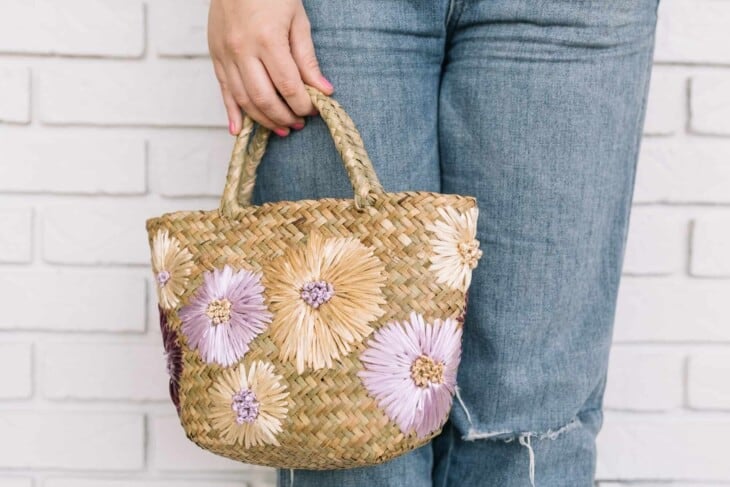

DIY Stitched Floral Purse: A Comprehensive Guide to Crafting Your Own Unique Accessory
Creating a DIY stitched floral purse offers a rewarding blend of creativity, practicality, and personalization. This project allows crafters of all skill levels to design a unique accessory that reflects their individual style and can be adapted for various occasions and needs. Beyond the aesthetic appeal, the process of hand-stitching a floral design provides a mindful and engaging activity, fostering a connection with the craft and resulting in a tangible, cherished item. This comprehensive guide will delve into every aspect of crafting your own stitched floral purse, from material selection and pattern creation to intricate stitching techniques and finishing touches, ensuring a successful and beautiful outcome.
Understanding Your Materials: Choosing the Right Fabric and Embellishments
The foundation of any successful DIY stitched floral purse lies in the careful selection of materials. For the main body of the purse, a sturdy yet pliable fabric is essential. Medium-weight cotton, linen, or even a cotton-linen blend are excellent choices. These fabrics offer good structure, hold their shape well, and are relatively easy to stitch through. Avoid very thin or stretchy fabrics, as they can be difficult to manage and may not provide the desired durability. Consider the color and pattern of your base fabric. A solid color will make your floral stitches pop, while a subtle print can add depth and visual interest.
For the floral embellishments, a diverse range of threads and embroidery floss will be your primary tools. Embroidery floss comes in a vast spectrum of colors and is typically made of six strands, which can be separated to achieve different line weights and textural effects. Silk threads offer a luxurious sheen and a smooth finish, ideal for creating delicate petals. Specialty threads like metallic, variegated, or variegated cotton floss can add unique visual elements and a touch of sparkle. For a more dimensional effect, consider using yarn or even thin ribbons for certain floral elements like leaves or thicker stems.
Beyond threads, consider other embellishments to elevate your stitched floral purse. Small beads, sequins, pearls, or even tiny buttons can be incorporated into the floral design to add sparkle, texture, and focal points. These can be sewn on as the final details of your stitches or applied strategically during the stitching process.
Designing Your Floral Motif: From Simple to Complex
The beauty of a DIY stitched floral purse lies in the freedom to design your own unique floral motif. You can start with a simple, minimalist approach or embark on a more elaborate, intricate design.
Sketching and Transferring Your Design: Begin by sketching your floral ideas on paper. Consider the overall size and shape of your purse and how the floral elements will be arranged. Do you envision a single, prominent bloom, a scattered field of smaller flowers, or a trailing vine motif? Experiment with different flower types – roses, daisies, sunflowers, poppies – and leaf shapes. Once you are satisfied with your sketch, you need to transfer it onto your fabric.
- Tracing: For simpler designs on lighter fabrics, you can place your sketch directly beneath the fabric and trace over it with a fabric marker or a disappearing ink pen. Ensure good lighting for accurate tracing.
- Iron-on Transfer Paper: This is a convenient method for more detailed designs. Print your design onto iron-on transfer paper (ensure it’s suitable for fabric) and then follow the product instructions to transfer the design onto your purse fabric using an iron.
- Stencils: You can create or purchase stencils of floral elements. Position the stencil on your fabric and lightly trace around it with a fabric marker.
- Freehand Stitching: For experienced embroiderers, freehand stitching is an option, allowing for spontaneous creativity as you stitch.
Scaling and Proportion: Pay attention to the scale of your floral elements relative to the size of your purse. Overly large flowers on a small purse can look overwhelming, while tiny details on a large tote might get lost. Aim for a balanced and harmonious composition.
Color Palettes: Consider your color palette carefully. You can opt for realistic, natural color combinations or choose more vibrant, abstract hues to make a bold statement. Look for inspiration in nature, art, or even existing floral patterns. Remember that different threads can be combined for shading and depth. For instance, using lighter and darker shades of the same color can create the illusion of light and shadow on your petals.
Stitching Techniques for Floral Elements
Mastering a few key embroidery stitches will unlock a world of possibilities for your stitched floral purse. Each stitch offers a different texture and visual effect, allowing you to create realistic or stylized floral elements.
Basic Stitches for Flowers:
- Satin Stitch: This is fundamental for filling in petals and leaves with a smooth, solid color. It involves closely packed, parallel stitches that lie next to each other, creating a flat, satin-like surface. Vary the length of your satin stitches to create rounded or pointed petal shapes.
- French Knot: Perfect for the centers of flowers, stamens, or small decorative dots. A French knot is created by wrapping the embroidery floss around the needle multiple times before pulling it through the fabric. The number of wraps determines the size of the knot.
- Lazy Daisy Stitch (Petal Stitch): This stitch creates individual, detached petals. It’s essentially a detached chain stitch where the loop is secured with a small tacking stitch at its base.
- Long and Short Stitch: This technique involves alternating long and short stitches to create a feathered or blended effect, ideal for shading petals and leaves. It allows for smooth transitions between colors.
- Woven Wheel Stitch: This creates a circular, layered effect resembling a woven rose or flower head. It involves radiating stitches from a central point, which are then woven through with a contrasting thread.
Stitches for Stems and Leaves:
- Backstitch: A strong and versatile stitch for outlining shapes, creating stems, and adding definition. It’s created by taking a stitch backward and then bringing the needle forward, overlapping the previous stitch.
- Stem Stitch: Ideal for creating smooth, flowing lines like stems and vines. It involves a series of overlapping stitches that create a braided or rope-like appearance.
- Chain Stitch: Creates a continuous line of interlocking loops, which can be used for stems, outlines, or even to create textured floral elements.
- Split Stitch: Similar to backstitch but with the needle passing through the previous strand of floss, creating a slightly softer, more textured line.
- Feather Stitch: A decorative stitch that creates a wispy, feathery effect, useful for delicate leaf veins or accents.
Embroidery Hoop: Your Essential Tool
An embroidery hoop is crucial for keeping your fabric taut and preventing puckering while you stitch. This allows for even tension and cleaner stitches. Select a hoop that is slightly larger than the area you intend to embroider. Unscrew the inner ring, place your fabric over the inner ring, and then position the outer ring over the fabric. Tighten the screw until the fabric is firm.
Embroidery Needles: Use sharp embroidery needles with large eyes for easy threading. The size of the needle should be appropriate for the weight of your embroidery floss. Thicker floss will require a needle with a larger eye and a thicker shaft.
Cutting and Assembling Your Purse
Once your floral embroidery is complete, it’s time to transform your embellished fabric into a functional purse. The cutting and assembly process will depend on the style of purse you are creating. Here are some common purse styles and their basic construction:
Basic Tote Bag:
- Cut Fabric: Cut two rectangular pieces for the main body of the purse and two strips for the handles. The size of these pieces will determine the overall dimensions of your tote.
- Prepare Handles: Hem the raw edges of the handle strips by folding them over twice and stitching them down.
- Attach Handles: Pin the handles to the top edges of one of the main body pieces, ensuring they are evenly spaced and facing inward. Stitch them securely in place.
- Sew Body: With right sides together, sew the two main body pieces along the sides and bottom. Leave the top open.
- Finish Top Edge: Fold down the top edge of the purse twice to create a hem and stitch it in place.
- Turn and Press: Turn the purse right side out and press the seams.
Drawstring Pouch:
- Cut Fabric: Cut one rectangular piece for the main body and two smaller strips for the drawstring channels.
- Prepare Drawstring Channels: Fold over the top edge of the main body piece twice to create a hem. Then, fold it over again to create a channel for the drawstring. Stitch along the bottom edge of this folded section, leaving small openings at the sides for the drawstring.
- Sew Body: Fold the main body piece in half widthwise, right sides together. Sew along the side and bottom edges.
- Insert Drawstring: Thread a cord or ribbon through the channels using a safety pin or a bodkin.
- Finish and Secure: Tie the ends of the drawstring together to create a loop.
Zippered Pouch:
- Cut Fabric: Cut two pieces for the main body and two smaller pieces for the lining.
- Attach Zipper: Place one main body piece and one lining piece right sides together with the zipper sandwiched between them. Stitch along the zipper tape. Repeat for the other side.
- Sew Pouch: With right sides together, sew the main body pieces along the sides and bottom, and then sew the lining pieces along the sides and bottom, leaving a gap for turning.
- Box Corners (Optional): For a more structured pouch, box the corners by flattening a corner so the side and bottom seams meet. Draw a line perpendicular to the seam and stitch across it.
- Turn and Close Gap: Turn the pouch right side out through the gap in the lining and hand-stitch the gap closed.
Adding Finishing Touches and Embellishments
Once your purse is assembled, the final touches can truly bring your DIY stitched floral purse to life.
- Bead and Sequins Application: Carefully sew on beads and sequins to the centers of flowers, as accents on petals, or as dew drops. Use a strong thread and a fine needle.
- Button Embellishments: Small vintage buttons can add a charming focal point. Sew them securely to the fabric.
- Lining: For a professional finish, consider lining your purse with a coordinating fabric. This also adds durability.
- Fray Check: Apply a liquid fray check along raw edges that won’t be enclosed in seams to prevent unraveling.
- Interfacing: For added structure and body, consider fusing a lightweight interfacing to the back of your main purse fabric before cutting out your pattern pieces.
- Tassels and Charms: Hang decorative tassels, charms, or a complementary ribbon from a handle or zipper pull for an extra flourish.
- Piping: Adding fabric piping along the seams can give your purse a more polished and professional look.
Care and Maintenance of Your Stitched Floral Purse
To ensure your beautiful DIY stitched floral purse lasts for years to come, proper care is essential.
- Spot Cleaning: For minor stains, gently dab the affected area with a damp cloth and mild soap. Avoid harsh scrubbing, which can damage the stitches.
- Hand Washing (if necessary): If a more thorough cleaning is required, hand wash your purse in cool water with a gentle detergent. Do not wring or twist the fabric. Gently press out excess water.
- Drying: Lay your purse flat on a clean towel to air dry. Avoid direct sunlight, which can fade colors.
- Ironing: If ironing is necessary, use a low heat setting and iron on the reverse side of the embroidery. Place a pressing cloth between the iron and the fabric to protect the stitches.
SEO Optimization for Your DIY Stitched Floral Purse Article
To ensure your article reaches a wide audience, incorporating SEO best practices is vital.
- Keyword Research: Identify relevant keywords such as "DIY stitched floral purse," "embroidered purse tutorial," "handmade floral bag," "embroidery project," "crafting floral accessories," "sewing a floral purse," "easy embroidery patterns," and "DIY handbag."
- Title Tag: Craft a compelling and keyword-rich title like the one provided: "DIY Stitched Floral Purse: A Comprehensive Guide to Crafting Your Own Unique Accessory."
- Meta Description: Write a concise and informative meta description that entices users to click. Include primary keywords and a clear benefit, e.g., "Learn how to create a stunning DIY stitched floral purse with this comprehensive guide. Discover material selection, design tips, stitching techniques, and assembly for a unique handmade accessory."
- Header Tags (H1, H2, H3): Use header tags to structure your content logically. The main title should be H1. Use H2 for major sections like "Understanding Your Materials," "Designing Your Floral Motif," and "Stitching Techniques." Use H3 for sub-sections within those categories.
- Keyword Density: Naturally integrate your target keywords throughout the article. Avoid keyword stuffing, which can harm your SEO. Focus on providing valuable and informative content.
- Image Optimization: If you include images of your purse, use descriptive alt text that includes relevant keywords (e.g., "Close-up of stitched floral detail on DIY purse," "Handmade embroidered floral tote bag"). Compress images to improve page loading speed.
- Internal and External Linking: Link to other relevant articles on your own website (internal linking) and to reputable external resources (external linking) for further information. For example, you could link to an article on basic embroidery stitches or a tutorial for a specific purse style.
- Readability: Use clear and concise language. Break up long paragraphs into shorter ones. Use bullet points and numbered lists to present information effectively.
- User Engagement: Encourage comments and questions from readers to foster community and signal to search engines that your content is valuable and interactive.
By following this comprehensive guide, you can confidently embark on the rewarding journey of creating your own unique DIY stitched floral purse. The combination of thoughtful material selection, creative design, skillful stitching, and careful assembly will result in a beautiful, personalized accessory that you’ll be proud to carry. Remember to experiment, have fun, and let your creativity bloom!
