American higher education institutions, particularly elite research universities, are facing intense scrutiny after government data revealed they have accepted millions of dollars from foreign sources designated on federal watchlists. These entities include organizations with documented ties to the Chinese military, raising significant national security concerns within the United States government. The revelations underscore a long-standing challenge for American universities balancing the pursuit of global academic collaboration with safeguarding national interests and intellectual property.
The Alarming Figures and Affected Institutions
According to data compiled by the U.S. government, dozens of universities reported receiving a staggering $27.6 million from foreign entities listed on at least one federal watchlist during the second half of 2025. This figure represents a fraction of a broader sum, as an Education Department spokeswoman disclosed that American universities have received nearly $405 million from "counterparties of concern" – entities deemed to pose a "very real risk to our national security and that of our allies." The universities implicated in these reports span a range of prestigious institutions, including Northwestern University, the University of California, Irvine, the University of Connecticut, Bryant University, and the University of California, Berkeley. These institutions, often at the forefront of critical research and innovation, now find themselves at the center of a burgeoning controversy over foreign influence and potential risks to national security.
Government’s Stance and Heightened Scrutiny
The Trump Administration has championed a policy shift aimed at increasing transparency regarding foreign funding in academia. "While previous administrations often looked the other way or kept this data hidden, that policy changes now," an Education Department spokeswoman affirmed. This new approach is facilitated through an updated Section 117 Dashboard, a critical tool designed to bring foreign financial contributions "out of the shadows" and inform students, families, and taxpayers about the origins of university funding. Furthermore, the data collected is intended to equip the State Department with the necessary information to protect the nation’s security.
The gravity of the situation was underscored by a letter sent by Under Secretary of State for Public Diplomacy Sarah B. Rogers to the boards of these universities. The letter, obtained by CBS News, cautioned that continued relationships with watchlisted entities could lead to restrictions on access to federal grant funding – a vital lifeline for many research-intensive institutions. "In light of the above, I urge you, as board members, to ensure heightened diligence on this matter which has important national security implications for our country," the letter stressed, placing direct responsibility on university leadership to address these concerns. This proactive stance from the State Department signals a more assertive federal approach to monitoring and potentially penalizing academic institutions that fail to adequately vet their foreign benefactors.
Key Watchlisted Entities and Their Connections
The disclosed government data highlights several specific foreign entities whose financial contributions to U.S. universities have triggered national security alarms. These entities are not merely generic foreign donors but organizations specifically identified by various federal agencies for their problematic activities or affiliations.
-
The Aero Engine Corporation of China (AECC): A Case Study in Military-Industrial Ties:
One of the most prominent watchlisted entities is the Aero Engine Corporation of China (AECC). This state-owned aerospace manufacturer is a cornerstone of China’s military-industrial complex, responsible for developing advanced turbofan engines for fighter jets and attack helicopters used by the People’s Liberation Army (PLA). AECC’s strategic importance to China’s defense capabilities has led to its inclusion on both the Treasury Department’s Foreign Assets Control List and the Department of Commerce’s "military end-user entity" list. The Treasury Department’s list targets individuals and entities involved in terrorism, narcotics trafficking, weapons of mass destruction proliferation, and other threats to national security. The Commerce Department’s list identifies entities that support military end-uses or end-users in China, Russia, Venezuela, and other countries, requiring U.S. exporters to obtain licenses for certain transactions.
Over the past several years, AECC reportedly paid $7.8 million to Northwestern University, UC Irvine, and the University of Connecticut. The exact nature of the collaboration or how this funding was utilized remains undisclosed in the documents filed with the Department of Education. However, the receipt of funds from an entity so deeply embedded in a rival nation’s military apparatus raises serious questions about potential technology transfer, intellectual property risks, and the erosion of America’s technological edge, especially in critical areas like aerospace engineering. -
Sun Yat-sen University and the "1286 List":
Another significant foreign entity highlighted in the reports is Sun Yat-sen University, a prominent research institution in China that hosts China’s National Supercomputing Center. UC Berkeley, a leading research institution itself, particularly in technology-related fields where the United States and China are direct competitors, received a $7.6 million grant from Sun Yat-sen University. The concern here stems from Sun Yat-sen University’s inclusion on the Pentagon’s "1286 List." This list, officially known as the "List of Chinese Military Companies Operating in the United States," enumerates entities that the Department of Defense believes are engaged in "problematic activities," often linked to China’s military-civil fusion strategy. This strategy aims to leverage civilian technological advancements for military purposes, blurring the lines between academic research and national defense objectives. Collaborations with such institutions, particularly in areas like supercomputing, artificial intelligence, and advanced materials, could inadvertently contribute to China’s military modernization efforts. -
Beijing Institute of Technology: Dual-Use Concerns:
Bryant University also entered into a substantial contract, totaling $22.6 million, with the Beijing Institute of Technology (BIT) to maintain a "jointly operated academic program in China." The Beijing Institute of Technology is widely known for its strong ties to China’s defense industry and is listed on two federal watchlists. BIT is a key institution for defense research and development, often referred to as a "Seven Sons of National Defense" university, directly subordinate to China’s Ministry of Industry and Information Technology, which oversees the country’s defense sector. Its research spans critical areas like advanced weaponry, missile technology, and autonomous systems. While Bryant University’s program was described as an "educational instruction only" accounting program, the sheer volume of funding and the deep connections of BIT to China’s military-industrial complex raise flags about the potential for indirect benefits or reputational risks.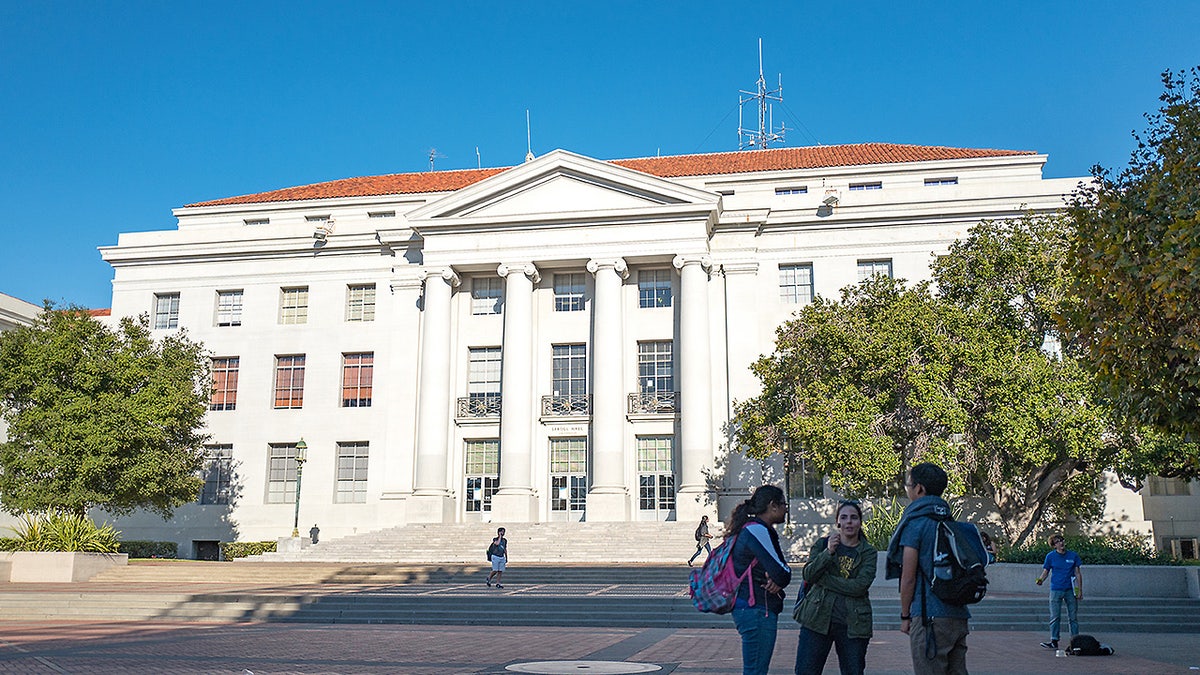
The Evolution of Disclosure and Oversight: A Timeline of Federal Action
The current heightened scrutiny is not an isolated event but rather the culmination of evolving federal concerns and policy changes. For years, Section 117 of the Higher Education Act of 1965 has required U.S. colleges and universities to disclose gifts and contracts from foreign sources totaling $250,000 or more in a calendar year. However, enforcement of this provision has historically been lax, and the level of detail required for reporting was often insufficient.
- Pre-2025 Landscape: Prior to recent changes, the records often only indicated the country of origin for foreign funds, without specifying the exact foreign entity or the nature of the collaboration. This lack of granular detail made it difficult for federal agencies to assess potential national security risks. Many critics, including intelligence officials and members of Congress, argued that this opaque reporting system allowed problematic foreign influence to flourish unchecked within academia.
- April 2025: Trump Administration Executive Order: Recognizing these vulnerabilities, President Donald Trump issued an executive order in April 2025. This order significantly tightened reporting requirements, directing the Department of Education to collect more comprehensive information from universities about the specific sources of their foreign funding, the amounts, and the nature of the agreements. This executive order marked a decisive shift towards greater transparency and accountability, laying the groundwork for the current revelations.
- Second Half of 2025: Data Collection and Public Disclosure: The data reported for the second half of 2025 reflects the initial fruits of this enhanced oversight. The updated Section 117 Dashboard, now more robust, allows for a clearer picture of the financial flows from foreign entities to U.S. academic institutions. This public disclosure is intended to empower stakeholders and inform policy decisions, ensuring that the integrity of American research and national security are not compromised.
University Responses and Challenges
The universities named in the reports have begun to issue responses, some defending their practices, others detailing corrective actions. Their statements highlight the complexities of international academic partnerships and the challenges of conducting due diligence on foreign entities.
- University of California, Berkeley: A spokesman for UC Berkeley stated, "We wish to state, unequivocally, that UC Berkeley complies with all of the statutes and regulations that apply to contracts and gifts from foreign sources." The university also indicated it was "still in the process of analyzing and fact-checking the characterization of the government’s data and the referenced CBS reporting." The spokesman specifically corrected an erroneous claim in the CBS report that UC Berkeley manages the Department of Energy’s primary high-performance computing facility at the Lawrence Berkeley National Laboratory, clarifying that "Berkeley" in that context refers to geographical location, not institutional oversight. This response underscores the intricate web of affiliations and the potential for misinterpretation in complex institutional relationships.
- Bryant University: Bryant University provided a more detailed account of its actions regarding the Beijing Institute of Technology (BIT). A university spokesman explained that the reported payments were "associated for a now-terminated accounting program whose contract was originally established in 2014 with the independent Beijing Institute of Technology, Zhuhai and terminated ten years later in 2024." Crucially, the spokesman emphasized that "The program was educational instruction only and never included research activities, federally funded research, defense-related work, technology transfer, or intellectual property development." Furthermore, Bryant University stated that "After learning that Beijing Institute of Technology (BIT) had fully acquired the Zhuhai institution and following BIT’s addition to the Department of Defense’s 1286 list, Bryant initiated termination of the relationship, stopped enrolling new students, and is completing a teach-out period for existing students in accordance with accreditation requirements, with completion on June 30, 2027." This response illustrates the difficult process of unwinding long-standing international agreements, especially when geopolitical circumstances or watchlist designations change.
- Other Universities: Northwestern University, UC Irvine, and the University of Connecticut did not immediately respond to requests for comment, indicating either ongoing internal review or a strategic silence while assessing the implications of the reports.
LJ Eads, founder of Data Abyss and director of research intelligence at Parallax Advanced Research, characterized the situation as a "huge policy fail in terms of implementing restrictions without follow-through over the years." He likened it to "having kids and not parenting well. Or giving your teenager a cellphone and having no restrictions on cellphone use," suggesting a historical lack of robust enforcement mechanisms that allowed these relationships to persist.
Broader National Security Implications and Expert Perspectives

The revelations about foreign funding to U.S. universities extend beyond mere financial transactions; they touch upon fundamental national security concerns, particularly in the context of escalating geopolitical competition between the United States and China.
- Intellectual Property Theft and Technology Transfer: A primary concern is the potential for watchlisted entities, especially those linked to foreign militaries, to gain access to sensitive American research, cutting-edge technologies, and valuable intellectual property. Whether through direct research collaboration, influence over academic programs, or recruitment of key personnel, these foreign entities could potentially exploit academic openness to advance their own strategic objectives, including military modernization. This is particularly salient in fields such as artificial intelligence, quantum computing, advanced materials science, biotechnology, and aerospace engineering, where U.S. universities are global leaders.
- Military-Civil Fusion Strategy: China’s military-civil fusion strategy is a core aspect of this concern. This national strategy aims to integrate civilian and commercial sectors with the defense industry to accelerate military development. Entities like AECC, Sun Yat-sen University, and Beijing Institute of Technology are integral to this strategy, making their engagement with U.S. academic institutions inherently risky. Analysts suggest that seemingly innocuous academic exchanges or joint programs could inadvertently feed into this broader strategic framework, bolstering a rival power’s capabilities.
- Erosion of Research Integrity and Academic Freedom: While universities champion academic freedom and global collaboration, the presence of funding from watchlisted entities can also raise questions about the integrity of research and potential undue influence on academic priorities. Critics argue that such funding might steer research towards areas beneficial to foreign adversaries or create environments where self-censorship occurs to maintain funding streams.
- The Trump Administration’s Nuanced Approach: It is noteworthy that while the Trump administration has taken a firm stance on foreign influence from problematic entities, it has also, at times, expressed a more nuanced view regarding Chinese students in the USA, as indicated by previous reports. This suggests a distinction between targeted institutional threats and the broader benefits of international student exchange, although the line can often be difficult to draw in practice.
Potential Consequences for Academia
The implications for American higher education are substantial and multifaceted.
- Restriction of Federal Grant Funding: The State Department’s warning about restricting access to federal grant funding is a significant threat. For research universities, federal grants are the lifeblood of scientific discovery and innovation. Losing access to these funds could cripple research programs, impede faculty recruitment, and diminish the overall standing of affected institutions. This potential penalty serves as a powerful incentive for universities to re-evaluate their foreign funding relationships.
- Reputational Damage: Beyond financial penalties, universities face considerable reputational damage. Public perception of institutions receiving funds from entities linked to foreign militaries or adversarial governments can erode trust among students, alumni, and the broader public. This can impact enrollment, philanthropic donations, and a university’s ability to attract top talent.
- Increased Compliance Burden: The enhanced reporting requirements under Section 117 and the general climate of heightened scrutiny mean universities will face a significantly increased compliance burden. They will need to invest more resources in due diligence, legal review, and transparent reporting to ensure they are not inadvertently violating federal regulations or compromising national security. This could involve developing more sophisticated internal mechanisms for vetting foreign partners and funding sources.
- Re-evaluation of International Collaborations: The current climate may force universities to fundamentally re-evaluate their strategies for international collaboration. While global partnerships are essential for advancing knowledge and fostering cross-cultural understanding, institutions may need to adopt a more cautious and risk-averse approach, particularly with entities from countries identified as strategic competitors. This could lead to a more selective engagement with foreign partners, prioritizing collaborations that align with national interests and pose minimal security risks.
The ongoing revelations about foreign funding from watchlisted entities to elite American universities underscore a critical juncture for U.S. higher education. The balance between academic openness, global collaboration, and national security is proving increasingly difficult to maintain. As the federal government continues to shine a light on these financial flows, universities will be compelled to enhance their vigilance and transparency, navigating a complex geopolitical landscape where the pursuit of knowledge must also align with the imperative of safeguarding national interests. The challenge will be to implement robust oversight without stifling the vital international exchange that enriches American academia.