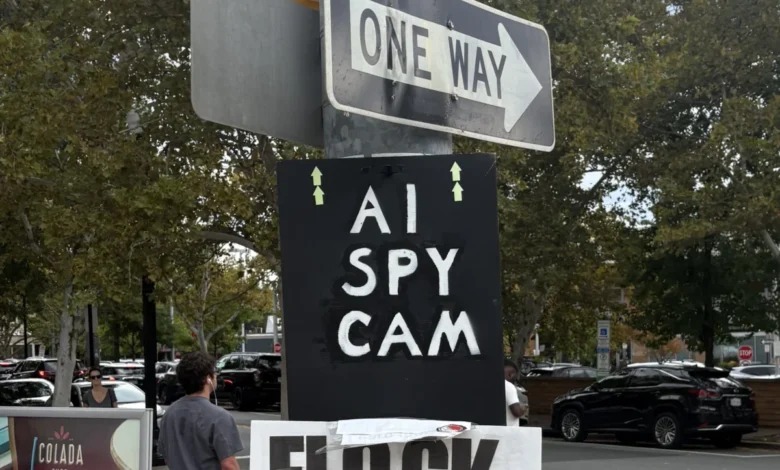
Flock Safety, the surveillance technology firm that has become a flashpoint in the national debate over privacy and law enforcement oversight, announced on Friday that it is offering voluntary severance packages to its workforce of approximately 1,500 employees. The move, described in internal communications as the most generous separation program in the company’s history, arrives at a critical juncture for the startup as it grapples with a wave of contract terminations and intense public scrutiny regarding the misuse of its automated license plate recognition (ALPR) systems.
The decision to offer these buyouts reflects a strategic pivot for the Atlanta-based company. By incentivizing voluntary departures, Flock Safety management appears to be attempting to stabilize its organizational culture while simultaneously managing the financial realities of a rapidly shrinking customer base. According to reports, the company has indicated it expects a significant portion of its staff to accept the terms, effectively preempting the need for mandatory layoffs that leadership conceded would have been necessary in the coming months.
A Chronology of Declining Confidence
The current crisis represents a sharp reversal of fortune for a company that, until mid-2026, had been heralded as a cornerstone of modern predictive policing. The deterioration of the company’s standing can be traced through a series of escalating incidents over the summer of 2026.
In early August, a comprehensive investigation by The Washington Post exposed a systemic vulnerability in how law enforcement agencies were utilizing Flock’s vast network of cameras. The report documented 46 distinct instances where police officers allegedly misused the technology to surveil personal acquaintances, including romantic partners and ex-spouses. This revelation ignited a firestorm of criticism from civil liberties groups, privacy advocates, and municipal governments.
The backlash was swift. Throughout August, the public sentiment shifted from cautious support for "public safety technology" to widespread concern over the potential for government-sponsored stalking. Data indicates that 90 cities across the United States terminated their contracts with Flock Safety in August alone. This figure represented a fourfold increase compared to July, signaling that municipal leaders were no longer willing to weather the political and ethical fallout associated with the partnership.
By September, the ripples reached the state level. Florida and Texas, two states that had previously been major adopters of Flock’s infrastructure, announced formal initiatives to suspend the use of the company’s cameras, citing significant privacy concerns and a lack of adequate safeguards against unauthorized data access.
Internal Morale and Financial Pressure
CEO Garrett Langley, who has been the public face of the company’s defensive efforts, recently addressed the internal climate during an appearance on the All-In podcast. Langley acknowledged that the "biggest damage" caused by the recent controversies was not necessarily the loss of revenue, but the erosion of internal morale. For a company that relies on the engineering and maintenance of complex, sensitive systems, the loss of human capital is a significant strategic liability.

The offer of voluntary severance is, in part, a mechanism to cull the ranks of employees who have become disillusioned by the company’s direction. However, industry analysts suggest that the program is also a fiscal necessity. With 90 municipalities pulling out in a single month and major state-level contracts in jeopardy, the company’s projected annual recurring revenue (ARR) is likely under intense pressure. Without the ability to pivot to new revenue streams or regain the trust of law enforcement agencies, the company faces a precarious fiscal future.
The Privacy Debate: Technology vs. Oversight
At the core of the conflict is the fundamental design of Flock Safety’s technology. The system uses high-definition cameras mounted on poles or integrated into existing infrastructure to scan license plates and vehicle characteristics in real-time. This data is then uploaded to a cloud-based network, where it is cross-referenced with various law enforcement databases.
While supporters argue that the technology is an essential tool for solving crimes—ranging from car thefts to violent abductions—critics point to the lack of sufficient oversight. The recent scandals involving officer misuse demonstrate a "feature, not a bug" problem, according to privacy experts. The system was designed for efficiency, but that same efficiency allows for the rapid, unauthorized tracking of individuals.
The Electronic Frontier Foundation (EFF) and other digital rights organizations have argued that the incident rate—46 documented cases—is likely the "tip of the iceberg." Their argument rests on the lack of granular audit trails within the software, which makes it difficult to detect when an officer is searching for a vehicle out of personal interest rather than investigative necessity.
The Broader Implications for the Surveillance Industry
The situation at Flock Safety serves as a bellwether for the broader surveillance technology industry. As local governments become more sensitive to the political cost of privacy violations, companies in the sector will face increased demands for transparency and accountability.
- Increased Regulatory Scrutiny: The moves by Texas and Florida suggest that state governments are beginning to treat private surveillance vendors as critical infrastructure providers that require state-level oversight, rather than just local vendors.
- Contractual Liability: The mass cancellation of contracts in August has exposed potential weaknesses in municipal procurement contracts. Many cities are now re-evaluating their termination clauses, seeking greater flexibility to exit agreements if a vendor faces significant reputational or ethical issues.
- The Burden of Compliance: Moving forward, any surveillance firm will likely be required to implement rigorous internal monitoring and third-party auditing to prove that their systems are being used exclusively for lawful purposes. For a company like Flock, which has historically prioritized speed and ease of installation, this shift will require significant operational investment.
Looking Ahead
As the deadline for employees to accept the severance packages approaches, the future of Flock Safety remains uncertain. The company faces a dual challenge: it must convince municipal clients that its technology is secure and ethical, while simultaneously rebuilding an internal culture that has been damaged by the intense public outcry.
Whether the company can survive this period of contraction will depend on its ability to implement meaningful structural changes. If Flock can successfully overhaul its access controls and provide independent, transparent oversight, it may be able to retain its remaining government partners. Conversely, if the trend of contract terminations continues at the pace observed in August, the firm may find itself forced to restructure its entire business model or risk further decline.
For now, the industry is watching closely. The collapse of confidence in Flock Safety has become a primary case study for the tension between the demand for public safety and the fundamental right to privacy in the digital age. As the company navigates its current workforce reduction, it remains a central figure in a broader national conversation that shows no signs of subsiding. The events of September 2026 will undoubtedly serve as a turning point in how American cities manage the integration of private surveillance technology into the public square.