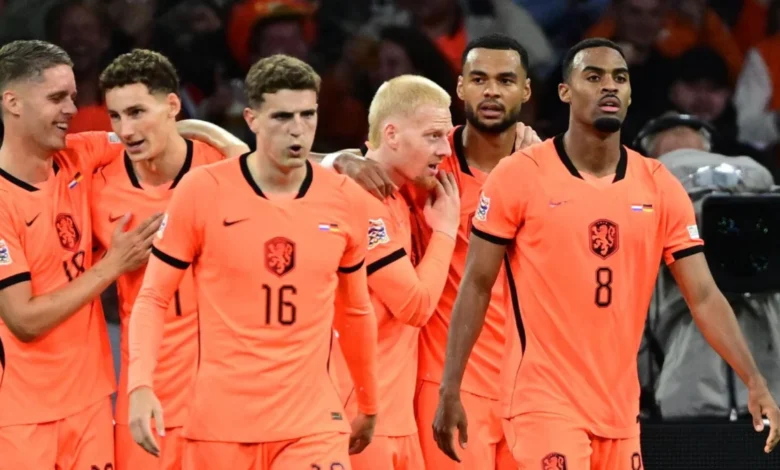
Cody Gakpo’s dramatic stoppage-time volley salvaged a 1-1 draw for the Netherlands against Germany in their UEFA Nations League Group A2 opener, spoiling Jürgen Klopp’s managerial debut for Die Mannschaft.
The high-profile fixture in Amsterdam marked a new era for both European powerhouses. Klopp took the reins of the German national team in July following their shock round-of-32 exit at the World Cup against Paraguay—a result that cost Julian Nagelsmann his job. Meanwhile, the Dutch federation appointed Xavi Hernández in August after Ronald Koeman departed under nearly identical circumstances following a premature tournament elimination.
Thursday’s encounter offered an intense tactical battle, riddled with early injuries, disallowed goals, and a late twist that left both managerial debutants sharing the spoils.
Pre-Match Shuffles and Early Drama
The build-up to the marquee clash suffered an immediate blow when Germany lost star playmaker Jamal Musiala to muscle pain during the warm-ups, forcing a late tactical reshuffle by Klopp. Despite the setback, the visitors attempted to dictate the tempo, but it was the hosts who appeared to draw first blood inside the opening quarter of an hour.
In the 14th minute, Netherlands captain Virgil van Dijk rose highest to meet a swinging corner, powering a header past German goalkeeper Marc-André ter Stegen. However, German protests led to a lengthy VAR review. The referee ultimately disallowed the goal, ruling that Van Dijk had committed a foul on Ter Stegen in the build-up, keeping the scoreline deadlocked.
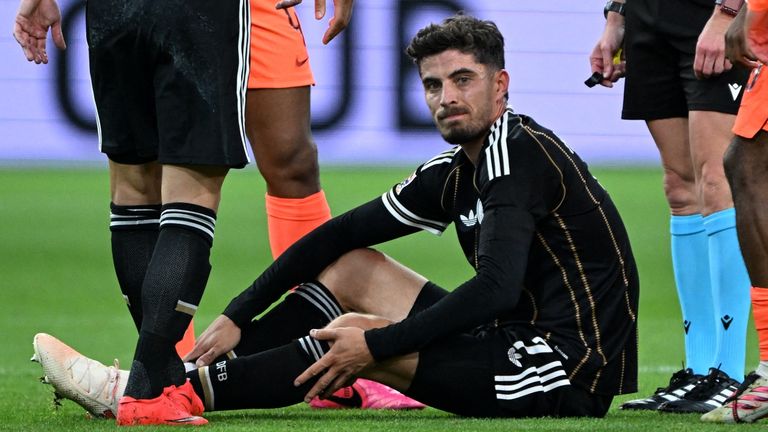
Physical tolls mounted quickly on a damp pitch in Amsterdam. Germany suffered another major setback on the half-hour mark when Arsenal forward Kai Havertz pulled up with an apparent injury, forcing an early substitution.
Breakthrough and Missed Opportunities
The injury disruption did little to slow Germany’s momentum. Just two minutes after Havertz’s departure, Klopp’s side unlocked the Dutch defense. Philipp Treu drove down the flank before delivering a precise cutback into the path of Felix Nmecha, who calmly slotted home from close range to give Germany a 1-0 lead in the 32nd minute.
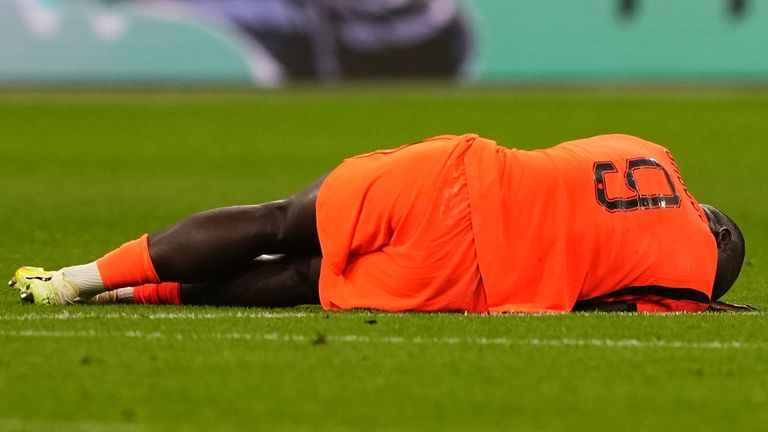
The home side responded with physical and tactical concerns of their own. Sunderland striker Brian Brobbey was forced off shortly after Nmecha’s opener, appearing to suffer a hamstring strain that added to the match’s heavy injury toll.
As the first half drew to a close, Germany squandered a golden opportunity to double their advantage. Karim Adeyemi found himself unmarked inside the six-yard box but somehow failed to hit the target, firing wide in a moment that would haunt the visitors later in the evening.
Ter Stegen Heroics and Late Equalizer
Trailing at the break, the Netherlands emerged for the second half with renewed intensity. Xavi Hernández’s side dominated possession and bombarded the German penalty area with waves of attacks.
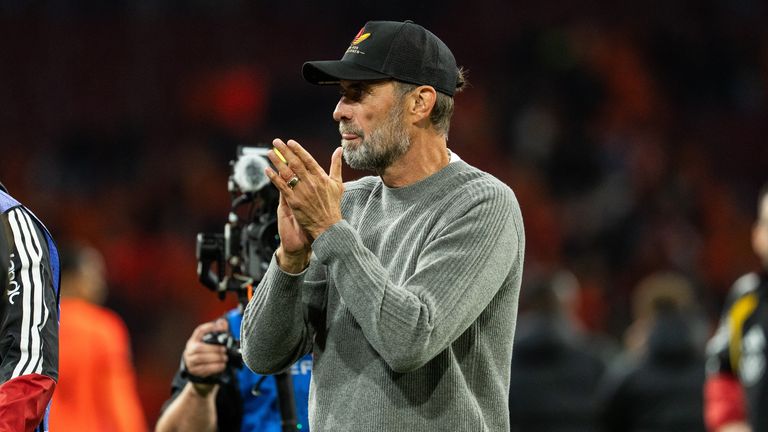
Barcelona goalkeeper Marc-André ter Stegen put on a masterclass between the posts, producing a succession of world-class saves to deny the Dutch forwards. Shots from distance and close-range headers were repeatedly beaten away by the German captain, who looked to have secured a clean sheet and a winning start for his new manager.
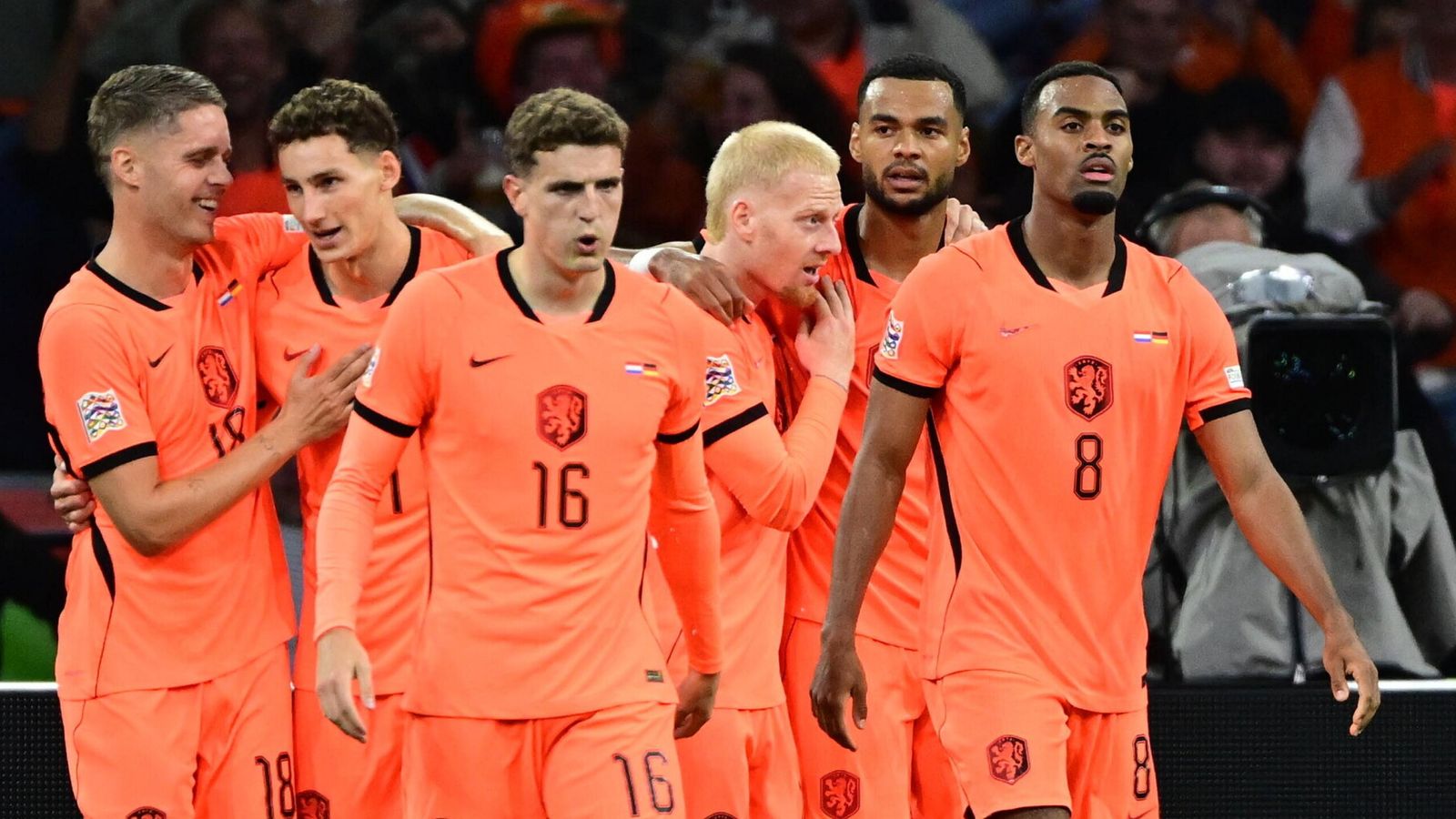
However, the relentless pressure finally broke the German resistance in the dying moments of the match. Deep into stoppage time, a swift Dutch counter-attack caught the German defense stretched. The ball fell invitingly to Cody Gakpo, who unleashed a ferocious first-time volley that bypassed Ter Stegen and nestled into the back of the net, sparking wild celebrations among the home supporters and securing a hard-fought 1-1 draw.
Haaland Brace Fires Norway to Victory in Oslo
While the spotlight in Amsterdam focused on the managerial debuts of Klopp and Xavi, Group A4 delivered its own share of drama as Erling Haaland spearheaded Norway to a thrilling 3-2 victory over Denmark in Oslo.
Norway burst out of the gates, with Fulham’s Oscar Bobb opening the scoring in the 14th minute after a fluid attacking sequence. Just four minutes later, Haaland doubled the advantage, latching onto a loose ball inside the box to make it 2-0.
Denmark, however, mounted a spirited comeback. Brentford midfielder Mikkel Damsgaard halved the deficit before halftime with a breathtaking, curling free-kick that left the Norwegian goalkeeper rooted to the spot. The visitors completed their comeback on the hour mark when former Manchester United striker Rasmus Højlund reacted quickest inside the penalty area to prod home the equalizer at 2-2.
With the momentum firmly with the Danes, Norway relied on their talisman. In the 74th minute, Haaland struck again, finishing clinically from close range to restore Norway’s lead and seal all three points. The decisive strike marked the Manchester City striker’s 64th senior international goal in just 56 appearances, further cementing his status as one of the most prolific goalscorers in modern football history.
Tactical Implications and Broader Outlook
The opening round of the UEFA Nations League fixtures has offered early indicators of the structural changes sweeping across European international football.
For Germany, Klopp’s debut highlighted both the potential and the vulnerabilities of his transitional squad. While Die Mannschaft displayed defensive resilience and clinical finishing through Nmecha, the injuries to Musiala and Havertz underscore the grueling physical demands placed on players during the early autumn club calendar. Klopp will take heart from Ter Stegen’s commanding performance in goal, though defensive lapses in transition during the dying minutes will demand immediate attention ahead of their upcoming fixtures.
For the Netherlands, Xavi’s first outing showcased tactical flexibility and a refusal to yield under pressure. Despite missing key personnel and falling behind against the run of play, the Dutch side maintained their offensive structure and wore down the German defense. Securing a late point at home keeps them firmly in contention in Group A2 and provides a psychological boost following their turbulent World Cup exit.
As the Nations League group stage progresses, both managers will face immediate pressure to manage squad depth and fitness levels, particularly with injuries threatening to derail early momentum. The tactical chess matches in Amsterdam and Oslo signal a fiercely competitive tournament ahead, where fine margins and individual brilliance will ultimately dictate continental supremacy.