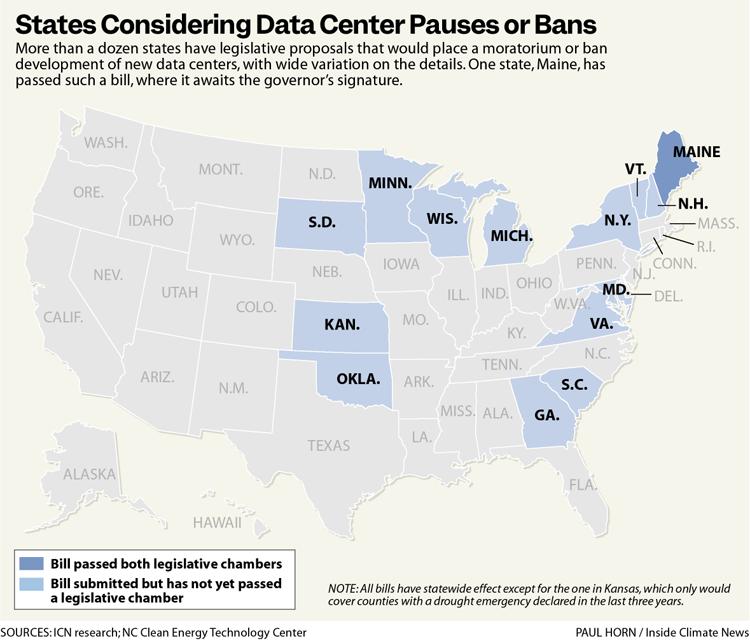
In a historic legislative move that signals a growing national skepticism toward the rapid expansion of the digital economy’s physical infrastructure, Maine has become the first state in the nation to pass a moratorium on the development of large-scale data centers. The legislation, known as LD 307, marks a significant turning point in how state governments balance the allure of high-tech investment against the sobering realities of energy consumption, resource management, and community stability.
The Maine House of Representatives and the State Senate approved the measure this week, effectively halting the approval process for any data center project requiring 20 megawatts or more of electricity. This prohibition is set to remain in place until at least October 2027, providing a three-year window for state regulators to establish a comprehensive framework for managing these massive facilities. The bill now sits on the desk of Governor Janet Mills. While the Governor has not yet issued a public statement regarding her intent to sign or veto the legislation, the comfortable margins by which the bill passed—79-62 in the House and 21-13 in the Senate—suggest a strong legislative mandate for caution.
The Scope and Scale of the Data Center Challenge
The surge in data center development across the United States is primarily driven by the exponential growth of artificial intelligence (AI), cloud computing, and high-frequency digital services. These "hyperscale" facilities are the engine rooms of the modern internet, but their physical footprint is immense. A 20-megawatt facility, the threshold set by the Maine moratorium, is capable of consuming as much electricity as roughly 15,000 average American homes.
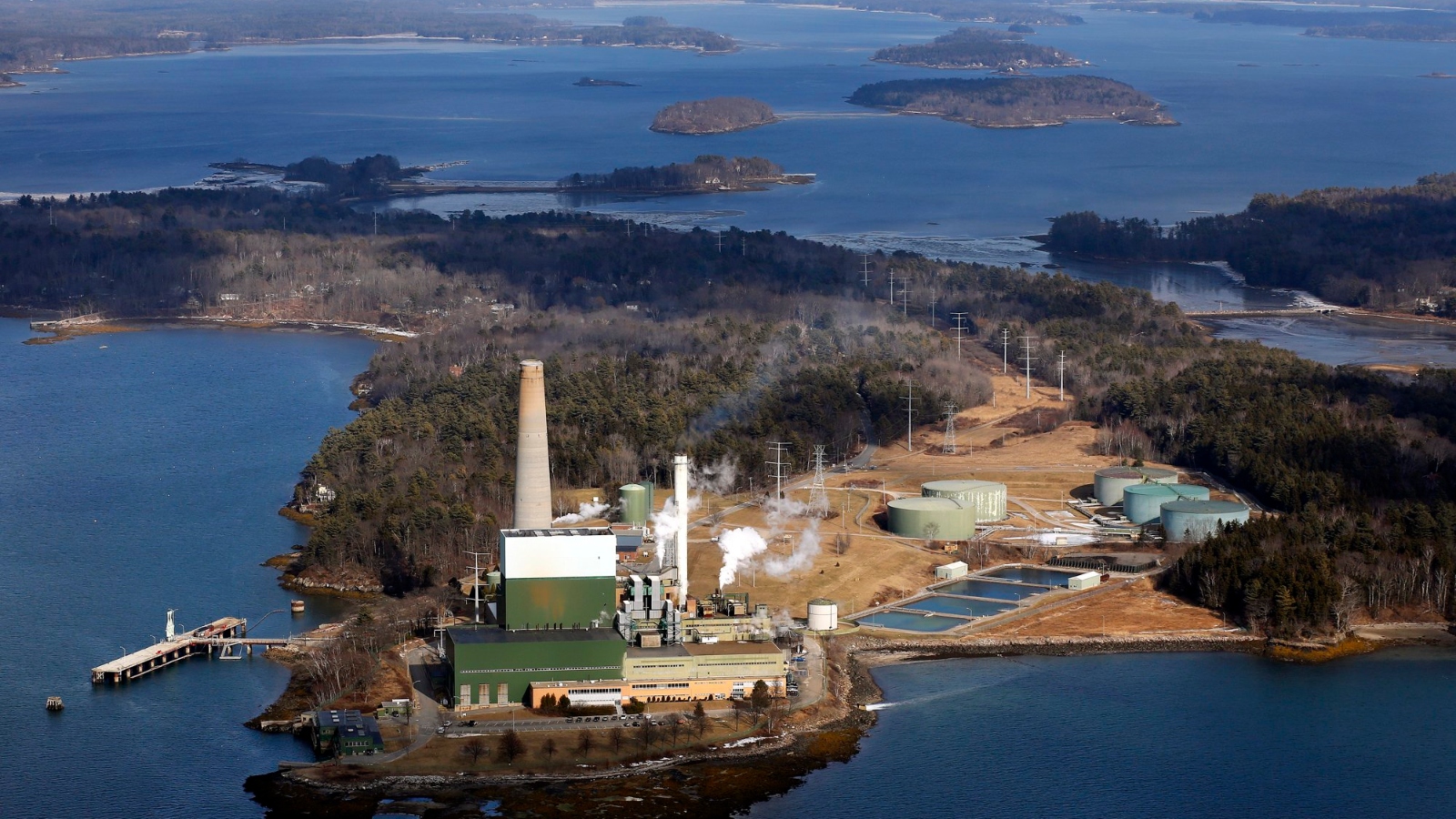
Nationwide, the scale of this energy demand is staggering. Recent reports from the Federal Energy Regulatory Commission (FERC) indicate that U.S. data centers accounted for more than 50 gigawatts of electricity demand as of late last year. To put this figure into perspective, it represents nearly double the peak demand of the entire New England power grid, which services six states including Maine. As technology giants like Microsoft, Google, and Amazon race to build the infrastructure necessary to support generative AI, energy experts warn that the current electrical grid may not be equipped to handle the projected load without significant upgrades—costs that often trickle down to residential ratepayers.
Legislative Chronology and the Path to LD 307
The journey of LD 307 began as a response to the perceived "gold rush" of data center developers scouting locations in the Northeast. While Maine currently hosts approximately ten data centers, none of them fall into the "hyperscaler" category that has caused significant public outcry in states like Virginia and Texas. However, lawmakers in Augusta recognized a window of opportunity to act before large-scale projects could break ground.
State Representative Melanie Sachs, a Democrat and the lead sponsor of the bill, characterized the moratorium not as an anti-tech measure, but as a necessary "breathing room" for the state. During the legislative sessions, Sachs argued that Maine should view the experiences of other states as a "cautionary tale." By pausing development now, Maine aims to avoid the infrastructure strains and environmental degradation seen in regions where data centers have outpaced local regulatory capabilities.
The legislation mandates the formation of a specialized council tasked with evaluating the multifaceted impacts of data centers. This council will spend the next three years investigating energy grid stability, water consumption for cooling systems, and the long-term economic viability of these projects. Their findings will ultimately shape the permanent regulations that will govern the industry in Maine after 2027.
Economic Tensions and the Partisan Divide
Despite its passage, the moratorium has exposed deep partisan rifts regarding Maine’s economic future. The debate in the legislature reflected a classic tension between environmental stewardship and aggressive industrial growth.
Opponents of the bill, largely represented by the Republican caucus, argue that the moratorium sends a negative signal to global investors. State Senator Matt Harrington expressed concern that the three-year pause would lead to the cancellation of multi-billion-dollar investments currently being discussed for communities like Sanford and Jay. In Jay, specifically, there have been talks of redeveloping a shuttered paper mill into a modern data hub—a project that could potentially revitalize a town hit hard by the decline of the manufacturing sector.
Governor Mills had previously expressed interest in including an exemption for the Jay project within the bill, but the final version of LD 307 passed without such a carve-out. This has left the project’s future in limbo and has intensified the pressure on the Governor’s office. Proponents of the bill argue that even a single massive facility could destabilize the local grid and that no project should be "fast-tracked" without the new regulatory oversight the council will provide.
Environmental and Resource Concerns
Beyond electricity, the environmental impact of data centers centers on water usage. Large facilities require millions of gallons of water daily to cool the servers that generate immense heat. In a state like Maine, which prides itself on its natural resources and pristine water quality, the prospect of diverting significant water supplies to cool computer hardware has met with fierce resistance from conservation groups.

Sarah Woodbury, the legislative director for Maine Conservation Voters, noted that community opposition often stems from a lack of transparency regarding these projects. "Voters do not want these facilities in their backyard," Woodbury stated, pointing out that several local attempts to attract data centers in Maine have already faced grassroots rebellion. The moratorium, according to environmental advocates, aligns the state’s industrial policy with public sentiment regarding resource protection.
A Growing National Trend
Maine may be the first to cross the finish line with a statewide moratorium, but it is far from alone in its concerns. According to the North Carolina Clean Energy Technology Center, lawmakers in 13 other states have introduced similar measures this year. Minnesota and Illinois are currently viewed by analysts as the most likely states to follow Maine’s lead, as both regions are grappling with a surge in data center applications and a corresponding backlash from residents and utility companies.
The issue has also reached the federal level. U.S. Senator Bernie Sanders and Representative Alexandria Ocasio-Cortez have recently proposed a national moratorium on AI-specific data centers. Their proposal highlights a broader societal concern: that the rise of AI, while technically impressive, carries hidden costs in the form of massive energy consumption, environmental degradation, and the potential for large-scale job displacement.
Analysis of Implications for the Power Grid and Ratepayers
One of the most critical aspects of the Maine moratorium is the protection of residential utility customers. When a large industrial user like a data center connects to the grid, it often requires the construction of new high-voltage transmission lines and additional power generation facilities. Under current regulatory structures in many states, the costs of these infrastructure upgrades are often shared among all ratepayers, meaning households could see their monthly bills rise to subsidize the operations of multi-trillion-dollar tech corporations.
By instituting a pause, Maine’s legislature is effectively asking who should bear the burden of these costs. The upcoming study council is expected to recommend "user-pays" models, ensuring that data center developers, rather than the general public, foot the bill for the infrastructure they require. This shift in policy could become a blueprint for other states looking to protect their citizens from the inflationary pressures of the AI boom.
Conclusion and Outlook
The passage of LD 307 represents a proactive approach to a technological revolution that has, thus far, moved faster than the law. For Maine, the next three years will be a period of intense study and deliberation. The state must decide if it wants to be a destination for the infrastructure of the future, and if so, at what price.
As Governor Mills weighs her decision, the tech industry is watching closely. If the moratorium becomes law, it will establish a precedent that technological progress does not grant an automatic exemption from environmental and social responsibility. For now, Maine has signaled that it value its "breathing room" more than the immediate promise of digital investment, setting the stage for a new era of state-level oversight in the age of artificial intelligence. Regardless of the outcome in Maine, the national conversation has fundamentally shifted; the era of unrestricted data center expansion appears to be coming to a close, replaced by a more measured, regulated, and scrutinized approach to building the digital world.