The digital landscape has transformed into a high-stakes arena during natural disasters, where the speed of information often outpaces the accuracy of the facts. Misinformation regarding extreme weather events frequently originates from seemingly innocuous sources—a social media post speculating on government negligence or a digitally manipulated image depicting a shark swimming through flooded streets. What begins as a single, unchecked rumor can achieve viral status within minutes, causing confusion, delaying emergency responses, and potentially endangering lives. As extreme weather events become more frequent and severe due to shifting climate patterns, the ability to discern credible intelligence from digital noise has become a fundamental component of public safety.
The Anatomy of a Digital Crisis
When disaster strikes, the human instinct is to seek immediate information. This environment creates a psychological "information vacuum." Studies in behavioral science indicate that during high-stress events, individuals are more likely to share content that triggers an emotional response—fear, anger, or urgency—without first verifying the source. This behavior, often labeled as "crisis-driven misinformation," creates a secondary disaster that emergency management agencies must navigate alongside physical threats like rising waters or wildfires.
The proliferation of AI-generated content has further complicated this landscape. According to recent data from the Pew Research Center, approximately 34 percent of web pages published since the late 2022 release of generative AI tools contain content that is either partially or entirely AI-authored or edited. For a resident trying to determine if their evacuation route is blocked, the presence of photorealistic but fake imagery of bridge collapses or flooded highways can lead to life-altering, poor decisions.
Chronology of a Rumor
To understand the lifecycle of misinformation, one must look at the typical progression of a false narrative during a crisis:
- The Trigger: An extreme weather event occurs, causing localized distress.
- The Vacuum: Official channels are overwhelmed, or the situation is evolving too quickly for real-time updates.
- The Catalyst: A user—often well-intentioned—shares a "witness" report or an image that appears to validate the severity of the crisis.
- The Acceleration: Algorithmic bias on social media platforms prioritizes engagement over accuracy, pushing the unverified claim to thousands of users.
- The Hardening: The claim is repeated by secondary sources, creating an "echo chamber" effect where individuals begin to believe the misinformation as objective truth.
- The Correction Lag: Official agencies issue a rebuttal, but by this point, the misinformation has often reached a larger audience than the subsequent correction.
Establishing a Hierarchy of Trust
The primary defense against the spread of false information is the utilization of a "trust hierarchy" when seeking updates. Not all information sources are equal, and relying on social media feeds for life-safety decisions is a high-risk strategy.
1. Primary Sources (Emergency Management):
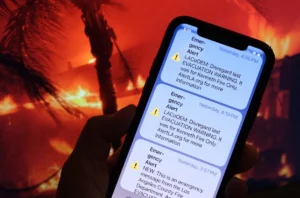
The most reliable information will always come from your local or state emergency management departments. These agencies are tasked with coordinating the response, managing evacuation orders, and providing real-time data. Citizens are strongly encouraged to register for local SMS-based emergency alert systems, which serve as the "gold standard" for critical notifications. In smaller municipalities, this function is often integrated into the sheriff’s office or local police department.
2. Institutional Authority (The National Weather Service):
As a division of the National Oceanic and Atmospheric Administration (NOAA), the National Weather Service (NWS) provides the technical backbone for virtually all legitimate weather forecasting in the United States. By visiting weather.gov and entering a ZIP code, residents can access localized, high-fidelity data. The NWS offers specialized alerts for everything from flash floods to wildfires, and their infrastructure is specifically designed to provide life-saving information in multiple languages where necessary.
3. Secondary Aggregators (News Outlets and Apps):
Commercial weather applications and television news stations rely on NWS data but add value through context and local reporting. However, experts warn against using commercial apps as a sole source for evacuation orders. Instead, use these as supplementary tools. Local news outlets, particularly nonprofit or verified legacy newsrooms, remain critical during a disaster. These entities often maintain live blogs and provide real-time reporting that national outlets may miss.
The Challenge of AI-Generated Content
Identifying AI-generated misinformation requires a critical eye. As generative tools become more accessible, the markers of synthetic content—such as distorted shadows, unnatural textures in water, or text that appears garbled—are becoming harder to spot. When viewing images or videos of a disaster, look for "hallucinations," such as buildings that melt into the landscape, inconsistent lighting, or repetitive background patterns. Furthermore, always reverse-image search suspicious media. If an image is presented as a "current" disaster but appears in archives from events years prior, it is a clear indicator of malicious intent.
Fact-Checking in the Heat of the Moment
During a crisis, the cognitive load on an individual is immense. To maintain clarity, follow these protocols:
- Prioritize Specificity: Instead of "doomscrolling" through general news, search for specific, actionable information. Ask yourself: "Is there an evacuation order for my specific street?" or "What is the expected crest time for the river in my county?"
- The Source Test: If a post lacks a timestamp, an author, or a link to an official agency, treat it with extreme skepticism. If the information is truly critical, it will be reported by multiple verified news outlets. If it is only appearing on a random social media thread, it is likely rumor.
- Leverage Fact-Checking Institutions: Organizations like Snopes, FactCheck.org, and local fact-checking initiatives are designed to debunk viral claims. Keep these bookmarked as part of your emergency preparedness kit.
Addressing the Human Element
Misinformation often spreads through personal networks, meaning the most difficult conversations are those held with friends and family. Research from the University of California, Los Angeles, and the Environmental Defense Fund suggests that confrontation is rarely effective. When a loved one shares inaccurate information, the most productive approach is to assume "positive intent." Most people share these posts because they are worried or feel they are helping their community.
Instead of calling them out in a public forum, engage in a private dialogue. Ask questions about where they found the information, and acknowledge the difficulty of the current situation. By trading sources and sharing how you personally verify information, you build a foundation of trust that makes the other person more receptive to the truth. If the conversation becomes heated, it is often best to step back; forcing a debate during a time of crisis can exacerbate anxiety and damage personal relationships without resolving the misinformation issue.
Broader Implications for Public Safety
The persistence of misinformation has real-world consequences. During the 2024 Hurricane Helene response, for example, conspiracy theories regarding the Federal Emergency Management Agency (FEMA)—such as claims that the agency was seizing private property or intentionally withholding aid—hampered relief efforts and threatened the safety of first responders. Such rhetoric diverts resources away from actual recovery and creates a climate of fear that prevents citizens from seeking necessary government assistance.
As we move forward, the "pre-bunking" of information—educating the public on common disaster myths before the next storm hits—will be a critical component of disaster resilience. By fostering a culture of verification, empathy, and reliance on official institutional data, communities can protect themselves not only from the physical forces of nature but also from the corrosive effects of digital falsehoods. The safety of a community in the wake of a disaster is contingent upon the accuracy of the information its citizens possess; in this sense, information literacy is now as vital as any physical emergency supply.