
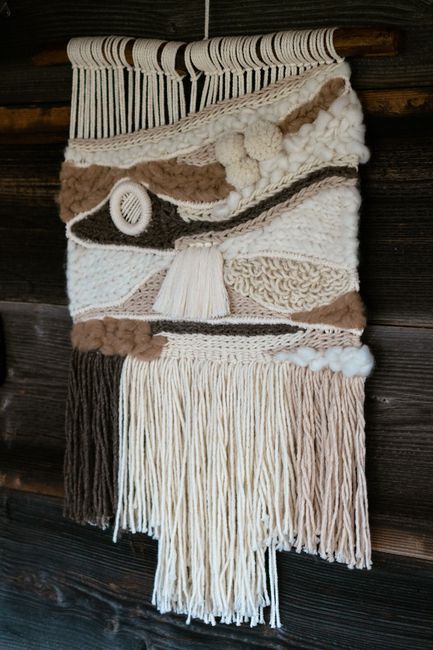
The Art of Intentional Absence: Mastering Negative Space in Woven Wall Hangings
Negative space, often referred to as white space or empty space, is a fundamental design principle that profoundly impacts the aesthetic and emotional resonance of any visual composition, including woven wall hangings. Far from being merely an absence of material, negative space is an active element, meticulously planned and strategically employed to enhance the visibility, impact, and overall narrative of the woven piece. In the context of woven wall art, negative space can manifest as unadorned warp threads, intentional gaps between woven sections, the surrounding wall area that frames the artwork, or even the unfilled portions within the tapestry’s design itself. Its intelligent integration liberates the viewer’s eye, allowing the eye to rest, process, and appreciate the intricate details and deliberate choices made by the artist. Without judicious use of negative space, a woven piece can feel cluttered, overwhelming, and ultimately lose its intended message or focal points. Understanding and effectively utilizing negative space is therefore not just an artistic consideration but a critical technical and conceptual skill for any weaver aiming to create compelling and impactful wall art. This article will explore the multifaceted role of negative space in woven wall hangings, delving into its definition, its various applications, the techniques employed to create it, its psychological impact, and its contribution to achieving a balanced and visually arresting composition.
The definition of negative space within a woven wall hanging extends beyond simple voids. It encompasses any area within or around the artwork that is intentionally left undeveloped or unfilled by yarn, fiber, or other textural elements. This can include the natural canvas provided by the warp threads if they are left exposed between weft insertions, the deliberate absence of weft to create open areas within the woven structure, or even the broader environment of the wall and room within which the tapestry is displayed. Think of a stark geometric pattern woven in a bold color against a backdrop of undyed, exposed warp. The exposed warp, in this instance, functions as negative space, providing a visual breathing room that accentuates the geometric form and its vibrant hue. Similarly, a piece featuring densely woven textures in one section might deliberately incorporate large swathes of open weave or even completely bare warp in another, creating a dynamic interplay between presence and absence. The surrounding wall is also a crucial component of negative space; a densely detailed tapestry hung on a bare, expansive wall will have a different impact than the same piece crammed into a crowded gallery. Therefore, when discussing negative space in woven wall hangings, it’s imperative to consider both the internal composition of the artwork and its external relationship with its environment.
The applications of negative space in woven wall hangings are diverse and serve a multitude of artistic objectives. Primarily, negative space serves to define and emphasize positive space. The positive space refers to the elements that are actually woven – the fibers, the textures, the colors, and the patterns. Without adequate negative space, these positive elements can become lost or muddled. Imagine a highly intricate knot-work tapestry; if every square inch is filled with dense knotting, the viewer’s eye will struggle to decipher individual knots or the overall design. By strategically leaving areas unknotted or with a simpler weave, the artist creates opportunities for the eye to rest and for the complex areas to stand out with greater clarity. This principle is akin to typography, where the space between letters and words is as important as the letters themselves in ensuring readability.
Furthermore, negative space can be used to create a sense of scale and proportion. A large woven piece with significant areas of negative space can appear grand and majestic, while a smaller piece with minimal negative space might feel intimate and dense. The artist can manipulate the amount and distribution of negative space to convey specific emotional responses or to guide the viewer’s perception of the artwork’s size and presence within a space. For instance, a towering abstract tapestry with vertical bands of open weave and sparse color will evoke a feeling of soaring ascension, while a compact, richly textured piece with minimal gaps might feel grounded and opulent.
Negative space also plays a crucial role in establishing visual hierarchy. By leaving certain areas empty, the artist can direct the viewer’s attention to specific points of interest within the weaving. These points of interest could be a particularly detailed motif, a vibrant color contrast, or a unique textural element. The negative space acts like a spotlight, drawing the eye to what the artist deems most important. This intentional guiding of the viewer’s gaze is a sophisticated technique that elevates a woven piece from a mere decorative object to a thoughtfully composed work of art. Consider a figurative woven tapestry where the face of a subject is rendered with intricate detail, while the background is a soft, impressionistic wash of color or even unadorned warp. The negative space in the background isolates and highlights the detailed rendering of the face, making it the undeniable focal point.
Techniques for creating negative space in woven wall hangings are as varied as the weavers themselves, drawing upon both traditional weaving methods and contemporary innovations. One of the most straightforward methods is simply leaving sections of the warp un-woven. This is particularly effective when working with a consistent warp sett. The gaps between weft insertions can be intentionally widened, or entire warp threads can be omitted from the weft design altogether. This results in visible warp threads forming a grid-like or linear structure, which acts as negative space. The color and material of the warp itself become a design element in this scenario.
Another common technique is the use of open weave structures. Instead of densely packing weft threads, weavers can employ plain weave with widely spaced weft, gauze weaves, or supplementary weft techniques that create deliberate holes and openings. Densely woven areas can be juxtaposed with these open areas to create strong visual contrast. Think of areas of tightly packed soumak or tapestry weave contrasting with sections of leno or supplementary warp that create lacy, permeable effects. These techniques not only introduce negative space but also add textural variety and a sense of lightness to the overall piece.
Freestyle weaving and intentional gaps are also powerful tools. Artists may choose to weave in distinct sections, leaving significant empty spaces between them. This can create a modular or fragmented aesthetic, where each woven element is allowed to breathe and be appreciated independently. These gaps can be irregular, organic shapes or precise geometric divisions. This approach breaks away from the traditional notion of a continuous woven surface and allows for a more dynamic and sculptural presentation.
The use of contrasting materials can also contribute to negative space. For example, a weaver might incorporate areas of bare, undyed cotton warp threads alongside sections woven with vibrant, textured yarns. The stark contrast in color, texture, and visual weight between the bare warp and the woven sections effectively defines the negative space. Similarly, incorporating elements like macrame, knots, or even natural materials like driftwood into a primarily woven piece can create intentional voids around these positive elements, thus enhancing their visual impact.
The psychological impact of negative space on the viewer is profound and deeply rooted in human perception. Our brains are wired to seek order and meaning. When presented with a visually cluttered or overwhelming composition, the brain expends significant energy trying to process the information, which can lead to fatigue and a lack of engagement. Negative space, on the other hand, provides visual relief. It allows the brain to pause, to absorb the information presented, and to appreciate the nuances of the design. This sense of calm and clarity can evoke feelings of serenity, sophistication, and thoughtfulness.
In art, negative space often carries symbolic weight. It can represent absence, silence, contemplation, potential, or the unknown. A stark, minimalist woven piece with vast expanses of negative space might evoke a sense of introspection or spiritual emptiness. Conversely, the strategic use of negative space to highlight a specific element can imbue that element with heightened importance or significance. The artist’s deliberate choice of where to place these voids can communicate a narrative or a feeling that words alone might fail to capture.
The concept of "less is more" is intrinsically linked to the effective use of negative space. Over-embellishment and a fear of empty areas can lead to visually noisy and ultimately less impactful artworks. Negative space allows the viewer to engage with the positive elements on a deeper level, appreciating the skill, craftsmanship, and artistic intent behind each woven thread. It encourages a more mindful and deliberate viewing experience, moving beyond a superficial glance to a more considered appreciation.
Achieving balance and visual harmony in woven wall hangings is intrinsically tied to the masterful application of negative space. Balance, in design, refers to the distribution of visual weight within a composition. Positive elements have visual weight due to their color, texture, size, and density. Negative space, while lacking tangible mass, also possesses visual weight. Large expanses of negative space can feel light and airy, counteracting the visual weight of dense, complex woven areas.
The interplay between positive and negative space is what creates dynamism and interest. A composition that is entirely filled with woven material can feel static. Introducing negative space, whether through deliberate gaps, open weaves, or surrounding wall area, breaks this monotony and introduces visual rhythm. The artist must carefully consider the placement, size, and shape of negative space to ensure it complements and enhances the positive elements, rather than detracting from them. This is not about simply filling the loom; it’s about intentionally leaving areas empty to create a more compelling and cohesive whole.
Consider a symmetrical woven piece. Negative space can be used to enhance this symmetry, creating a sense of order and calm. Conversely, asymmetrical placement of negative space can create tension, movement, and a more dynamic visual experience. The artist’s intuitive understanding of visual weight and the psychological impact of empty space is crucial in orchestrating this balance. It’s a delicate dance between filling and emptying, between presence and absence, that ultimately defines the success of the composition.
SEO considerations for an article on negative space in woven wall hangings are crucial for reaching a wider audience of artists, designers, and art enthusiasts. Keywords to integrate naturally throughout the text include: "negative space in weaving," "woven wall art design," "tapestry negative space," "fiber art composition," "empty space in textiles," "visual balance in weaving," "intentional voids in art," "minimalist wall hangings," "abstract woven art," "textile design principles," "fiber art techniques," "how to use negative space in art," "creating depth in weaving," and "contemporary woven sculptures." Using variations of these terms and ensuring they appear in headings, subheadings, and the body text will improve search engine visibility.
For instance, a subheading could read: "Techniques for Creating Negative Space in Woven Wall Art." Another might be: "The Psychological Impact of Negative Space in Fiber Art." Naturally weaving these keywords into sentences like, "Understanding the role of negative space is paramount for achieving visual balance in woven wall art," will enhance the article’s searchability.
Furthermore, using descriptive language that appeals to visual learners and those searching for specific aesthetic qualities is beneficial. Phrases like "stark geometric patterns," "organic voids," "airy open weaves," and "dense textural elements" will resonate with users looking for inspiration and guidance. The article should aim to be a comprehensive resource, answering questions that potential readers might be typing into search engines, such as "What is negative space in weaving?" or "How can I make my woven wall hangings more impactful?"
In conclusion, negative space is not a passive byproduct of weaving but an active, deliberate, and indispensable element in the creation of impactful woven wall hangings. Its intelligent application enhances clarity, defines form, establishes hierarchy, evokes emotion, and contributes to the overall aesthetic harmony of the artwork. By mastering the techniques for its creation and understanding its profound psychological and compositional significance, weavers can elevate their creations from mere decorative objects to compelling works of art that engage, inspire, and resonate with viewers on a deeper level. The art of intentional absence, when wielded with skill and understanding, is indeed the art of making the present elements sing.

