The historic and culturally vibrant heart of the southern Polish city of Krakow was shattered by an unprecedented wave of violence on Saturday, November 7, 2026. A 25-year-old Polish national, allegedly radicalized by ultranationalistic ideologies, drove a vehicle directly into the bustling Main Market Square—one of Europe’s most famous tourist destinations—and opened fire at random with an AR-15 rifle. The mass shooting left six people dead and at least 15 others wounded, sending shockwaves across Poland and drawing swift condemnations from international leaders.
The horrifying sequence of events, which transformed a peaceful autumn afternoon into an active combat zone, has prompted intense scrutiny regarding firearm accessibility, extremist radicalization, and the safety of open public spaces in European urban centers.
Chronology of the Attack: From the Market Square to a Familial Horror
The sequence of devastation began at approximately 3:00 p.m. local time (2:00 p.m. GMT) on Saturday. According to eyewitness accounts and municipal authorities, a dark-colored vehicle suddenly breached the perimeter of Krakow’s Main Market Square. As pedestrians, tourists, and locals enjoyed the weekend atmosphere, the driver rolled down the window on the driver’s side and began discharging an AR-15 semi-automatic rifle indiscriminately into crowds.
"I saw shots being fired from the driver’s side window, and smoke was coming out," recounted a witness named Konrad, who fled for his life. "I ran to the police station in the main market square; when I burst inside, it was full of people hiding on the floor."
Another witness, a 67-year-old man named Julek, recalled the terrifying proximity of the assault: "If we had been two minutes earlier, we might have been shot. A dark car appeared suddenly, the driver started shooting at a group of people, and then he sped off."

Law enforcement response was swift. Officers assigned to the area engaged the vehicle and exchanged gunfire with the perpetrator. During the ensuing confrontation, the gunman was shot and wounded by police before being safely detained and transported under heavy guard to a local hospital.
However, the horror of the day was not confined to the market square. Later on Saturday evening, Polish Prime Minister Donald Tusk delivered a grim update that expanded the scope of the tragedy. Utilizing drone footage, authorities discovered three additional bodies—two women and one man—inside the private home of the suspected shooter. Investigators believe the three deceased individuals are members of the gunman’s immediate family, raising grim questions about a possible domestic nexus to the rampage.
Casualties and International Impact
The death toll from the indiscriminate shooting rose to six over the course of Saturday evening. According to National Police Chief Marek Boron, the fatalities include four women and two men. Among the identified victims are three Polish women and one British national. Two other victims remain unidentified pending formal forensic examination and notification of next of kin.
In addition to the fatalities, at least 15 to 16 people sustained various injuries, requiring urgent hospitalizations across Krakow. The Malopolski regional government and Interior Minister Marcin Kierwinski confirmed that the wounded victims represent a cross-section of locals and international visitors. Among those hospitalized are five foreign nationals, reflecting the international appeal of Krakow’s historic old town.
The Ministry of Foreign Affairs of Portugal subsequently confirmed that a Portuguese woman was among those injured and is currently receiving medical treatment. Furthermore, the violence directly impacted the security forces responding to the emergency; Poland’s interior ministry verified that two police officers were wounded in the line of duty during the confrontation with the gunman, with one officer sustaining serious injuries.
Profile of the Gunman and Ideological Links
As investigators sift through digital footprints and physical evidence, details regarding the perpetrator have begun to emerge. Authorities have confirmed that the shooter is a 25-year-old Polish citizen. Addressing rampant speculation and unverified conspiracy theories circulating on social media, regional police explicitly clarified that the perpetrator acted alone, that no second gunman is at large, and that the assailant is entirely of Polish nationality.
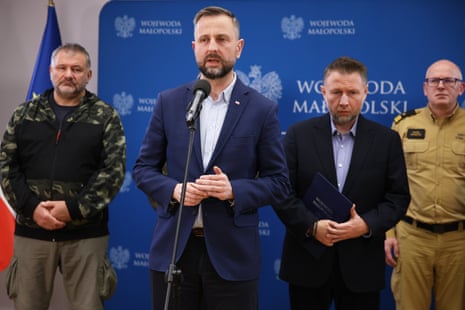
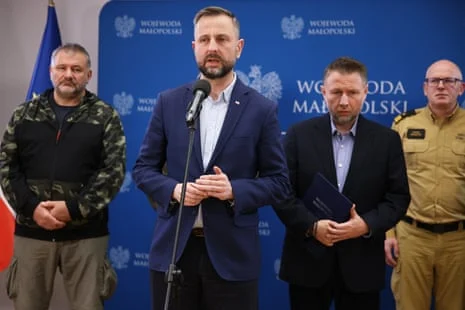
Denying other premature rumors, Poland’s Defence Minister Wladyslaw Kosiniak-Kamysz firmly rejected social media claims that the attacker had any affiliation with the military. "The man was not and is not a soldier in the Polish Armed Forces and has never had anything to do with the military," Kosiniak-Kamysz stated during an emergency press briefing.
Police spokesperson Andrzej Fijolek revealed to broadcaster TVN 24 that the suspect carried out the attack using an AR-15 rifle. Crucially, investigators discovered that the gunman possessed a legally obtained firearms license.
Interior Minister Marcin Kierwinski addressed reporters regarding the ideological motivation behind the rampage, stating that preliminary findings strongly indicate the perpetrator was deeply influenced by far-right ideology. "Everything points to the fact that the shooter was influenced by far-right ideology, a matter that will also be subject to investigation," Kierwinski said. "Police officers are on-site, as are agents from the Internal Security Agency, both here at the scene and at the individual’s family home."
Government Responses and Official Condolences
The mass shooting has triggered a unified, bipartisan response from the highest echelons of the Polish government, accompanied by urgent pleas for public composure and unity.
Prime Minister Donald Tusk took to social media to express his profound sorrow and appreciation for the security forces. "My deepest condolences to the families and loved ones of the victims of the tragic attack in Kraków," Tusk wrote on X. "The highest praise for the heroic police officers who risked their lives. And a heartfelt appeal to politicians of all stripes: do not exploit this tragedy. We will establish all the circumstances of this crime."
Justice Minister Waldemar Żurek echoed these sentiments while appealing for civic calm and assuring the public that the judicial system would deliver uncompromising justice. "A terrible tragedy in Kraków’s Main Market Square," Żurek stated. "I share the grief of the families and loved ones of the victims of this unimaginable tragedy. The perpetrator was injured and detained. Prosecutors, police and all the relevant services are already working at the scene, securing evidence and investigating the circumstances of the attack. The state is taking action. We appeal for calm and ask that people not interfere with the work of the emergency services. We will ensure that the perpetrator of this crime is held fully accountable and severely punished."
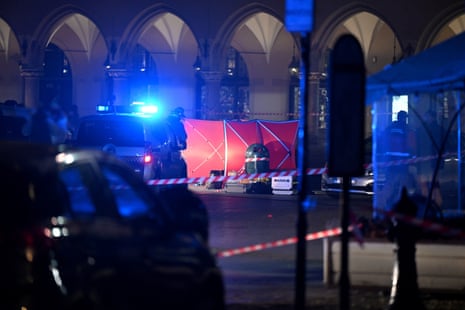
Local leadership has also mobilized to support a traumatized city. Krakow Mayor Łukasz Gibała announced that the city will enter an official period of mourning extending until Wednesday. Despite the heartbreak, Gibała struck a defiant and resilient tone in a video message posted to social media, vowing that Krakow will neither cower nor close its doors to the world. "The square will belong to us again," Gibała declared.
Broader Implications and Security Analysis
The events in Krakow mark a rare and deeply unsettling instance of mass violence in Poland, a nation generally considered to have lower rates of public mass shootings compared to other Western nations. The integration of an AR-15 rifle—a weapon more commonly associated with mass casualty events in the United States—coupled with the legal acquisition of a firearms license by a radicalized young adult, is certain to ignite intense national debates over Poland’s gun control laws, mental health screenings for gun owners, and the monitoring of domestic extremist networks.
Furthermore, the involvement of international victims—including British and Portuguese nationals—transforms a national tragedy into an international diplomatic and security concern. European security agencies are likely to increase intelligence sharing regarding the cross-border and online radicalization of young individuals through extremist far-right echo chambers.
As investigations by the Internal Security Agency and local prosecutors continue, the city of Krakow remains draped in mourning. While the physical scars on the historic Main Market Square will be repaired, the psychological impact of Saturday’s attack will leave a lasting mark on Poland’s national consciousness, forcing a reckoning with domestic extremism, public safety, and the vulnerabilities of open democratic societies.