Osteoporosis remains one of the most formidable medical challenges facing aging global populations, silently eroding bone density and drastically escalating the vulnerability of patients to debilitating fractures. In Germany alone, an estimated six million individuals are currently affected by the condition, with postmenopausal women representing the vast majority of cases due to declining hormonal protection. Worldwide, hundreds of millions suffer from the systemic skeletal disease, which leads to structural deterioration, chronic pain, a profound loss of mobility, and a heightened risk of mortality following severe hip and spinal fractures.
Despite decades of pharmacological advancements, current therapeutic interventions for osteoporosis are frequently limited by severe long-term side effects, diminishing efficacy over prolonged use, or mechanisms of action that fail to comprehensively rebuild lost skeletal architecture. Consequently, the international medical and scientific communities have maintained an urgent search for novel biological targets capable of preserving, reinforcing, and regenerating bone tissue safely over extended periods. A major breakthrough in this enduring quest has now emerged from Leipzig University, where a team of dedicated researchers has identified the cell-surface receptor GPR133 as a master regulator of bone strength and a remarkably promising target for next-generation treatments.
The Identification of GPR133 and Its Critical Function in Skeletal Homeostasis
GPR133 belongs to a specialized and structurally complex family known as adhesion G protein-coupled receptors (aGPCRs). These fascinating receptors are embedded within the plasma membrane of cells, where they function as sophisticated biological antennae, detecting and translating mechanical cues, physical forces, and extracellular signals from the surrounding microenvironment into intracellular biochemical responses. Although the broader family of adhesion GPCRs remains relatively understudied compared to conventional G protein-coupled receptors, the groundbreaking work from Leipzig University establishes a definitive, direct link between GPR133 and the intricate cellular processes that govern lifelong bone health.
The significance of this receptor came into sharp focus when researchers observed the skeletal phenotypes of murine models possessing genetic impairments in the GPR133 gene. When this specific receptor is disrupted by genetic mutations, mice exhibit pronounced manifestations of accelerated bone density loss at an early age, closely mirroring the pathological hallmarks of human osteoporosis. Building upon this vital observation, the research team utilized a specialized substance designated as AP503—a compound only recently discovered through advanced computer-assisted screening techniques designed to identify targeted stimulators of GPR133.
When administered to both healthy subjects and experimental models exhibiting osteoporosis-like bone degradation, AP503 demonstrated an extraordinary capacity to substantially increase bone strength and structural integrity. According to Professor Ines Liebscher, lead investigator of the study from the Rudolf Schönheimer Institute of Biochemistry at the Faculty of Medicine, these empirical findings position GPR133 at the very forefront of future therapeutic pipelines for degenerative bone disorders.
Cellular Mechanics: How GPR133 Modulates Bone Remodeling
To fully appreciate the therapeutic promise of targeting GPR133, it is essential to examine the delicate, lifelong process of bone remodeling. Healthy skeletal tissue is never static; rather, it undergoes continuous, highly regulated cycles of resorption and formation. This ongoing renewal is driven by the dynamic interplay between two primary cellular populations: osteoclasts, which are specialized cells responsible for breaking down and resorbing old or damaged bone tissue, and osteoblasts, the industrious cells tasked with synthesizing new extracellular matrix and mineralizing it to form fresh bone.
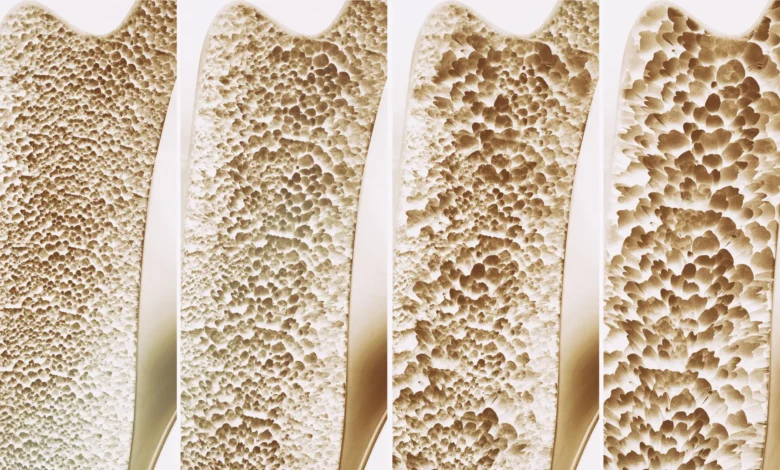
In a state of skeletal health, bone resorption and bone formation remain exquisitely balanced, ensuring that bone mass stays constant and structural integrity is maintained. However, in pathological states such as postmenopausal osteoporosis, this equilibrium is disrupted. Accelerated osteoclast activity outpaces the regenerative capacity of osteoblasts, leading to a net deficit in bone mass, microarchitectural deterioration, and porous, fragile bones.
The activation of the GPR133 receptor by mechanical forces, cell-cell interactions, or pharmacological agonists like AP503 profoundly alters this cellular equation. When GPR133 is stimulated, it initiates a cascade of intracellular signaling pathways that simultaneously bolster the activity and proliferation of bone-forming osteoblasts while suppressing the destructive, resorptive activity of osteoclasts. By shifting the cellular balance decisively in favor of bone deposition, AP503 acts as a functional mimic of the body’s natural mechanical signaling processes. This pharmacological action opens up unprecedented clinical possibilities not only for halting the progression of bone loss, but potentially for restoring skeletal mass that has already been severely compromised by disease or advanced age.
A Dual Benefit: Synchronous Strengthening of Bone and Skeletal Muscle
One of the most exciting and unexpected dimensions of the Leipzig research team’s discovery is that the therapeutic potential of AP503 extends far beyond the skeletal system. Aging populations rarely experience isolated declines in bone density; instead, bone degeneration is frequently accompanied by sarcopenia, the age-related loss of skeletal muscle mass and functional strength. This dual deterioration severely compromises patient mobility, increases the frequency of falls, and amplifies the likelihood of catastrophic fractures.
In an earlier foundational study published by researchers at Leipzig University, scientific evaluations revealed that pharmacological activation of GPR133 using AP503 simultaneously enhances the strength and performance of skeletal muscle tissue. The new revelation that AP503 concurrently reinforces bone strength creates a powerful, synergistic therapeutic profile that is exceptionally rare in modern pharmacology.
Dr. Juliane Lehmann, lead author of the study and a prominent researcher at the Rudolf Schönheimer Institute of Biochemistry, emphasized the broader societal and medical significance of these findings. The parallel strengthening of both bone and muscle tissues highlights the immense utility of targeting GPR133 to address the complex, multi-systemic vulnerabilities inherent to aging populations. By offering a single therapeutic agent capable of simultaneously bolstering structural skeletal integrity and muscular support, clinicians could soon have a comprehensive tool to preserve patient mobility, prevent debilitating falls, and significantly reduce fracture risks in elderly cohorts.
A Decade of Dedication: Leipzig University’s Leadership in GPCR Research
The successful identification and pharmacological exploitation of GPR133 did not happen overnight; it represents the culmination of more than a decade of focused, cutting-edge scientific inquiry at Leipzig University. For over ten years, the institution has established itself as a global epicenter for adhesion G protein-coupled receptor research, largely spearheaded by Collaborative Research Center 1423, entitled Structural Dynamics of GPCR Activation and Signaling.
This prestigious multidisciplinary research consortium brings together top-tier biochemists, structural biologists, and pharmacologists dedicated to unraveling the complex biophysical mechanisms by which adhesion GPCRs change their three-dimensional conformations, become activated in response to physiological stimuli, and transmit critical regulatory signals across cellular membranes. Because GPCRs represent the largest family of membrane receptors and are the targets of approximately one-third of all modern pharmaceuticals, Leipzig University’s specialized focus on these elusive proteins has placed it at the absolute vanguard of international molecular medicine.
Chronology of Discovery and Future Research Trajectories
The journey leading to the current breakthroughs in bone and muscle research spans several distinct phases of scientific endeavor. In the early 2010s, Leipzig University consolidated its research infrastructure around GPCR signaling dynamics, laying the groundwork for high-throughput screening technologies. By the late 2010s and early 2020s, advances in computational modeling allowed scientists to virtually screen vast compound libraries, ultimately leading to the identification of AP503 as a selective stimulator of the GPR133 receptor.
Following initial laboratory validations demonstrating the compound’s positive effects on skeletal muscle tissue, the research team expanded their investigations into bone metabolism, culminating in the recent identification of GPR133 deficiency phenotypes in murine models and the successful in vivo administration of AP503 to reverse osteoporosis-like symptoms.
Building upon these encouraging milestones, the Leipzig research group is currently advancing a series of comprehensive follow-up projects. Investigators are actively working to map the complete signaling architecture downstream of GPR133 to uncover any potential secondary pathways or off-target interactions. Furthermore, ongoing studies are exploring whether AP503 and related compounds might hold therapeutic value for other degenerative or inflammatory conditions. As pre-clinical evaluations continue, researchers are also working to refine the pharmacological properties of GPR133 agonists to ensure optimal pharmacokinetic profiles, safety, and efficacy profiles suitable for future human clinical trials.
Implications for Healthcare Systems and Aging Societies
As demographic trends point toward a rapidly aging global population, the socioeconomic and healthcare burdens associated with osteoporosis and musculoskeletal frailty are projected to escalate dramatically. Fragility fractures consume billions of dollars annually in acute hospital care, long-term rehabilitation, and nursing home placements, while imposing an immense toll on patient independence and quality of life.
Current preventative measures, such as calcium and vitamin D supplementation, lifestyle interventions, and existing antiresorptive medications like bisphosphonates, offer vital management options but often fail to provide a complete solution for patients with advanced disease. The discovery that the GPR133 receptor can be safely and effectively targeted to stimulate bone formation while simultaneously improving muscle strength introduces a paradigm-shifting approach to geriatric medicine. If successfully translated from animal models to human therapeutics, targeting GPR133 could transform the clinical management of age-related musculoskeletal decline, offering millions of patients a renewed foundation for robust, independent, and fracture-free longevity.