
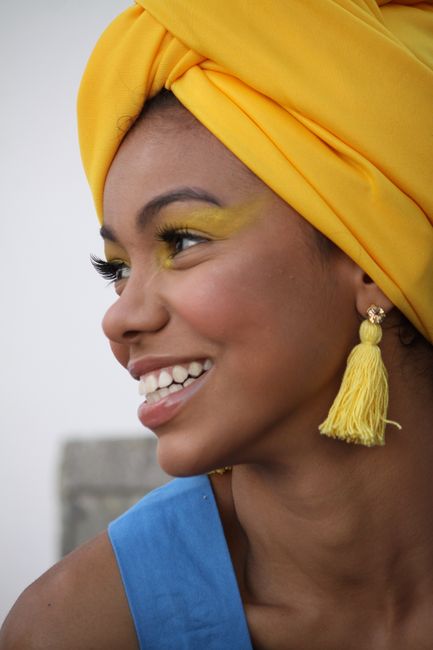
Tag Head Wrap Tutorials 2: Elevating Your Style with Advanced Techniques
Tag head wraps, a vibrant and versatile accessory, have transcended their functional origins to become powerful style statements. While basic knotting techniques offer a foundation, Tag Head Wrap Tutorials 2 delves into advanced methods that allow for greater creativity, sophistication, and personal expression. This comprehensive guide explores intricate wrapping styles, fabric considerations, styling tips, and the essential elements that transform a simple headscarf into a captivating focal point. Whether you’re a seasoned head wrap enthusiast or looking to push your boundaries, mastering these techniques will unlock a new level of sartorial prowess.
The foundation of any successful head wrap lies in understanding fabric properties. For advanced techniques, the choice of material becomes paramount. Silks and satins, with their inherent drape and sheen, are ideal for creating elegant, flowing styles. Their smooth texture allows for intricate pleating and smooth transitions, lending a luxurious feel to any ensemble. Chiffons, while delicate, offer a sheer, ethereal quality, perfect for layered wraps and styles that play with transparency. Cotton, particularly lightweight varieties like voile or lawn, provides structure and hold, making it suitable for more defined, architectural wraps. Linen blends offer breathability and a natural texture, ideal for bohemian or casual-chic looks. Understanding how each fabric behaves when manipulated – its weight, stretch, and slip – is crucial for executing complex knots and achieving the desired silhouette. Pre-washed fabrics can also offer a softer hand and better grip, especially for beginners venturing into more challenging wraps. Always consider the climate and the overall aesthetic you aim to achieve when selecting your fabric. A heavier fabric might be too warm for a summer day, while a sheer fabric might lack the necessary opacity for a more formal occasion.
Moving beyond the simple turban, advanced Tag Head Wrap Tutorials 2 introduce techniques that involve layering, pleating, and strategic knotting to create dimension and visual interest. The "Rose Bloom" wrap, for instance, utilizes a long, rectangular scarf to create a series of cascading pleats that unfurl like petals. This technique requires a fabric with good drape, allowing the pleats to fall softly. The process typically involves creating a series of small, even pleats along one edge of the scarf and then carefully wrapping these pleats around the head, securing them with a subtle knot at the nape or side. Another sophisticated style is the "Waterfall" wrap, which mimics the fluid movement of cascading water. This is achieved by loosely draping a wider scarf over the head and then creating gentle, undulating folds that are secured with an internal tie or pins. The key here is not to over-tighten, allowing the fabric to flow naturally. For those seeking a more structured look, the "Architectural Twist" offers sharp lines and defined shapes. This often involves twisting sections of the scarf before wrapping, creating geometric patterns that can be both bold and elegant. The success of these wraps relies on patience and a keen eye for symmetry. Practicing with different scarf sizes and widths will also help you understand how much fabric is needed to achieve the desired volume and effect.
The art of the knot is central to advanced head wrap styling. While basic knots secure the wrap, advanced techniques employ decorative knots that become an integral part of the design. The "Infinity Knot," a seamless loop that can be adjusted for tightness, is a versatile option that can be incorporated into various styles. It offers a clean, modern finish. The "Braided Knot," created by braiding sections of the scarf before tying, adds texture and visual complexity. This works particularly well with longer, thinner scarves and can be positioned at the front, side, or back. For a more dramatic effect, consider the "Turban Knot" variations. Instead of a simple tuck, these involve wrapping and twisting the ends to create elaborate, sculptural forms that resemble elaborate crowns or intricate updos. Mastering these knots often requires a bit of trial and error. It’s helpful to visualize the process beforehand, perhaps by watching video tutorials that demonstrate the knotting sequence step-by-step. The placement of the knot is also crucial; a well-placed knot can enhance the overall balance and symmetry of the head wrap.
Accessorizing is where advanced Tag Head Wrap Tutorials 2 truly shine, transforming a head wrap from a standalone piece into a cohesive styling element. Brooches, pins, and embellishments can be strategically placed to add sparkle, texture, or a touch of regality. A vintage brooch pinned to a carefully pleated wrap can elevate it for a formal occasion. Delicate chains or strands of beads can be woven into the fabric or draped around the knot for a bohemian or tribal aesthetic. Feather accents, carefully secured, can add an avant-garde touch. When choosing accessories, consider the fabric of your head wrap and the overall outfit. A heavy, ornate brooch might overwhelm a delicate silk scarf, while a minimalist pin might get lost on a richly patterned fabric. The key is to strike a balance that enhances, rather than competes with, the head wrap itself. Experiment with different types of embellishments and their placement. Sometimes, a subtle addition can make a significant impact.
Styling a head wrap extends beyond the knot to encompass its integration with your overall wardrobe and personal features. The shape of your face and the texture of your hair play a role in determining which wraps are most flattering. Rounder faces can benefit from wraps that create height or asymmetry, drawing the eye upwards or to the sides. Oval faces offer the most versatility, accommodating a wide range of styles. Those with prominent foreheads might opt for wraps that extend lower, while individuals with smaller foreheads can experiment with styles that create more volume at the crown. The length and texture of your hair also influence the final look. Longer hair can be incorporated into the wrap itself, creating added fullness and texture. Short hair often benefits from wraps that provide structure and visual interest, creating the illusion of more volume. Beyond facial features and hair, consider the neckline of your garment. A high neckline pairs well with wraps that are sleek and close to the head, while a lower neckline can accommodate more voluminous or elaborate styles. The overall silhouette of your outfit is also a consideration. A structured outfit might call for a more structured head wrap, while a flowing, bohemian ensemble can be complemented by a looser, more draped style.
The versatility of Tag Head Wrap Tutorials 2 allows for adaptation to various occasions, from casual outings to formal events. For everyday wear, opt for breathable cotton or linen blends in muted tones or subtle patterns. Simple knots and understated embellishments create a chic, effortless look. A loosely tied scarf with a few subtle pleats can add a touch of bohemian flair to jeans and a t-shirt. For work, consider a silk or satin scarf wrapped tightly and secured with a neat knot, perhaps a subtle Infinity Knot, that projects professionalism and sophistication. A monochromatic wrap that complements your work attire can be particularly impactful. Special occasions demand a greater degree of artistry. Luxurious silks, intricate pleats, and decorative knots are your allies. A "Rose Bloom" wrap in a rich jewel tone, adorned with a vintage brooch, can be the perfect finishing touch for an evening gown. Experiment with bold colors and patterns to make a statement. For cultural events or celebrations, consider wraps that incorporate traditional patterns or are made from culturally significant fabrics, paying homage to heritage with a modern twist.
Troubleshooting common issues is an integral part of mastering advanced head wrap techniques. Slippage is a frequent concern, especially with silk and satin fabrics. Using a fine-toothed comb to gently tease the roots of your hair before wrapping can provide better grip. Anti-slip headbands worn underneath the scarf can also be a lifesaver. If your wrap feels too tight or too loose, adjust the initial tying tension. Remember that most knots can be loosened or tightened to some degree. For wraps that lack volume, consider using a thinner scarf underneath for added bulk, or choose fabrics with a bit more structure. If your wrap appears lopsided, take a moment to step back and visually assess its symmetry. Gently repositioning sections or re-tying a knot can often correct minor imbalances. Patience is key; don’t be discouraged by imperfections. Each attempt is a learning experience that hones your skills.
Beyond the aesthetic, head wraps carry cultural significance and can be a powerful form of self-expression. Many cultures have a rich history of head covering, and exploring these traditions can offer inspiration for new techniques and styles. Understanding the origins and meanings behind different wrap styles can add a deeper layer of appreciation and respect to your practice. For some, head wrapping is a spiritual or religious observance, while for others, it’s a nod to cultural heritage. Personalizing your head wraps by choosing fabrics and embellishments that resonate with you is essential. Your head wrap is an extension of your personality, and advanced techniques allow you to articulate that individuality with greater nuance and flair. Experimenting with different color combinations and patterns can also reflect your mood or aspirations. A bright, vibrant wrap might signify joy and energy, while a muted, earthy tone could convey a sense of calm and groundedness.
Ultimately, Tag Head Wrap Tutorials 2 are about embracing creativity and pushing the boundaries of personal style. The journey of mastering these advanced techniques is one of continuous exploration and refinement. By understanding fabric properties, experimenting with intricate knots and pleats, and thoughtfully integrating accessories and styling, you can transform the humble headscarf into a breathtaking work of art. The possibilities are endless, limited only by your imagination and willingness to experiment. Each wrap is an opportunity to tell a story, express a mood, or simply elevate your everyday look. The ongoing evolution of head wrap fashion, driven by innovation and cultural exchange, ensures that there will always be new techniques and inspirations to discover, making the world of head wrapping a perpetually exciting and rewarding domain for style enthusiasts.

