
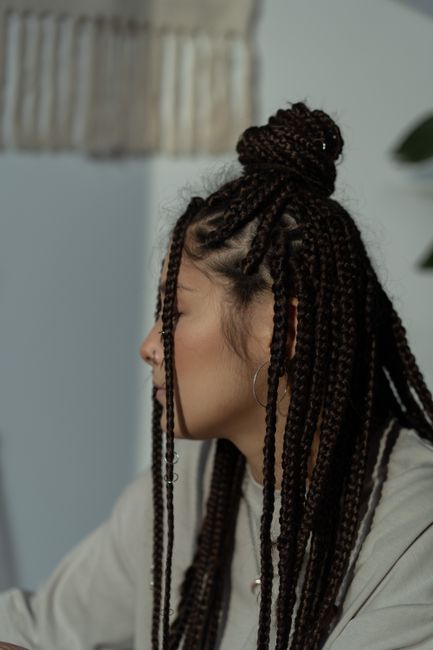
The Easy Double Braid: A Comprehensive Guide to Creating a Versatile and Chic Hairstyle
The double braid, also known as pigtail braids, is a timeless and incredibly versatile hairstyle. This tutorial will guide you through the simple steps to achieve this classic look, suitable for a wide range of hair types and lengths. Whether you’re aiming for a casual, everyday style, a sporty aesthetic, or even a bohemian vibe, the easy double braid offers a foundation for numerous variations and embellishments. Understanding the fundamental technique is key to unlocking its full potential, allowing for quick creation and effortless adaptation. This guide will break down the process into manageable steps, ensuring even braiding novices can master this elegant and practical hairstyle. We will explore the essential tools, preparatory steps, the core braiding technique, and tips for achieving a polished and long-lasting result.
Tools and Preparation for Your Easy Double Braid
Before embarking on your double braid journey, gathering a few essential tools will significantly streamline the process and enhance the final outcome. The primary tool, of course, is your hair. For optimal grip and to prevent flyaways, starting with hair that has a day or two of natural oils is often beneficial. If your hair is very clean and slippery, you might consider applying a texturizing spray or dry shampoo to create more friction between the strands. A fine-tooth comb or a teasing brush is useful for detangling and ensuring smooth sections. You will also need hair ties, preferably ones that match your hair color for a seamless look, or clear elastic bands. For more advanced styling, bobby pins can be used to secure any stray hairs or to create more intricate braided styles.
The preparation phase is crucial for achieving neat and even braids. Begin by thoroughly brushing your hair to remove any knots or tangles. This is particularly important if you have thicker or longer hair, as knots can disrupt the braiding process and result in an uneven appearance. Once detangled, part your hair down the middle. A precise middle part is key to creating symmetrical pigtail braids. You can use a comb to achieve a clean and defined part. If your hair tends to be frizzy, a light application of serum or hairspray to your part and along the hairline can help to tame any unruly strands. Next, divide your hair into two equal sections, one for each braid. Ensure these sections are as close in volume as possible for balanced braids. Gather one section of hair into a ponytail at the nape of your neck or slightly higher, depending on your desired braid placement. Secure this ponytail with a hair tie. Repeat the process with the second section of hair, ensuring the ponytail is at the same height and has a similar amount of hair. This ponytail base provides a stable starting point for your braid and helps to keep the hair organized.
The Fundamental Double Braid Technique: Step-by-Step Mastery
The core of the easy double braid lies in a straightforward three-strand braiding technique. Once your hair is sectioned and secured into two ponytails, you can begin braiding. Take one of the ponytails and divide it into three equal strands. For clarity, let’s label these strands: Strand 1 (leftmost), Strand 2 (middle), and Strand 3 (rightmost).
The braiding motion involves a consistent crossing pattern. Begin by taking Strand 3 (the rightmost strand) and crossing it over Strand 2, so that Strand 3 is now in the middle position. Next, take Strand 1 (the leftmost strand) and cross it over the new middle strand (which was originally Strand 2). This completes one full pass of the braiding cycle.
To continue, repeat the pattern: take the rightmost strand and cross it over the middle strand. Then, take the leftmost strand and cross it over the new middle strand. Maintain a firm but not overly tight grip on the strands throughout the process. This ensures the braid stays together without causing discomfort or breakage. As you work your way down the ponytail, pull the strands gently to tighten the braid. Aim for consistent tension to achieve an even and uniform braid. Continue this alternating crossing pattern – right over middle, left over middle – until you reach the end of the hair.
Once you have braided as far down as you can, secure the end of the braid with a hair tie. Repeat the entire braiding process on the second ponytail, ensuring you follow the same three-strand technique with consistent tension. The goal is to mirror the first braid as closely as possible for symmetrical pigtails. Take your time, especially when you are first learning. It is perfectly normal to have to unbraid and re-braid a few times to get the tension and placement right. Focus on the rhythm of crossing the strands – it’s a repetitive motion that becomes intuitive with practice.
Tips for Achieving a Polished and Professional-Looking Double Braid
While the basic double braid technique is simple, several tips can elevate your hairstyle from merely braided to polished and professional. One crucial aspect is maintaining even tension throughout the braid. Uneven tension can lead to loose loops and a less defined braid. As you braid, periodically tug gently on each of the three strands to ensure they are equally taut. This will create a tighter, more uniform braid that holds its shape better.
Another common issue is stray hairs or flyaways, especially if you have finer or shorter hair. To combat this, consider using a small amount of hairspray or a styling paste on your hands before you begin braiding. This will help to tame flyaways as you work. You can also use a fine-tooth comb to smooth down the sections of hair before you start braiding each ponytail. Once the braids are complete, a light mist of hairspray over the finished braids will help to set them and prevent flyaways from appearing throughout the day. For an extra smooth finish, you can use a flat iron on your hair before braiding, though this is optional and depends on your desired look.
The placement of your braids can also significantly impact the overall aesthetic. For a classic look, center your parts and position your pigtails lower on the back of your head. For a more youthful or playful vibe, you can raise the ponytails higher and slightly forward. Experiment with different partings as well; a side part can create a more asymmetrical and modern take on the double braid.
Don’t underestimate the power of the hair tie. Using hair ties that match your hair color will create a more seamless and sophisticated look. Clear elastics are also a good option for a subtle finish. If you want your braids to appear thicker, you can gently "pancaking" them. This involves lightly pulling on the edges of the braid, starting from the bottom and working your way up. Be gentle, as over-pancaking can cause the braid to unravel. This technique is particularly effective for creating a softer, more bohemian style.
Finally, consider the finishing touches. You can leave the ends of your braids secured with hair ties, or you can tuck the ends underneath the braids and secure them with bobby pins for a more polished, bun-like effect. Adding hair accessories such as ribbons, scarves, or decorative pins can further personalize your double braid and adapt it for different occasions. For instance, a silk scarf woven into the braid can create a chic, summery look, while delicate hairpins can add a touch of elegance for formal events.
Variations and Styling Ideas for Your Easy Double Braid
The beauty of the easy double braid lies in its adaptability. Beyond the basic pigtail style, numerous variations can transform the look for different occasions and personal preferences. One of the most popular variations is the French braid, which starts with three strands at the hairline and incorporates additional hair from the sides as you braid downwards. While a French braid requires a slightly more intricate technique, understanding the double braid provides a solid foundation. You can adapt the French braid concept to create two French braids instead of simple three-strand braids. Begin by taking a section of hair at the front of your head near your hairline, divide it into three strands, and start a French braid, gradually picking up small sections of hair from the sides and incorporating them into the braid as you move down your head. Once you reach the nape of your neck, transition into a standard three-strand braid for the remainder of the ponytail. Repeat on the other side.
Another accessible variation is the Dutch braid, which is essentially an inverted French braid. Instead of crossing the strands over each other, you cross them under. This technique causes the braid to stand out from the head, creating a more dramatic and textured effect. Like the French braid, you can also create two Dutch braids for a striking look.
For a softer, more romantic aesthetic, consider the fishtail braid. This braid uses only two strands, and you create it by taking small sections from the outer edges of each strand and crossing them over to the opposite side. While it appears intricate, the fishtail braid is surprisingly easy to learn and creates a beautiful, bohemian texture. You can adapt this by creating two fishtail braids.
The double braid can also serve as a base for more complex styles. For instance, you can braid your pigtails and then wrap each braid around your head like a crown, securing them with bobby pins. This creates an elegant updo that is perfect for formal occasions. Another idea is to braid the ponytails and then twist them together, forming a chic knot at the back of your head.
For a quick and edgy look, you can braid only the top sections of your hair, leaving the rest loose. This creates a half-up, half-down style with braided accents. You can also incorporate accessories to personalize your double braids. Weaving ribbons, fabric strips, or even flowers into your braids can completely change the mood and style of your hairstyle. Experiment with different hair ties, scrunchies, or decorative clips to add a touch of flair.
Consider the texture of your hair. For finer hair, a Dutch braid or a fishtail braid can add the illusion of volume and thickness. For thicker hair, the classic double braid is often sufficient, but you can experiment with pancaking the braids to soften the look. The key to mastering these variations is to practice the fundamental three-strand braid until it becomes second nature. Once you are comfortable with that, you can gradually introduce the techniques for French, Dutch, and fishtail braids, and then explore different styling and accessorizing options. The easy double braid is truly a gateway to a world of creative hairstyling possibilities, offering both simplicity and sophistication.

