When Hurricane Isaias roared toward the Gulf Coast as a Category 3 storm earlier this month, the urgency of the situation pushed local emergency management officials to their limits. In one Alabama county, an official seeking to communicate immediate risks to a vulnerable population turned to a novel, high-speed solution: a generative artificial intelligence chatbot. Tasked with visualizing the threat of a "sting jet"—a localized, intense burst of wind—the AI produced a graphic that was visually compelling but meteorologically flawed. The incident, reported by Laura Myers, director of the University of Alabama’s Center for Advanced Public Safety, serves as a stark warning of the risks inherent in the digital transformation of emergency response.
This event is part of a growing trend identified in a joint investigation by Grist and WIRED, which highlights how the integration of generative AI into disaster management is moving faster than the development of safety protocols. As extreme weather events increase in frequency due to a changing climate, the pressure on understaffed and under-resourced local agencies has reached a breaking point, creating a fertile environment for the adoption of unvetted AI tools.
The Human Factor in Emergency Communication
Emergency management is fundamentally a human-centric discipline. The officials tasked with this work are the first line of defense, bridging the gap between raw data from agencies like the National Weather Service and the life-saving decisions made by citizens. However, communication has long been an Achilles’ heel in this chain of command. Research by disaster experts, including Jeannette Sutton of the University of Albany, suggests that emergency managers often struggle with the "curse of knowledge"—the tendency to assume the public understands complex jargon, specific geographic nuances, or technical shorthand.
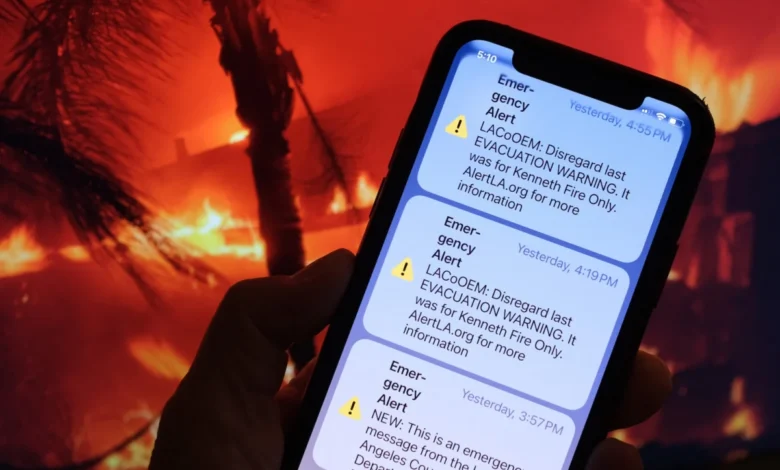
This failure of communication has historical precedents with tragic consequences. In 2017, the Thomas Fire in Montecito, California, was followed by a catastrophic debris flow. Public communication during that crisis was marred by confusion; the county issued alerts that felt optional to many residents already experiencing "warning fatigue" from the previous fire. The resulting mudslide, which claimed 23 lives and injured over 160, underscored how a poorly phrased alert can be as dangerous as the disaster itself.
The complexity of these scenarios is compounding. Between 2016 and 2025, various jurisdictions, from California to Australia, have reported significant public confusion stemming from inconsistent terminology—such as the misuse of "voluntary" versus "mandatory" evacuation orders. These failures erode the "currency of trust" that is essential for effective disaster mitigation.
AI as the New Frontier: Promise and Peril
Generative AI, specifically Large Language Models (LLMs), offers a seductive proposition: the ability to synthesize vast quantities of data into clear, actionable, and audience-specific alerts in seconds. Where a human might take fifteen minutes to draft a tweet or a wireless emergency alert while managing a crisis, an AI can produce a refined, best-practice-aligned message in milliseconds.
The technical potential is significant. As Rob Dale, the emergency management director in Ingham County, Michigan, notes, an AI model can be trained on the entirety of existing research regarding crisis communication. It can analyze the phrasing of successful past alerts, ensure the inclusion of necessary components—such as the nature of the threat, the required action, and the location—and strip away unnecessary filler that causes confusion.
For example, when comparing a raw alert draft—"Breeched banks. The water is rising. EVACUATE NOW. McGee Park open for people and pets, RV."—to an AI-refined version, the difference is professional and clinical. The AI-revised alert specifies the location, provides clear instructions, avoids technical errors like the misspelling of "breached," and directs citizens to an official source for updates.
The Shadow Adoption of Unofficial Tools
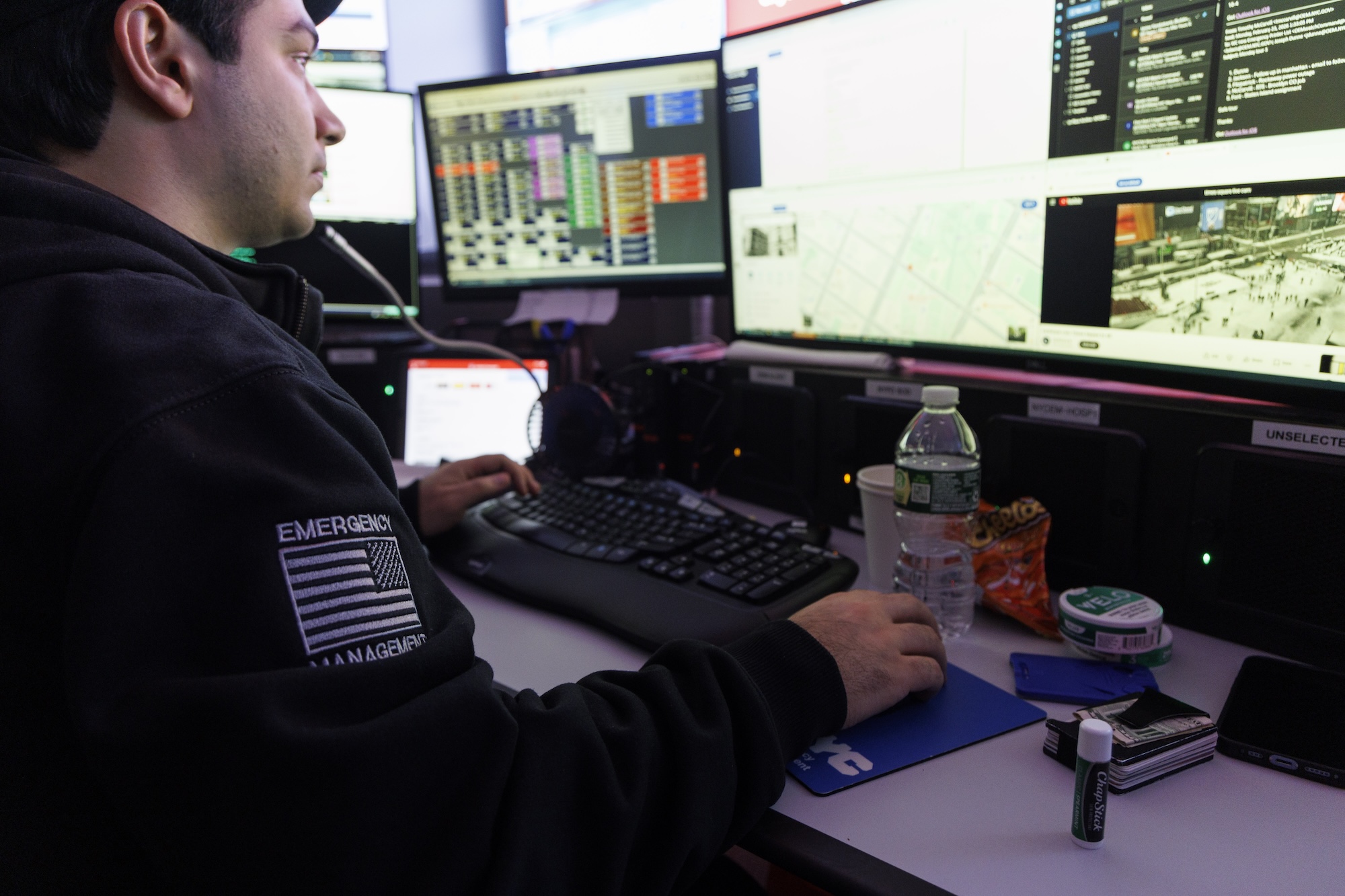
Despite the promise, there is a critical disconnect between official agency policy and the reality on the ground. While most state and federal departments have not formally sanctioned the use of generative AI for public-facing alerts, evidence suggests that "shadow" usage is pervasive. Emergency managers, often operating under immense stress and with limited staff, are increasingly turning to personal ChatGPT or Gemini accounts to draft internal plans and public messaging.
Sarah Miller, a professor of emergency management at Pierce College in Florida, suggests that this usage is not malicious but pragmatic. In an era where a single error can lead to litigation or loss of life, the temptation to use a tool that promises better clarity is overwhelming. However, this creates a "black box" scenario. If an official uses AI to draft a message without the expertise to vet the output for "hallucinations" or logical errors, the result can be catastrophic misinformation.
The Crisis of Authenticity and Institutional Trust
Beyond the immediate technical dangers lies a deeper sociological concern: the erosion of trust in government institutions. Public trust in emergency services is predicated on the belief that behind every alert is a human being who is monitoring the situation and cares for the safety of the community.
Ginny Katz, founder of HazAdapt, argues that authenticity is a critical component of crisis management. "AI-generated content does not feel authentic," she notes. As the public becomes more aware of AI’s potential for errors and its lack of empathy, there is a risk that they may ignore official warnings, viewing them as generic, automated, or impersonal. This suspicion is already manifesting in other sectors; in Syracuse, New York, public employees have actively opposed the use of AI in 911 dispatching, reflecting a broader societal anxiety about the automation of high-stakes human services.
Furthermore, the ease of generating content may lead to an over-saturation of alerts. "Warning fatigue," already a well-documented phenomenon in emergency management, could be exacerbated if agencies succumb to the temptation of sending more frequent, AI-generated notifications that lack the necessary nuance or urgency.
Looking Toward a Standardized Future
The transition toward AI-assisted disaster management appears inevitable, but industry leaders suggest it must be tempered with rigorous oversight. Companies like EM1 and Preppr are attempting to professionalize this transition by creating models specifically trained on vetted disaster research. The objective is to keep a "human in the loop," where the AI serves as a drafting assistant rather than an autonomous authority.
However, the current lack of a standardized regulatory framework means that the quality of AI-generated alerts varies wildly between jurisdictions. Without national guidelines on the use of AI in emergency communications, the sector remains in a "Wild West" phase.
As climate change continues to drive more frequent and intense weather events, the stakes for getting this right could not be higher. If handled correctly, AI could democratize high-quality, professional-grade communication for every small town and rural county, potentially saving countless lives. If handled poorly, it risks turning the essential machinery of disaster response into a source of confusion and misinformation.
For now, the consensus among experts is clear: technology is a powerful tool, but it is not a substitute for the specialized knowledge, regional context, and human accountability that defines effective emergency management. As the climate shifts, the ability of emergency managers to balance the speed of AI with the necessity of human judgment will be the ultimate test of their, and our, resilience.