BATON ROUGE, La. — In a significant move to bolster educational access for vulnerable youth, First lady Melania Trump visited the Louisiana State University (LSU) campus on Saturday to unveil a $7.2 million scholarship endowment. The initiative, anchored in her "Fostering the Future" program—a key pillar of her "Be Best" platform—aims to provide long-term academic and financial stability for students who have transitioned out of the foster care system.
The announcement was timed to coincide with the high-profile SEC rivalry game between LSU and the University of Alabama, blending the gravity of educational philanthropy with the pageantry of American college football. Against a backdrop of purple-and-gold, the first lady’s visit underscored a strategic effort to bring national attention to the specific challenges faced by foster youth in higher education.
Chronology of the Initiative
The "Fostering the Future" program was first introduced in 2021 as a targeted effort to bridge the gap between foster care and post-secondary success. Since its inception, the initiative has focused on creating sustainable pathways for students who often lack traditional family support systems.
- 2021: The first lady launched "Fostering the Future" to advocate for educational opportunities for children in foster care.
- 2022–2025: The program began building strategic alliances with various universities across the United States to formalize scholarship pathways.
- November 2026: The LSU endowment reached a critical milestone of $7.2 million, bolstered by a $5 million leadership gift from the MMR Group, led by LSU alumnus James B. "Pepper" Rutland, and an additional $2.2 million from 75 individual contributors.
Financial Structure and Academic Support
The $7.2 million endowment represents one of the largest single-university commitments to this demographic. According to LSU Foundation President and CEO Krista Raney, the fund is designed to be permanent, ensuring that resources remain available for future generations of students.
LSU President Wade Rousse clarified the operational impact of the endowment during the press event at Patrick F. Taylor Hall. "The $5 million leadership gift is projected to generate approximately $200,000 in annual interest," Rousse noted. These funds are earmarked to cover essential student costs, including tuition, mandatory fees, textbooks, and on-campus room and board—the primary financial barriers that often force foster youth to drop out of degree programs.
"At LSU, we believe talent is everywhere, but we understand that opportunity is not," said President Rousse. By providing a financial safety net, the university intends to move beyond mere admission and toward consistent retention and graduation.
A Symbolic Cultural Integration
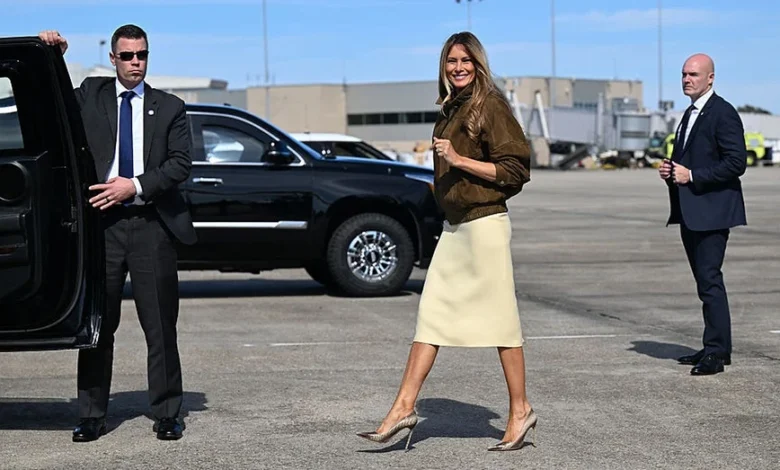
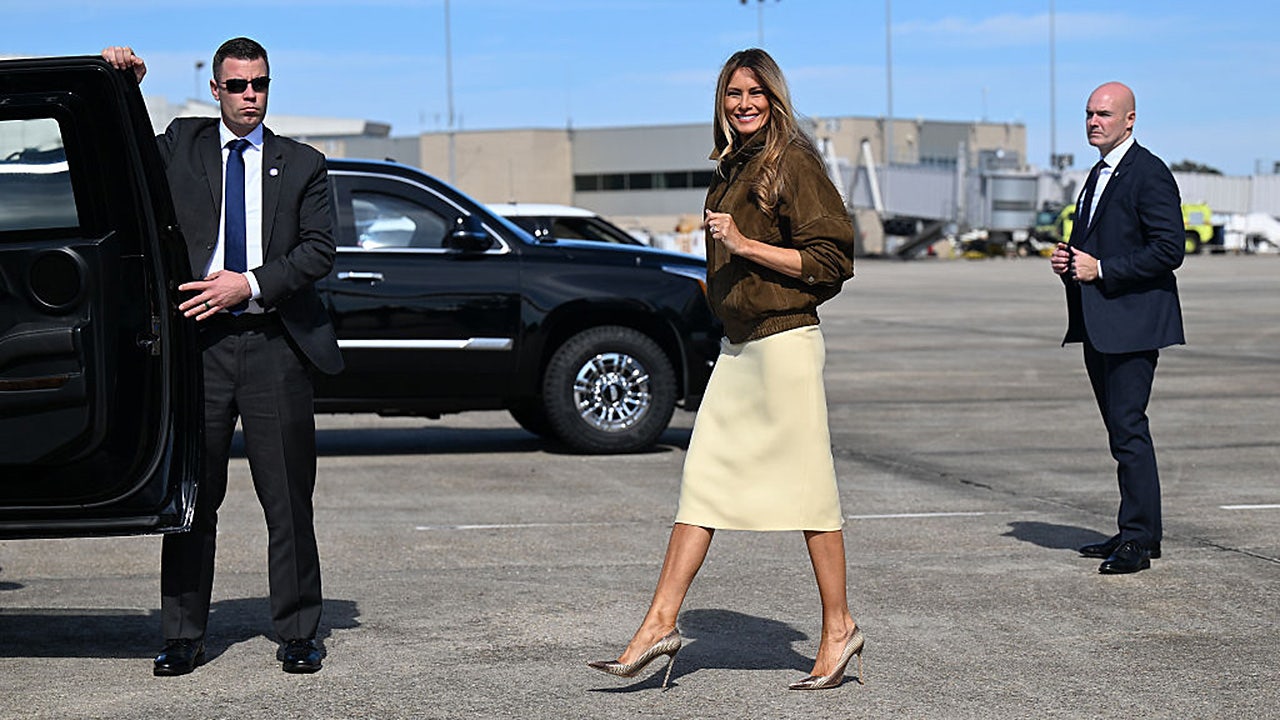
The visit was marked by a synthesis of public policy advocacy and the tradition of Southern collegiate sports. The first lady, wearing a tailored ensemble featuring a Nour Hammour suede bomber jacket and Adam Lippes skirt, participated in several ceremonial events.
The university presented Mrs. Trump with a custom LSU jersey emblazoned with her name and the number 14, as well as a commemorative football designed by Big Game USA. Former LSU coach Ed Orgeron, a prominent figure in the university’s athletic history, participated in the presentation, underscoring the institutional buy-in for the initiative.
The event’s reach extended into the game-day experience itself. Players donned special patches on their jerseys, and the university incorporated the "Fostering the Future" branding into the stadium’s visual presentation. During the game, Mrs. Trump appeared on the stadium’s Jumbotron, where she was met with enthusiastic support from the crowd, including sustained chants of "USA."

Comparative Analysis: The "First Point" of Competition
A lighthearted but telling moment occurred during the press conference regarding the competitive nature of the rivalry between LSU and Alabama. When it was revealed that LSU currently supports 14 "Fostering the Future" scholars compared to nine at the University of Alabama, the mood shifted to a friendly, competitive spirit.
"Mrs. Trump, what I heard you say is that LSU has 14 scholarship recipients and Alabama has nine," noted Krista Raney. "So I think that means we’ve already won the first point."
This competitive benchmarking highlights a broader trend: universities are increasingly using their philanthropic weight to compete not just on the gridiron, but in social responsibility metrics. As of the current semester, 26 universities nationwide have partnered with the initiative to support roughly 100 students, creating a competitive landscape for academic excellence among those who have navigated the foster system.
Political and Social Implications
The presence of Louisiana Gov. Jeff Landry, first lady Sharon Landry, and House Majority Leader Steve Scalise, R-La., at the announcement underscored the bipartisan and state-level support for the program. The event serves as a high-visibility platform for the first lady’s ongoing legislative efforts, specifically her call for Congress to codify executive orders related to foster care into permanent federal law.
From a policy standpoint, the initiative addresses a systemic "cliff" where foster youth lose state support upon reaching the age of majority. By shifting the responsibility to university endowments, the program attempts to fill the gap left by fluctuating public funding cycles.

The First Lady’s Message
Addressing the attendees, the first lady emphasized the transformational power of education. "This achievement will give young people from foster care an anchor of stability, a strong educational foundation, and a chance to build a wonderful life," she stated. "A great education does more than prepare someone for work life. It gives something no one can ever take away."
Her closing remarks were directed specifically at the students in attendance: "To the Fostering the Future scholars here today, and throughout America: I see you. I believe in you. And I will keep working to create new opportunities with you."
Future Outlook and Sustainability
The $7.2 million endowment is expected to grow. As more donors recognize the impact of the fund, the university and the first lady’s team hope to expand the program’s reach to include mentorship, internship placement, and career development services.
The gift of a handcrafted wooden bowl—made from a fallen limb of one of LSU’s historic oak trees—served as a symbolic gesture of longevity. Much like the oaks that define the LSU campus, the university aims for the scholarship program to provide a deep-rooted, lasting foundation for students who have otherwise experienced a lack of permanence.
As the LSU football program continues its season, the "Fostering the Future" branding will remain visible, serving as a reminder that the institutional priorities of the university include long-term social investment. Whether the initiative can serve as a scalable model for other public university systems remains a topic for future educational policy study, but for the students in Baton Rouge, the impact is immediate and material.

The event concluded with a clear objective: to demonstrate that the support of foster youth is a shared responsibility between government, private donors, and the institutions of higher learning that mold the next generation of American leaders. With 26 universities now on board, the program has reached a critical mass that may influence how other states approach the transition of foster youth into adulthood.