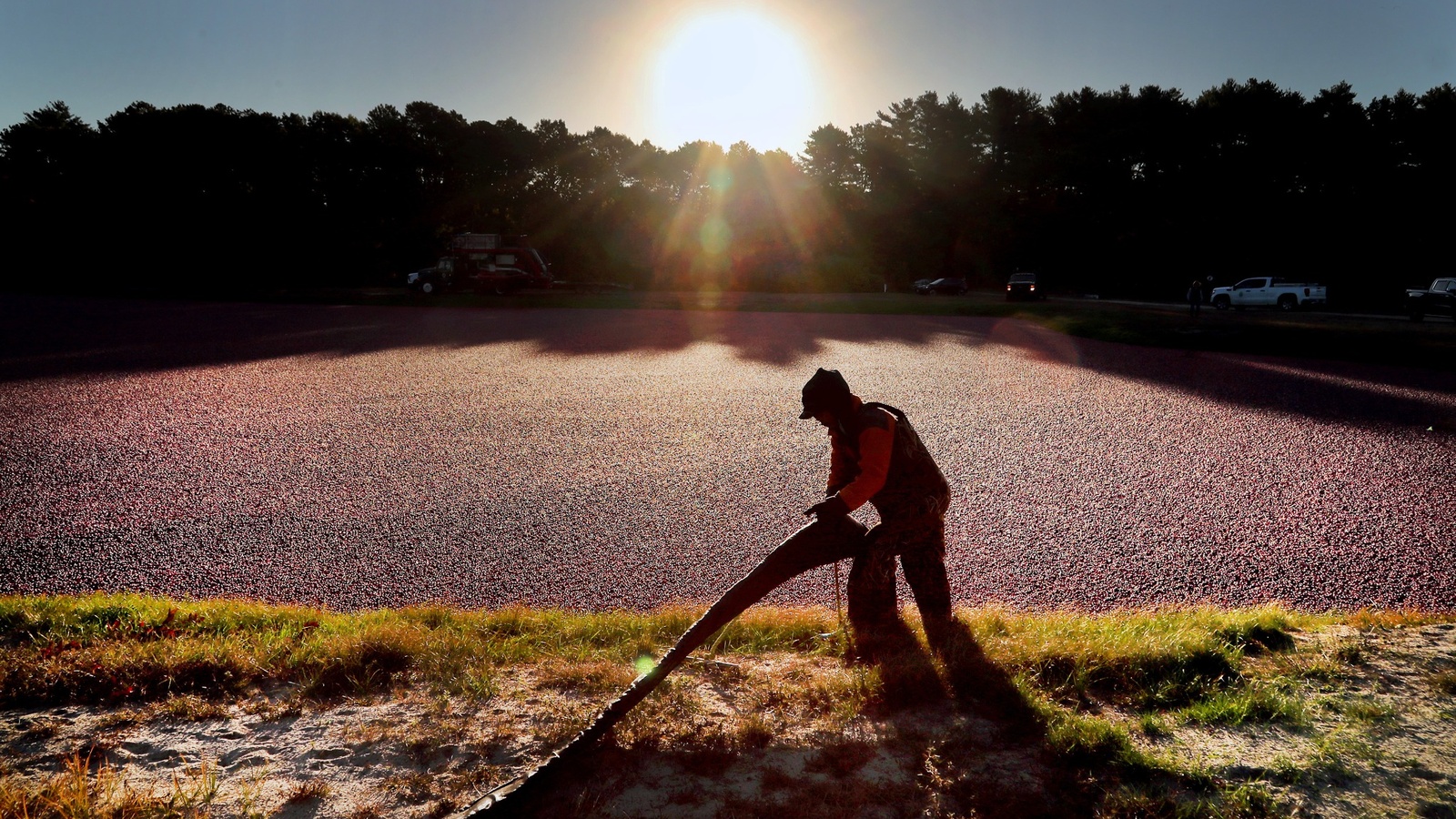
It is the height of cranberry harvest season in southeastern Massachusetts, where the iconic ruby-red fruit is being gathered from flooded bogs to supply holiday tables across the nation. Yet, for two specific sites in the towns of Kingston and Plymouth, the traditional harvest scene has been fundamentally transformed. Workers now maneuver specialized equipment between rows of industrial steel pilings, harvesting berries from beneath the protective canopy of utility-scale solar panels. These two locations represent a pioneering milestone in American agriculture and energy production: they are the first successful, fully operational examples of cranberry-focused agrivoltaics in the United States.
The Convergence of Renewable Energy and Traditional Agriculture
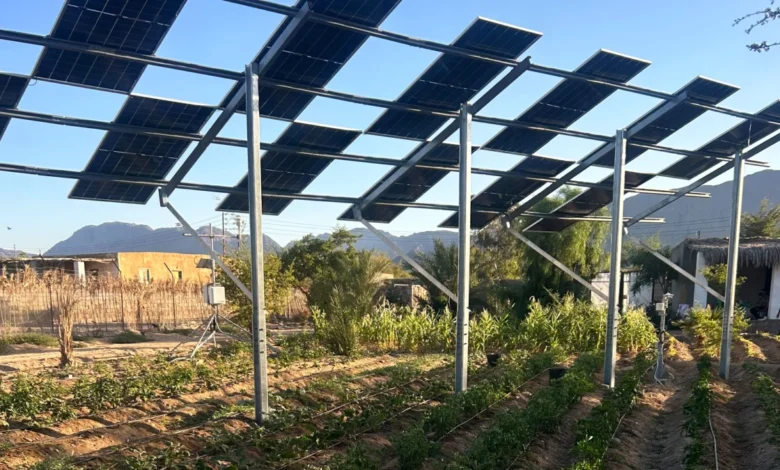
The integration of photovoltaic arrays onto working farmland, a practice known as agrivoltaics or dual-use solar, is emerging as a critical strategy for states aiming to meet ambitious climate mandates. Massachusetts, which has codified a commitment to reach net-zero carbon emissions by 2050, has long been a leader in renewable energy incentives. However, the rapid expansion of solar infrastructure has hit a geographic bottleneck. In a state characterized by dense populations, protected woodlands, and limited open space, the "siting wars"—the conflict between land conservationists and clean energy developers—have become increasingly fierce.
Solar installations on rooftops and parking lots, while environmentally benign, are often capital-intensive and limited in capacity. Conversely, developing large-scale solar farms on previously undisturbed land frequently triggers intense local opposition due to concerns over habitat loss and the erosion of community character. Agrivoltaics offers a potential middle ground, preserving the agricultural utility of the land while harvesting the sun’s energy.
For cranberry growers, this transition is not merely a technological experiment; it is a financial lifeline. Massachusetts currently ranks as the second-largest cranberry producer in the United States, trailing only Wisconsin. However, the industry faces mounting economic pressures, including volatile market prices and the high costs of bog maintenance. Because cranberry bogs are classified as protected wetlands, they cannot be converted into residential or commercial real estate developments, leaving farmers with limited options if their traditional operations become unprofitable. The arrival of solar developers offers a unique opportunity to maintain the land as a working farm while securing a steady, secondary revenue stream.
Engineering the Impossible: Overcoming the Bog Obstacle
The transition from a standard cranberry bog to a dual-use energy site is an engineering challenge that requires significant innovation. Prateek Tare, co-founder and executive vice president of Distributed Energy Infrastructure, led the construction of the Kingston and Plymouth projects. The hurdles were immediate and significant. Standard solar installations typically rely on foundation pilings driven eight to ten feet into the earth. In the soft, saturated soil of a cranberry bog, such foundations would lack the structural integrity required to support massive solar arrays.
Tare’s team had to undertake an extensive period of trial and error to identify machinery capable of sinking pilings deep enough to reach stable, compact sub-soil. Furthermore, the high moisture content of the environment made standard underground wiring systems impossible. Engineers had to design an overhead cabling network to ensure safety and durability. To facilitate harvesting, the arrays were mounted on single-axis trackers ten feet above the ground, with pilings spaced at greater intervals than traditional solar farms to allow heavy, wide-bodied harvesting equipment to navigate the bogs without obstruction.
The resulting installations are highly efficient. The Kingston site features a 4.4-megawatt array coupled with a 13.5-megawatt-hour battery storage system, while the Plymouth location operates a 1-megawatt array. Both projects function under a community solar model, allowing local residents to subscribe to the electricity produced and realize cost savings on their monthly utility bills.
A Timeline of Massachusetts Agrivoltaic Policy
The success of these projects is deeply rooted in the state’s legislative history. Massachusetts pioneered the financial framework for dual-use solar in 2018, creating an incentive structure that specifically encourages the pairing of agriculture with energy generation.
Under the current state incentive program, solar developers receive a base rate for every kilowatt-hour of electricity produced. Projects that qualify as "dual-use" receive a substantial bonus—an additional 9 cents per kilowatt-hour. This supplemental revenue is often the deciding factor for developers who are otherwise hesitant to undertake the higher costs associated with building on difficult, boggy terrain.
The trajectory of this industry has not been without setbacks. Five years ago, a project in the town of Carver was poised to be the first in the nation to integrate solar and cranberries. While the arrays were successfully installed and the crops were planted, the project stalled when the developing company entered bankruptcy. The site remains a focal point for the industry; current operators have expressed a firm commitment to revitalizing the project, viewing it not as a failure, but as a proof-of-concept that simply requires better financial management. Iain Ward, a consultant and experienced cranberry farmer who manages the active Kingston and Plymouth sites, remains optimistic that the Carver bog will eventually be brought to full capacity.
Economic and Environmental Implications
The broader implications of these developments extend far beyond the Massachusetts cranberry industry. Agrivoltaics is increasingly seen as a viable solution for various sectors of American agriculture, including cattle grazing, apple orcharding, and Christmas tree farming.
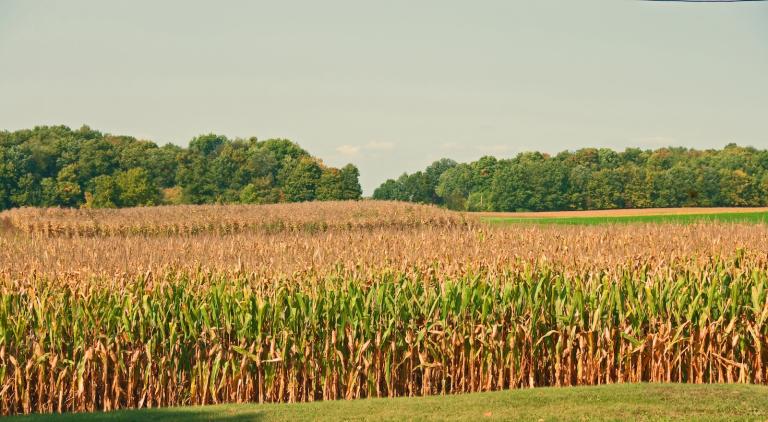
From an economic perspective, the model provides "farm viability." By leasing a portion of their land to solar developers, or in some cases, selling the land while retaining the right to farm the space beneath the panels, agricultural producers can stabilize their income. The farmers are typically compensated not only for the lease but also for the services provided in maintaining the vegetation and managing the perimeter of the arrays.
Environmentalists, while historically cautious about solar development, are beginning to view well-planned agrivoltaics as a net positive. By keeping the land in agricultural use, the soil remains largely undisturbed, and the bogs continue to provide the hydrological services and habitat benefits associated with wetlands. When compared to the alternative of industrial or residential development, which would result in the permanent loss of the bog, the dual-use model represents a significant victory for conservationists.
Looking Toward the Future
Despite the initial successes, the adoption of agrivoltaics is still in its infancy. Scaling the model requires standardized construction techniques, continued state-level subsidies, and a fundamental shift in how farmers view their land. Critics of the current model point to the "learning curve" costs, noting that the specialized engineering required for the first few sites is far more expensive than it will be for future, more refined iterations.
However, the industry is already witnessing a decline in these barriers to entry. Tare and his team are applying the data gathered from the Kingston and Plymouth bogs to new projects across the region. They are finding that the time required for site preparation is decreasing, and the reliability of the mechanical systems is increasing.
"When you change a paradigm, it takes a little time," Ward noted, reflecting on the slow but steady momentum building within the agricultural community. As the technology matures and the financial benefits become more apparent to skeptics, the expectation is that more farmers will explore the potential for dual-use installations.
The Massachusetts experience demonstrates that the conflict between renewable energy development and agricultural preservation is not an inevitable zero-sum game. Through collaboration between engineers, policymakers, and farmers, it is possible to harvest both the sun’s energy and the earth’s bounty simultaneously. As the state moves toward its 2050 climate goals, the quiet, efficient operation of the Kingston and Plymouth bogs may serve as the blueprint for a more sustainable, integrated agricultural future for the rest of the nation.