
Wall Mounted Jewelry Box Displays: Maximizing Space and Showcasing Your Collection
Wall mounted jewelry box displays offer a practical and aesthetically pleasing solution for organizing and showcasing personal jewelry collections. These units transcend mere storage, acting as functional art pieces that enhance interior décor while simultaneously providing easy access to cherished adornments. The primary advantages of opting for a wall-mounted unit include significant space-saving benefits, particularly in smaller living quarters or bedrooms. Traditional jewelry boxes, while charming, often consume valuable surface area on dressers, countertops, or nightstands. Wall-mounted designs, conversely, leverage vertical space, freeing up these surfaces and contributing to a more streamlined and organized living environment. Furthermore, their elevated placement can deter accidental damage or displacement, keeping delicate pieces out of harm’s way from pets or children. The sheer variety of designs available, from minimalist modern aesthetics to ornate vintage styles, ensures a wall mounted jewelry box display can seamlessly integrate into virtually any interior design scheme. This article will delve into the multifaceted world of wall mounted jewelry box displays, exploring their various types, materials, organizational features, mounting considerations, and the SEO benefits of strategically choosing and marketing these popular home décor items.
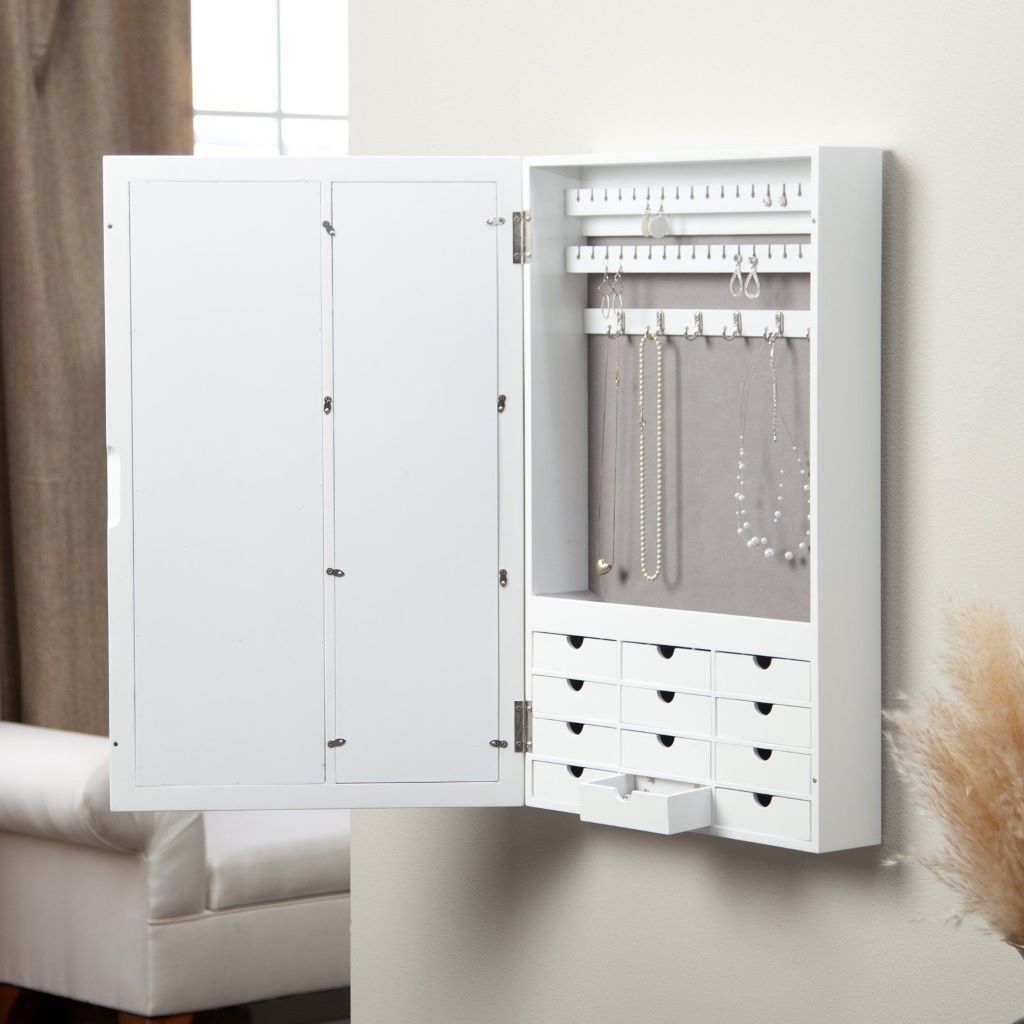
The fundamental types of wall mounted jewelry box displays can be broadly categorized by their primary function and design. Open shelving units represent a minimalist approach, featuring exposed shelves designed to hold individual jewelry pieces or smaller decorative boxes. These are ideal for showcasing statement necklaces, bracelets, or earrings that are frequently worn and intended to be seen. The advantage here is immediate visibility and accessibility, allowing for quick selection. However, they offer less protection from dust and potential damage. Closed cabinet or armoire-style displays provide a more comprehensive storage solution. These units often feature a combination of shelves, drawers, hooks, and padded compartments, offering dedicated spaces for a wide array of jewelry types, from rings and earrings to necklaces and watches. The doors of these cabinets can be solid, mirrored, or even feature glass panels for partial visibility. Mirror-integrated displays are a particularly popular subcategory. These combine the functionality of a full-length or decorative mirror with a hidden jewelry storage compartment. When closed, they appear as a stylish mirror, but upon opening, reveal an organized interior for jewelry. This dual-purpose design is exceptionally space-efficient and adds a touch of elegance to any room. Another innovative design is the swing-out or pull-down armoire, which typically hangs flat against the wall but can be pulled out or lowered to reveal a more extensive collection stored within. These are excellent for maximizing capacity while maintaining a compact external profile. Finally, modular systems allow for customization, where individual units or sections can be arranged and attached to the wall according to the user’s specific storage needs and available space. This flexibility makes them adaptable to evolving collections.
The choice of materials significantly impacts the durability, aesthetic appeal, and overall cost of a wall mounted jewelry box display. Wood remains a classic and versatile choice, offering both warmth and structural integrity. Various wood types, from economical pine and MDF to premium hardwoods like oak, walnut, and cherry, provide different aesthetic qualities. Painted or stained wood finishes can be tailored to match existing décor. For a more contemporary or industrial look, metal frames and accents are popular. Steel, iron, and aluminum can be fashioned into sleek, minimalist designs or more robust, ornate structures. Metal displays are often durable and easy to clean. Acrylic and glass are frequently used for doors, shelves, or entire display sections, offering a clear view of the jewelry within. Acrylic is lighter and more shatter-resistant than glass, making it a safer option in some environments. Glass, however, conveys a sense of luxury and sophistication. Fabric-lined interiors, such as velvet or satin, are crucial for protecting delicate jewelry from scratches and tarnish. These linings are often found in drawers, ring rolls, and necklace hooks. The integration of mirrors, typically made of glass with a silvered backing, is a common feature, adding both practicality and an illusion of space to the display. The combination of these materials dictates the product’s perceived value and target market.
Effective organization is paramount for any jewelry display, and wall mounted units offer diverse solutions. Compartments and dividers are essential for separating different types of jewelry, preventing tangling and damage. Dedicated ring rolls with individual slots, earring panels with holes or slots, and necklace hooks or bars are standard features designed for specific jewelry types. Drawers of varying depths provide storage for bracelets, brooches, watches, and other items that require a more contained space. Adjustable shelves offer flexibility for accommodating larger pieces or rearranging the display as needed. Padded trays can be incorporated for precious metals and gemstones, offering an extra layer of protection. The internal layout is often designed with the principle of visibility and accessibility in mind. For instance, necklace hooks positioned at the top allow chains to hang freely, preventing knots. Deep drawers at the bottom can store bulkier items. The thoughtful arrangement of these organizational elements directly impacts the user’s daily experience and the overall functionality of the display.
The installation and mounting of a wall mounted jewelry box display require careful consideration to ensure both security and aesthetic integration. Wall type is the most critical factor. Most displays are designed for mounting on drywall, requiring the use of wall anchors and screws to securely attach the unit to the wall studs. Locating studs is essential for robust support, especially for heavier displays. For plaster walls, specific anchors designed for this material are necessary. Concrete or brick walls require specialized drill bits and anchors (e.g., expansion anchors) for secure mounting. The weight of the display, especially when fully loaded with jewelry, must be accounted for when selecting mounting hardware. Always adhere to the manufacturer’s recommended weight limits. Tools commonly required include a stud finder, level, drill, screwdriver, measuring tape, and possibly a pencil for marking pilot holes. The location of the display is also important. Placing it near a power outlet might be necessary if the unit includes lighting. Proximity to a mirror can be advantageous for trying on jewelry. The height of the display should be ergonomically considered for easy access. Finally, safety precautions, such as wearing safety glasses during drilling and ensuring the display is level to prevent items from falling, are crucial.
From an SEO perspective, optimizing content around "wall mounted jewelry box display" involves a strategic approach to keyword integration, content quality, and user experience. The primary keyword, "wall mounted jewelry box display," should be naturally integrated into the title, headings, and throughout the body of the article. Related long-tail keywords such as "space-saving jewelry organizer," "mirrored wall jewelry cabinet," "hanging earring organizer," "modern wall jewelry storage," "wooden jewelry armoire wall mount," and "how to mount a jewelry box on the wall" can significantly broaden reach. High-quality, informative content that thoroughly addresses the user’s needs and questions is paramount. This includes detailing types, materials, features, and installation. Image optimization is also vital; using descriptive alt text for images (e.g., "Sleek white wall mounted jewelry box display with mirrored door") helps search engines understand the content. Structured data markup (schema) can further enhance search engine visibility by providing explicit information about the product, such as dimensions, materials, and price. User engagement signals, such as time on page and bounce rate, are influenced by the readability and comprehensiveness of the content. Providing clear, actionable advice on installation and organization also enhances user experience and can lead to backlinks from other relevant websites. The article’s structure, with clear headings and subheadings, improves readability for both users and search engines. Internal linking to other relevant articles on home organization or décor can also boost SEO.
Beyond the purely functional aspects, wall mounted jewelry box displays serve as significant decorative elements within a home. Their design can be a focal point, adding personality and style to a bedroom, dressing room, or even a hallway. Minimalist designs with clean lines and neutral finishes (e.g., white, black, natural wood) complement modern and Scandinavian aesthetics. Ornate or vintage-inspired pieces, often featuring decorative carvings, distressed finishes, or antique hardware, can enhance traditional, farmhouse, or bohemian interiors. Mirrored surfaces not only serve a practical purpose but also contribute to a sense of spaciousness and light, making smaller rooms feel larger. The color of the display can be chosen to either blend seamlessly with the wall color for a subtle effect or to act as a contrasting accent piece, drawing attention. The scale and proportion of the display should be considered in relation to the wall space and the overall room size. A small, delicate display might get lost on a large wall, while an oversized unit in a cramped space can feel overwhelming. The arrangement of jewelry within the display also contributes to its aesthetic appeal. Curated displays, showcasing a few select pieces artfully arranged, can transform the jewelry box itself into a piece of art. Conversely, a well-organized and filled display can reflect a sense of abundance and personal style.
The benefits of a wall mounted jewelry box display extend to jewelry preservation and longevity. Proper storage is crucial for maintaining the condition of precious metals and gemstones. Exposure to air, moisture, and light can cause tarnishing, discoloration, and degradation of certain materials. Enclosed wall mounted displays, particularly those with lined compartments, offer protection from these elements. Separating jewelry within designated compartments prevents scratching, which can occur when pieces rub against each other. This is especially important for delicate items like pearls, softer gemstones, and plated metals. Necklace hooks prevent chains from tangling and breaking, a common frustration with more rudimentary storage methods. For valuable or antique pieces, a secure wall mounted display can offer a sense of peace of mind, keeping them safely stored and out of casual reach. Some higher-end models may even feature lockable compartments, providing an additional layer of security. By investing in a well-designed wall mounted jewelry box display, individuals are not only organizing their belongings but also actively contributing to the preservation and longevity of their cherished jewelry collection.
The market for wall mounted jewelry box displays is diverse and caters to a wide range of budgets and preferences. Entry-level options, often made from MDF or composite wood with simpler hardware, are widely available and provide a functional solution at an affordable price point. Mid-range options typically offer better quality materials, more intricate designs, and enhanced organizational features, such as felt-lined drawers and specialized compartments. High-end and luxury displays can feature solid hardwoods, premium metal finishes, integrated lighting, and bespoke designs, catering to discerning consumers who prioritize both craftsmanship and aesthetic excellence. Online marketplaces, home goods retailers, and specialty furniture stores are primary distribution channels. The SEO strategy for these products often involves targeting specific buyer intentions, from those searching for "cheap wall jewelry organizer" to those looking for "luxury mirrored jewelry cabinet." The ability to offer detailed product descriptions, high-resolution images, and customer reviews is critical for driving sales and building trust.
In conclusion, wall mounted jewelry box displays are a sophisticated and practical solution for modern living. They expertly balance the need for organized storage with the desire for aesthetically pleasing décor. By understanding the various types, materials, organizational features, and mounting considerations, consumers can make informed decisions that best suit their individual needs and interior design. Furthermore, for businesses and marketers, a comprehensive understanding of SEO principles applied to this product category is essential for maximizing online visibility and effectively reaching target audiences in the competitive home décor market. The enduring appeal of these displays lies in their ability to declutter spaces, protect valuable collections, and elevate the overall ambiance of a room.

