As the American political landscape braces for the pivotal 2026 midterm elections, the city of Dallas has become the epicenter of a high-stakes ideological clash. The American Airlines Center, typically a venue for professional sports, is currently playing host to the Republican Party’s first-ever national midterm convention. The event, designed to consolidate the party’s base and provide a platform for former President Donald Trump, has drawn sharp rebuke from high-ranking Democrats, led by Illinois Governor JB Pritzker, who argue that the spectacle is a strategic distraction from substantive policy failures.
A Historic Gathering: The GOP’s Midterm Strategy
The decision to hold a national midterm convention is an unprecedented maneuver in modern American politics. Traditionally, political conventions are reserved for presidential election cycles, serving to officially nominate candidates and finalize party platforms. By opting for a mid-cycle gathering, the Republican National Committee (RNC) aims to mirror the enthusiasm typically seen during presidential years, intending to bolster voter turnout in a landscape where the party is fighting to maintain narrow majorities in both the House of Representatives and the Senate.
RNC Chair Joe Gruters has framed the event as an essential mobilization effort. "We are putting the president on the ballot," Gruters stated in an interview ahead of the convention. "That’s exactly what we’re doing with this midterm convention." For the GOP, the narrative is clear: the convention serves as a referendum on the current administration’s policies, with the party hoping to leverage the influence of Donald Trump to energize a base currently facing significant political headwinds.
The Democratic Counter-Offensive
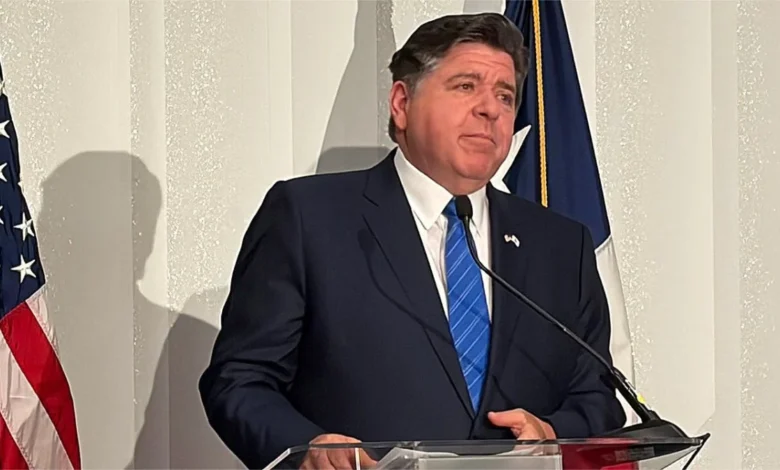
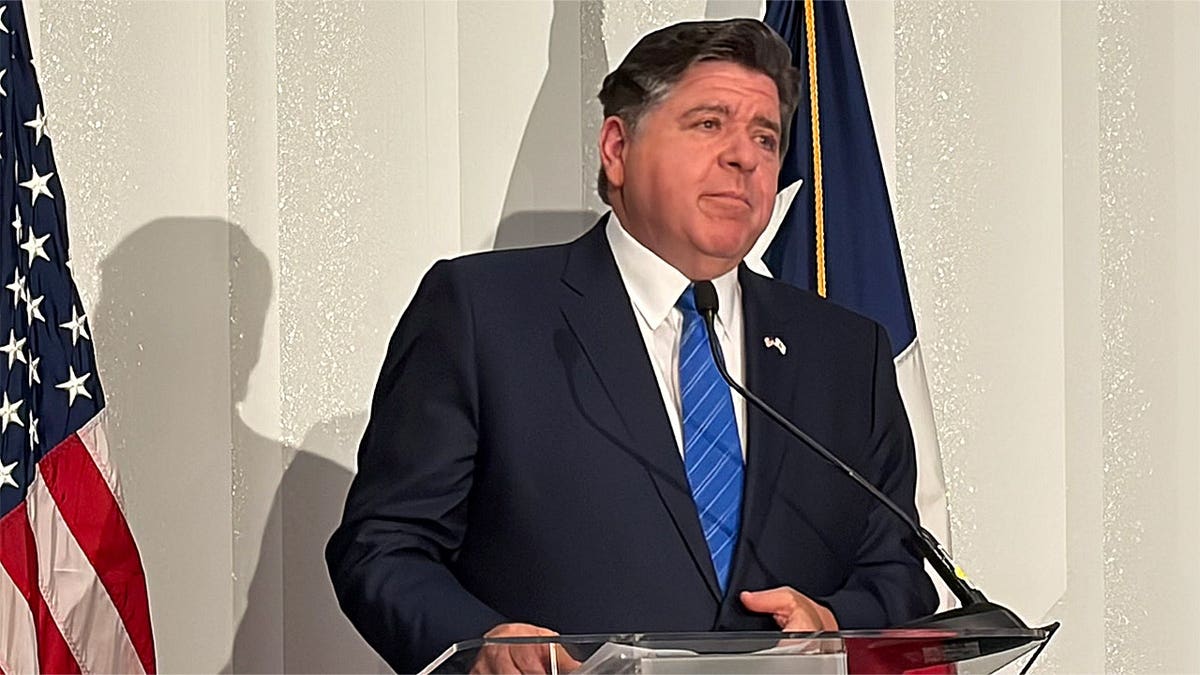
Across the street from the bustling convention site, Illinois Governor JB Pritzker spearheaded a Democratic National Committee (DNC) counter-programming effort. Pritzker, currently navigating his own re-election campaign for a third term, utilized the platform to deliver a scathing critique of the GOP’s agenda.
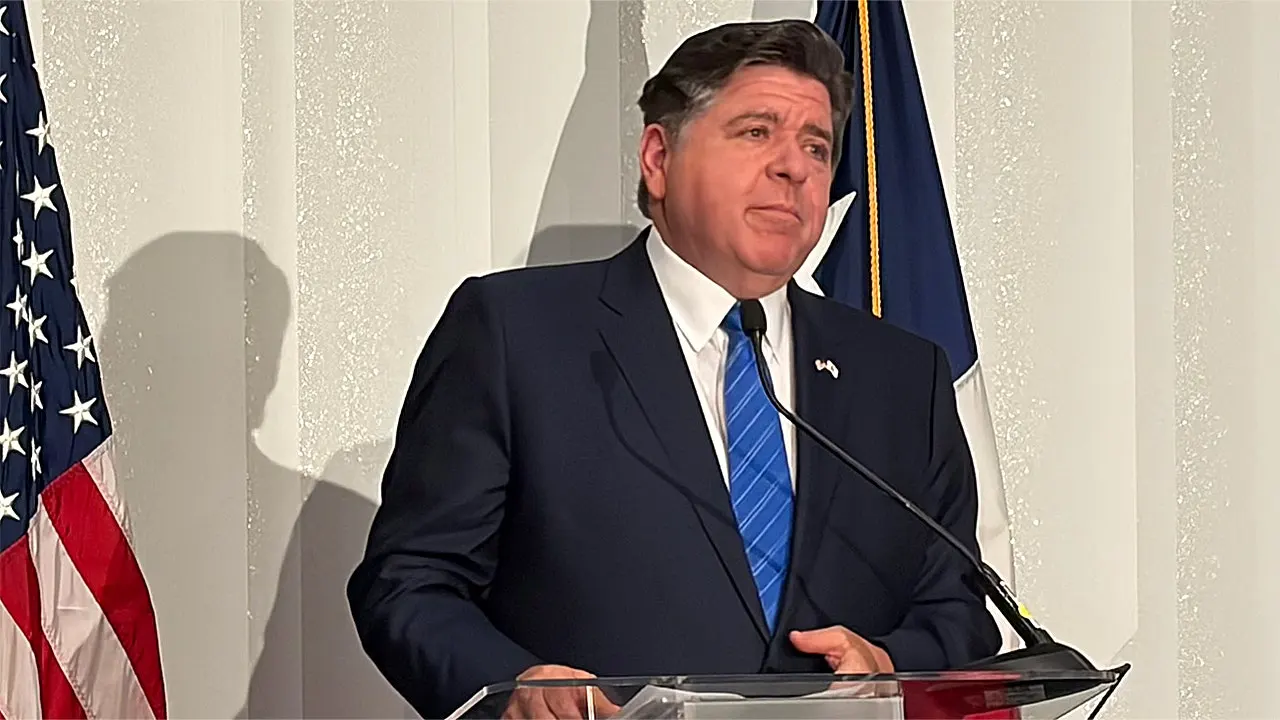
"Voters can see through the BS that Republicans are spewing," Pritzker remarked during the news conference. He characterized the convention as a "bizarre" attempt to mask the perceived shortcomings of Republican policies. Pritzker’s critique spanned a wide array of economic and geopolitical grievances, alleging that the former president’s trade policies have exacerbated grocery store costs, while simultaneously criticizing the administration’s handling of international relations, specifically citing tensions in Iran as a direct threat to American agricultural stability.
The Governor further argued that the GOP is attempting to pivot away from domestic issues—such as the rising costs of healthcare and housing—by focusing on a "flashy primetime event." According to Pritzker, these efforts are a tactical deflection from the tangible challenges facing working-class families across the nation.
Claims of Election Integrity and the Postal Service
Perhaps the most contentious aspect of Pritzker’s critique involved allegations regarding the integrity of the upcoming electoral process. Pritzker explicitly accused the Republican leadership of attempting to "rig" the 2026 elections, specifically pointing to executive actions taken regarding the U.S. Postal Service (USPS) and their potential impact on mail-in balloting.
"Republicans know that they can’t win on the merits of their unpopular policies. So, they’re working to rig the 2026 election," Pritzker asserted. He went on to suggest that the outcome of these midterms holds existential weight for the democratic process, warning, "If Democrats don’t win in this election, we may not have other elections, or certainly we’re going to have future elections, every single one of which will be rigged."
In response to these allegations, the White House has consistently defended the administration’s stance on election security. Officials have described recent directives regarding the postal system as "commonsense measures" intended to modernize mail logistics and ensure the integrity of the ballot, rather than suppress voter participation.

The 2028 Horizon: Pritzker’s National Profile
The presence of Governor Pritzker in Dallas has fueled speculation regarding his political trajectory. As a prominent voice within the Democratic Party and a potential contender for the 2028 presidential nomination, his active role in national midterm messaging is viewed by political analysts as a deliberate effort to expand his influence beyond Illinois.
When questioned about whether his Dallas appearance served as a signal of future national ambitions, Pritzker maintained a focused, albeit diplomatic, stance. "I care a great deal about what happens in Texas. Voters everywhere in the country should care about what happens in Texas," he stated. "So, I’m pleased to be here for that reason. If I can advance the cause, that’s why I should stand here."
Contextualizing the 2026 Midterm Landscape
To understand the intensity of the Dallas standoff, one must look at the data governing the 2026 cycle. Republicans are currently defending slim margins in the House and Senate, a position that historically leaves the incumbent party vulnerable to the "midterm penalty"—a phenomenon where the party in power often loses seats during the second year of a presidential term.
Recent economic indicators have complicated the path for both parties. Inflationary pressures, while showing signs of stabilization in specific sectors, continue to weigh heavily on consumer sentiment. For the GOP, the challenge lies in translating voter dissatisfaction with the economy into a clear mandate for legislative change. For the Democrats, the strategy relies on framing the opposition as extreme and focusing on the protection of established social programs and electoral systems.
A Chronology of the 2026 Pre-Election Cycle
- January 2026: Initial discussions among GOP leadership regarding a national midterm convention begin, signaling a shift in campaign strategy.
- April 2026: The RNC officially selects Dallas as the venue, citing its symbolic importance in the party’s electoral heartland.
- June 2026: Early polling data indicates a tightening race in key battleground states, prompting both parties to accelerate fundraising and grassroots organizing.
- August 2026: The White House issues executive guidance on postal voting procedures, drawing immediate legal challenges and criticism from Democratic leadership.
- September 9, 2026: The Republican Midterm Convention commences in Dallas, featuring a series of high-profile speakers and a keynote address by Donald Trump. Concurrently, the DNC launches its counter-programming operation led by Governor Pritzker.
Broader Implications for American Democracy
The tension currently on display in Dallas reflects a deepening polarization within the United States. The divergence between the two parties’ narratives is not merely restricted to policy differences but extends to the fundamental perception of how elections should be conducted and what constitutes a legitimate threat to democracy.
Analysts note that the "midterm convention" model could become a permanent fixture if the Dallas event succeeds in its objective of driving voter turnout. Conversely, if the event fails to move the needle in the polls, it may be remembered as an expensive and ineffective gamble. As the November elections approach, the rhetoric from both sides is expected to intensify, with the focus remaining squarely on the battle for control of the legislative branch.
The coming weeks will be critical. With early voting windows opening in several states, both the GOP’s mobilization efforts and the Democratic Party’s pushback will be tested in real-time. The discourse in Dallas is a microcosm of a larger national struggle, where the definition of "the will of the people" is being contested with unprecedented vigor.
Conclusion: The Road to November
As the dust settles on the two-day convention in Texas, the focus shifts back to the local districts and statewide races that will ultimately determine the balance of power in Washington. The accusations of "rigging" and the counter-claims of "securing the vote" highlight a profound lack of consensus on the mechanics of the democratic process itself.
For voters, the choice in 2026 remains complex. They are faced with two distinct visions for the country: one that emphasizes a return to the policies and populist appeal of the previous administration, and another that advocates for the protection of current institutional frameworks and a pivot toward different economic priorities.
The significance of the 2026 midterm elections cannot be overstated. With the balance of power hanging by a thread, every rally, every press conference, and every policy announcement is amplified. As the nation moves toward the final weeks of the campaign, the events in Dallas serve as a stark reminder that the American political theater is evolving, with both parties betting that an aggressive, high-visibility strategy is the only way to secure the future of their respective visions for the nation.