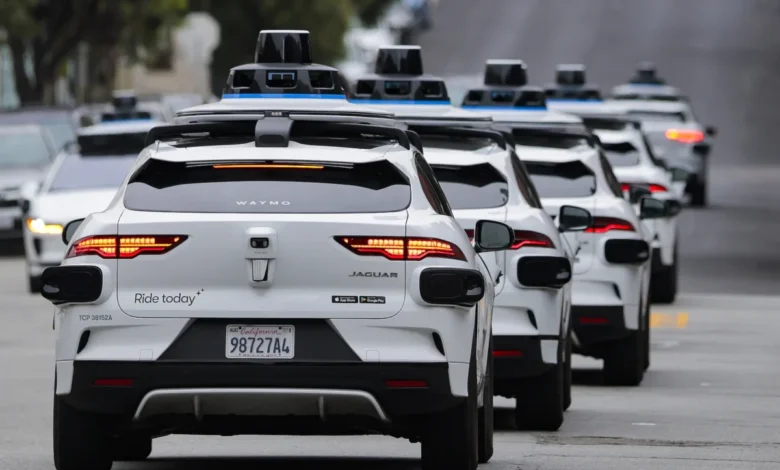
San Francisco’s autonomous vehicle landscape experienced another moment of disruption and swift recovery on July 18, 2026, when Waymo, the self-driving technology company owned by Alphabet, temporarily paused its robotaxi service across parts of the city. The cessation of operations was a direct response to a significant power outage that affected approximately 7,000 PG&E customers, plunging several districts into darkness. The incident, though resolved within hours, reignited ongoing discussions about the resilience of autonomous systems in the face of urban infrastructure failures and underscored calls from San Francisco Mayor Daniel Lurie for more robust state regulations governing the operation of self-driving vehicles during emergencies.
The disruption began shortly before 12:30 PM PDT, the time at which Waymo confirmed its "temporary adjustments" to service. Reports from customers and social media posts indicated that Waymo had communicated a "temporarily paused" status for its robotaxi service, specifically noting that "freeway routes are unavailable." This immediate response from the company highlighted its protocol for handling unexpected large-scale urban disruptions, prioritizing safety by limiting or halting operations when critical environmental data might be compromised or external conditions become unpredictable. The power outage, as confirmed by PG&E, was widespread enough to necessitate such a cautious approach from Waymo.
Chronology of the Disruption and Resumption
The sequence of events unfolded rapidly on Friday afternoon. Around midday, reports of power outages began to surface across various San Francisco neighborhoods. PG&E, the primary utility provider for the region, confirmed that roughly 7,000 of its customers were without electricity, an event substantial enough to impact traffic signals, streetlights, and potentially the communication infrastructure vital for autonomous vehicle navigation.
Upon detecting the widespread outage, Waymo initiated its contingency protocols. At approximately 12:30 PM PDT, the company began issuing notifications to its San Francisco customers, informing them of the service pause. A spokesperson for the Alphabet-owned company initially stated to TechCrunch, "We are making temporary adjustments to our service while we monitor local conditions. We know riders depend on us, and we will return to normal operations as soon as possible." This initial statement emphasized the company’s commitment to both safety and service reliability, while also indicating an active assessment of the situation.
Within an hour of the initial pause, and as PG&E crews worked to restore power, Waymo provided an update. A company spokesperson later elaborated, stating that Waymo "decided to pause service for approx. one hour to assess the scale of the power outage affecting a large portion of San Francisco and coordinate with local officials." This clarification underscored the structured decision-making process employed by the autonomous vehicle operator, involving not just internal system monitoring but also external coordination with city authorities to understand the broader impact. Following this assessment and as power began to be restored in affected areas, Waymo’s robotaxi service was progressively resumed, indicating a successful implementation of their incident response plan for this particular event.
Background of Autonomous Vehicle Challenges in Urban Environments
This recent incident is not an isolated event but rather another data point in the ongoing narrative of autonomous vehicle deployment in complex urban settings like San Francisco. The city, with its dense population, unique topography, diverse traffic patterns, and frequent public events, serves as both a proving ground and a crucible for self-driving technology. Waymo, along with other autonomous vehicle developers, has invested heavily in mapping and navigating this intricate environment. However, infrastructure failures, such as power outages, present a unique set of challenges that even the most advanced AI and sensor suites must contend with.
Autonomous vehicles rely on a sophisticated array of sensors—including lidar, radar, cameras, and ultrasonic sensors—alongside highly detailed high-definition maps and real-time data feeds, including GPS and vehicle-to-infrastructure (V2I) communication. A power outage can disrupt several critical components of this operational ecosystem. Traffic signals, which are typically incorporated into AV decision-making, cease to function, creating uncontrolled intersections. Streetlights go dark, reducing visibility, especially in low-light conditions. Furthermore, cellular and wireless networks, which autonomous vehicles use for communication with their operational centers, for receiving real-time updates, and for remote assistance, can experience degradation or complete failure during widespread power disruptions.
The absence of reliable external cues, combined with potential communication blackouts, necessitates a highly conservative response from autonomous systems. Most AVs are programmed to enter a "minimal risk condition" (MRC) when faced with situations beyond their operational design domain (ODD) or when critical inputs are compromised. This MRC often involves pulling over safely, halting movement, or seeking human remote assistance. This is precisely why Waymo implemented a temporary pause, recognizing that a degraded environment could compromise the safety and predictability of its operations.
Previous Incidents and the Call for Tougher Regulations

The recent power outage incident echoes similar challenges Waymo has faced in San Francisco over the past year. In December of the previous year (2025), a number of Waymo vehicles reportedly stalled on city streets during a blackout. This incident led to temporary service suspensions and highlighted the vulnerabilities of AV systems to widespread power failures. Earlier in the current year (2026), during a Fourth of July fireworks show near the Golden Gate Bridge, a similar incident saw autonomous vehicles, including Waymo units, contributing to traffic paralysis. While the specific cause of the Fourth of July disruption might have been a combination of overwhelming human traffic and communication issues rather than solely a power outage, the common thread was the inability of the AVs to navigate effectively or seamlessly integrate with human-driven traffic during anomalous, high-stress events.
These repeated incidents have not gone unnoticed by local leadership. San Francisco Mayor Daniel Lurie has been a vocal proponent for more stringent oversight of autonomous vehicle operations, particularly in emergency scenarios. Following the previous traffic disruptions, Mayor Lurie publicly called for tougher state regulations, advocating for rules that would "adequately address how autonomous vehicles operate during major incidents, planned or not." His statements reflect a growing concern among city officials about the preparedness and responsiveness of AV companies when unforeseen circumstances disrupt the normal urban flow.
The regulatory framework for autonomous vehicles in California is primarily managed by the California Public Utilities Commission (CPUC) and the California Department of Motor Vehicles (DMV). While the DMV handles testing permits, the CPUC is responsible for issuing permits for commercial passenger service, including setting conditions for safe operation. Mayor Lurie’s push for "state regulations" directly targets the CPUC’s purview, urging them to implement stricter protocols concerning emergency response, data sharing with local authorities, and clearer guidelines for AV behavior during power outages, natural disasters, or large-scale public events. The mayor’s argument centers on ensuring that as AV technology becomes more pervasive, it does not inadvertently become a hindrance to emergency services or public safety during critical moments.
Broader Impact and Implications
The ongoing interplay between autonomous vehicle technology and urban infrastructure resilience has significant implications for both the future of transportation and public policy. Each incident, even a short-lived one like the recent Waymo service pause, contributes to the public perception of autonomous vehicles. While Waymo’s swift decision to pause and then resume service demonstrates a responsible approach to safety, repeated disruptions, regardless of their cause, can erode public trust and amplify skepticism about the technology’s readiness for widespread adoption.
From a technological standpoint, these events provide invaluable data for Waymo and other AV developers. They highlight the need for even more robust redundancy in navigation systems, enhanced communication protocols with city infrastructure (V2I), and sophisticated machine learning models capable of predicting and reacting to a wider array of unexpected environmental changes. Developing autonomous systems that can not only operate safely in ideal conditions but also gracefully degrade or effectively navigate highly compromised environments is a paramount challenge.
For regulators, the incidents underscore the necessity of proactive and adaptive rule-making. The CPUC, in collaboration with city and state emergency services, will likely face increased pressure to develop comprehensive guidelines. These guidelines might include mandating real-time data sharing with traffic management centers, establishing clear communication channels during emergencies, and potentially even requiring AV companies to demonstrate robust manual override or remote assistance capabilities that can function even in degraded network conditions. The balance lies in fostering innovation while simultaneously safeguarding public interest and ensuring urban resilience.
Economically, even a one-hour pause in a commercial robotaxi service, particularly in a busy city like San Francisco, can have tangible, albeit minor, impacts. For customers relying on the service for critical appointments or daily commutes, it represents an inconvenience. For Waymo, it means a temporary halt in revenue generation and a potential impact on customer satisfaction metrics. While these short-term effects are manageable, the long-term economic viability and public acceptance of robotaxis depend heavily on their consistent reliability and their ability to operate without hindering city functions.
Conclusion
The temporary pause and swift resumption of Waymo’s robotaxi service in San Francisco following a power outage on July 18, 2026, serves as a microcosm of the larger challenges and opportunities facing the autonomous vehicle industry. It demonstrated Waymo’s operational protocols for handling unexpected urban disruptions, prioritizing safety and coordinating with local conditions. Simultaneously, it reinforced the calls from city leaders like Mayor Daniel Lurie for state regulators to establish more comprehensive and stringent rules for autonomous vehicles, particularly concerning their behavior during emergencies and infrastructure failures.
As San Francisco continues to serve as a key proving ground for self-driving technology, the ongoing dialogue between innovators, regulators, and the public will shape the future trajectory of urban mobility. The path forward demands not only technological advancement but also robust policy frameworks and a commitment to transparency and public safety, ensuring that autonomous vehicles seamlessly integrate into the fabric of urban life, even when the power goes out. The incidents of 2025 and 2026, though brief, underscore the continuous need for adaptability, foresight, and collaborative problem-solving as cities embrace the promise of autonomous transportation.