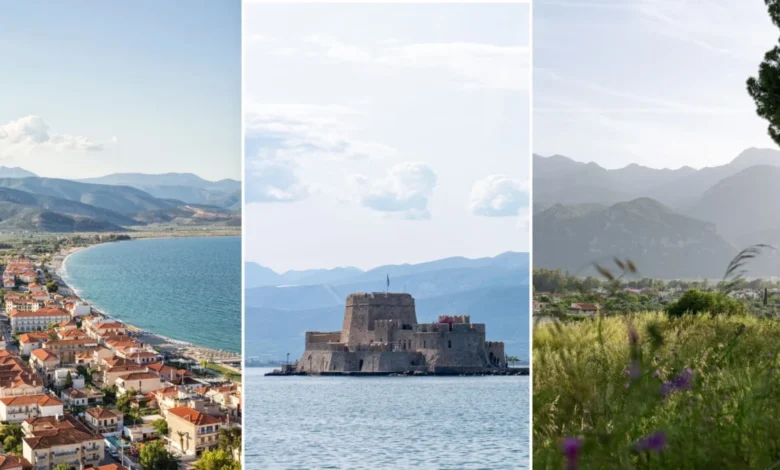
The Peloponnese, a rugged and sprawling peninsula forming the southernmost part of mainland Greece, is currently undergoing a profound cultural and economic transformation. Long overshadowed by the white-washed allure of the Cycladic islands like Santorini and Mykonos, this region—roughly the size of Slovenia—is emerging from decades of relative isolation. This shift is being driven by a strategic combination of high-profile cinematic exposure, the development of the largest hiking network in Greece, and a grassroots movement dedicated to preserving ancient traditions and reversing the tide of rural depopulation.

For decades, the Peloponnese remained a "well-kept secret" among domestic travelers and a handful of intrepid foreigners. Statistics from the Bank of Greece indicate that as recently as 2025, only three out of every 100 foreign visitors to Greece reached this westernmost peninsula, despite its proximity to Athens. However, 2024 and 2025 have marked a turning point. The release of Christopher Nolan’s blockbuster epic, The Odyssey, has cast a global spotlight on the region’s dramatic landscapes. Shot partially on location in Messinia, the film revisits Homer’s 3,000-year-old narrative, bringing to life the mythical sites where Odysseus lived and fought. This cinematic interest is coinciding with the formal opening of the Peloponnese Trail Network, a 1,200-mile project connecting ancient footpaths and isolated villages across five administrative regions.
A Chronology of Connectivity and Crisis
The path to the Peloponnese’s current resurgence is rooted in a complex history of infrastructure development and socio-economic challenges. Following World War II and the subsequent Greek Civil War, the peninsula suffered from severe devastation, leading to significant internal displacement and waves of emigration to Northern Europe, North America, and Australia.

In the 1950s, the first major modern road projects began to pierce the isolation of the Parnon and Taygetus mountain ranges, connecting coastal towns with the interior. However, it was not until the early 2000s that the region saw a modern infrastructure boom. New highways and tunnels significantly reduced the travel time from Athens, making the Argolis and Messinia regions accessible for weekend tourism.
The 2008 global financial crisis presented a major setback. The resulting economic stagnation triggered a "brain drain," forcing a new generation of young Greeks to leave the peninsula for urban centers or foreign countries. This led to the phenomenon of "ghost villages," such as Lasta in Arcadia, which at one point reported zero year-round residents, and Vamvakou in Laconia, which saw its population dwindle to single digits.

The tide began to turn with the vision of the late Captain Vassilis Constantakopoulos, a Messinian shipowner who sought to transform his birthplace into a sustainable luxury destination. His efforts culminated in the opening of Costa Navarino, an eco-retreat that served as a catalyst for further investment. By 2022 and 2023, global luxury brands including W Hotels and Mandarin Oriental had established a presence in the region, with Four Seasons and Six Senses slated to follow by 2026.
The Cinematic Catalyst and the Concept of Nostos
The impact of Christopher Nolan’s The Odyssey cannot be overstated in terms of its "set-jetting" potential. By utilizing historical sites such as Nestor’s Cave—where the film depicts Odysseus’s encounter with the Cyclops—and the Methoni Castle, the production has anchored mythical fiction in tangible reality.

Local hospitality experts note that the film emphasizes the Greek concepts of xenia (ritualized hospitality) and nostos (the theme of homecoming). These themes resonate deeply with the current demographic shift in the region. Professionals like Nikos Stakias, who spent two decades in the international hospitality industry, are returning to the Peloponnese to lead community projects. Stakias is a key figure in the Peloponnese Trail Network, an initiative that views tourism not just as a revenue stream, but as a means of "homecoming" for the land itself.
Expanding the Map: The Peloponnese Trail Network
While Messinia has garnered attention through cinema and luxury resorts, the Peloponnese Trail Network is designed to distribute the benefits of tourism more equitably across the peninsula’s other regions: Argolis, Arcadia, Laconia, and Elis.

The network currently consists of 11 official trails, including the 64-mile Argolis Trail and the 143-mile circular Parnon Trail. These routes are more than mere hiking paths; they are historical corridors. In Argolis, hikers encounter the 4th-century BC theater of Epidaurus, a UNESCO World Heritage site where ancient performances were once prescribed as clinical therapy for patients. The trail continues through Ottoman-era stone paths to the Palamidi Fortress, a Venetian masterpiece overlooking Nafplio, the first capital of modern Greece.
In the southeast, the Parnon Trail ascends the rugged Mount Parnon, a massif visible from Athens on clear days. The trail passes through villages like Pera Melana and Leonidio, the latter of which has become a premier destination for world-class mountain climbing due to its towering limestone cliffs. This infrastructure is vital for the survival of "shepherding villages" like Pragmateftis, which houses fewer than 200 residents.

Cultural Conservation: Language and Heritage
A significant component of the Peloponnese’s renewal is the preservation of intangible cultural heritage. In the town of Leonidio, educators like Eleni Manou are working to save the Tsakonian language. A direct descendant of the ancient Doric dialect spoken by Spartans, Tsakonian is one of the oldest living languages in Europe. Because the Parnon mountains kept the region isolated until the mid-20th century, the dialect survived where others vanished. Today, with fewer than 2,500 fluent speakers remaining, the town has introduced Tsakonian street signs and hosts an annual festival in July to integrate the language into modern contexts.
Similarly, in the village of Geraki in Laconia, a movement is underway to preserve the art of vertical loom weaving. This practice, which has remained unchanged for 5,000 years, is now part of the Greek National Intangible Heritage. Chrysoula Stamatopoulou of Geraki Weaving reports that after years of decline, students from across Europe are now arriving to learn the craft for free. The intricate kilims produced here feature geometric designs—the sun, the tree of life—that date back to the Bronze Age, mirroring the burial shrouds described in Homeric poetry.

Socio-Economic Implications and Future Outlook
The revitalization of the Peloponnese is already showing measurable demographic results. In Vamvakou, a revival project funded by the Stavros Niarchos Foundation and led by young entrepreneurs with local roots has increased the year-round population from nine to thirty. These residents are not just maintaining the village; they are establishing tech hubs, agro-tourism ventures, and gastronomic experiences.
Social entrepreneurs like Maria Monastirioti are capitalizing on the "slow travel" trend by organizing village cooking classes that focus on local staples like trachanokeftedes (fermented milk pasta balls). This shift toward experiential and sustainable tourism is viewed as a necessary alternative to the over-tourism seen in other parts of the Mediterranean.

The broader implications of this renaissance suggest a new model for Greek tourism—one that moves away from the "sun and sea" monoculture toward a year-round economy based on heritage, ecology, and outdoor adventure. By leveraging its 860 miles of coastline alongside its mountainous interior, the Peloponnese is positioning itself as a resilient destination capable of supporting local populations while offering deep cultural immersion to visitors.
As the peninsula concludes its "homecoming," it stands as a testament to the power of integrating ancient history with modern sustainability. From the Acropolis of ancient Sparta to the luxury eco-resorts of Messinia, the Peloponnese is no longer Greece’s best-kept secret, but rather its most ambitious laboratory for cultural and economic renewal. The region’s ability to balance the influx of global film fans and luxury travelers with the delicate work of linguistic and artisanal preservation will likely determine its success in the decades to come. For now, the "blessed land" of the Peloponnese appears to have successfully navigated its own odyssey, returning to the forefront of the Mediterranean stage.