A new Fox News survey, conducted in July, has revealed a significant erosion of public confidence in President Donald Trump’s handling of key issues, most notably a record-high disapproval of his Iran policy. The poll also indicates a critical shift in public perception regarding immigration, where the Republican Party has lost its traditional advantage, raising substantial questions about the political landscape and the administration’s agenda.
Escalating Tensions with Iran: A Deep Dive into Public Sentiment
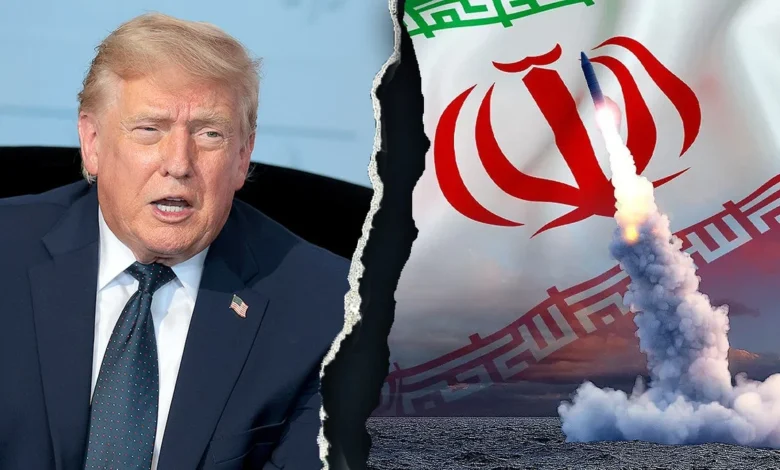
President Trump’s approach to Iran has garnered his lowest approval ratings to date, with a staggering 66% of voters disapproving of his actions, while only 34% express approval. This figure marks a new record for negative sentiment regarding the administration’s foreign policy towards the Islamic Republic, signaling widespread public unease.
Record Disapproval on Iran Policy
The record disapproval rating for President Trump’s handling of Iran reflects years of heightened tensions and a policy framework often described as "maximum pressure." This strategy, initiated early in his first term, involved the unilateral withdrawal of the United States from the Joint Comprehensive Plan of Action (JCPOA) in May 2018. The JCPOA, an international agreement designed to prevent Iran from developing nuclear weapons in exchange for sanctions relief, had been a cornerstone of international diplomacy. Upon withdrawal, the Trump administration re-imposed and expanded a suite of economic sanctions, targeting Iran’s oil exports, financial sector, and key industries.
The stated goal of the "maximum pressure" campaign was to compel Iran to negotiate a new, more comprehensive agreement addressing its nuclear program, ballistic missile development, and support for regional proxy groups. However, critics argued that this approach alienated allies who supported the JCPOA and pushed Iran closer to non-compliance, rather than to the negotiating table.
A Chronology of Confrontation
The period following the JCPOA withdrawal was marked by a series of escalating incidents that fueled public anxiety:
- May 2019: Attacks on oil tankers in the Gulf of Oman, which the U.S. attributed to Iran, though Tehran denied involvement.
- June 2019: Iran shot down a U.S. surveillance drone over the Strait of Hormuz, prompting President Trump to approve and then abruptly call off retaliatory military strikes.
- September 2019: Major drone and missile attacks on Saudi Arabian oil facilities, for which the U.S. and Saudi Arabia blamed Iran.
- January 2020: The U.S. assassinated Iranian Major General Qassem Soleimani in Baghdad, a move that brought the two nations to the brink of war, followed by retaliatory Iranian missile strikes on U.S. bases in Iraq.
- Throughout 2020-2026: Continued proxy conflicts in Yemen, Iraq, and Syria, cyberattacks, and ongoing rhetorical exchanges between Washington and Tehran kept regional tensions perpetually high. Despite occasional overtures for dialogue, no significant diplomatic breakthrough materialized, leaving the public with a sense of protracted confrontation.
This long-term, high-stakes standoff, characterized by military posturing, economic warfare, and a lack of clear resolution, appears to have worn on the American public, contributing to the record disapproval figures observed in the July 2026 poll.
Opposition to Military Intervention
A significant majority of voters, 56%, expressed opposition to U.S. military action against Iran, with 40% strongly opposing such intervention. This sentiment underscores a broad public desire to avoid another protracted conflict in the Middle East. The partisan divide on this issue is stark: 84% of Democrats oppose military action, while 76% of Republicans support it. This sharp contrast highlights the deep ideological chasm within the electorate regarding foreign policy and military engagement.
The American public’s weariness with foreign military interventions is not new, drawing lessons from the extended conflicts in Iraq and Afghanistan. This war fatigue likely plays a substantial role in the strong opposition to military action against Iran, even among those who might support a tough stance against the regime. The data suggests that while a segment of the Republican base aligns with a more assertive, potentially military, approach, the broader electorate, including a considerable portion of independents and even some moderate Republicans, prefers non-military solutions.
Long-Term Conflict Expectations and Deal Skepticism
The poll also reveals a growing pessimism about the duration of the conflict and the prospects for a diplomatic resolution. A striking 64% of voters now believe that any conflict with Iran will last at least a year or more, a significant 13-percentage-point increase since May. This growing expectation of a drawn-out engagement contrasts sharply with the views of supporters of military action, 56% of whom believe it would be over in weeks or months. Conversely, 80% of opponents expect a long-term commitment.
Adding to this somber outlook, approximately half of all voters express doubt that the U.S. will ever reach a deal with Iran. Among the remaining half, opinions are split, with 27% expecting a "good deal" and 25% anticipating a "bad deal." This skepticism about diplomatic success is prevalent across the political spectrum, with roughly half of Democrats, Republicans, and independents predicting no agreement. However, partisan differences emerge regarding the quality of any potential deal: Democrats are 20 points more likely to expect a bad deal, while Republicans are 27 points more likely to expect a good one. This divergence underscores the deep partisan lens through which foreign policy outcomes are viewed, heavily influenced by underlying trust in the negotiating administration.
President Trump’s Overall Job Performance Under Scrutiny
Beyond the specifics of Iran policy, President Trump’s overall job approval ratings remain underwater, reflecting broader discontent across several critical areas.
Stagnant Approval Ratings
The Fox News survey finds President Trump’s overall job performance approval at 39%, a figure that has remained unchanged for the past three months. His disapproval rating stands at 61%, tying a previous high. Notably, 49% of voters "strongly" disapprove of his performance, also matching a record high. This persistent negativity suggests deep-seated dissatisfaction with the direction of the country under his leadership.
For historical context, President Trump’s highest approval rating during his presidency was 49%, achieved in April 2020 amidst the initial stages of the global pandemic. His current 39% approval rating is comparable to those of previous presidents facing significant challenges during the summer of a midterm election year. For instance, former President Joe Biden registered 40% approval in July 2022, and former President Barack Obama stood at 42% in July 2014. While the year 2026 for a hypothetical Trump second term would not be a midterm election year in the traditional sense (assuming a 2025 inauguration), the comparison highlights a common trend of presidential approval dipping during periods of economic or geopolitical strain.
Erosion of Key Support Bases
While President Trump continues to draw formidable support from his core base—97% approval among MAGA Republicans and 72% among conservatives—the poll reveals a significant erosion of support among other crucial demographic groups. His approval has declined to a near-record low among rural voters, dropping 7 points to 44% compared to June. Similarly, approval among White voters has fallen 3 points to an all-time low of 41%.
Perhaps most striking is the decline among non-MAGA Republicans, whose support has plummeted 13 points since last month to 51% approval. This group had shown significantly higher approval, reaching 70% at the beginning of what the poll implies is Trump’s second term. The fracturing within the Republican Party, particularly among those who identify as Republican but not explicitly as "MAGA," could have profound implications for future elections and party unity. These shifts suggest that even within the broader Republican coalition, there is growing disillusionment with the President’s performance, possibly driven by concerns over policy outcomes, political rhetoric, or the sheer longevity of the political battles.
Economic Discontent
The poll also underscores widespread discontent with the administration’s handling of economic issues. President Trump’s approval rating on the economy stands at a mere 33%, with 67% disapproving. His performance on inflation fares even worse, with only 27% approving and a substantial 73% disapproving. These figures indicate that despite any reported economic growth, voters are feeling the pinch of rising costs and perceive the administration as ineffective in addressing these concerns.
Economic anxiety, particularly regarding inflation, has been a persistent challenge for administrations globally in the wake of the pandemic and geopolitical disruptions. Rising energy prices, supply chain issues, and increased cost of living have directly impacted household budgets, leading to widespread dissatisfaction. These low economic approval ratings are particularly damaging, as economic performance is often a primary driver of voter sentiment and a crucial factor in electoral success.
Immigration: Republicans Lose Ground as Public Concerns Shift
One of the most significant shifts identified in the Fox News survey concerns immigration, an issue traditionally seen as a strength for the Republican Party. Voters are now almost evenly divided on which party is better equipped to handle immigration, with 50% favoring Democrats and 49% favoring Republicans. This represents a meaningful shift from April, when the GOP held a distinct 8-point advantage on the issue.
Shifting Party Preference on Immigration
The erosion of the Republican lead on immigration is a notable development. Women and voters under the age of 45 now express a preference for Democrats on immigration, while men and those aged 45 and older continue to favor Republicans. This demographic split suggests that different aspects of the immigration debate resonate differently with various voter groups.
Daron Shaw, a Republican pollster who works on the Fox News Poll alongside Democratic counterpart Chris Anderson, commented on this shift: "During the Biden administration years, immigration attitudes were often defined by border security considerations. Today, immigration enforcement and ICE often dominate, eroding the GOP’s edge on the issue." This observation suggests a change in the public discourse around immigration, moving beyond just border crossings to encompass the broader enforcement apparatus and its implications. The focus on agencies like Immigration and Customs Enforcement (ICE) and the methods of enforcement may be alienating some voters who previously aligned with the GOP’s tougher stance.
Trump’s Immigration Approval and ICE Sentiment
Despite immigration being one of President Trump’s signature issues and often his strongest performing area in polls, his approval rating on it remains negative: 42% approve, while 57% disapprove. This indicates that even on an issue where he has focused significant attention and resources, public opinion is largely unfavorable.
Views of ICE, the federal agency responsible for immigration enforcement, follow a similar pattern. ICE approval stands at 41%, unchanged since early this year but down from 49% last September. The agency faces strong disapproval from majorities of Democrats (90%) and independents (68%), while most Republicans (79%) approve. The intensity of these views is also stark, with 78% of Democrats and 50% of independents "strongly" disapproving, contrasted with 53% of Republicans who "strongly" approve. This deep partisan divide reflects fundamental disagreements over the role, methods, and humanitarian implications of immigration enforcement.
Public Opinion on Undocumented Immigrants
The poll delves into public preferences for how to handle undocumented immigrants currently residing in the U.S. A vast majority of voters reject the idea of allowing all illegal immigrants to remain in the U.S., with only 7% taking that position. This includes 11% of Democrats, 5% of independents, and a mere 2% of Republicans.
Instead, the most popular approach, supported by 62% of voters, is to deport those who have been charged with crimes while allowing others to stay and eventually qualify for citizenship. This position garners majority support from every demographic group except Republicans (39%), conservatives (41%), and White evangelical Christians (48%), indicating a broad desire for a nuanced approach that prioritizes public safety while offering a pathway for integration for non-criminal residents.
A significant minority, 31%, favors deporting all illegal immigrants. Support for this hardline stance is highest among MAGA Republicans, with 68% endorsing it. This highlights the ongoing debate within the Republican Party and the broader electorate about the severity and scope of immigration enforcement.
Key Concerns: Strain on Services Dominates
When asked about their primary concerns regarding illegal immigration, voters overwhelmingly cited the strain on government services (39%). This concern eclipsed others such as crime (19%), job losses for U.S. citizens (14%), changes to the country’s culture (13%), and terrorism (10%).
The perception of overburdened government programs ranks as the top concern across various demographic groups, including college graduates, those in high-income households, suburban voters, and independents. This indicates that the economic and logistical impact of immigration on public resources, rather than cultural or security fears, is the most salient issue for a significant portion of the electorate. This concern often manifests in debates over school capacity, healthcare access, and social welfare programs, particularly in communities experiencing rapid demographic shifts due to migration.
The GOP’s Internal Divide on Immigration
The immigration findings consistently reveal a significant ideological divide within the Republican Party itself, particularly between MAGA Republicans and other Republicans. For instance, ICE approval stands at 91% among MAGA Republicans, compared with 59% among other Republicans—one of the widest gaps observed in the survey.
A similar split is evident in ratings of President Trump’s handling of immigration, with 91% of MAGA Republicans approving versus 63% of other Republicans. Furthermore, MAGA Republicans are nearly 30 points more likely to favor deporting all illegal immigrants (68% vs. 41%). This internal divergence within the GOP underscores the challenges the party faces in crafting a unified and broadly appealing immigration platform. It suggests that while the "America First" wing of the party holds very strong, uncompromising views on immigration, a substantial portion of the Republican base might be open to more moderate or practical solutions, or at least less dogmatic in their approach. This schism could complicate efforts to pass comprehensive immigration legislation and could lead to internal power struggles within the party.
Broader Implications and Political Landscape
The findings of the July Fox News poll paint a challenging picture for the Trump administration and carry significant implications for the broader political landscape, particularly as the nation looks towards future elections.
Challenges for the Administration
The convergence of record disapproval on a critical foreign policy issue like Iran, stagnant overall approval ratings, and declining support on economic matters presents a formidable challenge for the administration. The erosion of support among key demographic groups, including rural and White voters, and the noticeable decline among non-MAGA Republicans, signals potential cracks in the President’s coalition. This could hinder the administration’s ability to rally public support for its initiatives, both domestically and internationally, and could complicate efforts to push through legislative priorities. The poll suggests a public weary of protracted conflicts and increasingly concerned about kitchen-table economic issues, which may necessitate a re-evaluation of the administration’s strategic priorities and messaging.
Future Election Outlook
While the 2026 date implies a hypothetical second term for President Trump, the sentiment captured in this poll would be highly impactful for any future electoral contest. The significant shift on immigration, where the Republican Party has lost its traditional advantage, could be particularly damaging. Immigration has long been a potent issue for mobilizing the Republican base, but if public opinion continues to trend towards the Democratic Party on this front, it could diminish the GOP’s ability to leverage it effectively in campaigns.
The internal divisions within the Republican Party on immigration, particularly between MAGA and non-MAGA factions, also present a strategic dilemma. While a hardline stance may energize the core base, it risks alienating more moderate voters and potentially exacerbating intra-party tensions. For Democrats, the shift on immigration offers a potential avenue for making inroads with voters who are seeking more nuanced solutions or are concerned about the human cost of enforcement-focused policies. The poll suggests that the emphasis on "strain on government services" as a primary concern could be a common ground for bipartisan policy discussions, albeit a challenging one.
The Role of Public Opinion in Policymaking
The pronounced public opposition to military action against Iran and the skepticism regarding a diplomatic resolution will likely exert pressure on the administration to carefully weigh its options in the Middle East. While presidential administrations often maintain their foreign policy course, persistent and strong public disapproval can influence rhetoric, resource allocation, and diplomatic strategies. Similarly, the public’s desire for a balanced approach to immigration—deporting criminals while offering pathways to citizenship for others—could push policymakers towards comprehensive reform efforts, even if political will remains fractured. The poll underscores that public opinion, even if not always dictating policy, remains a powerful force that shapes the political environment in which decisions are made.
Poll Methodology
This Fox News survey was conducted from July 17–20, 2026, under the joint direction of Beacon Research (D) and Shaw & Company Research (R), reflecting a bipartisan approach to polling. The survey included interviews with a sample of 1,003 registered voters, who were randomly selected from a national voter file. Respondents participated through live interviews on landlines (70) and cellphones (681), or completed the survey online after receiving a text (252). The results, based on the full sample, carry a margin of sampling error of ±3 percentage points. The survey also incorporated an oversample of 200 voters aged 18–29, bringing the total sample size for that subgroup to 350 (with a margin of error of ±5 percentage points). It is important to note that sampling error for results among other subgroups may be higher. Beyond sampling errors, factors such as question wording and order can influence the survey results. To ensure demographic representation of the registered voter population, weights were generally applied to variables including age, race, education, and geographic area, drawing from sources such as the most recent American Community Survey, Fox News Voter Analysis, and voter file data.